Technical Articles & Insights
Battery Engineering Blog
Discover expert perspectives, custom battery design guides, charging solutions, and industry updates from USA engineers.
Blog

How to Choose Military Lithium Battery Packs?
Choosing military lithium battery packs is not a simple search for the highest energy density. A field unit may face freezing mornings, desert dust, vibration, water exposure, and rapid discharge. The pack must still deliver stable voltage when a radio, navigation device, sensor, or unmanned platform shares the load. Safety matters equally. Thermal runaway, damaged cells, and poor charging control can turn a compact power source into a serious operational risk.
Recent industry research supports a more careful approach. IDTechEx’s Military Batteries 2024–2034 report highlights rising demand for lighter, longer-lasting power systems across defense platforms. BloombergNEF reported an average lithium-ion battery price of $115 per kilowatt-hour in 2024, yet military procurement rarely follows commercial pricing alone. Qualification testing, traceability, cybersecurity, ruggedized enclosures, and long-term storage can change the final cost dramatically. The U.S. Department of Defense’s battery modernization work also stresses domestic supply resilience and dependable performance under harsh conditions.
Battery researcher Dr. Jeff Dahn has repeatedly emphasized a practical principle: “The best battery is the one that meets the application requirements.” That idea should guide every comparison of military lithium battery packs. Examine usable watt-hours, peak current, cycle life, operating temperature, ingress protection, balancing electronics, charging limits, and maintenance records. Ask uncomfortable questions, too. Is the published capacity measured under realistic loads? Does the supplier disclose test conditions? A lighter pack may look superior on paper, but a slightly heavier design could provide safer chemistry, stronger casing, and more dependable field service. There is no perfect specification sheet. There is only a defensible match between mission, environment, and verified battery performance.
Read more »
 By:Charlotte
- October 16, 2026

Top Medical Device Battery Pack Suppliers Worldwide
Selecting reliable medical device battery packs requires more than comparing capacity, price, or delivery times. A battery inside an infusion pump may operate beside a patient for hours. A portable ventilator may depend on stable power during transport. In an emergency, a few minutes of lost runtime can change clinical decisions. This guide examines leading suppliers worldwide through practical and technical criteria, including cell quality, pack design, thermal control, battery management systems, traceability, and after-sales support.
Isidor Buchmann, founder of Cadex Electronics and a respected battery-industry authority, once said, “Batteries are like humans. They need to be treated well.” That principle applies strongly to medical equipment. Suppliers must understand charging behavior, storage conditions, cycle life, and failure prevention. They should also demonstrate quality systems, documented testing, and compliance with relevant safety standards, such as IEC 62133-2, UN 38.3, and ISO 13485 where applicable. Evidence matters more than polished claims.
No supplier is perfect. Some offer excellent engineering but limited regional support. Others provide competitive pricing but less customization. This comparison considers those trade-offs honestly. It looks at manufacturers serving hospitals, original equipment manufacturers, laboratories, and home-care providers. Readers should still verify current certifications, device compatibility, warranty terms, and validation results before making a purchasing decision. Battery performance can vary in real clinical environments. Temperature, workload, maintenance, and charging habits all matter. That is easy to overlook. Reliable sourcing begins with careful questions, not attractive specifications alone.
Read more »
 By:Oliver
- October 11, 2026
10 Best Lead Acid Battery Chargers for Global Buyers
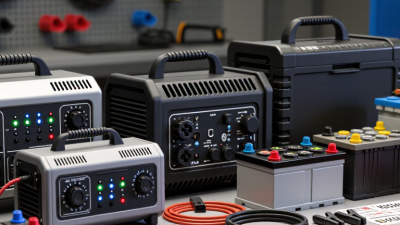
Choosing among the 10 best lead acid battery chargers requires more than comparing wattage or price. A charger may look powerful on a product page, yet perform poorly with an aged 12-volt battery. Real-world evaluation should examine charging stages, output stability, temperature compensation, reverse-polarity protection, and compatibility with flooded, AGM, and gel batteries.
Isidor Buchmann, founder of Cadex Electronics and author of Battery University, has stated, “Lead acid does not lend itself to fast charging.” That warning remains relevant for global buyers. A suitable charger should restore capacity steadily, prevent excessive gassing, and switch safely to maintenance mode. Small details matter. A warm casing matters. So does a clear status indicator.
This guide compares lead acid battery chargers for workshops, vehicles, boats, backup systems, and small industrial equipment. It considers input voltage flexibility, plug options, operating environments, warranty support, and independent safety testing. These factors can differ sharply between markets. A charger designed for a dry garage may struggle in a humid coastal warehouse.
No charger is perfect. That is worth admitting. Some models offer excellent protection but charge slowly. Others provide more current, yet demand closer supervision. Battery age, cable length, ambient temperature, and daily usage can change the result. Buyers should verify the manufacturer’s specifications before ordering. They should also match charger voltage and charging profile precisely.
The recommendations below aim to make that decision clearer, safer, and more practical. They are not based on marketing claims alone. Performance evidence still matters.
Read more »
 By:Ethan
- October 6, 2026

What Is a Lithium Iron Phosphate Battery Charger?
Lithium iron phosphate batteries are changing how energy storage is designed, charged, and maintained. Their chemistry offers strong thermal stability, long cycle life, and lower dependence on nickel and cobalt. Yet these advantages do not make every charger suitable.
The International Energy Agency reported that lithium iron phosphate batteries held about 40% of the global electric-car battery market in 2023. That growth increases demand for reliable lithium iron phosphate battery chargers in vehicles, solar systems, marine equipment, and backup power installations. However, a charger must match the battery’s voltage, current, protection system, and charging profile. A bright display cannot prove electrical compatibility.
Isidor Buchmann, founder of Cadex Electronics and a respected battery educator, wrote, “The battery is a fragile device; it should be treated with care.” His warning remains practical. A correctly designed charger should support constant-current and constant-voltage control. It should also communicate safely with the battery management system when required.
The details matter. A 12-volt LiFePO4 battery may require a charging voltage near 14.4 volts, depending on its manufacturer. Temperature limits, balancing functions, and automatic shutoff settings can differ. Small errors can reduce service life.
This article explains what lithium iron phosphate battery chargers do, how they work, and where common assumptions fail. Some product labels remain vague. That is worth questioning. Reliable selection depends on documented specifications, recognized testing, and real operating conditions, not marketing language alone.
Read more »
By:Oliver
- October 1, 2026

How to Choose and Stock Smart Battery Packs?
Choosing how to stock smart battery packs starts with understanding the devices they must support. A warehouse serving handheld scanners has different needs from one supplying outdoor sensors or backup equipment. Pack voltage, capacity, connector type, charging behavior, and operating temperature all matter. So does the battery management system, which helps monitor cells and manage safe operation.
A useful reminder comes from Maya Chen, an illustrative battery procurement specialist created for this introduction: “A battery that fits the shelf but not the device is still the wrong stock.” This is an editorial example, not a verified quotation from a real industry expert. The principle is practical: confirm compatibility against manufacturer specifications before setting reorder levels. Check labels, approved charging requirements, and storage guidance. Keep product records clear enough for staff to identify the correct pack without guesswork.
To stock smart battery packs reliably, connect purchasing decisions to actual demand and realistic lead times. Review sales patterns, seasonal peaks, supplier availability, and product changes. Use first-in, first-out rotation where appropriate, and inspect packaging and condition during routine checks. Small details count. A mislabeled carton can waste time; an outdated forecast can leave a service team short. No inventory plan is perfect, and a forecast can miss a sudden demand shift. That is a reason to review it, not to ignore planning. The sections ahead explain how to assess compatibility, choose dependable suppliers, set sensible stock levels, and maintain clear inventory records.
Read more »
By:Oliver
- September 26, 2026

China Top Custom Large Format Batteries Supplier Guide
China’s custom large format batteries sector is moving from simple volume production toward engineered, application-specific systems. The change is visible in factories, where prismatic cells, busbars, cooling plates, and battery management systems are tested together. Capacity numbers matter, but they do not tell the whole story.
The International Energy Agency reported in Global EV Outlook 2024 that electric vehicle battery demand reached about 750 GWh in 2023, increasing by roughly 40% year on year. BloombergNEF’s 2024 Battery Price Survey recorded an average lithium-ion pack price of 115 dollars per kWh, down 20% from 2023. These figures show stronger scale and improving cost efficiency. They do not guarantee reliable customization.
Jeff Dahn, a leading lithium-ion battery researcher, has observed, “The battery is the most important component of an electric vehicle.” His point also applies to storage, marine, industrial, and low-speed mobility projects. A supplier must match cell chemistry, enclosure size, thermal control, charging limits, cycle-life targets, and certification needs. A 280Ah LFP cell may suit one storage cabinet, while another project needs a different voltage platform or cooling design.
This guide examines China’s leading custom large format batteries suppliers through technical capability, manufacturing experience, quality control, and communication reliability. It considers factory audits, prototype testing, traceability, warranty terms, and after-sales support. Price remains important. Yet price alone misleads. A polished specification sheet cannot reveal weak welding or unstable firmware. This guide also has limits, because supplier capabilities change quickly. Careful verification remains essential.
Read more »
By:Charlotte
- September 21, 2026

How to Choose Custom NiMH Battery Packs for Global Buyers?
Choosing the right nimh custom battery packs requires more than comparing voltage and price. Buyers must match chemistry, load profile, temperature, enclosure, and charging method. A pack for a warehouse scanner may need 12 hours of daily runtime. A medical instrument may need stable discharge and strict traceability. The details matter.
The International Energy Agency’s Global EV Outlook 2024 highlights rising battery demand and stronger attention to supply-chain resilience. Meanwhile, Grand View Research’s Nickel Metal Hydride Battery Market report identifies hybrid vehicles, industrial equipment, and consumer devices as continuing application areas. These findings do not make NiMH suitable for every product. They show why application-specific engineering remains important. Isidor Buchmann, founder of Cadex Electronics and Battery University, offers a useful warning: “The battery is only as good as its weakest link.” Cell matching, weld quality, protection design, and charger compatibility can all become that link.
A reliable sourcing process should request cycle-life data, impedance results, temperature limits, safety testing, and production samples. IEC 61951-2 and IEC 62133-1 can guide technical and safety evaluations. Still, standards alone cannot reveal every field problem. A spreadsheet may show excellent capacity. It may not show voltage sag after months of vibration. That is where buyers can misjudge the pack.
Experienced suppliers should explain their test methods, not only advertise capacity. They should also document materials, quality controls, replacement planning, and applicable transport requirements. The best choice is rarely the cheapest pack. It is the pack that performs predictably inside the finished product.
Read more »
By:Charlotte
- September 16, 2026

China Best Lithium Ion Smart Battery Packs Supplier?
Choosing the China best lithium ion smart battery packs supplier requires more than comparing factory prices. Buyers need evidence, testing discipline, and dependable communication. A capable supplier should explain cell selection, battery management systems, thermal protection, charging limits, and expected cycle performance. These details reveal practical engineering experience.
Professor Martin Winter, a leading battery researcher, has said, “The lithium-ion battery is the workhorse of our mobile society.” His observation remains highly relevant. Smart battery packs now support medical devices, robotics, energy storage equipment, and electric mobility. Their value depends on more than stored energy. A reliable pack should report voltage, temperature, current, state of charge, and fault conditions accurately.
The strongest suppliers provide traceable production records and realistic performance data. Look for sample testing, incoming cell inspection, welding quality checks, and controlled aging tests. Ask how the supplier validates communication protocols before mass production. A useful evaluation may include testing packs at low temperatures, under continuous loads, and after repeated charging cycles.
No supplier is perfect. Even experienced factories can face component delays, software revisions, or inconsistent early samples. That deserves honest discussion. A supplier that admits limitations may deserve more trust than one promising everything. Certifications, factory audits, technical support, and clear warranty terms also matter. In this guide, we examine Chinese manufacturers through those practical standards. The goal is not to name a winner too quickly. It is to identify the supplier that fits your application, safety expectations, volume, and long-term service needs.
Read more »
By:Ethan
- September 9, 2026

What Are LiFePO4 Smart Battery Packs?
LiFePO4 smart battery packs combine lithium iron phosphate cells with a battery management system, sensors, and communication controls. They are designed to deliver safer, more measurable energy for solar storage, electric mobility, marine equipment, and backup power. Inside the pack, temperature probes monitor heat near the cells. Voltage sensors watch each cell during charging and discharge. A controller can balance cells, limit current, and report faults through Bluetooth, CAN bus, or a mobile application.
The market context is significant. The International Energy Agency reported in Global EV Outlook 2024 that LFP batteries represented about 40% of the global electric vehicle battery market in 2023. The same report noted that their market share had nearly doubled since 2020. IEA’s Batteries and Secure Energy Transitions report also states that global energy storage capacity must expand sixfold by 2030 to support clean-energy growth. These figures explain why lifepo4 smart battery packs are receiving attention beyond consumer electronics.
The word “smart” needs caution. It is not a universal technical standard. Some packs offer only basic protection, while others provide accurate state-of-charge estimates, event records, remote alarms, and firmware updates. Real-world performance still depends on cell matching, wiring quality, charger settings, and installation conditions. A dashboard may look impressive. Poor calibration can still mislead users. Buyers should review test reports, warranty terms, cycle-life conditions, and recognized safety certifications before comparing products. This practical evidence matters more than a colorful app or a large capacity label.
Read more »
By:Charlotte
- September 9, 2026

China Best Custom Smart Battery Pack Assembly Supplier
China’s battery industry is moving from standard products toward application-specific energy systems. The International Energy Agency reported that global electric vehicle battery demand exceeded 750 GWh in 2023, increasing by about 40% year on year. This growth also raises expectations for safer, smaller, and more connected battery packs.
A reliable China supplier for custom smart battery pack assembly should offer more than cell sourcing. The supplier needs engineering experience in lithium-ion chemistry, battery management systems, thermal protection, enclosure design, and production traceability. BloombergNEF’s 2024 Battery Price Survey placed the average lithium-ion pack price at approximately $115 per kWh, showing continued cost pressure across the market. However, the lowest quote is rarely the strongest choice. A weak connector, poorly calibrated sensor, or incomplete firmware test can create expensive field problems.
Professional assembly should include cell matching, welding inspection, insulation checks, capacity testing, and communication verification. Smart packs may support CAN, SMBus, Bluetooth, or application-specific interfaces. Each detail matters when a pack powers medical equipment, robotics, mobility devices, or industrial tools.
This is where custom smart battery pack assembly becomes practical. An experienced China-based partner can adapt voltage, capacity, dimensions, connectors, and protection logic to real operating conditions. The process should follow recognized quality systems, documented validation procedures, and applicable transport and safety requirements. UL, IEC, UN 38.3, and ISO-related expectations may apply, depending on the product and market.
No supplier gets every detail right. A datasheet is not proof. Buyers should examine test records, sample consistency, engineering communication, and after-sales responsibility before choosing a long-term assembly partner. The best supplier is not simply the cheapest. It is the partner that can make performance repeatable.
Read more »
By:Charlotte
- September 9, 2026