Technical Articles & Insights

Battery Engineering Blog

Discover expert perspectives, custom battery design guides, charging solutions, and industry updates from USA engineers.

0%

Choosing military lithium battery packs is not a simple search for the highest energy density. A field unit may face freezing mornings, desert dust, vibration, water exposure, and rapid discharge. The pack must still deliver stable voltage when a radio, navigation device, sensor, or unmanned platform shares the load. Safety matters equally. Thermal runaway, damaged cells, and poor charging control can turn a compact power source into a serious operational risk.

Recent industry research supports a more careful approach. IDTechEx’s Military Batteries 2024–2034 report highlights rising demand for lighter, longer-lasting power systems across defense platforms. BloombergNEF reported an average lithium-ion battery price of $115 per kilowatt-hour in 2024, yet military procurement rarely follows commercial pricing alone. Qualification testing, traceability, cybersecurity, ruggedized enclosures, and long-term storage can change the final cost dramatically. The U.S. Department of Defense’s battery modernization work also stresses domestic supply resilience and dependable performance under harsh conditions.

Battery researcher Dr. Jeff Dahn has repeatedly emphasized a practical principle: “The best battery is the one that meets the application requirements.” That idea should guide every comparison of military lithium battery packs. Examine usable watt-hours, peak current, cycle life, operating temperature, ingress protection, balancing electronics, charging limits, and maintenance records. Ask uncomfortable questions, too. Is the published capacity measured under realistic loads? Does the supplier disclose test conditions? A lighter pack may look superior on paper, but a slightly heavier design could provide safer chemistry, stronger casing, and more dependable field service. There is no perfect specification sheet. There is only a defensible match between mission, environment, and verified battery performance.
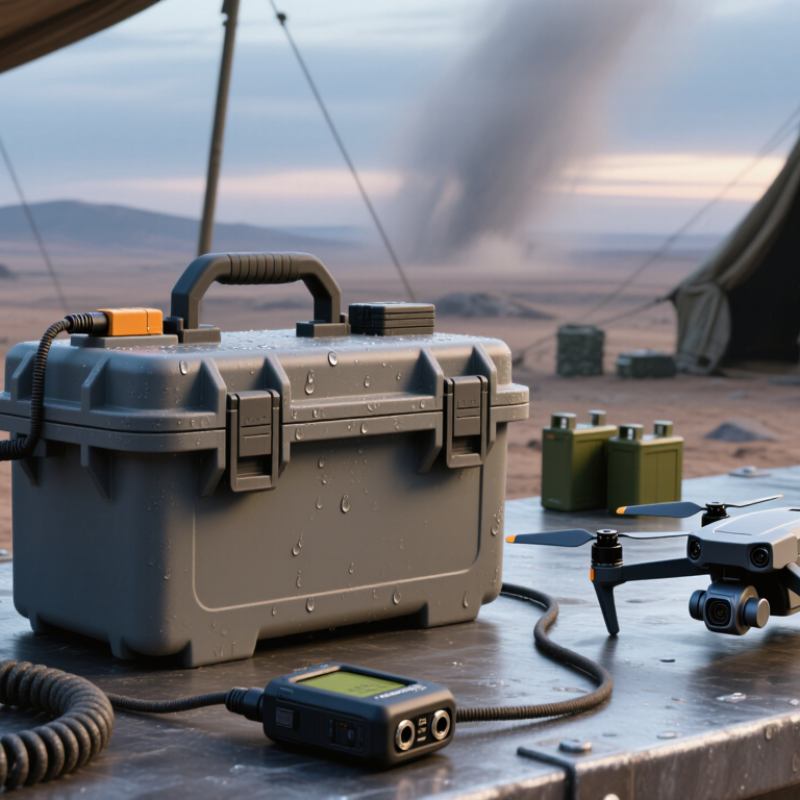
How to Choose Military Lithium Battery Packs?

Military Lithium Battery Pack Fundamentals and Mission Requirements

How to Choose Military Lithium Battery Packs?

Military lithium battery packs begin with the mission, not the battery catalog. Define the equipment’s voltage, continuous load, peak power, runtime, and recharge schedule. A radio may need stable energy for twelve hours, while a sensor may demand low standby loss for months. Record cold starts, heat exposure, vibration, shock, dust, moisture, and storage conditions. These details shape cell selection, enclosure design, thermal control, and battery management requirements.

Tips: Build a mission load profile before requesting quotations. Measure real equipment behavior, including startup surges and sleep cycles. Ask for capacity data at the expected temperature, not only at room temperature. Require traceable test reports, transport documentation, and clear safety procedures. Independent laboratory verification is valuable, especially for abuse testing and environmental performance.

A reliable pack should communicate accurate state-of-charge information and protect against overcharge, over-discharge, short circuits, and excessive temperature. Mechanical interfaces also matter. A loose connector can interrupt power during vehicle movement, even when the cells perform well. Choose serviceable designs when field replacement is realistic, but sealed designs may better resist moisture. Do not assume a larger capacity always improves readiness; added mass can reduce mobility and increase cooling demands. My own selection process would leave room for revision, because early load estimates are often incomplete. Prototype testing under realistic mission conditions remains essential.

Key Performance Specifications for Defense Applications

How to Choose Military Lithium Battery Packs?

Defense platforms need more than high energy density. They need predictable power in dust, vibration, cold storage, and sudden load changes. BloombergNEF’s 2024 Battery Price Survey reported an average lithium-ion pack price of 115 US dollars per kWh, down 20% from 2023. Cost is useful, but it should not dominate selection. A field pack with 220 Wh/kg may outperform a 260 Wh/kg pack if its thermal controls and connectors remain reliable.

Check continuous power, peak power, usable capacity, cycle life, and operating temperature together. The International Energy Agency reported that global electric-vehicle battery demand exceeded 750 GWh in 2023. This scale supports faster cell innovation, but military procurement still requires application-specific validation.

Ask for discharge curves, low-temperature capacity data, cell-matching records, and battery-management-system fault logs. Test the pack under realistic mission loads, not only laboratory averages.

Small details matter. Connector sealing matters.

Safety evidence should include thermal propagation testing, overcharge protection, short-circuit response, and transport documentation. Mechanical testing should cover shock, vibration, water, dust, and repeated insertion cycles.

A sealed enclosure may protect electronics, yet trap heat during rapid discharge. That trade-off is easy to miss. Also examine electromagnetic compatibility and communication failure behavior. If the battery-management system loses data, the platform should enter a controlled state.

I would not trust a specification sheet alone; real testing often exposes uncomfortable gaps.

Battery Chemistry, Safety, and Environmental Adaptability

Choosing military lithium battery packs begins with chemistry, not capacity. Lithium iron phosphate offers strong thermal stability and long cycle life, while nickel-rich cells usually provide higher energy density. The International Energy Agency reported that LFP batteries represented about 40% of global electric-car battery deployments in 2023. That figure does not decide a field application, but it shows LFP’s growing industrial maturity. A pack carried through snow, dust, and vibration needs more than a high watt-hour rating.

Safety depends on layered control. Specify cell-level monitoring, temperature sensors, current interruption, mechanical protection, and traceable testing. UN 38.3 transport testing is essential, but it does not replace abuse testing for shock, puncture, water exposure, or rapid charging. UL Research Institutes has repeatedly identified thermal runaway propagation as a major lithium-ion safety concern. Separation between cells can slow failure. It cannot make poor assembly safe.

Environmental adaptability must be measured at the mission temperature, not at room temperature. At -20°C, available power may fall sharply, especially during high-current bursts. Preheating can help, yet it consumes energy and adds control complexity. At high temperatures, aging accelerates; the U.S. Department of Energy commonly uses 25°C as a reference condition for battery testing, while real equipment may face far harsher cycles. That gap matters. A spreadsheet will not capture every cold-soaked connector. Engineers should test the complete pack, charger, cable, and enclosure together. Some requirements will remain imperfect, and that uncertainty should be documented rather than hidden.

Evaluating Pack Design, Integration, and Compatibility

How to Choose Military Lithium Battery Packs?

Pack design should begin with the mission, not the highest capacity number. A soldier’s radio, sensor, or vehicle may face dust, vibration, rain, and sudden temperature changes. MIL-STD-810H testing can reveal weaknesses in seals, connectors, and mounting points. The U.S. Department of Energy’s Battery500 program targets 500 Wh/kg at cell level, but real packs lose energy through protection circuits, cooling, wiring, and casing. Pack-level performance matters more.

Integration is equally important. Check voltage windows, connector polarity, communication protocols, and charger limits before purchase. A battery can fit physically and still fail electronically.

The battery management system should record temperature, cell balance, fault events, and remaining capacity. That data supports safer maintenance decisions.

IEC 62133-2 and UN 38.3 provide useful safety and transport references, while MIL-STD-461G can guide electromagnetic compatibility checks. Compatibility is not a label. It needs testing inside the complete system.

Tips: Test the pack with the actual load, cable length, charger, and enclosure. Measure voltage sag during radio transmission or motor startup. Keep at least 15% reserve capacity for cold weather and aging. Ask for cycle-life data at your expected discharge rate, not only laboratory conditions. I would also challenge one common assumption: a lighter pack is not always better. A fragile housing, weak connector, or poorly tuned BMS can create greater field risk. Pilot testing may expose inconvenient problems early.

Testing, Certification, Maintenance, and Lifecycle Support

Choosing a military lithium battery pack begins with verification, not advertised capacity. Request cell traceability, BMS architecture, and complete test records. Test packs against MIL-STD-810H methods for vibration, shock, humidity, altitude, and temperature cycling. Add ingress, electromagnetic compatibility, and connector-abuse testing when missions require them. A laboratory pass is not field proof. It can miss cold starts, wet gloves, or damaged cables. UN 38.3 is essential for transport, while IEC 62133-2 supports battery safety evaluation. Aviation programs may also require RTCA DO-311A. Certification must match the actual platform and mission.

Use measurable acceptance limits. Record usable energy at -20°C, 25°C, and high temperature, not only nominal watt-hours. Measure voltage sag during radio or motor peaks. Thermal imaging and internal sensors can expose uneven cells. BloombergNEF’s 2024 Lithium-Ion Battery Price Survey reports an average pack price of 115 dollars per kWh, a 20% decline from 2023. Lower prices do not eliminate qualification costs. A cheaper pack may create higher expenses through shortened service intervals or reduced readiness.

Lifecycle support needs a written plan. Track state of health through cycle count, resistance growth, capacity tests, and BMS event logs. Define storage charge limits, inspection intervals, firmware control, spare-pack availability, and end-of-life criteria. The IEA’s Global Critical Minerals Outlook 2024 projects lithium demand to grow about ninefold by 2040 under stated policies. Supply planning matters. Six-month inspections may suit one climate, but not another. That assumption needs testing. Keep failed packs for controlled analysis. Maintenance is evidence, not paperwork.

How to Choose Military Lithium Battery Packs?

Testing, certification, maintenance, and lifecycle support should be evaluated together with cell chemistry, operating conditions, and mission requirements.

How to read the chart: Nominal cell voltage affects pack architecture, charger design, and the number of cells connected in series. These are typical chemistry-level values; the final pack voltage must be matched to the equipment, protection system, and operating profile.

Testing

Confirm electrical, thermal, vibration, shock, humidity, dust, and altitude testing for the intended mission profile. MIL-STD-810H describes environmental test methods rather than a universal battery certification.

Certification

Check applicable transport, safety, EMC, and platform requirements. UN 38.3 is commonly relevant to lithium battery transport, while additional requirements depend on the equipment and jurisdiction.

Maintenance

Use battery-management-system records, inspect connectors and enclosures, check swelling or damage, and store packs within the specified state-of-charge and temperature limits.

Lifecycle Support

Prioritize traceability, spare-pack availability, firmware and BMS support, capacity testing, safe end-of-life handling, and documented replacement procedures.

Typical nominal cell-voltage references: LFP 3.2 V, NMC 3.6 V, LCO 3.7 V, and LTO 2.3 V. Actual values vary by cell design and manufacturer.

FAQS

What should be defined before selecting a military lithium battery pack?

Define voltage, continuous load, peak power, runtime, and recharge timing. A radio may need twelve hours. A sensor may sleep for months. Early estimates can be wrong.

Why is a mission load profile important?

It records startup surges, sleep cycles, and changing power demand. Measure the actual equipment. Do not rely only on catalog values. Small errors can affect pack size.

How do temperature and storage conditions affect battery selection?

Cold can sharply reduce available power, especially during high-current bursts. Heat accelerates battery aging. Record snow, dust, moisture, vibration, shock, and storage temperatures. Room-temperature results are not enough.

Which battery chemistry should be considered?

Lithium iron phosphate offers strong thermal stability and long cycle life. Nickel-rich cells usually provide higher energy density. The best choice depends on mission priorities. Capacity alone decides nothing.

What safety features should a lithium battery pack include?

The pack should monitor cells, temperature, current, and charging limits. It also needs protection from overcharge, deep discharge, short circuits, and overheating. Cell separation may slow a failure. It cannot fix poor assembly.

Are transport tests enough to prove pack safety?

No. Transport testing does not replace abuse and environmental testing. Evaluate shock, puncture, water exposure, rapid charging, and thermal failure behavior. Independent laboratory verification adds confidence. No test removes every uncertainty.

How should the battery pack handle cold environments?

Preheating may restore power during cold starts. However, it consumes energy and adds control complexity. Test the complete pack, charger, cable, and enclosure together. Cold-soaked connectors can still fail.

Does a larger battery always improve mission readiness?

Not necessarily. Extra capacity adds weight and may increase cooling demands. A loose connector can interrupt power during vehicle movement. Choose serviceable designs when field replacement is realistic. Sealed designs may resist moisture better.

Conclusion

Choosing military lithium battery packs requires more than comparing energy capacity. The selection should begin with the mission profile, including required runtime, peak power, weight limits, operating temperature, transport conditions, and the consequences of power failure. Key specifications such as energy density, discharge rate, cycle life, recharge time, voltage stability, and monitoring capability should be matched to the equipment and deployment environment. Chemistry and safety are equally important, so the pack should include appropriate protection against overcharging, overheating, short circuits, and mechanical damage while remaining reliable in vibration, moisture, dust, and extreme temperatures.

A suitable pack must also integrate correctly with the platform’s electrical, mechanical, and communication systems. Buyers should assess connectors, mounting, battery management functions, charging compatibility, and system-level safety. Before adoption, products should undergo relevant performance, environmental, transportation, and quality testing. Clear documentation, inspection procedures, maintenance plans, replacement strategies, and lifecycle support are essential to preserve dependable performance throughout long-term service.

Charlotte

Charlotte

Charlotte is a dedicated marketing professional with a strong understanding of the company’s products, services, and customer-focused approach. Combining strategic insight with clear, engaging communication, she regularly contributes expert articles to the company website, helping readers better......