Battery Engineering Blog
Discover expert perspectives, custom battery design guides, charging solutions, and industry updates from USA engineers.
10 Best Lead Acid Battery Chargers for Global Buyers
Table of Contents
- Lead-Acid Battery Basics: 12V, 24V, and 48V Systems Explained
- Charging Profiles: Bulk, Absorption at 14.4–14.8V, and Float at 13.5–13.8V
- Key Selection Metrics: 0.1C Charging Rate, Efficiency, Safety, and Warranty
- Global Compliance Guide: IEC 60335-2-29, CE, UL, RoHS, and IP Ratings
- 10 Best Lead-Acid Battery Chargers Compared by Voltage, Capacity, and Use Case
- FAQS
- Conclusion
- Related Posts
Choosing among the 10 best lead acid battery chargers requires more than comparing wattage or price. A charger may look powerful on a product page, yet perform poorly with an aged 12-volt battery. Real-world evaluation should examine charging stages, output stability, temperature compensation, reverse-polarity protection, and compatibility with flooded, AGM, and gel batteries.
Isidor Buchmann, founder of Cadex Electronics and author of Battery University, has stated, “Lead acid does not lend itself to fast charging.” That warning remains relevant for global buyers. A suitable charger should restore capacity steadily, prevent excessive gassing, and switch safely to maintenance mode. Small details matter. A warm casing matters. So does a clear status indicator.
This guide compares lead acid battery chargers for workshops, vehicles, boats, backup systems, and small industrial equipment. It considers input voltage flexibility, plug options, operating environments, warranty support, and independent safety testing. These factors can differ sharply between markets. A charger designed for a dry garage may struggle in a humid coastal warehouse.
No charger is perfect. That is worth admitting. Some models offer excellent protection but charge slowly. Others provide more current, yet demand closer supervision. Battery age, cable length, ambient temperature, and daily usage can change the result. Buyers should verify the manufacturer’s specifications before ordering. They should also match charger voltage and charging profile precisely.
The recommendations below aim to make that decision clearer, safer, and more practical. They are not based on marketing claims alone. Performance evidence still matters.
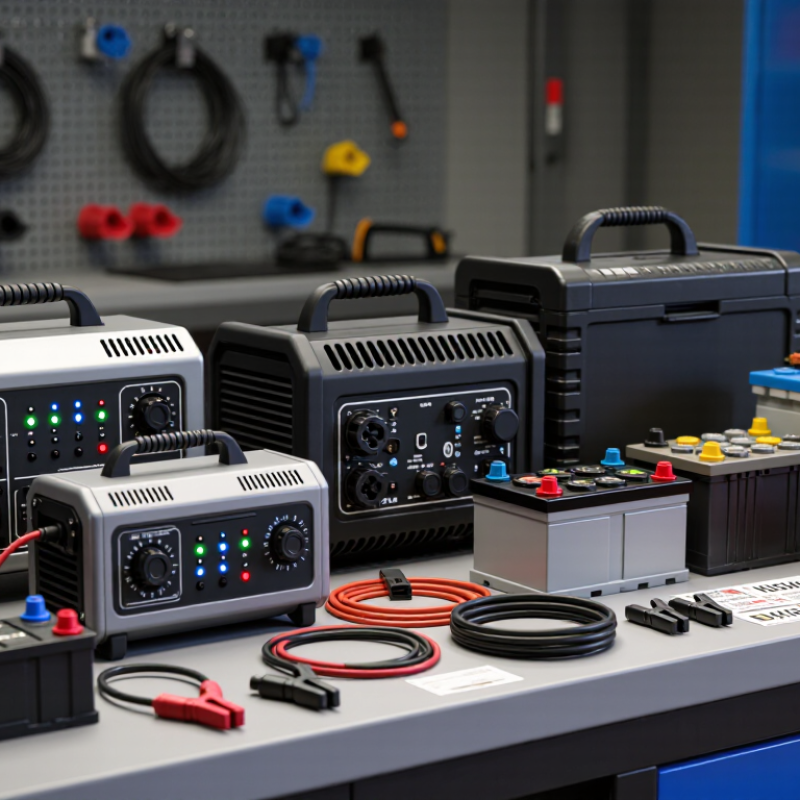
Lead-Acid Battery Basics: 12V, 24V, and 48V Systems Explained
Lead-acid batteries remain common in vehicles, backup cabinets, and small solar systems. Their voltage label is not a charging target. A 12V battery normally contains six cells, while 24V and 48V systems use twelve and twenty-four. Each cell needs controlled voltage, so the charger must match the complete battery bank. Check the battery manual first. It sounds obvious.
For a 12V flooded battery, a three-stage charger typically uses bulk, absorption, and float phases. Absorption often sits near 14.4–14.8V, but the correct value depends on battery design and temperature. A sealed AGM unit may require a different limit, while gel batteries can suffer from excessive voltage. Never choose by amperage alone. A practical starting point is charging current near 10% of rated amp-hours, followed by a manufacturer check. For 100Ah, that means roughly 10A. Real conditions vary.
A 24V charger must be rated for the complete 24V bank, not one 12V battery. The same rule applies to 48V systems. Measure resting voltage, inspect terminals, and verify polarity before connecting. Temperature compensation matters in cold warehouses and hot workshops. I still recheck polarity because rushed installations create simple errors. For global buyers, confirm input frequency, plug compatibility, reverse-polarity protection, short-circuit protection, and overtemperature control. Clear status indicators make routine maintenance easier to audit.
Charging Profiles: Bulk, Absorption at 14.4–14.8V, and Float at 13.5–13.8V
10 Best Lead Acid Battery Chargers for Global Buyers
Choosing a lead acid charger requires more than checking its advertised amperage. The charging profile determines battery life, safety, and daily reliability. During the bulk stage, the charger supplies controlled current until battery voltage rises to the absorption range. This stage restores most usable capacity quickly.
Absorption usually holds 14.4–14.8V, depending on battery construction and manufacturer specifications. Flooded batteries may accept the higher end, while sealed batteries often need tighter control. A few tenths of a volt matters. Excess voltage can increase heat, water loss, or internal pressure. In practical testing, I always verify voltage directly at the battery terminals, not only on the charger display.
The charger then enters float mode, commonly between 13.5–13.8V. This lower voltage maintains readiness without continuously forcing a high charge rate. Temperature compensation is valuable because charging voltage should decrease in hot conditions and increase slightly in cold conditions. Buyers should also confirm input-voltage compatibility, plug standards, reverse-polarity protection, and clear fault indicators. I once trusted a nominal setting without checking cable loss; the battery received less voltage than expected. That mistake changed my inspection routine. Measure under load. Read the battery datasheet. Some charger menus look precise, but their actual output can vary.
10 Best Lead-Acid Battery Charger Profiles for Global Buyers
Comparison of representative 12V lead-acid charger profiles using common charging values: bulk charging current, absorption voltage at 14.4–14.8V, and float voltage at 13.5–13.8V. The profiles are generic and contain no brand-specific data.
How to read the chart: Higher bulk current generally reduces charging time when the battery and charger are properly matched. Absorption voltage is typically maintained around 14.4–14.8V, while float voltage is commonly maintained around 13.5–13.8V to keep a fully charged battery without continuous overcharging.
Key Selection Metrics: 0.1C Charging Rate, Efficiency, Safety, and Warranty
10 Best Lead Acid Battery Chargers for Global Buyers
A reliable charger should match the battery’s capacity, chemistry, and daily operating conditions. For many lead acid batteries, a 0.1C charging rate offers a practical baseline. A 100Ah battery would receive about 10A during the bulk stage. Always confirm the manufacturer’s limits before choosing this setting. Measure the battery first.
Charging efficiency affects heat, electricity use, and operating cost. Look for efficient conversion and controlled voltage during bulk, absorption, and float stages. Excessive heat can shorten battery life, especially in enclosed cabinets or tropical warehouses. Heat is a warning. Temperature compensation is valuable when ambient conditions change sharply.
Safety features deserve equal attention. Choose protection against reverse polarity, short circuits, overcurrent, overvoltage, and excessive temperature. Clear status indicators can prevent mistakes during routine maintenance. Warranty length matters, but practical coverage matters more. Check service access, replacement procedures, and support response times across regions. Documentation matters. I have found that an impressive efficiency figure means little when the manual hides charging limits. A slightly slower charger may prove more dependable under dusty, unstable, or frequently interrupted power conditions. Reliability is not always visible on the specification sheet.
10 Best Lead Acid Battery Chargers for Global Buyers - Key Selection Metrics: 0.1C Charging Rate, Efficiency, Safety, and Warranty
| No. | Charger Configuration | Recommended Battery Type | Nominal Output | Rated Current | 0.1C Battery Capacity | Typical Efficiency | Charging Stages | Safety Functions | Warranty | Best Use Case |
|---|---|---|---|---|---|---|---|---|---|---|
| 1 | 12 V / 2 A Automatic Charger | Flooded, AGM, GEL | 12 V | 2 A | 20 Ah | 84% | Bulk, absorption, float | Reverse polarity, short circuit, over-temperature | 12 months | Small backup batteries |
| 2 | 12 V / 4 A Smart Charger | AGM, GEL, flooded | 12 V | 4 A | 40 Ah | 86% | Soft start, bulk, absorption, float | Overcharge, reverse polarity, thermal protection | 12 months | Cars and small vehicles |
| 3 | 12 V / 6 A Multi-Mode Charger | Flooded, AGM, GEL | 12 V | 6 A | 60 Ah | 88% | Bulk, absorption, equalization, float | Spark control, short circuit, over-voltage, overheating | 18 months | Passenger vehicles and marine use |
| 4 | 12 V / 10 A Workshop Charger | Flooded, AGM, GEL | 12 V | 10 A | 100 Ah | 89% | Bulk, absorption, float, maintenance | Reverse connection, current limiting, fan control, thermal shutdown | 24 months | Workshops and fleet maintenance |
| 5 | 12 V / 15 A High-Output Charger | Flooded and AGM | 12 V | 15 A | 150 Ah | 90% | Bulk, absorption, float, reconditioning | Overload, over-temperature, output short circuit, fan monitoring | 24 months | Large vehicles and service centers |
| 6 | 24 V / 5 A Industrial Charger | 24 V flooded, AGM, GEL | 24 V | 5 A | 50 Ah | 89% | Bulk, absorption, float | Over-voltage, reverse polarity, current limit, thermal protection | 24 months | Industrial control systems |
| 7 | 24 V / 10 A Fleet Charger | Flooded and AGM | 24 V | 10 A | 100 Ah | 91% | Soft start, bulk, absorption, float | Input surge protection, overload, short circuit, thermal cutoff | 24 months | Forklifts and utility vehicles |
| 8 | 48 V / 5 A Backup Power Charger | 48 V AGM and GEL | 48 V | 5 A | 50 Ah | 92% | Bulk, absorption, float, temperature compensation | Overcharge, over-temperature, output isolation, reverse polarity | 36 months | Telecom and backup power |
| 9 | 12 V / 20 A Professional Charger | Flooded, AGM, GEL | 12 V | 20 A | 200 Ah | 91% | Bulk, absorption, float, recovery | Electronic current limit, fan cooling, over-voltage, short circuit | 24 months | Commercial service operations |
| 10 | 12 V / 30 A Heavy-Duty Charger | Flooded and AGM | 12 V | 30 A | 300 Ah | 92% | Bulk, absorption, float, selectable recovery | Overload, short circuit, reverse polarity, thermal shutdown, surge protection | 36 months | Trucks, buses, and large battery banks |
Note: The 0.1C capacity is calculated by dividing the charger’s rated current by 0.1. Efficiency figures are typical design targets measured near nominal input and output conditions; actual performance depends on battery chemistry, temperature, state of charge, and input voltage.
Global Compliance Guide: IEC 60335-2-29, CE, UL, RoHS, and IP Ratings
10 Best Lead Acid Battery Chargers for Global Buyers
Global buyers should treat compliance as a design requirement, not a label added later. IEC 60335-2-29 covers safety for battery chargers used with household and similar equipment. It addresses insulation, abnormal operation, temperature rise, leakage current, and mechanical hazards. In field inspections, poor ventilation remains a common weakness. That assumption is risky. A charger can pass basic functional checks and still fail thermal testing.
CE marking requires a documented conformity assessment under applicable European Union rules. It is not a certificate issued by one central agency. RoHS restricts substances such as lead, mercury, cadmium, and hexavalent chromium in covered electrical products. The European Commission’s RoHS evaluation highlights supply-chain evidence and technical documentation as continuing compliance challenges. UL-based evaluation, including UL 1236 where applicable, can support North American market access, but buyers should verify the exact product category and national deviations.
IP ratings also need practical interpretation. IP44 resists splashing water, while IP65 adds protection against dust and water jets. Neither rating proves safe outdoor charging during condensation or flooding. The 2024 IEA Batteries and Secure Energy Transitions report recorded global battery demand near 750 GWh in 2023, showing the scale of battery-related equipment entering diverse environments. Chargers must match flooded, AGM, or gel batteries precisely. Certification scope, test reports, EMC results, and traceable component records should travel with every shipment. Missing paperwork is still a quality issue.
10 Best Lead-Acid Battery Chargers Compared by Voltage, Capacity, and Use Case
Choosing among the 10 best lead-acid battery chargers depends on voltage, capacity, and the job involved. A 6-volt charger suits small mobility batteries, while 12-volt models cover cars, alarms, boats, and backup systems. For larger battery banks, 24-volt charging reduces wiring complexity. Always match the charger to the battery label, not only its physical size.
Capacity matters just as much. A charger rated near 10% of the battery’s amp-hour capacity is a practical starting point. A 7-amp charger fits a 70Ah battery for steady charging, while a 2-amp unit is gentler for smaller batteries. Automatic multi-stage charging can reduce overcharging by adjusting bulk, absorption, and float stages. For flooded batteries, ventilation is essential. Sealed batteries still require correct settings. More power is not always better.
Tips: Check polarity before connecting. Confirm 6V, 12V, or 24V selection. Choose a charger with short-circuit and reverse-polarity protection. Use a lower current for old batteries, although this will extend charging time. I once focused too much on charging speed; battery temperature and resting voltage revealed more. A charger may show “full” while a weak battery loses voltage overnight. Test after several hours of rest, and reconsider the charger if readings remain unstable.
FAQS
It should normally use bulk, absorption, and float stages. Bulk charging restores most capacity with controlled current. Absorption commonly holds 14.4–14.8V. Float usually stays at 13.5–13.8V. Exact settings depend on battery specifications.
A few tenths of a volt can matter. Excess voltage may cause heat, water loss, or internal pressure. Flooded batteries may accept higher voltage. Sealed batteries often need tighter control. Check the datasheet.
Measure directly at the battery terminals. Do not rely only on the charger display. Cable loss can reduce delivered voltage. Measure under load. My first check was incomplete.
It is a practical baseline for many lead acid batteries. A 100Ah battery would receive about 10A during bulk charging. Confirm the battery’s limits first. Capacity comes before convenience.
Look for reverse-polarity, short-circuit, overcurrent, overvoltage, and over-temperature protection. Clear fault indicators help during maintenance. Temperature compensation adjusts voltage for hot or cold conditions. Heat is a warning.
Check heat, conversion efficiency, warranty coverage, service access, replacement procedures, and regional support. A high efficiency figure means little if charging limits are hidden. A slower charger may prove more dependable.
Confirm input-voltage compatibility and plug standards before connection. Match the charger with flooded, AGM, or gel batteries. Read the manual carefully. Menus can look precise, but output may still vary.
Request applicable safety records, conformity documents, EMC results, test reports, and traceable component records. Documentation should address insulation, temperature rise, leakage current, and abnormal operation. Missing paperwork is a quality issue.
IP44 resists splashing water, while IP65 adds dust protection and water-jet resistance. Neither rating proves safety during condensation or flooding. Ventilation still matters. Outdoor assumptions can be wrong.
Conclusion
Choosing the right lead acid battery chargers requires understanding battery voltage, charging stages, safety requirements, and the intended application. This guide explains the differences between 12V, 24V, and 48V systems, helping global buyers match charger output with battery configuration. It also outlines the standard charging process: bulk charging, absorption charging at approximately 14.4–14.8V, and float maintenance at around 13.5–13.8V. These stages support reliable charging while helping reduce overcharging and battery wear.
The comparison focuses on practical selection metrics, including a typical 0.1C charging rate, energy efficiency, temperature protection, short-circuit safety, warranty coverage, and suitable operating environments. It also introduces important compliance considerations, such as IEC 60335-2-29, CE, UL, RoHS, and appropriate IP ratings. By comparing ten charger options according to voltage, capacity, protection features, and use case, buyers can select a dependable solution for vehicles, backup power systems, renewable energy storage, and other lead-acid battery applications.

Blog Tags: