Battery Engineering Blog
Discover expert perspectives, custom battery design guides, charging solutions, and industry updates from USA engineers.
Featured Smart Wireless & Bluetooth BMS Lithium Modules
Explore our enterprise-grade battery management system boards, smart active balancing modules, and fire-tested lithium power packs. Built for high reliability, seamless CANbus/UART telematics integration, and low-latency wireless monitoring across industrial, solar, and automotive applications in Belgium.
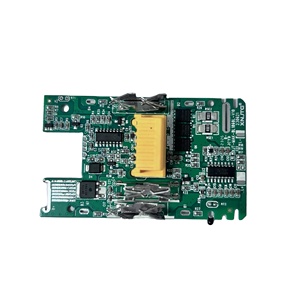
Durable Electric Tool Battery BMS 18V 21V 40V 18650 BL1860 Replacement Module with Smart Protection
Inquire Now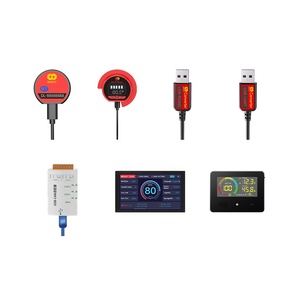
Daly Smart BMS Accessories WiFi BT Module LCD Screen UART 485 Cable CANBUS SOC Indicator for LiFePO4 16S 48V
Inquire Now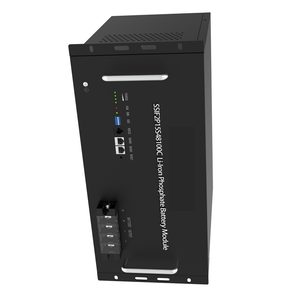
UL9540A Fire-Safety Tested LFP Battery Module Intelligent BMS Solar Panel Power Source MPPT External Wireless Charging
Inquire Now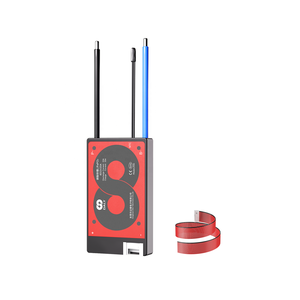
Daly BMS Manufacturer 18650 Battery Pack 3.2V LiFePO4 Cell 4S 12V 20A Lithium Management System Circuit Board
Inquire Now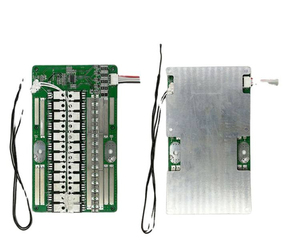
Wholesale Smart Daly BMS with WiFi Active Balance Module for 4S to 16S LiFePO4 & Li-Ion Storage Packs
Inquire Now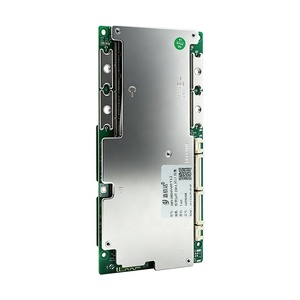
JiaBaiDa Lithium Battery BMS 100A-200A Smart BMS LiFePO4/Li-ion 8S to 24S 24V-60V With BT UART Telemetry
Inquire Now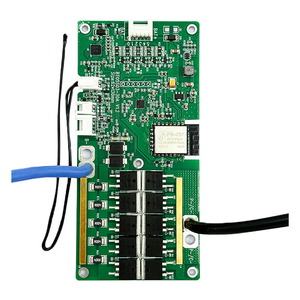
YDE Built-in BT Lithium Battery Management System 3S 4S 12V LFP/NMC Smart BMS 100A-200A UART Telemetry
Inquire Now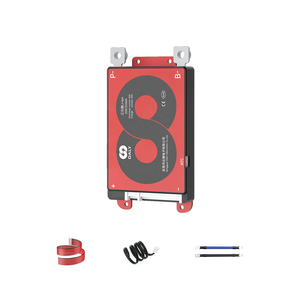
Daly Li-ion BMS For Lithium Battery Pack 18650 Management System 20S 72V 60A High-Voltage Circuit Board
Inquire Now1. Technical Architecture & Engineering Paradigm of Wireless BMS (wBMS)
As European electrification demands higher volumetric energy density, enhanced safety protocols, and lifecycle circularity, traditional wired Battery Management Systems (BMS) are encountering fundamental physical limits. Heavy signal wire harnesses, multi-pin mechanical connectors, and complex daisy-chain routing not only add up to 15% to total battery pack weight, but also represent the primary point of failure under severe mechanical vibration and long-term thermal cycling.
Our Wireless BMS (wBMS) Lithium Battery Modules replace physical data communication wires with a highly secure, ultra-low latency RF mesh network. By embedding an intelligent wireless node unit (WNU) directly onto each lithium module monitoring board, battery data—including individual cell voltage, internal resistance, and multi-point temperature—is transmitted seamlessly to a centralized Wireless Manager Controller (WMC).
RF Coexistence & Immunity
Operating in the 2.4 GHz ISM band with adaptive Frequency Hopping Spread Spectrum (FHSS) and IEEE 802.15.4e protocols, our wBMS guarantees robust data integrity even in electromagnetically noisy port facilities or industrial plants in Antwerp and Ghent.
Sub-Millisecond Synchronization
Time-Synchronized Channel Hopping (TSCH) delivers deterministic latency under 2ms for high-frequency cell telemetry, allowing instant hardware-level overcurrent and overvoltage protection triggering.
ASIL-D & ISO 26262 Integrity
Architected in accordance with functional safety standard ISO 26262 (up to ASIL-D), featuring dual-core redundant MCU hardware, hardware watchdog circuits, and end-to-end AES-128 cryptographic encryption.
Comparative Analysis: Wireless BMS vs. Conventional Wired BMS Systems
| Architecture Metrics | Conventional Wired BMS | Next-Gen Wireless BMS (wBMS) | Impact on Belgian Integrators |
|---|---|---|---|
| Wiring Harness Weight | High (5 kg - 25 kg per pack) | Zero Harness (0 kg) | Improves EV payload & usable volumetric density |
| Failure Points | Connectors, pin corrosion, broken wires | Solid-state wireless nodes | Reduces warranty claims & downtime by >65% |
| High-Voltage Isolation | Requires optical/capacitive isolators | Intrinsic air-gap galvanic isolation | Eliminates risk of ground faults up to 1500V DC |
| Assembly & Serviceability | Manual, labor-intensive wiring work | Modular plug-and-play drop-in | Faster production cycles in local assembly plants |
| EU Battery Passport Logging | Limited flash memory & slow readout | Cloud-linked BLE/WiFi mesh loggers | 100% compliance with EU Regulation 2023/1542 |
2. Localized Application Scenarios Across the Belgian Market
Belgium stands at the geographic and logistical crossroads of Europe, spearheading strict environmental regulations and ambitious green energy transformation initiatives. Our wireless BMS lithium battery modules are specifically engineered to satisfy the rigorous technical requirements of Belgian enterprise clients across Flanders, Wallonia, and the Brussels-Capital Region.
Port Logistics & AGVs (Antwerp & Zeebrugge)
The Port of Antwerp-Bruges requires continuous, heavy-duty 24/7 material handling equipment. Automated Guided Vehicles (AGVs) and electric yard tractors equipped with our high-voltage 72V–800V wireless BMS lithium modules benefit from rapid wireless telemetry, active thermal management during high-current fast charging, and zero harness fatigue caused by constant chassis shock and vibration.
Offshore Wind & Grid Frequency Stabilization
With massive offshore wind developments in the Belgian North Sea, energy grid operators (such as Elia) rely heavily on Battery Energy Storage Systems (BESS) for grid frequency response (FCR/aFRR). Our UL9540A-tested smart BMS modules allow scalable containerized energy storage with real-time active cell balancing to prevent capacity degradation under rapid charge/discharge cycles.
Residential & Commercial Microgrids in Flanders
Following changes to Belgian net-metering schemes and the phase-out of reversing meters in Flanders, residential and industrial site owners are rapidly installing local energy storage. Our 48V (16S) LiFePO4 smart BMS units natively support leading European hybrid inverters (Victron Energy, SMA, Fronius) via integrated CANbus and RS485 communication protocols.
3. Strategic Market Trends Shaping Battery Procurement in Belgium
Navigating the Belgian battery storage market requires alignment with upcoming European legislative mandates and regional decarbonization targets. Belgian OEMs and system integrators must prepare for three critical macro trends currently driving battery module selection:
4. Company Advantages & Global Export Strengths
With over 40 years of combined engineering excellence in power electronics and battery assembly, our manufacturing network provides custom original equipment manufacturers (OEMs) with end-to-end design, prototyping, testing, and volume manufacturing services.
ISO 9001:2015 Certified Facilities
Our state-of-the-art production lines feature 100% Automated Optical Inspection (AOI), high-precision Surface Mount Technology (SMT), and fully automated End-of-Line (EOL) electrical functional testing to guarantee zero-defect shipments to European clients.
Multi-Protocol Firmware Interoperability
Pre-loaded with software drivers compatible with all major European inverters and telematics gateways. Supports customization for CAN 2.0B, CANopen, Modbus RTU/TCP, UART, Bluetooth Mesh, and dedicated web-app control panels.
Seamless Belgium Logistics & DDP Shipping
We provide complete export handling, including UN38.3 transport certification, MSDS, DG sea freight packaging, customs clearance, and direct Delivered Duty Paid (DDP) delivery straight to your warehouse in Antwerp, Brussels, or Liege.
5. Frequently Asked Questions (FAQ) for Belgian Buyers & Engineers
Partner with a Leading Wireless BMS & Lithium Module Exporter
Elevate your energy storage products and electric equipment with enterprise-grade wireless battery management systems engineered for safety, compliance, and long-term durability in Belgium.
Inquire Now