Battery Engineering Blog
Discover expert perspectives, custom battery design guides, charging solutions, and industry updates from USA engineers.
UL-Approved Chargers & Smart Lithium Battery Solutions
Engineered for high discharge, rapid recharging, and rugged industrial deployment across the Greater Paris commercial hub.
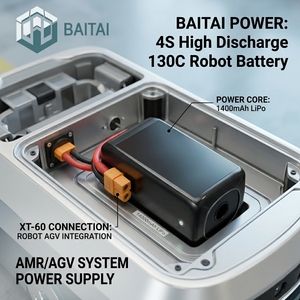
130C 1400mAh 4S High Discharge LiPo Battery Pack
Engineered for service robot AGV and Autonomous Mobile Robot (AMR) high-burst propulsion systems with advanced thermal regulation.
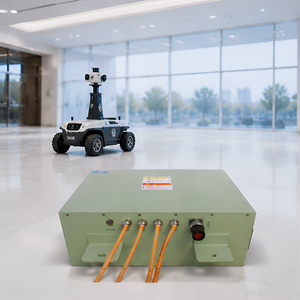
72V 60Ah LiFePO4 AMR Mobile Robot Battery Pack
Heavy-duty autonomous robot battery with Smart BMS integration, high discharge rates, and custom OEM/ODM configurations for Paris fulfillment centers.
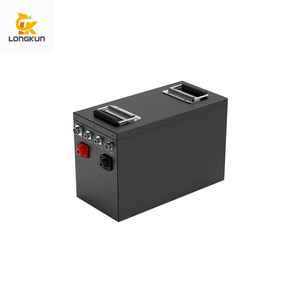
Longkun 24V 30Ah Lithium Ion Robot Battery Pack
Rechargeable Li-ion power unit equipped with multi-protection BMS, designed for continuous intralogistics AGV/AMR platform operations.
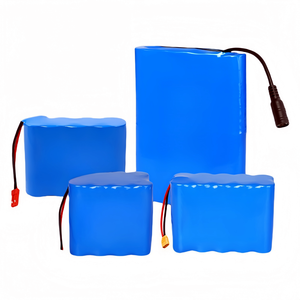
Modular OEM Li-ion Battery Pack 3.7V to 14.8V
Custom 18650 / 32650 / 26650 multi-cell configurations optimized for autonomous floor-cleaning robots and micro-mobility platforms.
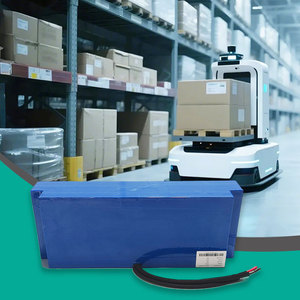
Customized Rechargeable LTO AGV Battery Pack 9Ah
Ultra-fast charging Lithium Titanate Oxide (LTO) battery solution offering 20,000+ cycle life and extreme low-temperature performance.
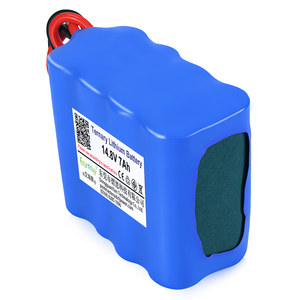
Custom 14.8V 7Ah NMC 4S2P High Capacity Pack
Lightweight, high-energy-density battery unit for autonomous lawn mowers, electric wheelchairs, and precision field robotics.
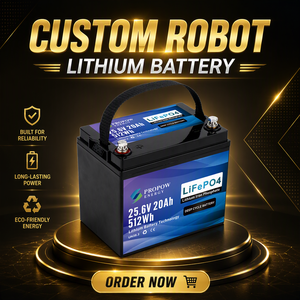
Industrial 12V / 24V 20Ah LiFePO4 Robot Battery
Ruggedized iron phosphate chemistry with intelligent CANbus communication for seamless integration into industrial AGV networks.
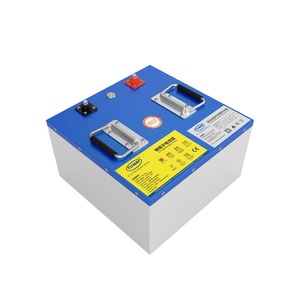
24V LiFePO4 Pack 50Ah-100Ah with BMS (-20°C~60°C)
Wide-temperature battery storage built for 1500+ deep cycles, delivering uninterrupted power to autonomous heavy-load mobile platforms.
Navigating Safety & Compliance: UL & CE Harmonization for Paris Industrial OEMs
As the European Union accelerates its industrial decarbonization under the European Green Deal and the new EU Battery Regulation (EU 2023/1542), engineering procurement teams in the Greater Paris region (Île-de-France) face unprecedented compliance stringency. Securing reliable, highly certified battery charging systems is no longer simply a operational requirement—it is a mandatory legal gateway for commercialization. For original equipment manufacturers (OEMs), systems integrators, and industrial technology exporters based in Paris who ship finished products both within the European Single Market and across North America, sourcing UL-approved battery chargers that align with European CE standards represents a massive strategic advantage.
Historically, manufacturers were forced to maintain dual production tracks: one utilizing CE-marked chargers for European deployment and another incorporating Underwriters Laboratories (UL) listed chargers for export to the United States and Canada. Modern power engineering practices pioneered by high-reliability suppliers have bridged this divide. By specifying UL-certified charging systems compliant with standard UL 62368-1 (Audio/video, information and communication technology equipment) and UL 1310 (Class 2 Power Units), alongside European standard NF EN 60335-2-29, industrial designers eliminate cross-border engineering friction.
Information Gain Insight for Paris Procurement Directors: Integrating dual UL/CE certified chargers provides universal safety isolation, unified thermal management protocols, and direct acceptance by French safety inspection authorities such as APAVE and SOCOTEC, while ensuring zero friction when exporting French-built robotics systems to North American healthcare and logistics operators.
Key Regulatory Frameworks Governing Industrial Battery Charging Systems
To establish full compliance within the Paris municipal ecosystem and wider European supply chains, battery charging architectures must address multiple overlapping safety standards:
UL 62368-1 Safety Standard
Replaced UL 60950-1 and UL 60065. Employs Hazard-Based Safety Engineering (HBSE) principles to safeguard equipment against thermal runaway, electrical shock, and energy hazards in high-capacity smart battery systems.
UL 1310 Class 2 Isolation
Dictates maximum voltage and current outputs for low-voltage applications. Essential for human-accessible medical cart chargers, automated floor scrubbers, and indoor service robotics across Paris facilities.
EU Battery Regulation 2023/1542
Mandates strict state-of-health (SoH) tracking, carbon footprint declarations, digital battery passports, and end-of-life recyclability metrics for all industrial batteries over 2kWh entering France.
Paris Industrial Landscape: Localized Application Scenarios
The Paris metropolitan area is undergoing a rapid urban logistics and industrial transformation. Driven by municipal climate initiatives, the expansion of the Grand Paris Express transit network, and the enforcement of strictly monitored Low Emission Zones (ZFE-m / Zones à Faibles Émissions), traditional combustion-driven industrial equipment is being completely phased out. In its place, electrically driven autonomous systems, smart fleet platforms, and high-frequency charging networks have become essential operational infrastructure.
1. Intralogistics & Autonomous Material Handling in Île-de-France
Regions surrounding Paris—such as Seine-et-Marne, Val-d'Oise, and the logistics corridors near Paris-Charles de Gaulle (CDG) and Orly airports—house over 18 million square meters of warehousing and distribution space. Facilities operating for major e-commerce platforms and retail distributors rely heavily on Autonomous Mobile Robots (AMRs) and Automated Guided Vehicles (AGVs).
These industrial vehicles demand continuous duty cycles (often 24/7/365). Implementing high-discharge LiFePO4 (24V/72V 50Ah-100Ah) and Lithium Titanate Oxide (LTO) battery packs coupled with custom UL-approved chargers featuring automatic contact-charging plates enables "opportunity charging." AMRs auto-dock during short 5-minute operational lulls, taking in high-current top-up charges without operator intervention or thermal degradation.
2. Medical & Healthcare Mobile Infrastructure (AP-HP Ecosystem)
With 39 hospitals under the Assistance Publique – Hôpitaux de Paris (AP-HP) umbrella, Paris represents one of Western Europe's largest medical networks. Mobile diagnostic carts, automated pharmaceutical delivery robots, and surgical lighting auxiliary units require whisper-quiet, zero-emission power modules. Chargers utilized in these sterile settings must meet stringent medical electrical safety standard IEC/EN 60601-1 along with UL safety listing, providing dual isolation barriers, ultra-low leakage current (<100 µA), and fanless convection-cooled aluminum enclosures to prevent airborne contamination.
3. Urban Micro-Mobility, Service Robotics & Automated Commercial Cleaning
Paris leads global urban sustainability with its "15-Minute City" urban planning mandate. Municipal maintenance services, commercial property management firms operating around La Défense, and private sanitation fleets utilize specialized electric equipment: autonomous floor scrubbers, robotic lawnmowers for public parks, and localized LAST-MILE delivery quadricycles. Charging infrastructure deployed in these public spaces must feature IP65/IP67 ingress protection, rugged vibration resistance, and smart thermal throttle algorithms capable of operating in unconditioned outdoor storage depots across seasonal European temperature swings (-20°C to +60°C).
Rungis Market Logistics Hub
High-current, rapid-charging platforms for heavy payload AGVs handling cold-chain agricultural goods with zero localized tailpipe or battery off-gassing emissions.
La Défense Medical Robotics
UL 60601-1 compliant medical chargers integrated into hospital transport AMR carts, featuring fail-safe BMS hardware and ultra-low electro-magnetic interference (EMI).
Grand Paris Mobility Networks
Universal input power supply units (100V–240V AC, 50/60Hz) designed for smooth deployment across French 230V grid infrastructure and overseas export fleets.
Engineering Deep-Dive: Charging Profiles & BMS Handshaking Architecture
Modern battery chargers are no longer simple constant-voltage transformers; they are highly sophisticated power conversion computers that communicate directly with the battery pack's internal Battery Management System (BMS). Selecting the correct charging topology based on cell chemistry is vital for maximizing service life, preventing thermal runaway, and fulfilling warranty guarantees.
Below is a comparative technical analysis of battery chemistries used across industrial applications, detailing their optimal charging profiles, thermal limits, and UL certification benchmarks:
| Battery Chemistry | Nominal Pack Voltage | Recommended Charging Algorithm | Max C-Rate / Discharge | UL / Safety Benchmarks | Primary Paris Industry Application |
|---|---|---|---|---|---|
| Lithium Iron Phosphate (LiFePO4) | 24V, 48V, 72V | CC/CV (Constant Current / Constant Voltage) with auto-float shutoff | 1C–3C Continuous / 1500–3000 Cycles | UL 1642 / UL 2580 | Heavy Warehouse AGVs, Autonomous Scrubbers, Solar Storage |
| Lithium Nickel Manganese Cobalt (NMC) | 14.8V, 36V, 52V | Multi-stage CC/CV with precise cell-balancing communication | 5C Burst / 800–1200 Cycles | UL 62368-1 / CE | Service Robots, Electric Wheelchairs, Commercial Lawnmowers |
| Lithium Titanate Oxide (LTO) | 24V (Custom Packs) | High-Current Fast Pulse CC/CV Charging | 10C–20C / 20,000+ Cycles | UL 1973 Certified | 24/7 Rapid Opportunity-Charge AMRs, Cold-Storage Logistics |
| Lithium Polymer (LiPo) | 14.8V (4S) | High-Precision CC/CV with individual cell voltage sensing | 130C Burst Discharge / High Power | UL 2054 Standard | High-Speed Actuation Robotics, Drone Inspection Platforms |
BMS Integration & Communication Protocols (CANbus, SMBus, RS485)
Our UL-approved smart battery chargers utilize digital communication protocols to establish real-time handshaking with the battery pack before power transmission commences. Through CANbus 2.0B, SMBus, or RS485, the charger queries the battery BMS for critical health metrics:
- Real-Time Cell Voltage & Temperature Monitoring: If ambient temperatures fall below 0°C or exceed +45°C, the charger automatically throttles back current or initiates integrated heating elements within the battery pack before initiating high-rate charging.
- Dynamic Over-Current & Over-Voltage Protection: Secondary hardware control loops cut power within microseconds in the event of a sensed short circuit, preventing thermal runaway hazards in crowded commercial facilities.
- Charge State Synchronization: Prevents overcharging individual series cells by dynamically rebalancing voltages during the Constant Voltage (CV) phase, extending total pack lifespan by up to 40%.
Trends Shaping the French & European Battery Ecosystem (2025–2030)
As the European battery supply chain shifts toward localized production—highlighted by the construction of European "Gigafactories" in Northern France (the Dunkerque Battery Valley)—purchasing strategies in Paris are prioritizing sustainability, digitalization, and local serviceability. To maintain a competitive edge, procurement teams must align with several macro trends:
1. Digital Battery Passports & Traceability
Under EU law, industrial batteries must maintain a secure digital record detailing material origin, recycled content percentages, and full cycle-life history. Smart chargers transmit charging data back to central cloud platforms to populate these passports automatically.
2. High-Efficiency Gallium Nitride (GaN) Semiconductors
Next-generation UL-approved chargers incorporate GaN power switches, achieving power conversion efficiencies exceeding 96%. This dramatically reduces heat dissipation, enabling smaller, lighter, and fully sealed IP67 charger footprints.
3. Universal Grid Adaptability & Plug Standardization
Parisian manufacturers require power supplies supporting universal AC inputs (90V–264V AC, 47–63Hz) paired with interchangeable mains cables (CEE 7/7 Type E/F plugs for France alongside NEMA options for North America).
Frequently Asked Questions: Sourcing UL Battery Chargers in Paris
Below are technical responses to common questions raised by French procurement managers, industrial design engineers, and logistics fleet operators regarding charger certification, voltage compatibility, and export compliance.
Why should a French OEM buy UL-approved chargers instead of standard CE-only units?
While CE self-declaration is legally required inside the EU, UL listing signifies third-party safety verification by an OSHA-recognized Nationally Recognized Testing Laboratory (NRTL). For Paris OEMs exporting robotics or industrial machinery to North America, UL approval is non-negotiable for passing local US electrical code inspections (NFPA 79 / NEC). Dual UL/CE approval allows you to utilize a single charger SKU globally.
Are your UL chargers fully compatible with the French 230V 50Hz electrical grid?
Yes. All offered battery chargers feature wide-range universal AC input capabilities (100V to 240V AC, 50/60Hz) and can be supplied with standardized French/European CEE 7/7 grounding plugs or industrial IEC C13/C19 couplers, ensuring seamless installation across Île-de-France facilities.
What is the operational difference between UL 1310 Class 2 and UL 62368-1 chargers?
UL 1310 Class 2 power units are restricted to an output power limit of 100VA (or 100W depending on power factor), making them ideal for safe, low-voltage human contact applications. UL 62368-1 covers higher-capacity industrial chargers (up to several kilowatts) required for heavy-duty AGVs, rapid-charge AMRs, and high-voltage energy storage systems.
Can custom smart BMS communication protocols be integrated into stock charger units?
Absolutely. Our engineering team customizes charging algorithms, firmware parameters, and physical communication interfaces (CANbus, SMBus, Modbus) to match your custom lithium cell configurations (LiFePO4, NMC, LTO), ensuring optimal charging efficiency and protecting long-term cell health.
How do these charging systems handle low-temperature conditions in French warehouse hubs?
Our wide-temperature industrial battery solutions (operating down to -20°C) feature integrated BMS thermal sensors. If low temperatures are detected, smart chargers dynamically switch to pre-heating or low-current pulse modes to prevent lithium plating, maintaining safe charging dynamics under cold-storage conditions.
What is the typical lead time for custom battery pack and UL charger export orders to Paris?
Standard catalog stock items ship rapidly. Custom OEM/ODM battery packs and configured chargers undergo rigorous engineering design, sample prototyping, and full End-of-Line (EOL) functional testing before air/sea dispatch to Paris logistics hubs, backed by end-to-end customs support.
Why Partner With Us: 40+ Years of Manufacturing Leadership
For over four decades, our manufacturing partners have stood at the forefront of custom smart battery pack design, charger development, and industrial power system assembly. Operating out of state-of-the-art facilities equipped with advanced automated spot-welding, circuit isolation testing, and environmental burn-in chambers, we deliver single-source power solutions to leading OEMs worldwide.
ISO 9001 Certified Quality Control
Every battery pack and charger undergoes 100% End-of-Line (EOL) electrical, thermal, and mechanical safety testing. Full lot traceability ensures strict quality compliance for medical and defense applications.
Vertically Integrated Engineering
From initial concept modeling, PCB layout, and custom enclosure toolmaking to BMS firmware coding and agency certification support, we manage the complete product lifecycle under one roof.
Global Export & Technical Support
We provide comprehensive export documentation, UN 38.3 transport compliance certification for lithium batteries, and dedicated application engineering support for seamless integration into European systems.
Accelerate Your Project with Certified Power Systems
Looking for a custom UL-approved charger or high-capacity lithium battery pack tailored for your Paris robotics or medical application? Connect directly with our engineering team today.
Get Catalog