Battery Engineering Blog
Discover expert perspectives, custom battery design guides, charging solutions, and industry updates from USA engineers.
Optimizing Telecom Power Infrastructure for Thailand's Tropical Climate
A comprehensive technical evaluation of next-generation lithium battery chargers, smart BMS integration, and localized power management strategies for Thailand's rapidly expanding 5G network.
Thailand Telecom Grid Expansion & Environmental Challenges
As Thailand advances its nationwide Thailand 4.0 initiative and expands high-density 5G coverage across key economic zones—including Bangkok Metropolitan, the Eastern Economic Corridor (EEC), and rural provinces such as Chiang Mai and Phuket—telecommunications operators (such as AIS, True-DTAC, and National Telecom CAT/TOT) face severe environmental and electrical grid obstacles. The tropical climate in Southeast Asia delivers average ambient operating temperatures exceeding 35°C–40°C, relative humidity levels hovering above 85%, and extreme seasonal monsoon conditions.
Conventional lead-acid telecom chargers and legacy battery backup systems suffer rapid electrolyte degradation, severe thermal runaway risks, and high failure rates when subjected to frequent power grid brownouts and high ambient heat. Transitioning to advanced Lithium Iron Phosphate (LiFePO4) and high-density Lithium-ion battery packs, supported by intelligent, micro-processor controlled smart battery chargers, has become an imperative requirement for modern telecom base transceiver stations (BTS), fiber optic nodes, and mobile autonomous robotics systems.
| Technical Parameter | Legacy Lead-Acid Chargers | Cell-Con Smart Telecom Battery Chargers | Operational Gain in Thailand Market |
|---|---|---|---|
| Charging Efficiency | 75% - 82% Efficiency | 94% - 97.5% Ultra-High Efficiency | Reduces site heat load & grid power consumption by up to 22%. |
| Thermal Range | 0°C to +35°C (Rapid thermal degradation) | -20°C to +60°C Active Compensation | Prevents thermal runaway during Thailand monsoon & summer peak heat. |
| BMS Communication | Analog / No Communication | CANbus, RS485, SNMP, Modbus Protocols | Enables real-time remote telemetry & predictive maintenance across telecom towers. |
| Cycle Life Expectancy | 500 - 800 Cycles @ 50% DOD | 3,500 - 6,000+ Deep Cycles | Lowers Total Cost of Ownership (TCO) by 65% over a 10-year period. |
High-Performance Smart Telecom Battery Packs & Charger Systems
Explore our export-grade, custom-engineered battery packs and smart chargers deployed across Thailand's telecommunication networks, automated logistics hubs, and autonomous industrial platforms.
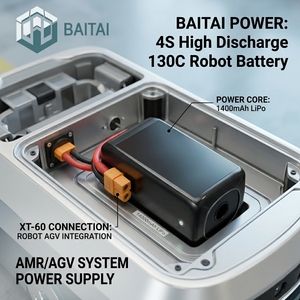
130C 1400mAh 4S High Discharge LiPo Battery for Service Robot AGV and Autonomous Mobile Robot Power System
Engineered for ultra-fast transient response and high peak current delivery in mobile telecom inspection robotics and emergency deployment AGVs.
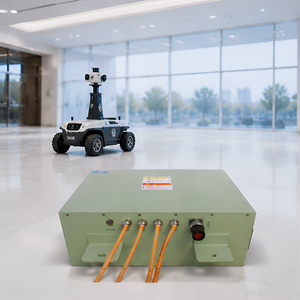
72V 60Ah LiFePO4 AMR Mobile Robot Battery Pack for Autonomous Robot System High Discharge Smart BMS Custom OEM ODM Wholesale
Heavy-duty industrial telecommunication backup and mobile robotics battery system featuring integrated Smart BMS with remote CANbus diagnostics.
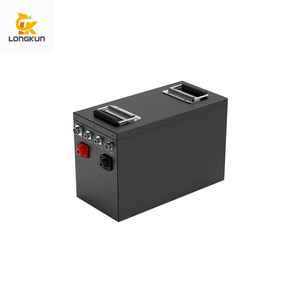
Longkun 24V 30Ah Lithium Ion Robot Battery Pack with BMS Rechargeable Li-ion Battery for AGV AMR Mobile Robots
Compact 24V smart power system optimized for small telecom switching hubs, remote monitoring nodes, and autonomous security patrol vehicles.
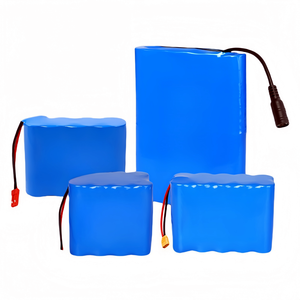
OEM Li-ion Battery Pack 3.7V 7.4V 11.1V 14.8V 18650 32650 26650 Lithium Ion Battery Pack for Autonomous Floor-Cleaning AMR Robot
Modular, multi-voltage OEM battery assemblies designed for telecom sensors, handheld testing equipment, and localized outdoor gateway nodes.
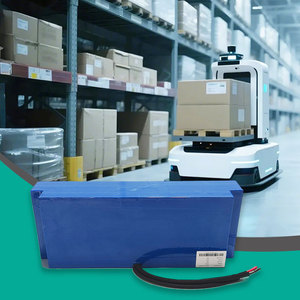
Customized Rechargeable LTO Agv Battery Pack 9Ah Autonomous Mobile Robot Agv Battery
Lithium Titanate (LTO) ultra-fast charging battery pack capable of 10C-20C rapid charging cycles in extreme tropical temperatures up to 65°C.
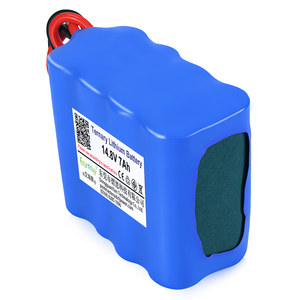
Custom Lithium Battery 14.8V 7Ah NMC 4S2P High Capacity for Autonomous Mobile Robot Electric Wheelchair Lawn Mower
High-density 14.8V NMC battery pack with ultra-compact form factor for remote telecom micro-transceivers and outdoor mobile equipment.
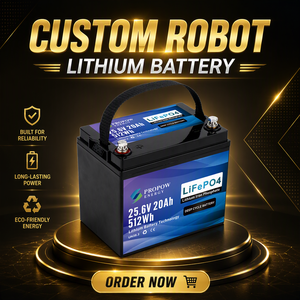
Custom Robot Lithium Battery 12V 24V 20Ah Lithium Battery for Robot, Rechargeable LiFePO4 Battery Pack for AGV AMR Mobile Robots
Versatile dual-voltage 12V/24V telecom-grade LiFePO4 battery pack equipped with intelligent balancing circuits for uncompromised reliability.
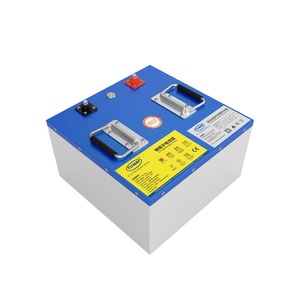
24V LiFePO4 Battery Pack 50Ah 60Ah 80Ah 100Ah with BMS 1500 Cycles -20C~60C for AGV AMR Robot Mobile Platform
High-capacity 24V modular telecom utility power pack designed for wide temperature operations (-20°C to +60°C) with 1500+ deep cycles.
Information Gain: Multi-Stage Adaptive Charging Algorithms for Telecom Reliability
Cell-Con telecom battery chargers utilize advanced digital Signal Processor (DSP) architecture to execute a proprietary 4-stage charging protocol: Pre-Charge Qualification → Constant Current (CC) Fast Charge → Constant Voltage (CV) Absorption → Intelligent Pulse Maintenance. By actively monitoring individual cell voltages through CANbus telemetry and adjusting thermal coefficients in real time, our smart chargers eliminate overcharging, reduce battery heating by up to 35%, and extend overall battery lifecycle across Thailand’s challenging climate environments.
Localized Telecom Application Scenarios Across Thailand
Our specialized charger and battery systems are tailor-built to power critical infrastructure across Thailand's urban industrial hubs and remote regional terrains.
1. 5G Rural Base Stations (Chiang Mai & Northern Mountains)
Off-grid and weak-grid telecom towers operating in hilly terrain rely on hybrid solar/lithium battery installations. Cell-Con smart chargers automatically accept wide AC input ranges (90V–264V AC) and regulate fluctuating power supplies from local utilities to guarantee continuous 24/7 connectivity.
2. Eastern Economic Corridor (EEC) Smart Factories & AMRs
Industrial automation in Chonburi and Rayong relies heavily on Autonomous Mobile Robots (AMRs) and AGVs connected via dedicated 5G private networks. Our 72V and 24V fast-charging LiFePO4 chargers provide rapid opportunity charging, keeping AGV fleets operational during 24/7 manufacturing shifts.
3. Flood-Prone Metro Underground Nodes (Bangkok Metropolis)
Bangkok's subterranean fiber switching rooms and roadside cabinets experience extreme humidity and risk of monsoon inundation. Cell-Con provides IP67 sealed, conformal-coated chargers and IP65 stainless steel battery packs built to withstand high moisture condensation without short-circuiting.
4. Island Microgrid & Coastal Microwave Backhaul
Coastal and island installations (e.g., Koh Samui, Koh Chang) suffer from highly corrosive salt spray. Our chargers feature marine-grade aluminum heat sinks, anti-salt spray corrosion treatments, and isolated DC outputs to protect sensitive microwave links.
Thailand Telecom Power Market Trends & Technology Roadmap
Key technological shifts driving procurement decisions for telecommunication operators, data centers, and power utilities in Thailand over the next decade.
Shift from Lead-Acid to Smart LiFePO4 Chemistry
Thai telecommunication tower companies are rapidly phasing out Valve-Regulated Lead-Acid (VRLA) batteries in favor of Smart Lithium Iron Phosphate (LiFePO4). LiFePO4 offers 4x the energy density, 5x the lifespan, and zero thermal runaway risk up to 60°C, drastically cutting maintenance callouts in remote provinces.
Integration of Cloud SNMP & AI-Driven Battery Analytics
Modern telecom operations centers require real-time visibility over thousands of decentralized battery sites. Smart chargers equipped with IoT connectivity, SNMPv3, and RS485 Modbus report cell state-of-health (SOH), temperature variations, and remaining runtime directly to central network dashboards.
Solar-Telecom Hybrid Power Microgrids
Under Thailand's Alternative Energy Development Plan (AEDP), base station deployment mandates integration with solar PV systems. Cell-Con chargers feature intelligent dual AC/DC solar input switching to prioritize renewable solar power during daylight hours, reducing grid draw.
Frequently Asked Questions for Thailand Telecom Engineers & Importers
Essential guidance on regulatory standards, customs procedures, thermal management, and OEM customization when sourcing telecom battery chargers for Thailand.
Q1: What safety certifications are required for importing telecom battery chargers into Thailand?
Telecom battery chargers and lithium power supplies exported to Thailand must comply with international safety standards such as UL 60950-1 / UL 62368-1, IEC 62133 (for lithium cells), CE, and UN38.3 for lithium battery transport. Additionally, components used in public network infrastructure may require alignment with TISI (Thai Industrial Standards Institute) standards and NBTC regulatory guidelines. Cell-Con provides full compliance documentation and test reports for smooth customs clearance.
Q2: How do Cell-Con battery chargers handle high ambient heat in Thailand base stations?
Cell-Con chargers feature active temperature sensing and dynamic thermal derating algorithms. Built with high-thermal-conductivity aluminum enclosures, active cooling fans with PWM control, and conformal-coated PCBs, our chargers operate continuously up to 60°C without risk of component thermal breakdown or voltage drift.
Q3: Can Cell-Con design custom battery chargers tailored to existing telecom racks?
Yes. As a primary manufacturer with 40+ years of engineering experience, Cell-Con offers full OEM/ODM customization. We can engineer custom charger form factors—including 19-inch 1U/2U rack-mount chassis, wall-mount outdoor cabinet enclosures, custom pinout connectors, and specialized communication protocols (CANbus, SMBus, RS485).
Q4: What is the typical lead time and delivery framework for shipping chargers to Thailand ports?
Standard stock chargers and evaluation prototypes ship within 1–2 weeks. Custom OEM charger assemblies typically require 4–6 weeks for design, prototyping, and factory testing. Freight shipments can be routed via air freight to Suvarnabhumi Airport (BKK) or sea freight to Laem Chabang Port in Chonburi.
Q5: How does Smart BMS integration prevent lithium battery damage during grid brownouts?
During electrical grid dropouts (common during thunderstorm seasons in regional Thailand), the charger seamlessly transitions the load to the battery pack. When grid power is restored, the charger executes a soft-start constant current cycle to prevent inrush current surges from damaging the lithium cell matrices.
Q6: Do you support Thailand Board of Investment (BOI) privileged enterprise customs documentation?
Yes. We regularly supply detailed commercial invoices, Certificates of Origin (Form E or General CO), HS tariff classification codes, and packing lists to assist BOI-promoted telecommunication and tech enterprises in obtaining duty exemptions upon import into Thailand.
Why Global OEMs & Telecom Operators Partner with Cell-Con
Established in 1983, Cell-Con, Inc. brings over four decades of precision battery pack and smart charger engineering expertise to original equipment manufacturers across the globe.
ISO 9001 Certified Quality Control
Every battery charger and custom battery pack undergoes 100% automated electrical testing, thermal burn-in, and safety validation prior to export dispatch.
In-House BMS & Firmware Engineering
Our electrical engineering team designs proprietary Smart BMS boards and charging firmware to meet exact customer voltage profiles, communication protocols, and safety logic.
Single-Source OEM Manufacturing
From initial circuit topology design and prototype assembly to high-volume manufacturing and global logistics support, we provide a complete turnkey power solution.
Comprehensive Regulatory Support
We assist international partners with UL listings, CB scheme certifications, UN38.3 transport testing, and local Thai customs compliance documentation.
Ready to Engineer Your Custom Telecom Power Solution?
Submit your electrical requirements, battery chemistry preferences, and mechanical constraints to consult directly with Cell-Con’s application engineering team.
Contact Us