Battery Engineering Blog
Discover expert perspectives, custom battery design guides, charging solutions, and industry updates from USA engineers.
High-Performance Smart Batteries & Charging Systems
Engineered for high-discharge stability, intelligent BMS monitoring, and continuous duty in telecom nodes, mobile robotics, and automated power infrastructure in Osaka.
Executive Whitepaper: Telecom Battery Charger Architecture & Export Infrastructure for Osaka
As Osaka accelerates its transformation into a next-generation smart megacity—driven by the expansion of 5G Standalone (SA) mobile networks, edge computing nodes across Umeda and Namba, and automated logistics infrastructure surrounding the Port of Osaka—the demand for uncompromising power continuity and intelligent charger systems has reached a critical juncture. Telecom infrastructure suppliers and engineering exporters supplying the Kansai market face unique electrical, thermal, and regulatory hurdles that standard off-the-shelf power equipment cannot satisfy.
In modern telecommunications, the battery charger is no longer a passive power conversion unit; it serves as the critical controller governing energy reliability, battery degradation control, thermal management, and dynamic grid interactions. Osaka’s coastal environment presents rapid humidity shifts, high summer ambient temperatures, and strict grid-interconnect resilience mandates enforced by local utility frameworks like Kansai Electric Power (KEPCO). To maintain 99.999% ("five nines") network uptime, global original equipment manufacturers (OEMs) and telecom system integrators require battery chargers engineered with advanced power factor correction (PFC > 0.99), intelligent multi-stage charging profiles (CC/CV, dynamic float, pulse equalizing), and seamless telemetry integration via CANbus, MODBUS RTU, or SNMP protocol bridges.
Technical evaluation teams and procurement officers in Osaka prioritize actionable engineering data over superficial marketing claims. When sourcing telecom battery chargers from global exporters, key intent clusters center on:
- Thermal Stability in Humid Coastal Conditions: Active power derating prevention and sealed IP65/IP67 enclosure heat dissipation engineered for Osaka Bay's summer humidity spikes.
- Multi-Chemistry Flexibility: Seamless adaptation between classic Lead-Acid/AGM float profiles and high-density Lithium Iron Phosphate (LiFePO4), Lithium Titanate (LTO), and NMC custom battery packs.
- High-Frequency Switching Efficiency: Resonant LLC topologies delivering over 96% energy conversion efficiency, mitigating internal cabinet heat generation and lowering operational carbon footprints.
- Disaster Resilient Black-Start Capabilities: Rapid recovery charging algorithms engineered to replenish 80% battery capacity within 2 hours following typhoon-induced grid disconnections or seismic outages.
Localized Development Trends & Infrastructure Drivers in Osaka
The Kansai region, anchored by Osaka, is undergoing one of East Asia’s most intensive technological upgrades. Understanding localized market forces is essential for international suppliers targeting Japanese telecommunications integrators and industrial procurement networks.
5G Small Cell Densification
Dense urban centers like Umeda, Namba, and Shinsaibashi rely on thousands of compact micro-base stations mounted on street poles and building facades, demanding miniaturized, high-efficiency 24V and 48V battery chargers with zero acoustic noise.
Yumeshima Smart City & Expo Grid
The infrastructure development surrounding Osaka’s Yumeshima island emphasizes microgrid integration, renewable solar storage buffering, and ultra-reliable battery chargers capable of zero-delay failover switching.
Port of Osaka Logistics Automation
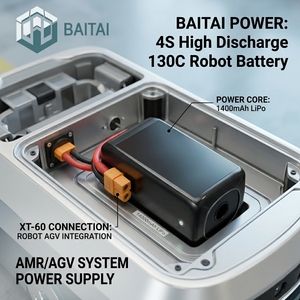
Automated logistics centers in Nanko and Sakishima deploy thousands of AGVs and AMRs. Fast-charging LTO and high-rate LiFePO4 chargers with automated contact plates are vital to maintaining continuous 24/7 port operations.
Technical Engineering: Battery Charging Profiles & BMS Interfacing
Modern telecom battery chargers designed for exported deployment into Japanese networks must bridge raw utility power and delicate lithium electrochemical cells. Below is an engineering overview of our proprietary charging methodology and protection parameters.
To maximize cycle life and operational safety, chargers exported to Osaka support customizable digital control loops programmed with chemistry-specific multi-stage charge curves:
- Constant Current (CC) Phase: Delivers full rated power (up to 100A dependent on system scale) while continuously monitoring individual cell voltage via CANbus telemetry.
- Constant Voltage (CV) / Absorption Phase: Holds precisely regulated voltage thresholds (e.g., 54.7V for 16S LiFePO4 packs) while current naturally tapers to prevent lithium plating.
- Smart Dynamic Float / Standby Mode: For standby telecom UPS cabinets, float voltage is micro-adjusted according to real-time ambient temperature sensors, preventing thermal runaway during intense summer heat.
- Pulse Equalization Phase: Periodic micro-pulse conditioning rebalances cell capacities in large-format series arrays without excessive electrolyte boiling or casing strain.
Our intelligent chargers interface directly with internal or third-party Battery Management Systems (BMS). Using isolated CAN 2.0B interfaces running proprietary or standardized open protocols, the charger actively monitors cell state-of-charge (SoC), state-of-health (SoH), individual cell temperatures, and fault registers. If a cell temperature exceeds 55°C, the charger dynamically scales back current before hardware thermal cutoffs trigger, maintaining partial operational redundancy rather than shutting down the node entirely.
Localized Application Scenarios across Osaka’s Industrial Sectors
Cell-Con power products and charger configurations are tailor-made to excel across Osaka’s diverse telecom, industrial, and municipal micro-environments:
Scenario A: Rooftop Telecom Towers in Central Osaka
Installed on high-rise commercial structures in Chuo-ku and Kita-ku. Chargers operate quietly with passive or low-RPM fan cooling, resisting high urban heat island temperatures while supplying uninterrupted power to 48V telecom switchgear.
Scenario B: AGV & AMR Charging Hubs in Port Logistics
Integrated into floor-mounted automated docking stations at Osaka Bay fulfillment facilities. Utilizing fast-charging LTO and 24V LiFePO4 packs, these chargers deliver ultra-fast opportunity charges during brief 5-minute robot idle intervals.
Scenario C: Disaster Emergency Telecom Vehicles
Ruggedized, shock-isolated charger assemblies mounted within mobile communications trucks deployed by emergency services during Kansai regional typhoon or earthquake recovery efforts.
Why Osaka Procurement Teams Partner with Cell-Con, Inc.
With a foundation established in 1983 in Bedford, Pennsylvania, USA, Cell-Con, Inc. has spent over 40 years establishing authority as a global single-source partner for custom smart battery packs, UL-approved chargers, and power conversion electronics.
ISO 9001 Certified Manufacturing
Every battery system and charger undergoes 100% end-of-line functional testing, burn-in verification, and full batch traceability in compliance with international aerospace and medical quality standards.
Full Single-Source OEM Capability
From custom enclosure tooling, PCB layout, and firmware customization to safety certifications (UL, IEC, CE, UN 38.3), Cell-Con manages the complete lifecycle under one roof.
Extreme Thermal & Cycle Resilience
Our packs and chargers operate flawlessly across an extended temperature envelope of -20°C to +60°C, guaranteeing operational continuity despite freezing winters or scorching Japanese summer heatwaves.
Frequently Asked Questions for Osaka Telecom & Hardware Procurement
Ready to Engineer Your Custom Telecom Power Solution for Osaka?
Connect with Cell-Con's application engineering team today to review your technical requirements, request custom charger quotes, or discuss export logistics for the Kansai region.
Contact Us