Battery Engineering Blog
Discover expert perspectives, custom battery design guides, charging solutions, and industry updates from USA engineers.
High-Performance Battery Systems & Compatible Charging Platforms
Engineered for industrial automation, heavy-duty AGVs, cleanroom AMRs, and service robotics deployed across Nagoya’s manufacturing sector. Explore our export-grade lithium power units below.
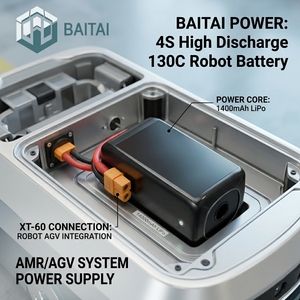
130C 1400mAh 4S High Discharge LiPo Battery for Service Robot AGV and Autonomous Mobile Robot Power System
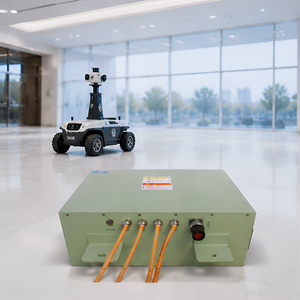
72V 60Ah LiFePO4 AMR Mobile Robot Battery Pack for Autonomous Robot System High Discharge Smart BMS Custom OEM ODM Wholesale
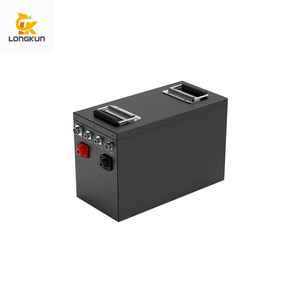
Longkun 24V 30Ah Lithium Ion Robot Battery Pack with BMS Rechargeable Li-ion Battery for AGV AMR Mobile Robots
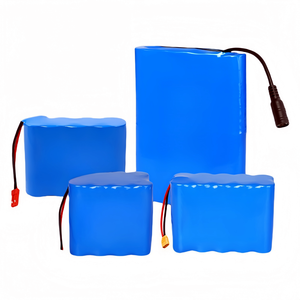
OEM Li-ion Battery Pack 3.7V 7.4V 11.1V 14.8V 18650 32650 26650 Lithium Ion Battery Pack for Autonomous Floor-Cleaning AMR Robot
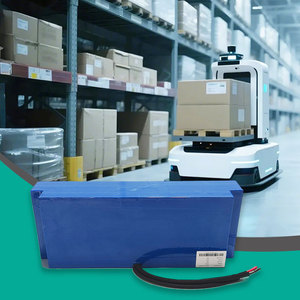
Customized Rechargeable LTO Agv Battery Pack 9Ah Autonomous Mobile Robot Agv Battery
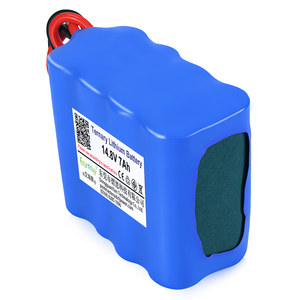
Custom Lithium Battery 14.8V 7Ah NMC 4S2P High Capacity for Autonomous Mobile Robot Electric Wheelchair Lawn Mower
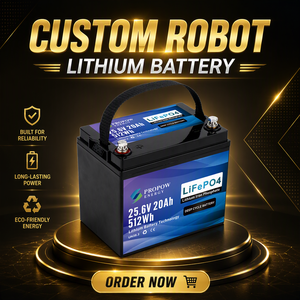
Custom Robot Lithium Battery 12V 24V 20Ah Lithium Battery for Robot, Rechargeable LiFePO4 Battery Pack for AGV AMR Mobile Robots
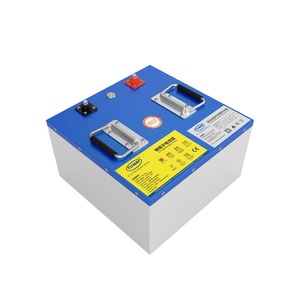
24V LiFePO4 Battery Pack 50Ah 60Ah 80Ah 100Ah with BMS 1500 Cycles -20C~60C for AGV AMR Robot Mobile Platform
Architectural Overview: Multi-Channel Charging Systems in Modern Industrial Operations
As Nagoya solidifies its position as Japan’s primary industrial automation titan—spanning Greater Aichi’s automotive manufacturing corridors, aerospace hubs, and high-density port logistics—the operational efficiency of Autonomous Mobile Robots (AMRs), Automated Guided Vehicles (AGVs), and smart warehouse fleets relies directly on power infrastructure scalability.
Conventional single-port battery chargers impose severe bottlenecks on automated facilities. When fleets of 50 to 500 mobile units require simultaneous turnaround, traditional charging topology results in floor space inflation, complex cable management, uneven grid loading, and ballooning capital expenditure (CAPEX). Multi-channel lithium battery chargers resolve these systemic vulnerabilities by combining centralized power conversion, isolated multi-bank control circuits, and intelligent dynamic load distribution into a compact modular chassis.
1. Isolated Multi-Bank Power Topology & Independent Channel Control
Unlike legacy parallel charging systems where cross-current leaks and voltage imbalances can degrade battery chemistry, state-of-the-art multi-channel charging platforms feature galvanic isolation across each output port. Each channel functions as an autonomous charging unit governed by its dedicated microprocessor. Whether charging a 24V LiFePO4 AMR pack on Port 1, a 14.8V NMC assembly on Port 2, or a high-rate 9Ah LTO module on Port 3, the charger dynamically adapts charging profiles (CC/CV/TC) without interference.
2. Smart BMS Handshake Protocols & Closed-Loop Telemetry
Modern industrial lithium battery packs are equipped with sophisticated Battery Management Systems (BMS). Our multi-channel chargers seamlessly integrate with standard industrial communication protocols including CAN bus (CANopen / J1939), RS485, and SMBus. During a charge cycle, the system monitors real-time parameters:
- Individual Cell Voltages: Active balancing algorithms prevent overcharging of individual series-connected cells.
- Thermal Gradient Monitoring: Real-time temperature throttling protects pack longevity across ambient fluctuations from -20°C to +60°C.
- State-of-Health (SoH) Throttling: Advanced cycle-counting algorithms automatically reduce peak current for aged packs, preventing thermal runaway.
Need Custom Charging Infrastructure for Your Fleet in Nagoya?
Our senior engineering team designs bespoke multi-port charging cabinets and custom BMS communication bridges tailored to Japanese industrial requirements.
Localized Application Scenarios across Nagoya’s Industrial Belt
Nagoya is the beating heart of Japan's manufacturing economy (Monozukuri). The unique demands of Aichi’s industrial sectors mandate specialized power solutions that strictly adhere to localized operational guidelines and physical space constraints.
Automotive Assembly Lines (Toyota City & Kariya)
Heavy-duty AGVs transporting powertrain assemblies require continuous 24/7 operation. Multi-channel chargers with fast-charging LTO (Lithium Titanate) capability deliver high-rate energy replenishment during 3-minute automated docking stops, keeping assembly lines fully synchronized.
Port of Nagoya Logistics & Cold Storage Facilities
Logistics centers around Nagoya Port experience low-temperature challenges in refrigerated warehouses (-20°C). Our custom 24V and 72V LiFePO4 battery chargers utilize pulse-heating pre-charge routines to prevent lithium plating in sub-zero environments.
Semiconductor & Electronics Cleanrooms
Compact autonomous floor-cleaning AMRs and wafer-transport robots operating in cleanroom facilities demand zero particulate contamination. Fully sealed IP65 multi-channel charging stations eliminate fan cooling dust dispersal.
Localized Market Trends & Regulatory Compliance in Nagoya
Deploying industrial electrical equipment in Japan requires strict adherence to national electrical safety standards and environmental regulations. As a dedicated exporter serving Nagoya, our product development process aligns with Japanese industrial guidelines:
PSE Mark & DENAN Law Compliance
Power supplies and chargers exported to Japan must comply with the Electrical Appliance and Material Safety Law (DENAN). Our chargers undergo rigorous testing for Circle PSE and Diamond PSE certification, verifying electrical insulation, creepage distances, and flame-retardant enclosures.
JIS C 8712 / JIS C 8714 Standards
Lithium battery packs integrated into our charging ecosystem conform to Japanese Industrial Standards (JIS) for portable sealed secondary cells, ensuring robust protection against internal short circuits, drop impacts, and overcharge stresses.
Aichi Prefecture Green Transformation (GX)
With local manufacturers pushing toward zero-carbon factories, our chargers incorporate Silicon Carbide (SiC) MOSFET power electronics. This yields an industry-leading conversion efficiency of 96.5%, drastically reducing heat generation and power plant strain during peak charging periods.
Technical Comparison: Multi-Channel vs. Traditional Single-Channel Charging
Evaluating power infrastructure for high-density AMR/AGV operations in Nagoya requires a comprehensive analysis of spatial footprint, efficiency, and system telemetry capabilities.
| Performance Metrics | Multi-Channel Smart Station | Legacy Single-Port Charger | Operational Impact in Nagoya Facilities |
|---|---|---|---|
| Spatial Efficiency (Footprint) | High (Up to 8 ports in 3U rack) | Low (Requires 8 separate wall outlets) | Saves up to 65% valuable factory floor space. |
| Power Conversion Efficiency | 95.5% – 96.5% (SiC Architecture) | 85% – 89% (Standard Silicon) | Significantly reduces thermal load and utility expenses. |
| BMS Communication | Isolated CAN bus, Modbus, EtherNet/IP | Analog signal or basic voltage sensing | Enables real-time fleet analytics for MES integration. |
| Chemistry Compatibility | Multi-Chemistry (LiFePO4, NMC, LTO, LiPo) | Single Fixed Chemistry | Allows unified charging for heterogeneous robot fleets. |
| Maintenance & Downtime | Hot-swappable modular channels | Total unit replacement required | Ensures continuous 24/7 assembly line uptime. |
Why Systems Integrators in Nagoya Partner with Us
Backed by over 40 years of battery manufacturing and power systems engineering excellence, we offer complete custom design, testing, and direct export capabilities for global OEM clients.
Single-Source OEM Partner
From initial cell screening, pack enclosure design, and custom BMS software integration to matching multi-channel chargers—we handle the entire power lifecycle under one certified umbrella.
ISO 9001 Quality Control
Every battery unit and multi-channel charger undergoes automated 100% full-load burn-in testing, thermal imaging checks, and insulation resistance validation prior to export packaging.
Direct Export Logistics to Nagoya Port
We provide comprehensive export documentation including UN38.3 transport safety reports, MSDS certifications, and streamlined DDP/CIF shipping directly to Nagoya Port and Chubu Centrair International Airport.
Frequently Asked Questions for Nagoya Engineering & Procurement Teams
Key technical inquiries addressed by our power engineering division regarding local grid compliance, customization options, and export logistics.
Yes. Our chargers support universal AC input ranges (90V – 264V AC, 50/60Hz), making them fully compatible with Japan’s 100V single-phase commercial line and 200V 3-phase industrial power infrastructure commonly found across Nagoya’s manufacturing plants. Active Power Factor Correction (PFC > 0.99) is built-in to prevent harmonic distortion on factory grids.
Absolutely. Each output channel features independent microprocessor control and isolated DC-DC converters. You can simultaneously charge a 72V LiFePO4 AMR battery pack on Channel 1, a 14.8V NMC assembly on Channel 2, and a 9Ah LTO AGV module on Channel 3. The charger automatically selects the appropriate charging curve based on BMS handshake data.
Our multi-channel charging cabinets support CAN bus (CANopen / J1939), RS485 (Modbus RTU), and EtherNet/IP protocols. Charging parameters—such as State of Charge (SoC), cell temperature, charging current, and fault diagnostics—are broadcast in real-time to your Central Fleet Management Software or local PLC network.
Standard prototype evaluations ship within 2 to 3 weeks, while custom volume manufacturing runs typically require 4 to 6 weeks. All export packages include full UN38.3 transport certificates, MSDS sheets, ISO test logs, and custom commercial documentation compliant with Japan Customs regulations at Nagoya Port or Chubu Centrair Airport.
Yes, our engineering team specializes in custom mechanical integration. We offer 19-inch rack-mount configurations, compact IP65 sealed enclosures for harsh wash-down environments, and modular slide-in charging drawers designed to fit seamlessly into automated AGV docking stations.
Accelerate Your Fleet Efficiency in Nagoya Today
Partner with an established custom battery and multi-channel charger exporter. Contact our engineering team for technical datasheets, custom CAD drawings, and factory-direct pricing.