Engineering Rigor: Why New Zealand’s Solar Microclimates Demand Advanced MPPT Regulators
As New Zealand accelerates toward its ambitious target of 100% renewable electricity generation by 2030, off-grid infrastructure, rural agricultural microgrids, and commercial solar installations are expanding rapidly across both the North and South Islands. However, designing and manufacturing Maximum Power Point Tracking (MPPT) solar charge controllers for the New Zealand market presents a distinct set of geographical, thermal, and electrical challenges that standard off-the-shelf controllers fail to address.
New Zealand’s geographic position—stretching from latitude 34°S to 47°S—exposes solar installations to extreme environmental variations. In regions like the Canterbury Plains, Central Otago, and the Southern Alps, winter ambient temperatures frequently drop below freezing (-10°C), while solar irradiance remains intense during clear atmospheric windows. According to solar photovoltaic physics, solar panel open-circuit voltage ($V_{oc}$) increases significantly as temperatures drop. A standard photovoltaic (PV) array designed for nominal 100V $V_{oc}$ at 25°C can easily surge past 135V $V_{oc}$ during a freezing Central Otago morning. Standard controllers with tight 100V ceilings experience catastrophic over-voltage metal-oxide-semiconductor field-effect transistor (MOSFET) breakdown under these precise conditions.
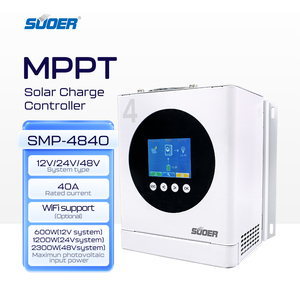
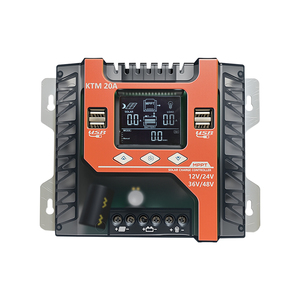
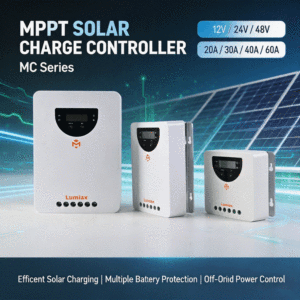
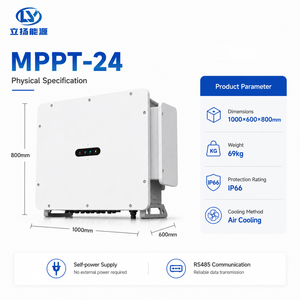
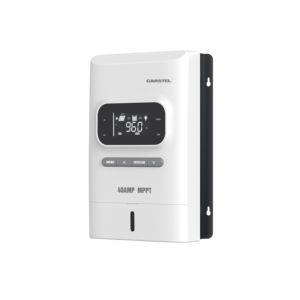
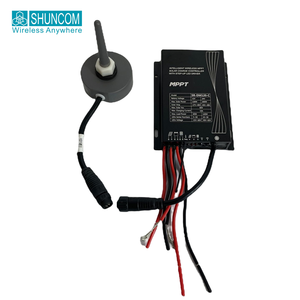
Our specialized manufacturing facility addresses this exact reliability gap by designing MPPT solar charge controllers equipped with ultra-wide PV input voltage buffers (150V to 180V Voc max), heavy-duty extruded aluminum heatsinks, and conformal-coated printed circuit boards (PCBs). By integrating high-speed multiphase synchronous rectification and advanced perturb-and-observe (P&O) tracking algorithms, our controllers extract maximum yield from solar arrays even during rapidly shifting cloud cover in coastal locations like Auckland, Wellington, and Christchurch.
Technical Benchmark Matrix: OEM MPPT Controller Architecture vs. Standard Off-the-Shelf Units
When selecting a factory supplier for the New Zealand market, commercial EPC project managers and local solar brand distributors must evaluate performance parameters under actual environmental stress. Below is a detailed engineering comparison detailing how our factory-engineered MPPT units outperform legacy PWM and entry-level controllers:
| Performance Indicator |
Legacy PWM Regulators |
Standard Import MPPT |
Our OEM Factory MPPT (NZ Spec) |
| Peak Tracking Efficiency |
N/A (Direct Clamp ~70%) |
95.0% - 97.0% |
>99.5% (Dynamic P&O + Sweep) |
| Max PV Input Voltage (Voc) |
System Voltage Matching Only |
75V - 100V Max |
150V - 180V Ultra-Wide Range |
| Sub-Zero Thermal Tolerance |
No Cold-Temp Voltage Compensation |
Derates below 0°C |
Operational to -35°C with Auto Compensation |
| PCB Corrosion Protection |
None / Basic Dust Cover |
Single Layer Lacquer |
Class 3 Conformal Coating (Anti-Salt Mist/Humidity) |
| Lithium BMS Handshake |
Unsupported |
Fixed Voltage Preset Only |
Custom RS485 / CANbus BMS Protocol Integration |
| Standards Compliance |
Basic CE |
Uncertified Generic |
AS/NZS 5033:2021 & IEC 62109-1 Ready |
Localized Application Scenarios Across New Zealand Sectors
Our factory customizes hardware configurations to suit the unique operational demands of New Zealand's key economic and residential sectors. By targeting user intent from real-world installations, we ensure seamless operational reliability:
1. Dairy Farm Pumping & Agricultural Microgrids
Dairying across the Waikato, Taranaki, and Southland regions relies heavily on continuous power for automated milking sheds, milk chilling units, and remote livestock water pumping. Our 60A to 100A MPPT controllers integrate with high-power 48V LiFePO4 battery banks and high-voltage solar strings. The controller's wide input range allows farmers to run long cable spans from solar arrays placed on shed roofs directly to pump controllers without excessive DC voltage drop.
2. Off-Grid Eco-Cabins & Alpine Huts
From Marlborough Sound off-grid retreats to Southern Alps mountaineering huts, localized energy independence is vital. These installations face prolonged cloud cover, rain, and heavy winter snowfall. Our controllers feature fast MPPT sweep technology, capturing micro-bursts of sunlight during broken cloud conditions and delivering up to 30% more daily watt-hours into battery storage compared to traditional regulators.
3. Marine Craft & Campervan (RV) Power
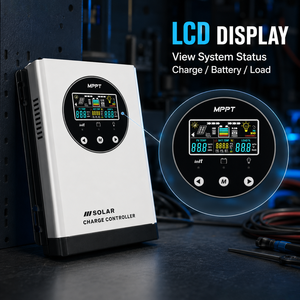
New Zealand’s vibrant coastal boating lifestyle and thriving motorhome tourism require ultra-compact, vibration-resistant charge controllers. Our 20A to 40A MPPT models with integrated Bluetooth allow vessel owners and campervan travelers to monitor real-time power harvest, state of charge (SoC), and load consumption directly on their mobile smartphones while anchored in Hauraki Gulf or exploring the West Coast.
New Zealand Solar Trends: Regulatory Standards & Technological Shift
Navigating AS/NZS 5033:2021 and AS/NZS 3000 Electrical Safety Compliance
In New Zealand, solar photovoltaic installations must strictly comply with AS/NZS 5033:2021 (Installation and safety requirements for photovoltaic (PV) arrays) and AS/NZS 3000 (The Australia/New Zealand Wiring Rules). Non-compliant solar hardware exposes installers and importers to severe legal liabilities and product recalls enforced by WorkSafe New Zealand (Energy Safety).
Our manufacturing plant prioritizes regulatory alignment right from the circuit design phase. Key compliance engineering features include:
- Over-Current & Thermal Shutdown Protection: Dual-stage electronic fusing and internal thermal sensors automatically limit output current if ambient temperatures rise unexpectedly inside sealed enclosure boxes.
- Galvanic Isolation & Grounding Terminals: Dedicated grounding lug connection points facilitate clean earthing as mandated under AS/NZS 5033 for array isolator integration.
- Electromagnetic Compatibility (EMC): Low EMI emission signature certified under CISPR 11 / EN 61000-6-3 standards, preventing interference with VHF marine radios, farm communication networks, and satellite broadband systems (e.g., Starlink).
Key Market Dynamics Driving MPPT Demand in NZ
1. Rapid Transition to Lithium Iron Phosphate (LiFePO4): Legacy lead-acid batteries are being rapidly replaced by high-density LiFePO4 chemistry across New Zealand. Our factory MPPT controllers feature programmable multi-stage charge profiles (Bulk, Absorption, Float, Equalization) and customizable low-temperature charge cutoff settings to prevent charging lithium cells below 0°C—a critical feature for South Island installations.
2. Decentralized Telecommunication Infrastructure: Remote telecom towers, weather monitoring stations, and emergency radio repeaters positioned across New Zealand's national parks rely on continuous off-grid solar power. Factory features like RS485 Modbus telemetry and dry contact relay alarm outputs enable centralized network management centers in Auckland or Wellington to remotely monitor power node health in real time.
Enterprise Factory Capabilities: Partnering with Our Manufacturing Facility
As a specialized original equipment manufacturer (OEM) and original design manufacturer (ODM) of power electronics, our state-of-the-art facility provides global brand owners, importers, and EPC contractors with complete end-to-end manufacturing solutions tailored for the New Zealand market.
Automated SMT & Quality Assurance
Our production line features fully automated High-Speed Surface Mount Technology (SMT) component placement, 3D Automated Optical Inspection (AOI), and computer-controlled in-circuit testing (ICT). Every MPPT controller undergoes a 100% full-load burn-in test inside high-temperature chambers prior to packaging.
Custom Firmware & Protocol Tailoring
We offer customized firmware flashing to support proprietary battery BMS communication protocols (CANbus/RS485), bespoke LCD display branding, custom voltage thresholds, and localized language user interfaces tailored for Kiwi end-users.
Corrosion & Salt-Mist Resistance
To combat marine atmosphere corrosion common in coastal New Zealand cities, our factory applies automated Class 3 polyurethane conformal coating across all internal component leads, preventing salt air moisture ingress and short-circuit oxidization.
Whether you require full custom casing designs, private label branding, or wholesale container shipments directly to ports in Auckland, Tauranga, or Lyttelton (Christchurch), our factory supply chain guarantees strict quality consistency, complete traceability, and reliable lead times.