Engineering Architectural Foundations of Modular Lithium Battery Rack Systems
In the contemporary European industrial landscape, Slovakia has emerged as a premier powerhouse for high-tech manufacturing, automotive assembly, and automated logistics. As industrial facilities in Bratislava, Trnava, Nitra, and Žilina shift toward 24/7 autonomous operations, the requirement for robust, safe, and scalable energy storage architecture has escalated. Modular Lithium Battery Rack Systems represent the pinnacle of high-density energy deployment, delivering uninterrupted power, active thermal regulation, and seamless dynamic load balancing.
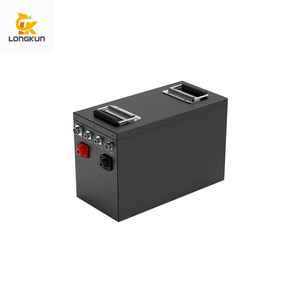
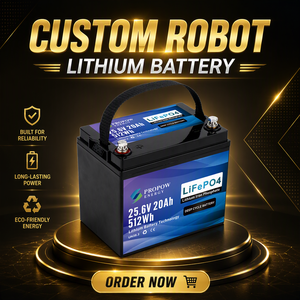
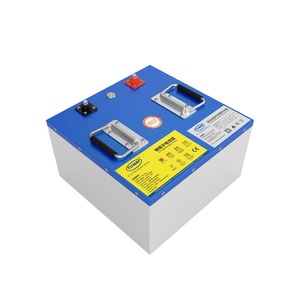
Unlike legacy stationary lead-acid installations or non-modular monolithic lithium banks, modern 19-inch standard and custom modular lithium battery racks operate as decentralized, intelligent micro-grids. Each module houses specialized prismatic or cylindrical cells—utilizing Lithium Iron Phosphate (LiFePO4), Nickel Manganese Cobalt (NMC), or Lithium Titanate Oxide (LTO) chemistries—paired with dedicated slave Battery Management Systems (BMS) that report back to a centralized master controller via high-speed CANbus, RS485, or Modbus TCP protocols.
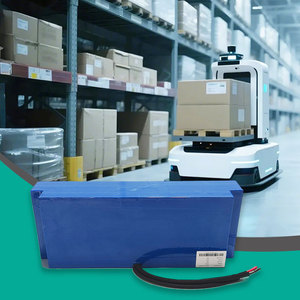
Technical Insight for Slovakian Systems Integrators: Modular battery rack design ensures zero single-point-of-failure operations. When a module requires maintenance or replacement in a continuous 24-hour manufacturing facility, hot-swappable rack architecture permits individual unit isolation without shutting down the primary DC busbar, maintaining uninterrupted operational uptime for automated guided vehicle (AGV) fast-charging hubs and facility UPS backups.
Electrochemical Selection Matrix: LiFePO4 vs. NMC vs. LTO for Industrial Racks
Designing an optimized modular lithium battery rack requires aligning electrochemical characteristics with local operational profiles. Central Europe experiences significant seasonal thermal variances, demanding strict compliance with EU safety directives (IEC 62619, CE marking, and UN 38.3 transport standards).
| Chemistry Parameter |
Lithium Iron Phosphate (LiFePO4) |
Nickel Manganese Cobalt (NMC) |
Lithium Titanate Oxide (LTO) |
| Nominal Cell Voltage |
3.2 V |
3.6 V - 3.7 V |
2.3 V |
| Volumetric Energy Density |
300 - 400 Wh/L |
500 - 700 Wh/L |
180 - 240 Wh/L |
| Cycle Life (80% DOD) |
4,000 - 6,000+ Cycles |
1,500 - 2,500 Cycles |
15,000 - 20,000+ Cycles |
| Thermal Runaway Threshold |
High (~270°C) |
Moderate (~210°C) |
Extremely High (>300°C) |
| Low-Temp Charge Performance |
Requires Heating Below 0°C |
Operates down to -10°C |
Operates down to -30°C |
| Primary Application in Slovakia |
Warehouse ESS, Heavy AGVs, Factory UPS |
Compact AMRs, Space-Constrained Racks |
Ultra-Fast Opportunity Charge AGVs |
Slovakia’s Industrial Automation Evolution & Market Dynamics
Slovakia maintains one of the highest automotive production rates per capita globally. Industrial clusters surrounding Volkswagen in Bratislava, Stellantis in Trnava, Jaguar Land Rover in Nitra, and Kia in Žilina have catalyzed massive investments in industrial automation, robotic assembly lines, and intra-logistics optimization. Consequently, the demand for modular battery rack systems serving Autonomous Mobile Robots (AMRs), Automated Guided Vehicles (AGVs), and smart warehouse buffer systems has reached an unprecedented scale.
Furthermore, European Union decarbonization mandates and the EU Battery Regulation (EU 2023/1542) strictly dictate carbon footprint transparency, supply chain traceability, and material recycling benchmarks for industrial batteries marketed across Slovakia and the broader Visegrád (V4) region. Procurement engineering teams must select battery suppliers capable of delivering certified, high-reliability modular rack architectures that satisfy EU safety directives while lowering Total Cost of Ownership (TCO).
Key Regional Deployment Scenarios in Slovakia
Our customized modular lithium battery rack systems and high-discharge AMR battery packs are specifically tailored to solve local operational challenges across Slovakian industrial sectors:
1. Automotive Assembly Logistics (Bratislava & Trnava)
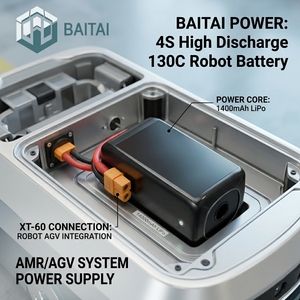
Heavy-duty AGVs carrying vehicle chassis require continuous high C-rate discharge (up to 130C peak) combined with automated opportunity charging racks during 10-second station stops.
2. Cold Storage & Food Processing Racks (Eastern Slovakia Hubs)
Standard lithium batteries suffer severe capacity degradation under sub-zero conditions (-20°C). Our modular packs integrate internal PTC heating blankets and LTO cell options to maintain full power delivery in frozen logistics facilities.
3. Solar-Coupled Industrial Peak Shaving (Nitra & Žilina)
High-voltage modular rack systems (400V - 800V DC) integrated alongside rooftop PV arrays to buffer expensive energy tariff spikes and ensure continuous factory power continuity.
4. Autonomous Floor-Cleaning & Service Robotics
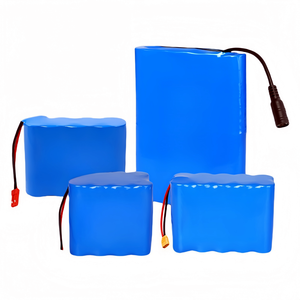
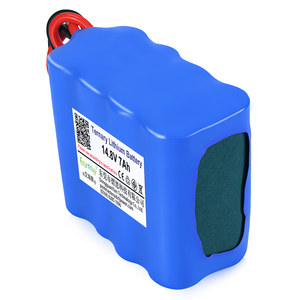
Compact 24V, 36V, and 48V OEM Li-ion packs featuring integrated smart BMS telemetry for commercial airport terminals, logistics halls, and medical complexes across Košice and Prešov.
Why Global OEMs Partner with Cell-Con / Hanco Energy
With over 40 years of pioneering battery design and manufacturing expertise (established in 1983), our company serves as a premier single-source partner for original equipment manufacturers, robotics integrators, and industrial energy engineering firms. We specialize in transforming complex power requirements into certified, production-ready battery systems.
Vertically Integrated Engineering Capabilities
From custom BMS PCB layout, firmware development, and thermal simulation to mechanical enclosure design and automated cell spot welding, every phase of production adheres to rigorous ISO 9001 quality management protocols. Our engineers collaborate directly with Slovakian technical directors to streamline project timelines, lower prototype iterations, and ensure UN 38.3 shipping compliance for seamless international delivery.
Custom BMS Integration
Proprietary active balancing algorithms and smart telemetry interfaces supporting CANopen, RS485, Modbus, and SMBus protocols.
OEM / ODM Flex Manufacturing
Rapid prototyping to mass volume production, catering to custom form factors, high-voltage rack architecture, and specific IP ratings.
Comprehensive Certification
Full engineering testing suite supporting UL 1973, UL 2580, IEC 62619, CE, and UN 38.3 safety and transport credentials.