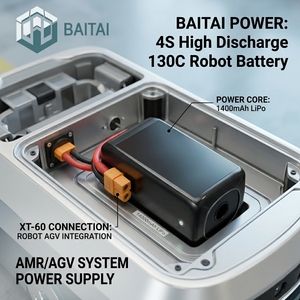
130C 1400mAh 4S High Discharge LiPo Battery for Service Robot AGV and Autonomous Mobile Robot Power System
Discover expert perspectives, custom battery design guides, charging solutions, and industry updates from USA engineers.
Custom OEM/ODM rechargeable battery assemblies integrated with intelligent BMS, wide thermal endurance, and rapid charge capabilities serving Pakistani industrial automation.
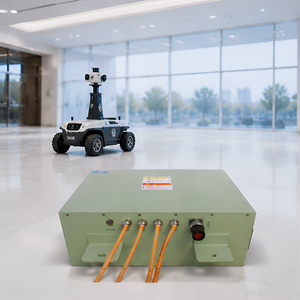
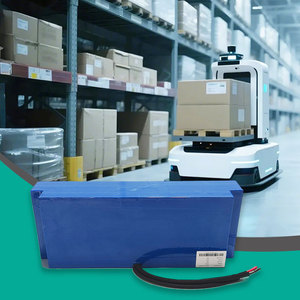
As Pakistan accelerates its transition toward Industry 4.0, smart agriculture, modernized logistics nodes along the China-Pakistan Economic Corridor (CPEC), and automated textile manufacturing, the operational reliability of wireless Industrial Internet of Things (IIoT) sensors and Autonomous Mobile Robots (AMRs) hinges fundamentally on energy density, thermal resilience, and internal Battery Management System (BMS) sophistication.
Deploying remote telemetry hardware, environmental sensor arrays, smart electric meters, and automated guided vehicles (AGVs) in Pakistan presents an exceptionally grueling set of engineering challenges. Power systems operating across the Thar Desert, Punjab agricultural belts, or industrial zones like Faisalabad and Karachi face relentless thermal exposure—frequently reaching ambient peaks of 50°C—alongside high relative humidity, severe dust particulate ingress (IP65/IP67 demands), and erratic electrical grid stability during station charging cycles. Standard off-the-shelf lithium-ion batteries rapidly succumb to thermal runaway risks, capacity fade, internal impedance spikes, and early passivation.
High ambient heat accelerates SEI (Solid Electrolyte Interphase) layer breakdown on graphite anodes in standard NMC cells. Specialized thermal dissipation sleeves, phase-change cooling, or LTO (Lithium Titanate Oxide) / LiFePO4 chemistry are required to prevent capacity drops beyond 45°C.
Rolling load shedding and transient voltage surges in remote regions demand custom BMS designs equipped with over-voltage, under-voltage, short-circuit, and high-side MOSFET protection circuitry capable of withstanding dirty AC grid rectification inputs.
Remote agricultural and pipeline monitoring sensors rely on multi-year unattended operation. Sub-microamp sleep currents combined with high primary/secondary cell stability (Li-SOCl2 or low self-discharge LiFePO4) are crucial to avoid costly field battery replacement campaigns.
Our custom smart battery packs and power systems are specifically designed to serve the key economic drivers and technological modernization programs across Pakistan's major industrial hubs.
In vast agricultural hubs like Multan, Faisalabad, and Sukkur, IoT soil moisture sensors, weather stations, and automated solar canal flow meters operate in isolated open fields exposed to direct sunlight.
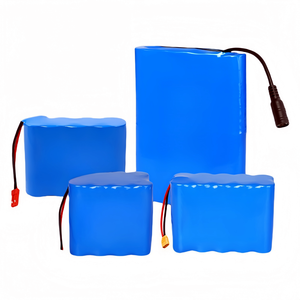
Battery Requirement: Compact 3.7V Li-ion and 12V/24V LiFePO4 battery modules equipped with high-durability epoxy potting, IP67 sealed housings, and integrated solar charge controllers. These modules withstand extreme thermal cycles while providing trickle-charging stability via localized PV panels, guaranteeing continuous sensor data transmission over LoRaWAN or NB-IoT networks to central farm management dashboards.
Modernized logistic terminals along the CPEC alignment (Gwadar Port, Karachi Port Trust, Lahore Logistics Hubs) are adopting Autonomous Mobile Robots (AMR) and Automated Guided Vehicles (AGVs) for 24/7 pallet handling and container scanning.
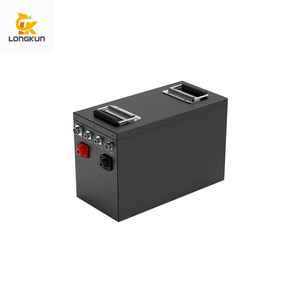
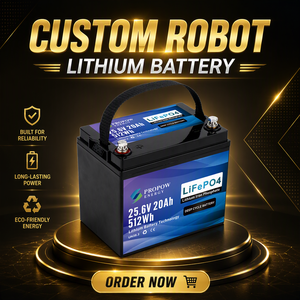
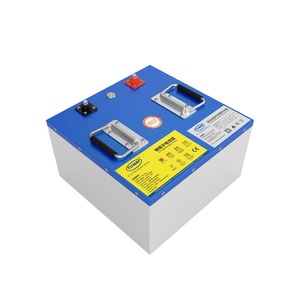
Battery Requirement: High-voltage, heavy-duty 48V, 72V, and 24V LiFePO4 / LTO packs (e.g., 72V 60Ah and 24V 100Ah packs). Featuring fast opportunity charging (1C to 3C rate charging), 3,000+ deep discharge cycles, and CANbus/RS485 smart BMS communication for automated docking stations without manual operator intervention.
Pakistan's premier textile weaving and garment manufacturing facilities are integrating autonomous floor-cleaning AMRs, material transfer carts, and airborne lint tracking IoT sensors inside high-temperature processing sheds.
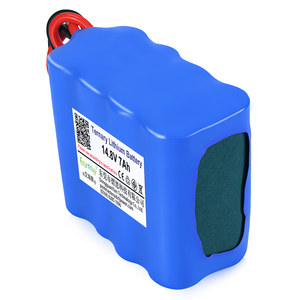
Battery Requirement: Customized 14.8V NMC and 24V LiFePO4 packs designed with anti-static, dust-proof enclosures. High current pulse output capabilities (up to 130C discharge for sudden torque demands) ensure smooth robot navigation over factory floor debris while powering onboard LiDAR, optical cameras, and drive motors.
With thousands of cellular towers across Khyber Pakhtunkhwa, Balochistan, and northern regions operating off-grid or on erratic utility lines, IoT remote terminal units (RTUs) continuously monitor fuel levels, battery health, and solar input.
Battery Requirement: Modular 12V / 24V back-up power packs engineered with long-life LiFePO4 chemistry and active cell balancing BMS. Capable of surviving un-conditioned ambient environments (-20°C in Gilgit to +55°C in Jacobabad) without thermal runaway or memory degradation.
Selecting the optimal lithium cell chemistry is vital for maximizing ROI, operating lifespan, and safety compliance in Pakistani operational environments. The table below outlines key technical parameters:
| Battery Chemistry | Nominal Cell Voltage | Cycle Life (80% DOD) | Operating Temp Range | C-Rate Capability | Best Fit Application in Pakistan |
|---|---|---|---|---|---|
| LiFePO4 (Lithium Iron Phosphate) | 3.2V / 3.3V | 2,000 – 5,000+ Cycles | -20°C to +60°C | 1C Continuous, 3C Peak | Industrial AMRs, Heavy AGVs, Telecom IoT, Solar Storage Nodes |
| LTO (Lithium Titanate) | 2.3V / 2.4V | 10,000 – 20,000+ Cycles | -30°C to +65°C | 5C to 10C Fast Charge | 24/7 Heavy Duty AGVs, Rapid-Charge Logistics, Extreme Desert IoT |
| NMC (Nickel Manganese Cobalt) | 3.6V / 3.7V | 800 – 1,500 Cycles | -10°C to +50°C | 1C to 5C Discharge | Compact Robotics, Portable Floor Cleaners, Handheld IoT Scanners |
| LiPo (Lithium Polymer High Discharge) | 3.7V | 300 – 500 Cycles | 0°C to +45°C | Up to 130C Burst | High-Torque Service Robots, Rapid Acceleration Actuators, Drones |
Pakistani industrial procurement is rapidly shifting away from conventional flooded and gel lead-acid batteries due to their short 1-year operational lifespan in high-heat zones, frequent maintenance requirement, and acid misting hazards. Custom LiFePO4 packs deliver a 4x longer lifespan, 70% weight reduction, and zero routine maintenance.
Modern IoT networks demand intelligent battery diagnostics. Our proprietary Smart BMS modules feature integrated Bluetooth 5.0, CANbus 2.0B, and RS485 interfaces, allowing plant engineers in Lahore or Karachi to monitor cell voltage balance, state-of-charge (SOC), internal temperatures, and cycle counts in real time via telemetry portals.
While basic cell manufacturing remains global, Pakistani OEMs require tailored battery pack physical footprints, custom wire harnesses, specialized connector types (e.g., Anderson, XT90, IP68 circular plugs), and localized technical support to seamlessly integrate power modules into custom machinery and IoT chassis.
Leveraging over 40 years of precision battery design experience, our engineering division serves as a single-source energy partner for top-tier OEMs, system integrators, and industrial enterprises worldwide.
Every cell batch undergoes strict incoming inspection, internal resistance grading, capacity matching, and automated spot-welding validation to guarantee zero-defect battery pack assembly.
Our electrical hardware engineers develop custom protection circuit modules (PCM) and active-balance smart BMS units supporting high-rate discharge, CANbus telemetry, and multi-layer thermal safeguards.
From initial fast-turn sample design worksheets to thousand-unit batch manufacturing, we support engineering teams at every phase of product development.
Need custom battery packs engineered for your IoT sensor network, service robots, or AGV fleets serving the Pakistan market? Contact our senior battery application engineers today for custom technical consultations and project quotes.