Battery Engineering Blog
Discover expert perspectives, custom battery design guides, charging solutions, and industry updates from USA engineers.
Precision-engineered emergency lighting modules equipped with smart BMS protection, optimized for voltage fluctuations (170V–265V) and extreme continental thermal variations in Central Asia.
1. Executive Summary & Market Intent: The Uzbekistan Energy Landscape
As Central Asia’s most populous country and fastest-growing industrial economy, the Republic of Uzbekistan is currently undergoing a transformative infrastructure modernization campaign under the national "Uzbekistan – 2030" Strategy. This macro-economic shift has triggered an unprecedented surge in commercial real estate construction, industrial zone expansion, transit infrastructure overhauls, and municipal safety standard upgrades across key administrative regions including Tashkent, Samarkand, Bukhara, the Fergana Valley (Namangan, Andijan, Fergana), and Navoi.
A vital pillar of this modernization involves structural building safety and compliance with updated national building safety norms (SNiP / KMK directives). Emergency lighting battery modules and conversion drivers form the frontline of life-safety architecture, ensuring continuous illumination during sudden utility grid failure, catastrophic fires, or seismic events. However, Uzbekistan’s unique environmental and electrical infrastructure profiles present complex operational challenges for standard off-the-shelf lighting electronics:
Grid Voltage Instability
Regional electrical networks outside major metropolitan centers often experience severe voltage fluctuations ranging between 170V and 265V AC, causing premature driver burnout in unrated emergency units.
Extreme Thermal Swings
Uzbekistan’s harsh continental climate exhibits extreme ambient temperature ranges—from sub-zero winter temperatures (-25°C) to scorching summer peaks (+45°C), stressing standard battery chemistries.
Strict GOST & CIS Standards
Procurement agencies require full compliance with GOST-U, IEC 60598-2-22 safety standards, and strict fire-retardant enclosure specifications before granting building clearance.
As a specialized OEM/ODM factory and international exporter with over four decades of power systems manufacturing heritage, our organization provides direct technical supply solutions designed explicitly to conquer these regional operational stressors. This whitepaper serves as a strategic technical procurement manual for Uzbek electrical contractors, building developers, lighting OEMs, and municipal engineering departments seeking high-information-gain insights into emergency lighting battery selection, BMS architecture, thermal management, and logistics execution.
2. Localized Application Scenarios Across Uzbekistan's Key Economic Hubs
Emergency lighting power supplies cannot be treated as one-size-fits-all components. The physical deployment environment directly dictates the required ingress protection (IP rating), lumen output efficiency, emergency duration runtime (60, 90, 180, or 300 minutes), and housing enclosure materials.
Tashkent Metropolitan Commercial Megaprojects
Deployment Environment: High-rise office towers, modern retail complexes (e.g., Tashkent City Mall), international hotel chains, and government administrative centers.
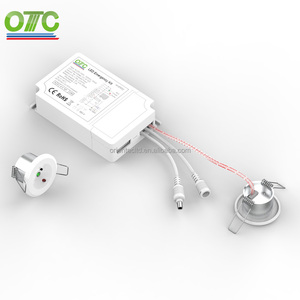
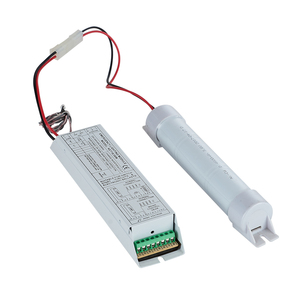
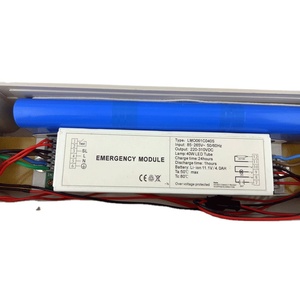
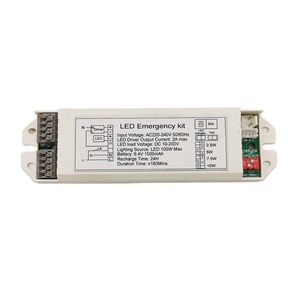
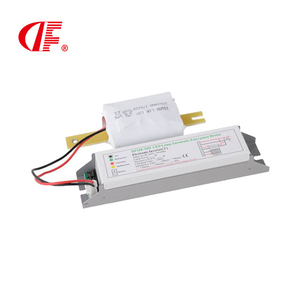
Technical Requirement: Concealed, ultra-slim emergency conversion kits (such as the OT-EPD02NST or slim profile T5/T8 kits) integrated into architectural LED panel lights. Units must feature automatic self-testing functionality, DALI-2 emergency protocol support, dual-color LED status diagnostics, and zero-second transfer time upon utility mains failure.
Industrial Complexes & Heavy Manufacturing Hubs
Deployment Environment: Metallurgical plants in Navoi & Almalyk, chemical processing facilities in Chirchiq, and textile manufacturing zones in the Fergana Valley.
Technical Requirement: Heavy-duty IP65 waterproof and dustproof emergency modules (e.g., Full Power IP65 40W Kits) capable of driving high-bay LED luminaires (100W–200W) at reduced or 100% full emergency wattage. Enclosures must utilize flame-retardant polycarbonate (UL94 V-0 rated) to withstand ambient industrial particulate and chemical exposure.
Public Transit & Underground Transport Networks
Deployment Environment: Tashkent Metro stations, railway hubs (Uzbekistan Railways), and international airport terminals in Samarkand and Bukhara.
Technical Requirement: Highly reliable LiFePO4 battery modules certified under IEC 62133 and UN38.3 with zero halogen gas emission profiles. Battery packs must deliver guaranteed 3-hour minimum emergency back-up runtime to enable safe mass evacuation through deep underground tunnels and complex concourses.
3. Technical Deep-Dive: Cell Chemistry, Smart BMS & Voltage Resilience
To provide true Information Gain for engineering teams, we must evaluate the microscopic chemical and electro-technical differences that determine emergency power system longevity under Central Asian operating conditions.
3.1 LiFePO4 vs. Traditional Battery Chemistries
Lithium Iron Phosphate (LiFePO4 / LFP) has emerged as the definitive global standard for emergency energy storage. Unlike standard Nickel-Cadmium (Ni-Cd), Nickel-Metal Hydride (Ni-MH), or Lithium Cobalt Oxide (LiCoO2) chemistries, LFP exhibits an exceptionally stable crystalline lattice structure that prevents thermal runaway even under mechanical puncture or electrical overcharge.
| Performance Parameter | LiFePO4 (Factory Standard) | Ni-Cd (Legacy Standard) | Li-ion / NMC (Standard Consumer) |
|---|---|---|---|
| Cycle Life (80% DOD) | 3,000 – 4,000 Cycles | 500 – 800 Cycles | 500 – 1,000 Cycles |
| Operating Temperature Range | -20°C to +65°C | -10°C to +40°C | 0°C to +45°C |
| Thermal Runaway Threshold | +270°C (Extremely Safe) | +180°C | +150°C (Risk of Fire) |
| Self-Discharge Rate (Monthly) | < 2% per month | 15% – 20% per month | 3% – 5% per month |
| Memory Effect | None | Severe (Requires periodic discharge) | None |
| Environmental Impact | Non-Toxic / Heavy-Metal Free | Toxic Cadmium Hazard | Cobalt / Nickel Contamination |
3.2 Advanced BMS (Battery Management System) Integration
A high-grade battery cell is only as dependable as the circuit board governing its charge and discharge parameters. Our factory integrates custom multi-tier micro-controller BMS modules directly into every battery pack assembly. Core protection protocols include:
- Over-Voltage Protection (OVP): Cuts charging current automatically when individual cell voltage exceeds 3.65V, preventing electrolyte degradation.
- Deep Discharge Cut-Off (UVLO): Automatically isolates the load when cell voltage drops below 2.5V, eliminating irreversible battery capacity loss during prolonged utility outages.
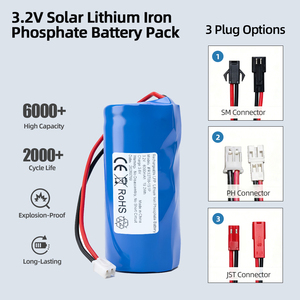
- Active Cell Balancing: Maintains equilibrium voltage across multi-cell packs (e.g., 3.2V 6000mAh or 12.8V packs), extending total usable service life by up to 30%.
- Extreme Mains Voltage Suppression: Integrated metal-oxide varistors (MOVs) and wide-input SMPS power supplies absorb high-voltage line surges up to 300V AC, common in suburban Uzbek power grids.
4. Localized Development Trends: Transition to Smart & Green Lighting Systems
In accordance with Uzbekistan's Ministry of Energy guidelines and regional green building initiatives (such as LEED and BREEAM certifications growing in Tashkent), three key trends are dominating procurement demands:
1. Self-Testing Emergency Modules (Auto-Diagnostics)
Building managers are shifting away from manual push-button test switches. Modern modules execute automated monthly 30-second functional tests and annual 90-minute full duration battery tests, alerting maintenance staff via status LEDs if a battery degradation issue occurs.
2. Dual-Mode Constant Power Output
Rather than dropping fixture output to a dim 3W emergency state, advanced conversion kits dynamically adjust drive voltage (10V–90V) to deliver constant luminous flux (e.g., 10W to 40W emergency output), ensuring compliance with strict industrial emergency lux level mandates.
3. Solar Hybrid & Off-Grid Integration
For rural regions across Karakalpakstan, Surkhandarya, and Kashkadarya, emergency lighting modules are increasingly paired with decentralized solar micro-grids, requiring hybrid DC-input battery packs capable of daytime solar charging and nighttime emergency activation.
5. Procurement FAQ: Essential Knowledge for Buyers in Uzbekistan
To assist procurement directors, importers, and electrical engineers in navigating direct factory sourcing, our technical team has synthesized solutions to the top questions asked by buyers across Central Asia:
Why Partner With Our Manufacturing Enterprise
Combining over 40 years of pioneering battery systems engineering with state-of-the-art automated SMT assembly lines, our factory stands as an authoritative supply chain partner for Central Asian distributors and OEMs.
7. Strategic Procurement Roadmap for Uzbekistan Project Tenders
Executing a successful emergency lighting project requires systematic collaboration between engineering design teams, local contractors, and the direct equipment manufacturer. We recommend the following technical roadmap when specifying emergency battery conversion modules for tenders in Uzbekistan:
- Step 1: Luminaire Load Calculation: Determine the precise forward operating voltage (Vf) and constant current requirements of the target LED panel, downlight, or linear fixture.
- Step 2: Emergency Duration Specification: Select the target backup runtime according to local KMK fire code standards—typically 90 minutes for standard commercial property and 180 minutes for high-density public assembly zones.
- Step 3: Thermal Profile Matching: Choose high-temperature LiFePO4 cell options if fixtures are housed inside unconditioned ceiling cavities where ambient temperatures exceed +40°C during summer peak hours.
- Step 4: Sample Testing & Prototyping: Request factory-engineered prototype samples to perform bench-top testing, EMC electromagnetic evaluation, and mechanical fitting verification prior to mass production order release.
Request Complete Product Catalog & Wholesale Pricing
Partner directly with an established emergency battery module factory. Click below to connect with our senior export engineering team for instant technical datasheets, GOST compliance files, and tailored price quotations for the Uzbekistan market.
Get Catalog