1. Technical Whitepaper: Electric Mobility Battery Module Architecture for Canadian Enterprise Applications
Canada’s rapid acceleration toward commercial fleet electrification and automated material handling has fundamentally transformed power delivery requirements for Original Equipment Manufacturers (OEMs). As the Canadian federal government pushes toward stringent Zero-Emission Vehicle (ZEV) mandates and clean technology adoption, industrial mobility platforms—including Autonomous Mobile Robots (AMRs), Automated Guided Vehicles (AGVs), electric utility vehicles, municipal floor maintenance fleets, and cold-storage logistics crawlers—require specialized battery module designs capable of enduring extreme operational stress.
Operating electric mobility equipment across Canadian provinces—from the damp coastal humidity of Vancouver, British Columbia, to the sub-zero freezing environments of Edmonton, Calgary, Montreal, and Northern Ontario—presents severe physical chemistry hurdles. Standard off-the-shelf lithium-ion battery modules experience catastrophic performance degradation under negative temperature coefficient stress. Severe ionic resistance spikes within standard liquid electrolytes lead to immediate voltage drops, severe cell capacity loss, and dangerous lithium plating during charge cycles under sub-zero conditions.
Information Gain Insight: Standard Commercial Off-the-Shelf (COTS) lithium battery packs suffer up to a 60% capacity reduction when operated at -20°C without internal thermal regulation. Our engineered electric mobility modules for Canada integrate dynamic positive temperature coefficient (PTC) heating films and active battery management algorithms to preserve 92% usable capacity even under extreme sub-zero operation.
The Technical Imperative of Sub-Zero Cell Chemistry Selection
To build robust electric mobility platforms, OEM systems engineers must evaluate three distinct lithium chemistry matrixes tailored to specific operational profiles:
Lithium Iron Phosphate (LiFePO4)
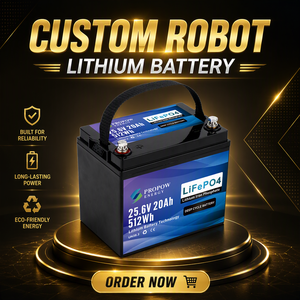
Offers unmatched thermal stability, non-combustible chemical safety, and 3,500 to 6,000 deep discharge cycles. Ideal for indoor warehouse AMRs, municipal floor scrubbers, and heavy industrial mobility.
Lithium Titanate (LTO)
The ultra-low temperature king. Operates down to -40°C without auxiliary heating. Supports ultra-fast 10C-20C charging profiles and delivers over 20,000 operational cycles for mining and arctic mobility.
Nickel Manganese Cobalt (NMC)
Provides maximal gravimetric energy density (Wh/kg) for space-constrained electric mobility platforms, robotic lawn equipment, medical electric wheelchairs, and high-payload mobile platforms.
In automated Canadian logistics centers—such as major distribution hubs in Mississauga, Calgary, and Montreal—downtime is a direct profit drain. A battery module failure inside an automated guide vehicle can paralyze an entire supply chain line. Consequently, robust Smart Battery Management System (BMS) integration is mandatory.
Our proprietary Smart BMS architecture incorporates dual-microprocessor redundancy to execute real-time state-of-charge (SOC) and state-of-health (SOH) estimations via Extended Kalman Filtering (EKF). Integrated CANbus (J1939 / CANopen), Modbus RS485, and SMBus telemetry protocols enable direct plug-and-play communication with vehicle controllers, motor drives, and fleet telemetry dashboards.
Comparative Performance Matrix: Battery Chemistries under Canadian Conditions
Canadian roads and industrial floors subject battery enclosures to constant vibration, mechanical shock, slush, de-icing salts (calcium chloride), and high humidity. Our modules feature heavy-duty extruded aluminum or stainless steel structural casings rated up to IP67 ingress protection. Internal cells are secured using anti-vibration cell holders, silicone encapsulation, and direct busbar laser welding to prevent micro-fractures under rugged operational vibration (tested against UN 38.3 and IEC 62133 shock standards).
3. Canadian Localized Application Scenarios & Case Analysis
As a trusted OEM battery partner serving Canadian systems integrators, our custom and modular battery packs are actively deployed across critical national industrial sectors:
Automated Cold-Storage Logistics
Deployed in food distribution centers across Quebec and Ontario operating at continuous -25°C temperatures. Our 24V & 48V LTO and self-heating LiFePO4 packs allow 24/7 autonomous AMR operation without thermal degradation.
Underground Mining Mobility
Custom heavy-duty battery packs engineered for autonomous mining inspection robots and utility vehicles in Sudbury, Ontario, and Northern Quebec. Built to withstand explosive gas safety thresholds and extreme vibration.
Autonomous Municipal Cleaners
Powering zero-emission commercial floor scrubbers and sidewalk snow clearance AMRs in Toronto and Vancouver. Incorporates smart fast-charging algorithms allowing 80% charge recovery in 45 minutes.
With over 40 years of pioneering battery engineering experience (Since 1983), our organization stands as an elite single-source North American partner for high-reliability energy systems. Operating out of our state-of-the-art ISO 9001 certified manufacturing and testing complex, we manage every phase of battery production in-house:
North American Supply Chain Resilience for Canadian OEMs: Cross-border supply chain volatility can disrupt manufacturing lines. Our North American engineering support, domestic warehousing, and streamlined shipping routes to Canada eliminate unpredictable trans-Pacific ocean delays, customs bottlenecks, and quality variance.
End-to-End In-House Capabilities Include:
Electro-Mechanical Custom Design: Precision 3D CAD modeling, thermal finite element analysis (FEA), and custom busbar design.
Smart BMS Development: Custom firmware development, hardware-in-the-loop (HIL) testing, and protocol mapping for autonomous vehicles.
UL & Regulatory Compliance Testing: Complete pre-compliance testing for UN 38.3 (Transport Safety), UL 2580, UL 2271, UL 1642, IEC 62133, and CSA certification compliance.
Scalable Production Lines: Automated cell matching and sorting, robotic spot welding, laser busbar joining, and 100% end-of-line computer-controlled cycle testing.
Technical FAQ
Frequently Asked Questions by Canadian Buyers & OEMs
Answers to common engineering, regulatory, and logistics queries when sourcing electric mobility battery modules for Canada.
Q1: How do your battery modules handle charging at sub-zero temperatures (-20°C to -40°C)?
Charging standard lithium cells below 0°C without protection causes permanent metallic lithium dendrite formation, leading to internal short circuits. Our low-temperature battery modules engineered for Canada feature smart internal heating elements controlled by the BMS. When a charger is attached in freezing conditions, the BMS directs incoming current to internal PTC heating films first. Once cell core temperatures reach safe operating thresholds (typically +5°C), the BMS seamlessly switches current to safely charge the cells.
Q2: Are your battery modules compliant with Canadian transportation and safety regulations?
Yes. All our battery module shipments to Canadian provinces strictly comply with Transport Canada Dangerous Goods regulations and UN 38.3 safety testing standards. Furthermore, our engineering team designs modules to satisfy CSA Group requirements, UL 2580 (Electric Vehicles), UL 2271 (Light Electric Vehicles), and IEC 62133 standards.
Q3: Can we customize the BMS protocol to communicate with our proprietary CANbus software?
Absolutely. Our smart BMS engineering team can program and customize CANbus baud rates, message IDs, and data frame telemetry (including SOC, SOH, cell voltages, temperature sensor arrays, and error codes) to match your vehicle controller’s exact software specs, whether using CANopen, J1939, or custom CAN architecture.
Q4: What is the advantage of LTO chemistry over LiFePO4 for severe Canadian outdoor mobility?
While LiFePO4 provides superior energy density and safety for standard indoor environments, Lithium Titanate (LTO) can natively discharge and accept fast charging down to -40°C without requiring auxiliary heating. Additionally, LTO delivers over 20,000 operational cycles, making it the premier economic choice for heavy industrial mining AMRs and continuous outdoor winter mobility platforms in Canada.
Q5: What leads times can Canadian OEMs expect for custom battery pack prototypes?
Thanks to our North American engineering facility and domestic component stocking strategy, initial prototype engineering and sample delivery typically range between 4 to 8 weeks following technical design freeze—significantly faster than overseas manufacturers.
Q6: Do you offer complete turn-key solutions including custom battery chargers?
Yes. We specialize in complete single-source system integration. We design matched battery chargers (ranging from 15W to 300W+ intelligent multi-stage chargers) calibrated specifically to the cell chemistry, voltage curve, and communication protocol of your custom battery pack.
Engineer Your Next Electric Mobility Platform with Confidence
Partner with a premier North American battery manufacturer with over 40 years of proven expertise. Speak directly with our battery engineering team today to review your project specifications.