Battery Engineering Blog
Discover expert perspectives, custom battery design guides, charging solutions, and industry updates from USA engineers.
Featured Subsea & Autonomous Mobile Platform Battery Systems
Precision-engineered lithium battery assemblies customized for high-discharge rates, subsea vehicle integration, deep-water endurance, and autonomous robotic operations in harsh marine environments.
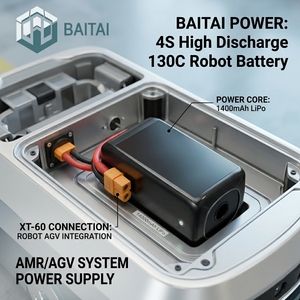
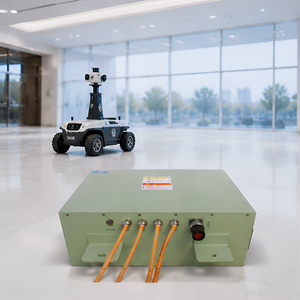
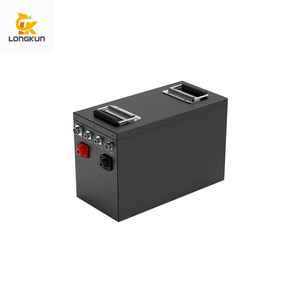
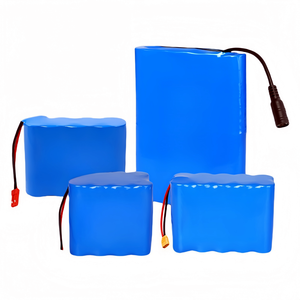
Engineering Subsea Reliability: Hydrostatic Pressure, Thermal Runaway & BMS Integration
Deploying energy storage systems into subsea environments—such as the warm, saline waters of the Gulf of Thailand or deep ocean trenches—presents unmatched engineering challenges. Subsea equipment operate under extreme hydrostatic pressures exceeding 300 bar (3,000 meters depth equivalent), where structural implosion or microscopic moisture ingress can lead to immediate catastrophe. As a global OEM leader with over 40 years of battery manufacturing heritage since 1983, our engineering architecture is designed from the ground up to solve these critical friction points.
Subsea Core Principle: Battery reliability in deep marine environments depends on three non-negotiable pillars: hydrostatic mechanical integrity, electrochemical stability under thermal confinement, and intelligent real-time BMS diagnostic telemetry.
Unlike standard terrestrial AGV or mobile robotics batteries, marine subsea battery packs must overcome severe thermal dissipation constraints within pressure-sealed dry canisters or oil-compensated wet housings. Our custom OEM battery packs utilize military-grade potted encapsulation compounds, high thermal conductivity dielectric gels, and anodized 6061-T6 aluminum or 316L stainless-steel pressure vessels to guarantee continuous operational safety.
Key Subsea Engineering Benchmarks
Every subsea pack built for Bangkok engineering projects undergoes rigorous helium mass spectrometer leak testing, hydrostatic pressure chamber simulation, and 100% automated cell-level burn-in cycles prior to international export shipment.
Subsea Equipment Application Scenarios Serving Bangkok Industries
Tailored battery solutions addressing the specific environmental, oceanic, and operational demands of Thailand’s maritime economy and subsea tech sectors.
Gulf of Thailand Offshore Oil & Gas Inspection
The offshore platforms situated in the Gulf of Thailand rely heavily on Autonomous Underwater Vehicles (AUVs) and Work-Class Remotely Operated Vehicles (ROVs) for pipeline integrity monitoring and riser inspections. Our 72V LiFePO4 and high-density NMC packs deliver extended subsea runtimes, allowing uninterrupted 12-hour mission profiles in warm tropical thermoclines.
Eastern Economic Corridor (EEC) Port Automation
As Bangkok Port and Laem Chabang Port undergo rapid automation under Thailand’s EEC framework, automated quay equipment, amphibious crawlers, and dockside AMRs require fast-charging energy units. Our LTO and high-cycle LiFePO4 packs facilitate rapid 15-minute opportunistic charging cycles under 90%+ ambient humidity.
Chao Phraya Hydrographic Surveying Robotics
Subsurface bathymetric mapping and riverbed environmental monitoring along the Chao Phraya river basin demand compact, neutrally buoyant power supplies. Custom 24V and 36V smart battery assemblies fit effortlessly into slim acoustic Doppler current profiler (ADCP) hulls and sonar survey craft.
Subsea Technology & Energy Storage Trends in Bangkok & Thailand (2025-2030)
1. Transition from Lead-Acid to Intelligent LiFePO4 & LTO Chemistries
Marine operators across Bangkok are rapidly retiring heavy lead-acid subsea battery banks in favor of high-safety LiFePO4 and Lithium Titanate (LTO) solutions. The key drivers are 3x greater gravimetric energy density, longer total service life (3,500 to 20,000+ cycles), and lower total cost of ownership (TCO) for offshore vessel maintenance.
2. IoT-Enabled BMS & Underwater Telemetry Protocols
Modern subsea operations require real-time health diagnostics. Our proprietary BMS systems integrate CANbus, RS485 Modbus, and SMBus protocols, allowing autonomous subsea micro-controllers to dynamically monitor State-of-Charge (SoC), State-of-Health (SoH), and cell temperature matrices before sending acoustic telemetry signals back to surface ships.
3. Zero-Emission Autonomous Offshore Swarm Systems
Thailand's national maritime clean-tech mandates are driving the adoption of autonomous oceanographic swarm robots. These micro-AUVs operate in coordinated clusters, requiring standardized hot-swappable battery modules that withstand rapid subsea docking, inductive charging, and continuous saltwater immersion.
OEM Customization Capability: We provide full engineering support for subsea enclosures—including custom geometry cell layouts, anti-corrosion anodizing, dual O-ring seal grooves, and custom potting options to prevent thermal propagation in tropical sea conditions.
USA Engineering Excellence Serving Bangkok Exporters & Integrators
Over four decades of dedicated battery innovation, single-source OEM assembly, and rigorous quality systems tailored for mission-critical marine operations.
ISO 9001:2015 Certified Manufacturing
Every custom pack is designed, assembled, and quality-tested under stringent ISO 9001 certified protocols in our Bedford, PA USA facility, ensuring full lot traceability and zero-defect quality control for overseas shipments to Bangkok.
Single-Source OEM Engineering Partner
From electrochemistry selection and custom PCB circuit design to thermal modeling, mechanical enclosure fabrication, and matching UL-certified chargers—we handle the entire power system lifecycle under one roof.
Global Logistics & Export Readiness
Complete UN38.3, MSDS, and DG (Dangerous Goods) shipping certification compliance for fast, hassle-free air freight delivery directly to Suvarnabhumi Airport (BKK) cargo terminals or sea freight to Bangkok Port (Klong Toey).
Frequently Asked Questions for Bangkok Subsea Battery Sourcing
Addressing essential technical, logistical, and compliance considerations for engineering managers and procurement officers in Thailand.
How do your subsea battery packs handle high tropical ambient temperatures and humidity in Bangkok prior to deployment?
Subsea equipment resting on deck at tropical port facilities in Bangkok or Rayong can experience ambient pre-deployment temperatures exceeding 40°C with 95% relative humidity. Our custom OEM packs utilize elevated thermal-grade cell chemistry, internal phase-change materials (PCM), and IP68 hermetically sealed pressure housings filled with inert nitrogen gas or dielectric potting resin to prevent internal condensation and thermal stress.
What pressure containment ratings are available for deep-sea subsea battery enclosures?
We manufacture dry pressure canisters rated from shallow bathymetric depths (100m - 300m) up to deep ocean depths of 3,000m to 6,000m (300 to 600 bar hydrostatic pressure). Enclosure materials include hard-anodized 6061-T6/7075 aluminum, grade 5 titanium, and 316L stainless steel, complete with dual viton O-ring sealing channels and wet-mate connector interfaces.
Are your subsea battery packs fully certified for international logistics and export directly to Thailand?
Yes. All lithium-ion and LiFePO4 battery shipments comply fully with UN38.3 transport safety testing, IEC 62133, and Class 9 Dangerous Goods air and sea freight regulations. We supply complete UN testing summaries, MSDS documentation, and custom tariff classification codes to streamline Thailand Customs clearance.
Can your Smart BMS integrate with specialized subsea telemetry protocols?
Absolutely. Our proprietary micro-controller BMS firmware supports CANbus 2.0B, CANopen, RS485 Modbus RTU, and SMBus standard communication. This enables your AUV control computer or subsea payload processor to continuously read real-time cell voltages, state-of-charge percentage, internal resistance, and diagnostic error flags.
What is the typical lead time for custom subsea battery prototypes delivered to Bangkok?
Initial custom engineering concept design and 3D mechanical rendering typically take 1 to 2 weeks. Prototype sample assembly, BMS programming, and environmental testing generally require 4 to 6 weeks. Fast-track air freight to Bangkok completes delivery within 3 to 5 business days after factory sign-off.
Engineer Your Custom Subsea Battery Solution for Bangkok Projects
Partner with a 40-year industry leader. Connect directly with our Senior Engineering Team to review your voltage requirements, pressure containment specs, and custom BMS features.