Battery Engineering Blog
Discover expert perspectives, custom battery design guides, charging solutions, and industry updates from USA engineers.
Advanced OEM Active Balancing BMS & Equalizer Product Showcase
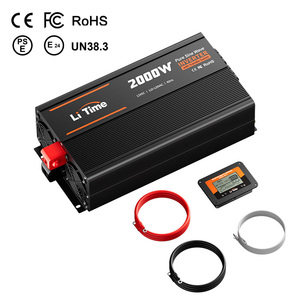
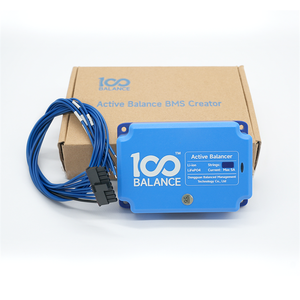
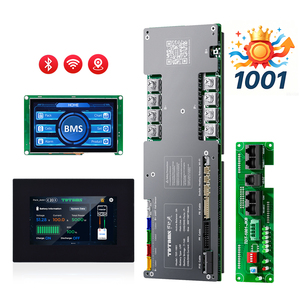
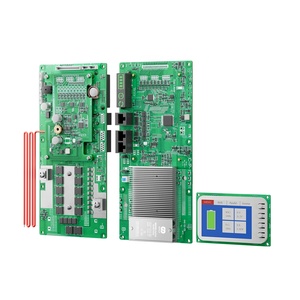
Explore our flagship active balancing battery management PCBA assemblies, high-current equalizer boards, and smart energy storage BMS solutions designed for lithium-iron phosphate (LiFePO4), NCM, and LTO cell chemistries.

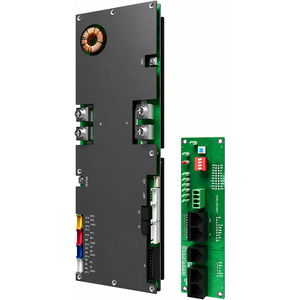
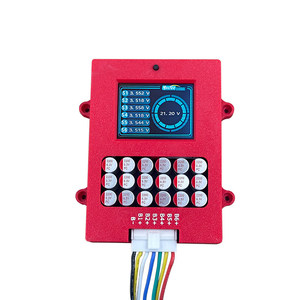
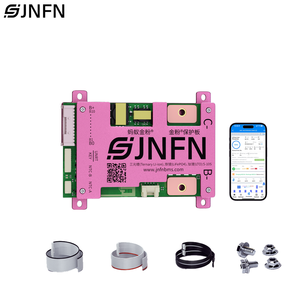
1. Technical Whitepaper: The Paradigm Shift to Active Balancing BMS in Modern Energy Architecture
In high-capacity lithium-ion (NCM/NCA), lithium iron phosphate (LiFePO4), and lithium titanate (LTO) battery assemblies, cell inconsistency is an inevitable thermodynamic and electrochemical reality. Manufacturing tolerances, internal resistance variances (IR), gradient thermal exposure, and non-uniform chemical degradation over cycling cause voltage divergence among series-connected cells. Left unmanaged, the weakest cell dictates the usable capacity of the entire pack, triggering premature low-voltage cut-offs during discharge and early over-voltage shutoffs during charge.
Traditional Passive Balancing mitigates cell imbalance by bleeding off excess energy from higher-voltage cells through resistive dissipation (heat). While cost-effective for small handheld electronics, passive balancing is fundamentally flawed for high-energy platforms. Dissipating energy as heat at nominal currents of 30mA to 100mA creates severe thermal management bottlenecks in sealed industrial enclosures and wastes up to 5-15% of stored electrical energy.
Information Gain Key Takeaway: Why Active Balancing is Mandatory for Modern Battery Packs
Unlike passive systems that burn off surplus charge as wasted thermal energy, Active Balancing BMS utilizes high-frequency bidirectional DC-DC inductive or capacitive energy transfer circuits. Energy is dynamically shuttled from highest-state-of-charge (SOC) cells directly to lowest-SOC cells with conversion efficiencies exceeding 92-98%. This reduces balancing duration by up to 80% while keeping ambient thermal generation near zero.
Technical Architecture Matrix: Passive Balancing vs. Dynamic Active Energy Transfer
| Performance Metric | Legacy Passive BMS Bleeding | Inductive Active Balancing BMS | Capacitive Dynamic Balancer |
|---|---|---|---|
| Balancing Method | Resistive heat dissipation (Ohmic loss) | Buck-Boost magnetic energy transfer | Switched-Capacitor charge shuttle |
| Balancing Current Range | 30mA – 200mA (Thermal limited) | 1A – 10A (Programmable dynamic) | 1A – 5A (Voltage delta dependent) |
| Energy Efficiency | 0% (100% Wasted as thermal loss) | 90% – 95% System efficiency | 93% – 98% High-frequency efficiency |
| Operational State | Top-balancing only (near end of charge) | Continuous (Charge, Discharge, Idle) | Continuous real-time equalization |
| Thermal Impact on Pack | High local hotspot generation (+15°C to +30°C) | Negligible rise (<2°C ambient shift) | Ultra-low heat production |
| Impact on Battery SOH | Baseline lifetime degradation | Extends usable cycle life by 25-40% | Extends usable cycle life by 20-35% |
2. Localized Industrial Application Scenarios in London & the Greater UK Ecosystem
As London enforces stringent environmental legislation—such as the expansion of the Ultra Low Emission Zone (ULEZ), the London Environment Strategy, and the UK’s binding Net Zero 2050 targets—the demand for reliable, high-performing custom battery power systems has reached an unprecedented peak. Our custom OEM Active Balancing BMS PCBA platforms are specifically tailored to meet UK and European operating conditions.
London Commercial & Residential BESS (Behind-the-Meter Storage)
With London’s electricity tariffs subject to volatile peak-shaving pricing (Octopus Flux, Economy 7), commercial properties and residential microgrids rely heavily on 48V/51.2V LiFePO4 battery banks (8S–16S configurations). Active balancing BMS units (such as our JKBMS and Daly smart inverter-compatible series) dynamically equalize cell voltages under intense 1C–2C charge/discharge cycles from roof-mounted solar PV arrays, maintaining maximum power yield and preserving pack equity.
ULEZ Heavy EV Fleets, Last-Mile Delivery & AGVs
Electrified commercial delivery vans operating within Central London encounter stop-and-go regenerative braking that delivers rapid energy surges to the battery bank. Our high-current 5A to 10A active equalizer boards instantly redistribute incoming peak currents across unbalanced parallel strings, preventing single-cell over-voltage trip errors and guaranteeing 100% fleet operational readiness across London logistics hubs.
River Thames Electric Marine Propulsion & Vessel Electrification
Navigating the River Thames demands absolute power reliability and rigorous marine safety standards. Marine electrification projects utilize robust high-voltage active BMS assemblies equipped with conformal coatings (protecting against high humidity and salt air corrosion) and isolated CANbus communication to deliver real-time cell telemetry to main bridge displays.
London Financial District Mission-Critical Datacenter UPS
Financial institutions in the City of London and Canary Wharf require zero-fail backup power system stability. Active balancing BMS solutions eliminate silent battery degradation in standby storage modules, providing automatic background balancing during trickle-charge phases and guaranteeing maximum power density when main grid failures occur.
3. UK Market Trends & Regulatory Compliance Standards for London OEM Procurement
Procuring battery management systems for installation in London and the broader European market requires strict adherence to international safety frameworks and emerging technological trends. Our factory production lines incorporate comprehensive end-of-line (EOL) testing matrix protocols matching UK standards.
UKCA & CE Compliance
All active BMS PCBAs feature electromagnetic compatibility (EMC) shielding and low-emission design compliance matching BS EN 61000-6-2 and BS EN 61000-6-4, ensuring flawless operation near sensitive communications equipment in urban environments.
BS EN 62619 Industrial Safety
Designed for industrial lithium battery safety, our smart active BMS hardware integrates multi-tiered firmware protection against thermal runaway, short circuits, over-current, cell under-voltage, and cell over-voltage conditions.
Multi-Inverter Protocol Matching
London energy installers require seamless interoperability. Our smart active BMS units feature dual RS485 and CANbus interfaces pre-loaded with communications protocols for major UK market inverters including Sunsynk, Victron Energy, Deye, Solis, and SMA.
4. Custom OEM Manufacturing Excellence & Factory Capabilities
As a specialized OEM/ODM manufacturer of active balancing BMS assemblies, our turn-key SMT assembly facilities bridge the gap between cutting-edge engineering design and large-scale industrial manufacturing. We provide full customization services tailored to specific OEM enclosure layouts, electrical specifications, and wire-harness requirements.
IATF 16949 & ISO 9001 Factory Quality
Our surface mount technology (SMT) production lines adhere to stringent automotive quality management standards. Every active balancing board undergoes 100% Automated Optical Inspection (AOI), X-ray solder joint inspection, and automated functional testing under loaded operational conditions.
Full Turnkey Customization & Hardware Engineering
We provide full hardware modification capabilities: custom PCB dimensions, optimized MOSFET thermal sinks, tailor-made continuous current limits (up to 400A continuous), integrated LCD displays, and customized NTC temperature sensor placement.
Software, Firmware & Protocol Tailoring
Our embedded software engineering team provides custom firmware programming for Bluetooth iOS/Android apps, custom Modbus RTU register mapping, CAN 2.0B protocol customization, and remote cloud telemetry integration over IoT gateways.
5. Frequently Asked Questions (FAQ) for London & UK OEM Buyers
An Active Balancing BMS dynamically transfers charge from high-voltage cells to lower-voltage cells with up to 95% efficiency using inductive or capacitive circuits. Passive BMS units waste this excess energy as heat (30mA-100mA bleed), creating thermal hotspots inside sealed enclosures. Active balancing provides 1A-10A equalizing currents without thermal penalties, maximizing usable energy capacity and significantly extending pack cycle life in demanding commercial battery applications across London.
Yes. Our smart active BMS units (including Daly, JKBMS, and TDT series) come pre-programmed with communications protocols for major UK hybrid inverter brands such as Sunsynk, Victron Energy, Deye, Solis, Luxpower, and SMA. They communicate seamlessly via CANbus or RS485 ports to provide live SOC, SOH, cell voltage, and alarm telemetry.
Standard OEM samples and evaluation boards ship via express air freight (DHL/FedEx/UPS) to London within 5 to 7 business days. Mass production OEM batch orders are delivered via air freight (7-10 days) or direct ocean freight to major UK ports (such as London Gateway or Southampton) within 25 to 35 days, including complete customs documentation and DDP terms upon request.
Our product lineup supports 3S up to 24S series configurations in single boards, with cascading master-slave BMS architectures available for high-voltage system strings up to 1000V DC. Compatible chemistries include Lithium Iron Phosphate (LiFePO4 / LFP), Nickel Manganese Cobalt (NCM / Li-ion), and Lithium Titanate (LTO).
Yes, we support engineering innovation with flexible MOQ requirements for initial prototype evaluation. Our turn-key SMT manufacturing line can produce custom PCB form factors, customized wiring harnesses (M8 terminals, Molex connectors), and modified firmware register sets to match your mechanical enclosure constraints.
Active balancing is particularly advantageous in colder climates like the UK winter. Because passive balancing generates internal heat spikes that create uneven thermal gradients across the battery pack, it accelerates localized cell aging. Active balancers maintain homogeneous temperature profiles across all cells while integrated software prevents low-temperature charging damage via NTC temperature sensor cut-offs.
Accelerate Your Battery Project with Custom OEM Active BMS Engineering
Partner with a trusted IATF 16949 certified manufacturer. Get tailored active balancing solutions, custom PCBA design reviews, and factory direct technical support for your battery applications in London and worldwide.