1. Strategic Whitepaper: Custom Battery Pack Engineering for Bangladesh’s Industrial Revolution
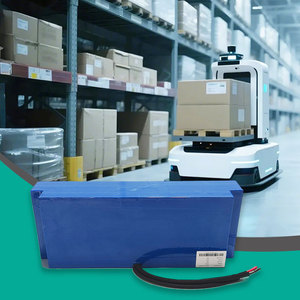
As Bangladesh advances towards its Smart Bangladesh 2041 Vision, industrial manufacturing across Dhaka, Chittagong, Gazipur, Narayanganj, and Khulna is undergoing a profound automation transformation. The rapid integration of Autonomous Mobile Robots (AMR), Automated Guided Vehicles (AGV), electric material handling platforms, and off-grid energy storage hubs requires high-integrity electrochemistry solutions capable of enduring extreme South Asian tropical environments.
Building high-performance custom battery packs for the Bangladeshi market requires addressing specific technical challenges: high ambient heat (exceeding 40°C to 45°C during summer peak months), intense relative humidity (frequently over 85%), power grid fluctuations, and continuous 24/7 industrial factory shift demands. Standard off-the-shelf lithium batteries frequently suffer from thermal throttling, rapid capacity degradation, short circuit risks due to condensation, and premature BMS failure. As a senior battery engineering and custom manufacturing company with over 40 years of expertise (established 1983), Cell-Con / Hanco delivers customized smart battery systems engineered specifically for longevity, thermal endurance, and mechanical resilience.
Information Gain Key Insight: Thermal & Humidity Engineering Matrix
Tropicalized battery design for Bangladesh relies on three core pillars: 1. Micro-Climate Thermal Dissipation using phase-change aluminum housings; 2. Moisture Barrier Conformal Coating on all Smart BMS circuit boards to prevent tropical humidity corrosion; and 3. Active Cell Balancing Electronics to mitigate impedance mismatch during high-rate charging.
2. Electrochemistry Comparison Matrix: Selecting the Right Battery Technology
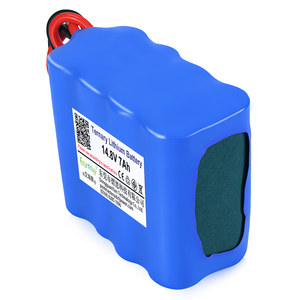
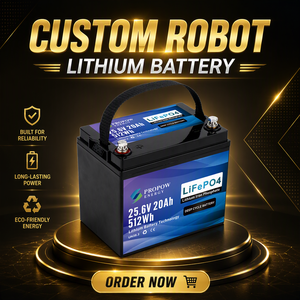
Selecting the optimal lithium cell chemistry is the foundational step in engineering a battery pack for OEM automation machinery in Bangladesh. Our engineering team customizes packs using tier-1 A-grade cylindrical (18650, 21700, 26650, 32650) and prismatic pouch cells across four main chemistries:
| Battery Chemistry |
Nominal Voltage |
Cycle Life (80% DOD) |
Thermal Stability |
C-Rate Capability |
Ideal Application Scenario |
| LiFePO4 (LFP) |
3.2V / Cell |
3,500 – 6,000 Cycles |
Exceptional (<270°C Thermal Runaway) |
1C – 3C Continuous |
Heavy Duty AGV, Industrial AMR, Warehouse Logistics |
| Lithium Titanate (LTO) |
2.3V / Cell |
20,000+ Cycles |
Extreme (-30°C to +65°C) |
6C – 10C Fast Charge |
24/7 Continuous Automated Factory Lines (Opportunity Charging) |
| NMC / Li-Ion |
3.6V - 3.7V / Cell |
1,200 – 2,000 Cycles |
Moderate (Active BMS Required) |
2C – 5C Discharge |
Compact Floor Cleaners, Portable Medical Equipment, Lawn Mowers |
| High-Discharge LiPo |
3.7V / Cell |
500 – 800 Cycles |
Requires Strict Thermal Management |
50C – 130C Burst |
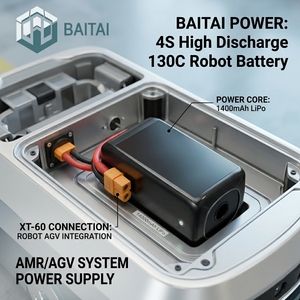
Robotics Actuators, High-Torque Lifting AGVs, Aerial Drones |
3. Smart BMS (Battery Management System) Architecture & Protocol Integration
A custom battery pack is only as reliable as its internal electronic brain. Our proprietary Smart BMS modules are engineered with multi-tiered safety hardware and intelligent software communication protocols. For Bangladeshi machinery manufacturers and robotics integrators, seamless communication between the battery pack and the vehicle control unit (VCU) or programmable logic controller (PLC) is critical.
CANbus / RS485 / Modbus Protocols
Full telemetric integration allowing industrial AGV controllers to monitor real-time State of Charge (SOC), State of Health (SOH), individual cell voltages, and thermal sensors.
Multi-Layer Thermal Cut-Off
Dual hardware switches combined with software temperature thresholds prevent thermal runaway under heavy discharge cycles in non-air-conditioned Bangladesh factory environments.
Active Cell Balancing
Maintains cell voltage parity within ±5mV during high-current charging, extending pack life by up to 40% in intensive 24-hour manufacturing facilities.
4. Localized Application Scenarios Across Bangladesh’s Industrial Sectors
Custom battery pack design cannot be generalized; it must address the precise operating conditions of specific regional industries. Below are the primary deployment scenarios where our custom battery engineering drives operational efficiency in Bangladesh:
Ready-Made Garments (RMG) & Textile Automation
Bangladesh’s multi-billion dollar RMG manufacturing sector in Gazipur, Savar, and Narayanganj is rapidly deploying automated guided carts and fabric-roll transport AGVs. Our 24V 30Ah Li-Ion and 48V LiFePO4 packs provide continuous 16-hour runtime, allowing seamless material transfer across spinning, dyeing, and sewing floors.
Pharmaceutical Cleanroom Robotics (Dhaka & Dhamrai)
Leading pharmaceutical manufacturing hubs require zero-emission, non-gassing, non-spillable battery solutions for automated cleanroom transport. Our sealed LiFePO4 smart battery modules with IP65 moisture protection comply strictly with cGMP sanitation standards.
Chittagong Port & Maritime Logistics Automation
Heavy-duty autonomous mobile robots operating near Chattogram Port face salt-fog corrosion and heavy load stress. Our customized 72V 60Ah and 48V 100Ah ruggedized battery packs feature shock-isolated internal cells and anti-corrosive stainless steel enclosures.
Telecom Infrastructure & Off-Grid Solar Energy Storage
Off-grid telecom towers in rural Bangladesh rely on robust energy storage during grid load-shedding. Our long-cycle LiFePO4 smart batteries integrate seamlessly with solar MPPT chargers, enduring high ambient temperatures without thermal degradation.
5. Industrial Trends & Technological Drivers in Bangladesh (2025–2035)
Several critical economic and technological trends are driving the transition from legacy flooded lead-acid batteries to smart engineered lithium solutions across Bangladeshi industrial facilities:
- Phase-Out of Lead-Acid Toxicity: Traditional lead-acid batteries suffer from short lifespans (under 500 cycles in tropical heat), acid fumes, and long 8-hour charge cycles. Transitioning to smart LiFePO4 reduces total cost of ownership (TCO) by over 55% over 5 years.
- Opportunity Charging Efficiency: Modern factories operating three continuous shifts cannot afford 8-hour battery cooldown periods. Lithium Titanate (LTO) and high-rate LiFePO4 packs accept 10-minute opportunity fast charging during worker break intervals.
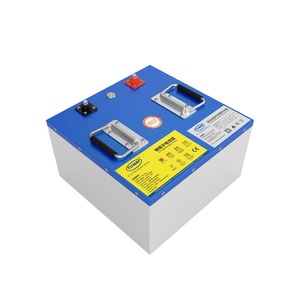
- Custom Enclosure Mechanical Vibration Resistance: Factory floors in developing industrial zones often feature uneven concrete surfaces. Cell-Con / Hanco packs feature internal structural resin potting and laser-welded nickel-copper busbars to eliminate vibration fatigue failures.
6. Enterprise Engineering Heritage & E-E-A-T Quality Assurance
With over 40 years of manufacturing excellence since 1983, Cell-Con / Hanco stands as a single-source OEM partner for battery pack design, cell sorting, BMS engineering, plastic/metal enclosure tooling, and global regulatory compliance testing.
International Regulatory & Safety Compliance Standard
Every custom battery system engineered for our Bangladeshi partners undergoes rigorous end-of-line testing and carries full compliance options including: UN38.3 (Transportation Safety), UL1642 / UL2054 (Cell & Pack Safety), CE Directive, and IEC 62133 (Global Portable Battery Safety).