Battery Engineering Blog
Discover expert perspectives, custom battery design guides, charging solutions, and industry updates from USA engineers.
High-Performance Portable Power Station Modules & Robot Battery Packs
Precision-engineered lithium battery modules tailored for Chilean system integrators, heavy-duty mining AGVs, and remote off-grid portable power stations.
Chile’s Clean Energy & Industrial Decarbonization Mandates
Analysing the intersection of Chile’s National Green Hydrogen Strategy, Copper Mining Automation, and the Growing Demand for Reliable OEM Portable Power Station Modules.
Mining Fleet Electrification in Antofagasta & Atacama
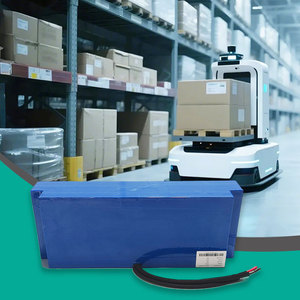
Chile produces over 28% of the world’s copper. Operators like Codelco, BHP Escondida, and Collahuasi are actively phasing out diesel gensets and diesel AGVs in favor of battery-electric platforms. Portable power station modules and ultra-high-discharge lithium battery packs serve as critical auxiliary power units (APUs) and field charging stations across high-altitude sites (>4,000 meters above sea level).
Renewable Microgrid Integration & Peak Shaving
With the Atacama Desert presenting the highest solar irradiance on Earth (>3,000 kWh/m²), Northern Chile faces immense solar over-generation during peak daylight, followed by sharp evening supply cliffs. Chinese modular portable power station units provide essential microgrid buffering, seamless inverter pairing, and instant black-start power for off-grid industrial nodes.
Automated Agriculture in Maule & O'Higgins Valleys
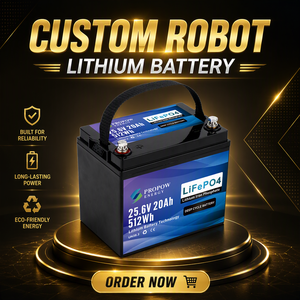
Chile's massive fresh fruit export corridor relies heavily on modernizing packhouse logistics and vineyard automation. Autonomous Mobile Robots (AMRs) and field-cleaning platforms equipped with 24V/48V LiFePO4 modules enable 24/7 continuous harvest operations with zero local carbon emissions, complying with EU and North American ESG import standards.
Engineering Solutions tailored for Chile’s Geographical Extremes
From the arid, ultra-high-altitude Atacama Desert to freezing sub-zero Patagonian marine installations—our portable power station modules are field-tested for maximum resilience.
1. High-Altitude Andean Mining Equipment
Operating above 3,800 meters presents severe heat dissipation and air density challenges. Our specialized Lithium Titanate (LTO) and LiFePO4 power station modules feature reinforced solid-state thermal pathways and IP67 sealed enclosures to withstand fine dust (Caliche) and barometric derating.
- Thermal Threshold: -30°C to +60°C operating window
- Enclosure: Extruded aluminum alloy with pressure equalization valves
- Cell Integrity: Zero capacity loss under low atmospheric pressure
2. Remote Telecom & Seismic Monitoring Nodes
Chile’s active seismic zone (ONEMI and CSN networks) demands 100% uninterruptible power across mountain passes and desert telemetry stations. Modular power station packs seamlessly interface with solar arrays and low-draw telemetry gear.
- BMS Telemetry: Integrated 4G / LoRaWAN remote diagnostics
- Self-Discharge: <1.5% per month for long standby reliability
- Cycle Life: Up to 6,000 cycles at 80% DOD (LiFePO4)
3. Patagonian Sub-Zero Marine & Research Camps
In Region XI (Aysén) and XII (Magallanes), standard lithium batteries fail due to cold-temperature plating. Our portable power modules incorporate integrated PTC self-heating films powered by incoming solar or AC charge prior to cell engagement.
- Pre-Heat System: Automatic heating below 0°C prior to charging
- Vibration Proofing: Encapsulated silicon cell framing for ocean transport
- Output: Dual Pure Sine Wave AC and high-current DC outputs
Portable Power Station Module Chemistry Comparison for Chilean OEM Buyers
Selecting the optimal lithium cell architecture based on duty cycle, environmental exposure, and capital cost efficiency.
| Chemistry Architecture | Energy Density (Wh/kg) | Cycle Life (DOD 80%) | Operating Temp Range | Primary Chilean Application | Safety Rating |
|---|---|---|---|---|---|
| LiFePO4 (Lithium Iron Phosphate) | 140 - 170 Wh/kg | 3,500 - 6,000 Cycles | -20°C to +60°C | Solar Microgrids, Commercial Portable Power Stations, AGVs | Highest (Thermal Runaway 270°C) |
| LTO (Lithium Titanate Oxide) | 80 - 110 Wh/kg | > 20,000 Cycles | -30°C to +65°C | High-Altitude Andes Mining, Ultra-Fast Charge Heavy Fleet | Extreme (Non-dendritic formation) |
| NMC High Density (Nickel Manganese Cobalt) | 210 - 260 Wh/kg | 1,200 - 2,000 Cycles | -10°C to +45°C | Ultra-Compact Portable Power Banks, Lightweight Drone Ground Power | High (Requires Advanced BMS) |
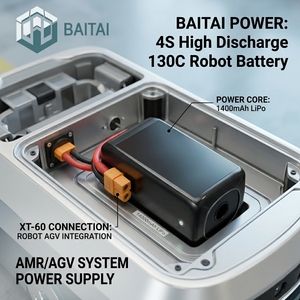
| High Discharge LiPo (Lithium Polymer) | 150 - 180 Wh/kg | 500 - 800 Cycles (High C) | 0°C to +50°C | Service Robots, High-Burst Industrial Actuators, Emergency APUs | Standard (Precision C-rate Limit) |
*Note for Chilean System Engineers: When configuring portable power station modules for altitudes above 3,000 meters in the Andes, thermal dissipation efficiency reduces by ~12% per 1,000m. Our custom BMS algorithms automatically recalculate continuous current ratings to prevent thermal throttling.
Why Top Chilean Importers Partner With Our Chinese Manufacturing Hubs
Combining over 40 years of power design heritage, ISO 9001 certified manufacturing, and vertical integration from raw cell sorting to final custom casing.
ISO 9001 & ISO 14001 Quality System
Every portable power station module undergoes 100% automated optical inspection (AOI), cell-matching sorting down to 5mV voltage differential, and full-cycle load testing prior to packaging.
Custom Smart BMS Integration
We program proprietary BMS hardware supporting CANbus 2.0B, RS485, Modbus, and SMBus protocols—ensuring seamless plug-and-play synchronization with Victron, Schneider, SMA, and Growatt inverters popular across South America.
Turnkey OEM/ODM Engineering
From initial CAD enclosure modeling (IP54 to IP67 steel/aluminum/ABS) to custom harness design, private labeling, and regional certification assistance—we compress your launch timeline from months to weeks.
Frequently Asked Questions by Chilean Buyers & Engineers
Addressing freight logistics, SEC electrical safety standards, customs duty structures, and high-altitude operational parameters.
Q1: How do you ship lithium portable power station modules safely to Chilean ports?
All our battery shipments strictly adhere to UN38.3, Dangerous Goods (DG) Class 9 standards. We offer direct sea freight containers (FCL/LCL) to principal Chilean ports including Valparaíso, San Antonio, Iquique, and Antofagasta. We supply full MSDS, UN38.3 test summaries, and sea transport safety certificates for fast clearance through Servicio Nacional de Aduanas.
Q2: Are your power station modules compliant with Chilean SEC (Superintendencia de Electricidad y Combustibles) rules?
Yes. We manufacture power station modules using UL 1973, IEC 62619, and IEC 62133 certified sub-components. For finished portable power generators and BESS units entering Chile, our engineering team works directly with your local compliance officers to provide full schematics, test reports, and factory audit documentation required for SEC QR code registration.
Q3: Can China-Chile Free Trade Agreement (FTA) benefits be applied to lower import tariffs?
Absolutely. Under the China-Chile FTA (Tratado de Libre Comercio China-Chile), qualifying battery packs and power station modules exported with a valid Form F Certificate of Origin enjoy zero or significantly reduced import tariffs at Chilean customs, saving you up to 6% compared to non-FTA origin goods.
Q4: How does high atmospheric altitude (>4,000m) in Northern Chile affect battery module performance?
High altitude decreases ambient air density, reducing natural convection cooling efficiency. To prevent overheating, our Andean-grade battery modules incorporate custom heat-sink housing, thicker copper busbars, and low-internal-resistance Grade-A cells. Our Smart BMS is specifically flashed with altered temperature cut-off limits tailored for high-altitude thermal behavior.
Q5: Can we customize the BMS communication protocol to talk with our existing inverter or AGV controller?
Yes. Our software engineers can pre-program or flash CANbus 2.0B / RS485 protocol definitions to match your proprietary vehicle control units (VCU) or commercial off-grid inverters (such as Victron Energy, Schneider Electric, or Deye). We provide full CAN matrix documentation during technical evaluation.
Q6: What is the typical MOQ and sample lead time for custom OEM portable power modules?
For standard modular packs and stock designs, sample orders can be dispatched within 7–10 working days. Custom OEM/ODM projects requiring new enclosure tooling or specialized BMS development typically take 3 to 4 weeks for prototype delivery, with flexible MOQs designed to support initial field trial deployments.
Partner With China's Premier Power Station Module Factory
Ready to power your high-altitude mining equipment, remote agricultural AGVs, or off-grid solar energy systems in Chile? Request a custom engineering consultation and bulk factory quotation today.