Battery Engineering Blog
Discover expert perspectives, custom battery design guides, charging solutions, and industry updates from USA engineers.
Featured Flame Retardant Battery Assemblies
Engineered for high-temperature resilience, explosion prevention, sub-zero Chicagoland operation, and heavy industrial reliability.
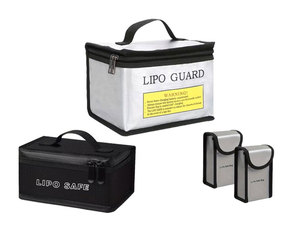
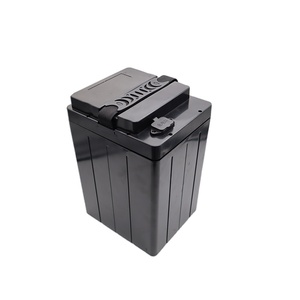
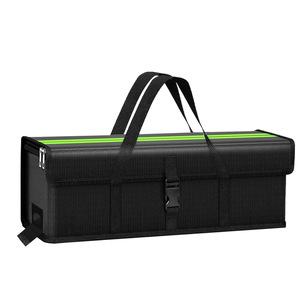
Executive Technical Report: Thermal Runaway Mitigation & Flameproof Battery Architecture
As the Greater Chicago area accelerates its transition toward electrification—spanning heavy industrial automation in logistics corridors like Joliet, commercial grid-scale energy storage under Illinois’s Climate and Equitable Jobs Act (CEJA), and heavy-duty equipment operating in challenging sub-zero winters—the demand for ultra-safe, high-energy-density battery assemblies has reached an unprecedented peak. Operating at the intersection of extreme mechanical stress, intense thermal cycling, and stringent urban fire safety codes (such as NFPA 855 and Chicago Fire Department regulations), custom battery packs must provide uncompromising safety guarantees alongside long operational lifespans.
Our OEM manufacturing facility in China stands as a global leader in designing, assembling, and exporting custom flame-retardant lithium-ion and lithium iron phosphate (LiFePO4) battery packs specifically engineered to meet North American industrial specifications. By integrating UL 94 V-0 rated enclosure polymers, phase-change thermal barriers, active aerosol fire suppression systems, and military-grade IP67/IP68 structural sealing, we supply Chicago procurement managers, engineering firms, and OEMs with direct factory solutions that exceed standard off-the-shelf offerings.
Information Gain Insight: Standard lithium battery packs utilize conventional ABS plastics that melt at approximately 160°C, accelerating flame propagation during internal cell short-circuiting. Our specialized flame-retardant battery assemblies employ polycarbonate/ABS blends reinforced with brominated or phosphorus-based flame retardants, paired with ceramic-fiber heat shields rated up to 1200°C. This active barrier architecture prevents cascade thermal propagation across adjacent cell groups even under catastrophic single-cell rupture.
Core Flame-Retardant Packaging Technologies
Achieving complete thermal isolation within high-capacity battery packs requires a multi-layered design philosophy. Rather than relying solely on external metal housing, our China-based factories implement cell-level, module-level, and pack-level containment layers:
Cell-Level Interstitial Aerogels
Ultra-thin silica aerogel blankets (0.5mm to 2.0mm) placed between individual prismatic or pouch cells to block conductive heat transfer during rapid cell venting.
V-0 Rated Fireproof Brackets
Injection-molded ABS+PC and PBT cell brackets compliance-tested under UL 94 V-0 standards. Self-extinguishing within 10 seconds without producing flammable drops.
Intumescent Thermal Coating
Interior structural surfaces coated with expanding intumescent materials that swell up to 50 times their original thickness under flame exposure, forming a protective carbon barrier.
Material Performance Matrix: Standard vs. Flame Retardant Battery Enclosures
To assist Chicago engineering teams in making informed procurement decisions, the following technical matrix details the thermal, mechanical, and safety differences across common lithium battery housing materials utilized in industrial and commercial assemblies.
| Housing Material Class | Flame Retardancy Standard | Thermal Resistance Range | Waterproof Sealing | Vibration & Impact Resistance | Ideal Application Scenario |
|---|---|---|---|---|---|
| Standard ABS Plastic | UL 94 HB (Low) | -20°C to 80°C | IP54 - IP65 | Moderate | Consumer Electronics, Light Power Tools |
| UL94 V-0 ABS+PC Alloy | UL 94 V-0 Certified | -40°C to 125°C | IP67 Sealed | High Structural Integrity | Custom Storage Kits, AGV Fleets, Portable Power |
| Die-Cast Aluminum + Aerogel | Non-Combustible (A1 Class) | -40°C to 600°C (Internal) | IP68 Submersible | Extreme Heavy Industrial | Mining Locomotives, EV Buses, Underground Tunneling |
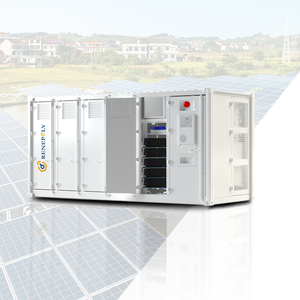
| Heavy Duty Stainless Steel | Non-Combustible | -50°C to 1000°C | IP67 Dual-Gasket | Maximum Mechanical Protection | 4180kWh Container BESS, Marine & Offshore Systems |
Localized Application Scenarios in Chicago & Midwest Logistics Hubs
Chicago’s geographic position as North America’s premier transportation, manufacturing, and distribution hub imposes unique environmental and operational stress factors on heavy-duty battery assemblies. From polar vortex sub-zero ambient temperatures to high-throughput industrial logistics, our custom battery packs are built to excel in specific local contexts:
Joliet & O’Hare Logistics AGVs
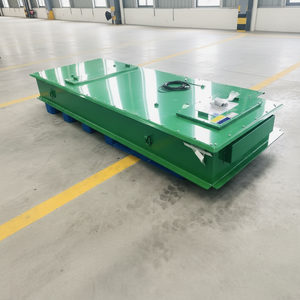
Automated Guided Vehicles (AGVs) operating in 24/7 fulfillment centers demand fast charging and continuous thermal monitoring. Our 48V flame-retardant bracket battery packs with smart BMS prevent thermal build-up during rapid 1C charging cycles in dense warehouse spaces.
Sub-Zero Winter Heating Pad Packs
Chicago winters routinely drop below -20°C (-4°F). Standard lithium cells suffer lithium plating during cold charging. Our stackable solar & ESS packs feature integrated internal heating elements managed by Smart BMS, ensuring cells reach optimal temperatures prior to charge acceptance.
Commercial High-Rise Backup & Data Centers
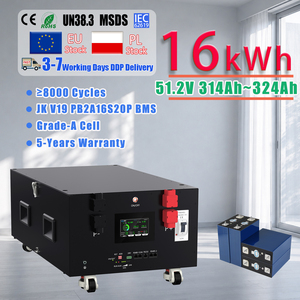
Downtown Chicago commercial towers demand strict adherence to city fire safety bylaws. Our BESS containers and rack-mounted LiFePO4 packs integrate active aerosol fire suppression systems and localized exhaust ports compliant with NFPA 855 standards for indoor installation.
Underground Mining & Tunneling Power
For tunneling locomotives and underground utility machinery across Midwest infrastructure projects, our 300Ah high-capacity flameproof lithium battery systems feature anti-explosion heavy metal casings engineered to resist high impact, dust ingress, and methane gas exposure.
Tactical & Portable Field Communications
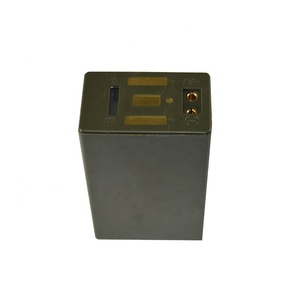
Midwest defense contractors and emergency first responders rely on robust field units like our BB-2847/U compatible IP67 waterproof and fireproof tactical radio battery packs, designed for extreme drop resistance, water submersion, and rapid field deployment.
Microgrid & Renewable Storage (ComEd Territory)
As utility companies across Illinois modernize distribution networks, our 4180kWh BESS containers provide peak-shaving and solar integration. Complete thermal insulation ensures stable operation through summer heatwaves and winter freezes alike.
Chicago & Midwest Market Trends: Safety Codes & Supply Chain Resilience
The energy landscape in Illinois and the broader Great Lakes industrial zone is undergoing a dramatic structural transformation. Driven by regulatory mandates, corporate ESG commitments, and lessons learned from past thermal incidents, battery procurement officers in Chicago are prioritizing three critical operational trends:
1. Stringent Adoption of NFPA 855 & UL 9540A Standards
The City of Chicago Department of Buildings and the Chicago Fire Department have implemented rigorous code reviews for indoor and rooftop energy storage systems. Compliance requires proof that a single cell failure will not cause cascaded runaway throughout an entire battery rack. Our factory provides complete UL 9540A thermal propagation test data, short-circuit protection protocols, and localized venting paths engineered directly into our custom battery assemblies.
2. Cold-Weather Chemistry Optimization (LiFePO4 + Heated BMS)
While standard Lithium Nickel Manganese Cobalt (NMC) chemistries deliver high energy density, their thermal stability window is narrower compared to Lithium Iron Phosphate (LiFePO4). For Chicagoland applications, LiFePO4 has become the standard due to its high thermal runaway threshold (270°C vs NMC’s 210°C) and superior cycle life (up to 8000+ cycles). Coupled with smart internal self-heating pads managed by JBD or JK BMS boards, our packs remain safe and functional even during severe Midwest winter storms.
3. Direct OEM Factory Collaboration for Custom Form Factors
Off-the-shelf standardized battery dimensions rarely fit custom industrial equipment chassis or retrofitted machinery. Chicago OEMs increasingly seek direct manufacturing partners in China capable of delivering customized ABS+PC mold designs, tailormade busbars, custom voltage ratings (from 3.2V cell modules to 800V high-voltage storage packs), and low-MOQ rapid prototyping within 3 to 4 weeks.
Our OEM Factory Edge: World-Class China Manufacturing Serving Chicago
Leveraging over 40 years of combined battery engineering expertise, our automated manufacturing facilities in China bridge the gap between cost efficiency and high-end Western quality compliance. We serve as a direct single-source OEM/ODM partner for US businesses seeking scalable power solutions.
ISO 9001 Certified Quality Assurance
Every battery module undergoes 100% automated optical inspection (AOI), cell capacity sorting, internal resistance matching, and automated spot welding to ensure zero-defect assembly.
Tier-1 Cell Sourcing & Full Traceability
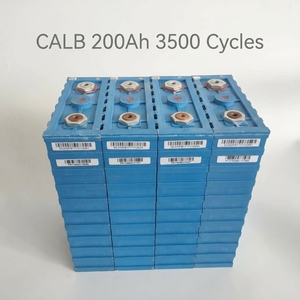
We partner exclusively with top-tier cell manufacturers (CATL, EVE, BYD, CALB) featuring batch-coded laser etching for 100% full lifecycle traceability from raw chemical grade to final pack build.
Streamlined DDP Logistics to Chicagoland
We handle all UN 38.3 transport testing, dangerous goods certification, customs clearance, and DDP shipping directly to your facility or warehouse location across Illinois and the Midwest.
Custom Engineering Process: 1. Mechanical CAD & Thermal Simulation → 2. BMS Firmware & Communication Protocol (CANbus/RS485/SMBus) Integration → 3. UL94 V-0 Bracket & Casing Prototyping → 4. UN38.3 & Drop Testing Verification → 5. High-Volume Automated Production.
Chicago B2B Procurement FAQ: Flame Retardant Battery Sourcing
Answers to common technical, logistics, and compliance questions asked by Chicago-based engineering and purchasing teams:
Q1: How do your battery assemblies comply with Chicago Fire Department safety codes?
Our battery assemblies utilize UL 94 V-0 flame-retardant polymers, internal ceramic isolation layers, and active battery management systems (BMS) with over-temperature shutdown. For larger storage systems, we provide UL 9540A thermal propagation test reports demonstrating containment of thermal runaway within the module.
Q2: Can these battery packs charge reliably during Chicago sub-zero winters?
Yes. We offer optional integrated silicone heating pads controlled by the BMS. When charging is initiated at temperatures below 0°C, the BMS directs incoming power to heating elements until cell temperatures reach a safe charging threshold (typically +5°C), protecting against dangerous lithium dendrite formation.
Q3: What is the typical lead time for custom battery sample prototypes?
For custom enclosures and BMS configurations, initial 3D prototypes and engineering samples are generally delivered within 21 to 30 days. High-volume production orders require 35 to 45 days, followed by sea freight or express air shipping to Illinois.
Q4: Do you offer DDP (Delivered Duty Paid) shipping to Chicago warehouses?
Yes. We handle end-to-end logistics, including HazMat packaging compliance, UN 38.3 certification documentation, US Customs clearance, tariffs, and inland truck transport directly to your door anywhere in the Greater Chicago metropolitan area.
Q5: What is the difference between UL 94 V-0 and UL 94 HB flame retardancy?
UL 94 HB indicates slow horizontal burning on a plastic specimen (low protection). UL 94 V-0 is a stringent vertical burn test where flaming stops within 10 seconds on a vertical specimen, and any dripping particles are non-inflamed. All our flameproof brackets meet V-0 standards.
Q6: Can your custom packs communicate with existing CANbus or Modbus equipment?
Absolutly. Our smart BMS boards support CANbus 2.0B, RS485, Modbus RTU, and SMBus protocols, allowing seamless real-time telemetry (SoC, SoH, cell voltages, temperature sensor data) to be sent directly to your master vehicle controller or SCADA software.