Battery Engineering Blog
Discover expert perspectives, custom battery design guides, charging solutions, and industry updates from USA engineers.
Next-Generation Defense Lithium Battery Engineering for the Pacific Northwest Ecosystem
Analyzing high-gain energy density, extreme thermal stability, and tactical power reliability for Defense OEMs, Naval Subsea Systems, and Autonomous Logistics across Puget Sound.
The Greater Seattle region—spanning Puget Sound, Everett, Bellevue, and Tacoma—stands at the global epicenter of maritime defense tech, autonomous aerospace engineering, and advanced industrial robotics. As defense contractors and autonomous mobile robot (AMR) integrators push the operational boundaries of unmanned underwater vehicles (UUVs), tactical aerial platforms, and mission-critical logistics systems, energy storage architecture has evolved from a passive component to a core strategic differentiator.
Operating in the demanding maritime and alpine microclimates of the Pacific Northwest requires custom defense-grade lithium battery assemblies that withstand rapid subsea thermal drops, heavy marine humidity, salt spray oxidation, and extreme high-current peak discharge loads. As a premier China OEM/ODM defense lithium battery manufacturer and global exporter, our engineering group bridges the gap between state-of-the-art electrochemical cell chemistries and rigorous defense compliance frameworks (including UN 38.3, UL 1642, IEC 62133, and MIL-STD-810H environmental hardening protocols).
By leveraging vertically integrated manufacturing capabilities—ranging from precision cell matching, ultrasonic tab welding, and custom Smart BMS (CANbus 2.0B / RS485 / SMBus) programming to IP67/IP68 hermetic casing design—we empower Seattle-based defense OEMs and technology innovators with unmatched total cost of ownership (TCO), rapid turnaround times, and quantifiable information gain for high-reliability deployment.
8 Recommended Defense Lithium Battery Systems for Seattle OEMs
Precision-engineered battery assemblies featuring smart BMS protection, high pulse C-rates, wide temperature resilience, and extended cycle endurance.
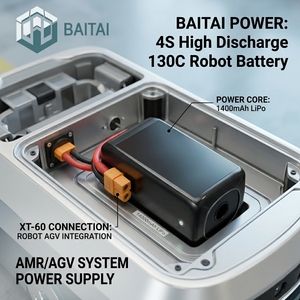
130C 1400mAh 4S High Discharge LiPo Battery for AGV & AMR Systems
Engineered for tactical service robots, high-speed autonomous mobile platforms, and drone burst systems requiring instantaneous peak current output without voltage drop.
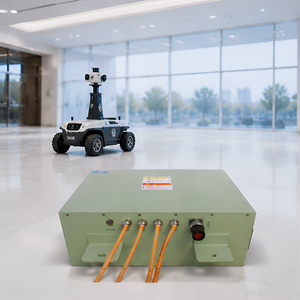
72V 60Ah LiFePO4 AMR Mobile Robot Battery Pack with Smart BMS
Heavy-payload energy core designed for autonomous robotics platforms, industrial automated mobile robots, and port logistics defense applications in Puget Sound.
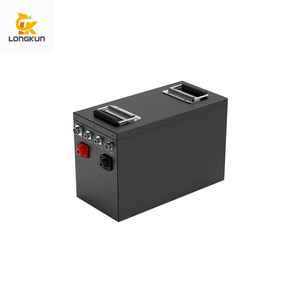
24V 30Ah Lithium-Ion Robot Battery Pack for Autonomous AGVs
Compact 24V power module equipped with integrated PCM protection, low internal impedance, and optimal volumetric energy density for tactical mobile ground robots.
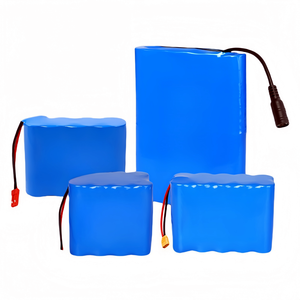
OEM Modular 3.7V - 14.8V 18650 / 32650 / 26650 Lithium Packs
Customizable multi-cell configuration platform tailored for autonomous floor-cleaning robots, inspection rovers, and specialized defense field equipment.
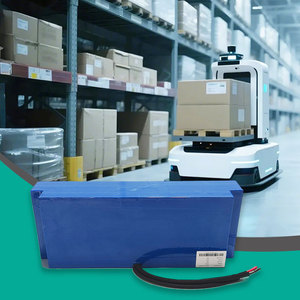
Custom Rechargeable LTO 9Ah Autonomous Mobile Robot Battery Pack
Extreme-life Lithium Titanate Oxide chemistry capable of 6-minute ultra-fast charging and 20,000+ deep cycles under sub-zero PNW winter environments.
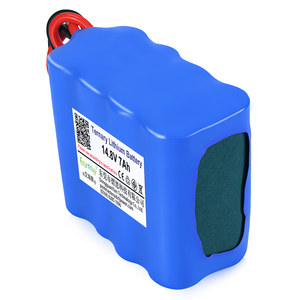
Custom 14.8V 7Ah NMC 4S2P High Capacity Lithium Battery Pack
Lightweight high-capacity battery matrix designed for tactical surveillance rovers, automated electric lawn devices, and lightweight defense mobility chairs.
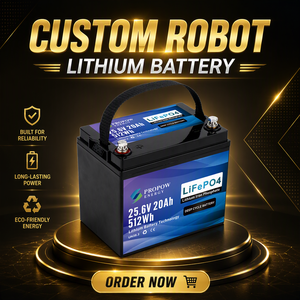
Custom Robot 12V 24V 20Ah Rechargeable LiFePO4 Battery Pack
Versatile dual-voltage platform providing inherent thermal safety, flame-retardant structural potting, and stable voltage discharge plateaus for AGVs/AMRs.
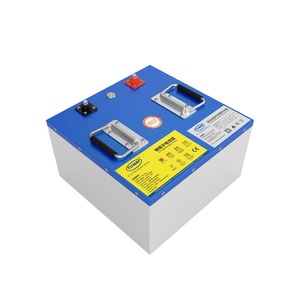
24V LiFePO4 50Ah - 100Ah Pack with BMS (-20°C to 60°C Operating Range)
Ruggedized large-format power platform delivering 1500+ deep cycles, wide-temperature operational resilience, and heavy-duty current delivery for military mobile platforms.
Electrochemical Chemistry Comparison for Defense Applications
Selecting the optimal cell chemistry based on gravimetric energy density, operational temperature envelopes, cycle longevity, and safety risks.
| Chemistry Platform | Gravimetric Energy Density | Nominal Cell Voltage | Cycle Endurance (80% DOD) | Operating Temperature | Tactical Defense Use-Case |
|---|---|---|---|---|---|
| Lithium Iron Phosphate (LiFePO4) | 140 - 170 Wh/kg | 3.2 V | 3,500 - 6,000 Cycles | -20°C to +65°C | Naval AGVs, Heavy Duty AMRs, Subsea Aux Systems |
| Lithium Titanate (LTO) | 80 - 110 Wh/kg | 2.3 V | 15,000 - 25,000 Cycles | -40°C to +65°C | Extreme Cold Ops, Ultra-Fast Charge Field Gear |
| Nickel Manganese Cobalt (NCM/NMC) | 200 - 250 Wh/kg | 3.6 V - 3.7 V | 1,000 - 2,000 Cycles | -20°C to +55°C | Tactical Aerial Drones, Portable Recon Radios |
| High-Discharge Lithium Polymer (LiPo) | 180 - 220 Wh/kg | 3.7 V | 300 - 500 Cycles | -10°C to +50°C | High-Burst Robotic Actuators, Ordnance Drones |
Custom Smart BMS Architecture
Integrated microcontrollers running custom firmware supporting CANbus 2.0B, SMBus, and RS485 communication protocols. Enables real-time State of Charge (SOC), State of Health (SOH), individual cell passive/active balancing, and multi-tier thermal shutdown protection.
IP67 / IP68 Subsea Hermetic Enclosures
Engineered for Puget Sound and Pacific marine environments. Utilizes precision CNC-machined anodized aluminum alloys or flame-retardant ABS/PC polymers with silicone gasketing and epoxy potting to resist saltwater immersion and deep-water hydrostatic pressure.
MIL-STD-810H Environmental Hardening
Internal cell matrices bound by high-grade structural silicone retainers and anti-vibration damping blocks. Rigorously tested to withstand mechanical shock, drop impacts, sinusoidal vibration, and rapid altitude depressurization for defense transit.
Powering Seattle’s Key Defense & Autonomous Technology Sectors
Custom lithium power configurations targeted specifically at the operational needs of Pacific Northwest defense contractors and maritime engineering hubs.
1. Subsea Autonomous Underwater Vehicles (AUVs) & UUVs
Puget Sound and Elliott Bay represent major testing corridors for naval defense marine robotics. Our custom 48V, 72V, and 300V subsea battery assemblies utilize pressure-equalized encapsulation and high-capacity LiFePO4 cells to power acoustic sonar, long-range propulsion motors, and sensor payload packages during extended oceanographic surveillance missions.
Puget Sound Maritime Defense2. Autonomous Warehouse Logistics & Port Automation
The Port of Seattle and Seattle-Tacoma industrial corridors rely on continuous 24/7 automated mobile robot (AMR) fleets. Our 24V 30Ah and 72V 60Ah smart lithium battery systems support opportunity fast-charging, zero-maintenance cycles, and seamless integration into automated material handling equipment.
Seattle Logistics & Port Freight3. Aerospace Prototyping & Tactical Drones (UAVs)
With Everett and Renton serving as worldwide aerospace centers, defense UAV developers demand high-gravimetric-density NMC and ultra-high-discharge 130C LiPo packs. These battery systems maximize flight endurance while providing instant high-current bursts required during aggressive tactical maneuvers and heavy payload launches.
Pacific Northwest Aerospace Hub4. Expeditionary Off-Grid Energy & Alpine Tactical Field Gear
Defense forces operating in the Cascade Range and remote Pacific Northwest field conditions require ruggedized wide-temperature energy storage. Our LTO and wide-temperature LiFePO4 battery modules maintain full charge-acceptance down to -20°C and -40°C, empowering remote communications and tactical surveillance gear.
Alpine & Extreme Environment OperationsSeattle’s Strategic Transition to Clean Maritime & Defense Autonomy
Understanding regional policy drivers, electrification mandates, and supply chain security priorities for Washington State defense engineering.
1. Rapid Decarbonization & Marine Vessel Hybridization Mandates
Washington State has enacted some of the nation’s strictest marine decarbonization targets, accelerating the transition of naval auxiliary craft, harbor tugs, research vessels, and unmanned marine vehicles from diesel-generators to hybrid-electric energy storage. Defense contractors in Seattle are increasingly integrating large-format 24V-72V lithium iron phosphate (LiFePO4) systems to meet zero-emission stealth loitering mandates without compromising operational range.
2. Expansion of AI-Driven Autonomous Swarm Systems
The Seattle technology corridor—leveraging local artificial intelligence expertise—is leading the development of collaborative autonomous robotics swarms for air, land, and sea defense. Swarm robotics require battery packs equipped with high-speed CANbus 2.0B / RS485 telemetry, allowing the host robot’s central AI controller to monitor state-of-health, cell temperature, and remaining run-time with millisecond precision.
3. Direct-Factory OEM Procurement & Supply Chain Resilience
To overcome domestic domestic supply bottlenecks and exorbitant markups by intermediaries, Seattle defense integrators are establishing direct manufacturing relationships with certified China battery exporters. By pairing factory-direct manufacturing scalability with international transport certifications (UN 38.3, MSDS, Drop-Test Verification), Seattle OEMs achieve substantial unit-cost reductions while maintaining ISO 9001-certified quality controls.
Why Leading Seattle Defense OEMs Partner with Our Engineering Group
Four decades of combined battery design heritage, rigid quality assurance pipelines, and end-to-end custom battery manufacturing.
Vertical Custom Engineering
From initial schematic capture and 3D CAD mechanical enclosure modeling to customized Smart BMS PCB layout design—our engineering group provides single-source turnkey development tailored to your exact mechanical footprint and electrical envelope.
Cell Grading & Automated Assembly
Every lithium cell undergoes rigorous automated capacity sorting, internal resistance (IR) matching, and voltage grading prior to assembly. Spot welding utilizing nickel-plated copper strips ensures minimal voltage drops under heavy surge currents.
Full Regulatory & Safety Certification
Our battery packs are engineered to comply with UN 38.3, UL 1642, UL 2054, CE, IEC 62133, and RoHS guidelines. Complete testing documentation and UN hazard shipping documentation are provided with every export batch bound for Seattle ports.
Seattle Defense Procurement & Engineering FAQ
Addressing critical technical, regulatory, shipping, and customization queries for engineering teams in Greater Seattle.
How do your lithium battery packs perform in Puget Sound's cold maritime environments?
Our defense lithium battery packs are specifically engineered for cold ambient temperatures. For standard operational ranges down to -20°C, we utilize optimized LiFePO4 cells with low-impedance electrolyte formulations. For extreme environments down to -40°C, we recommend our Lithium Titanate (LTO) series or custom packs integrated with internal low-power BMS-controlled heating films that pre-warm the cell matrix prior to charging.
Can your Smart BMS communicate directly with our autonomous robot’s main computer?
Yes. Our custom Smart BMS microcontrollers support open and proprietary communication protocols, including CANbus 2.0B, RS485, SMBus, and UART. We provide Seattle software engineers with comprehensive telemetry registers to track individual cell voltages, pack temperature, real-time current draw, State of Charge (SOC percentage), and cycle counts.
What certifications are provided for air or sea shipment to the Port of Seattle?
All exported battery systems include comprehensive UN 38.3 transport testing certification packages, material safety data sheets (MSDS), standard 1.2m drop test reports, and air/sea transport compliance certificates (IATA/IMO). We work directly with licensed freight forwarders to ensure seamless customs clearance at Sea-Tac International Airport and the Port of Seattle.
How do you guarantee cell consistency and prevent early pack degradation?
We implement a strict 100% cell sorting protocol using automated testing equipment. Cells are matched within narrow tolerance bands: Voltage differential ≤ 5mV, Internal Resistance differential ≤ 1.5mΩ, and Capacity tolerance ≤ 1%. Combined with passive or active balancing circuitry in our BMS, this prevents cell drifting and extends pack cycle life by up to 40%.
What options are available for shock and vibration protection under MIL-STD-810H?
For high-vibration applications—such as rough-terrain defense AMRs or marine vessels—we utilize internal structural honeycombs, anti-vibration silicone rubber mounts, flame-retardant structural epoxy potting, and reinforced aluminum outer cases. This mechanical architecture absorbs multidirectional mechanical shock and prevents spot-weld fatigue.
What is your typical turnaround time for custom prototype samples to Seattle OEMs?
Following design approval and schematic confirmation, standard custom prototype assemblies are typically manufactured, tested, and dispatched within 2 to 3 weeks. Rapid prototyping options are available for urgent defense engineering programs.
What thermal runaway prevention features are engineered into your battery packs?
Safety is paramount. Our packs incorporate multi-tiered protection: thermal cutoff fuses, physical cell spacers for heat dissipation, flame-retardant phase-change material (PCM) insulation, and BMS-controlled over-temperature cutoffs at both cell and pack levels.
Can you manufacture custom battery housings to fit constrained robotic chassis dimensions?
Absolutely. We specialize in custom housing design utilizing CNC-machined 6061-T6 aluminum, stainless steel, or custom injection-molded/3D-printed flame-retardant polymers (UL94-V0 rated) engineered precisely to fit your vehicle’s physical dimensions and weight distribution requirements.