Battery Engineering Blog
Discover expert perspectives, custom battery design guides, charging solutions, and industry updates from USA engineers.
Featured Medical & AMR Autonomous Battery Solutions
Custom engineered battery packs designed for critical healthcare platforms, autonomous mobile robots (AMR), and hospital automation systems deployed across Japan.
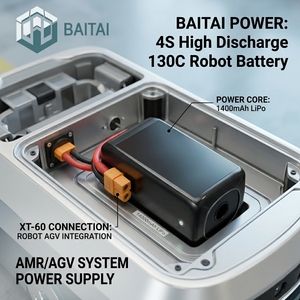
130C 1400mAh 4S High Discharge LiPo Battery for Service Robot AGV and Autonomous Mobile Robot Power System
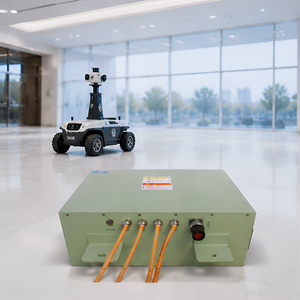
72V 60Ah LiFePO4 AMR Mobile Robot Battery Pack for Autonomous Robot System High Discharge Smart BMS Custom OEM ODM Wholesale
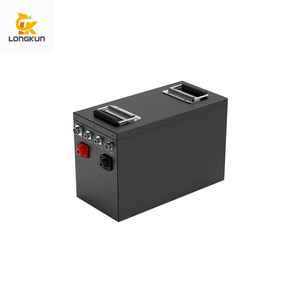
Longkun 24V 30Ah Lithium Ion Robot Battery Pack with BMS Rechargeable Li-ion Battery for AGV AMR Mobile Robots
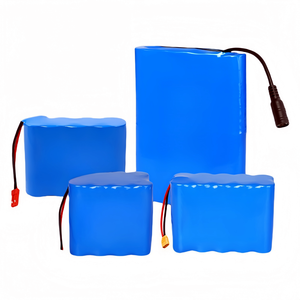
OEM Li-ion Battery Pack 3.7V 7.4V 11.1V 14.8V 18650 32650 26650 Lithium Ion Battery Pack for Autonomous Floor-Cleaning AMR Robot
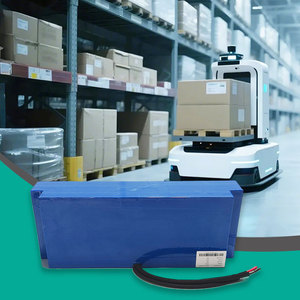
Customized Rechargeable LTO Agv Battery Pack 9Ah Autonomous Mobile Robot Agv Battery
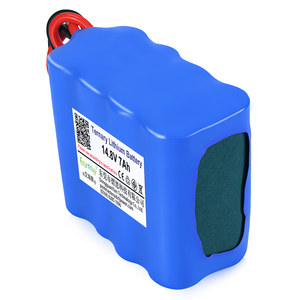
Custom Lithium Battery 14.8V 7Ah NMC 4S2P High Capacity for Autonomous Mobile Robot Electric Wheelchair Lawn Mower
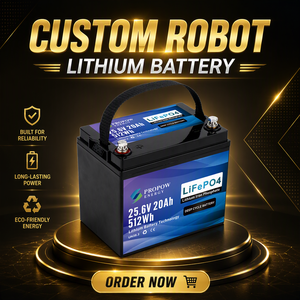
Custom Robot Lithium Battery 12V 24V 20Ah Lithium Battery for Robot, Rechargeable LiFePO4 Battery Pack for AGV AMR Mobile Robots
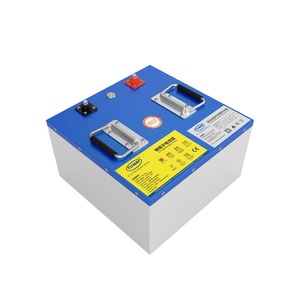
24V LiFePO4 Battery Pack 50Ah 60Ah 80Ah 100Ah with BMS 1500 Cycles -20C~60C for AGV AMR Robot Mobile Platform
1. The Technical Landscape of Medical Energy Systems in Japan
Japan’s healthcare technology sector represents one of the world's most demanding environments for battery design, safety, and reliability. As Japan accelerates its adoption of hyper-automated healthcare under the Society 5.0 framework, original equipment manufacturers (OEMs) of surgical robotics, portable clinical equipment, and hospital-wide Autonomous Mobile Robots (AMRs) face rigorous operational demands. Power sources are no longer passive chemical containers; they are intelligent, multi-layered safety subsystems that directly impact patient outcomes and institutional security.
Modern medical devices deployed in Japanese university hospitals, acute care clinics, and home healthcare networks require battery systems engineered with ultra-high energy density, zero-fail safety redundant architectures, and strict electromagnetic compatibility (EMC). A single power anomaly in an active infusion pump, surgical navigation system, or floor-disinfection AMR can lead to critical operational downtime. Consequently, custom medical battery pack manufacturing must move beyond off-the-shelf assembly toward cell-level thermal modeling, active hardware/software fault tolerance, and comprehensive regulatory traceability.
Information Gain Insight: Unlike standard commercial battery packs, medical-grade lithium power systems destined for the Japan market require dual-layer hardware protection circuits (Over-Voltage, Under-Voltage, Over-Current, Thermal Runaway) combined with isolated SMBus v1.1 or CAN bus 2.0B communication protocols to seamlessly interface with PMDA-registered hospital equipment consoles.
Our custom battery engineering facilities integrate primary cell sourcing from tier-1 manufacturers (including Panasonic, Sony/Murata, and Samsung SDI) with custom enclosure design. By controlling the complete lifecycle—from initial 3D mechanical CAD modelling to micro-code development for Smart Battery Management Systems (BMS)—we ensure every battery pack satisfies both international CE directives (Medical Device Regulation MDR 2017/745) and Japan’s local Electrical Appliance and Material Safety Law (DENAN Law / PSE Mark).
2. Navigating CE Marking, IEC 62133-2, EN 60601-1 & Japan PSE/PMDA Standards
Exporting medical electrical equipment into Japan or partnering with Japanese OEMs for international distribution requires an absolute alignment of European CE compliance with Japanese domestic regulatory frameworks. A common hurdle for procurement engineering teams is understanding the overlapping testing requirements between international electrotechnical standards and local Ministry of Health, Labour and Welfare (MHLW) directives.
Key Regulatory Frameworks for Medical Battery Assemblies:
- CE Marking & Medical Device Regulation (MDR 2017/745): Demands rigorous risk management documentation under ISO 14971, ensuring that battery failure modes do not pose thermal, toxic, or electrical hazards to patients or clinical operators.
- IEC 62133-2:2017: The cornerstone safety standard for portable sealed secondary lithium cells and packs. Mandatory tests include external short-circuit, thermal abuse, mechanical drop, crush, and forced internal short-circuit testing.
- EN 60601-1 / JIS T 0601-1: The foundational medical electrical safety standard. Battery systems must adhere to strict creepage and clearance distances, touch current limits, and flame-retardant enclosure ratings (UL94 V-0 minimum).
- Japan PSE Mark (DENAN Law): Lithium-ion battery packs with energy densities exceeding 400 Wh/L imported into Japan must undergo testing according to Technical Criteria (JIS C 8712 / JIS C 8714) to earn the mandatory Circle PSE Mark.
- UN 38.3 Transportation Certification: Prerequisite for air and sea transport into Tokyo, Osaka, and Nagoya ports, guaranteeing stability under low pressure, thermal shock, vibration, impact, and forced discharge.
| Standard / Regulation | Target Region | Primary Testing Scope | Compliance Status |
|---|---|---|---|
| IEC 62133-2:2017 | Global / Europe / Japan | Chemical Safety, Thermal Runaway, Overcharge Protection | Full Certification |
| EN 60601-1-2 (4th Ed.) | EU / Global Medical | Electromagnetic Compatibility (EMC) & Immunity | Full Certification |
| JIS C 8712 / 8714 (PSE) | Japan Domestic Market | Drop Test, Internal Short Circuit, Cell Insulation integrity | Full Certification |
| UN 38.3 & MSDS | International Freight | Altitude Simulation, Thermal Impact, Shock, Vibration | Full Certification |
| ISO 13485 | Manufacturing Quality | Medical Device Quality Management System (QMS) | Factory Compliant |
3. Specialized Japanese Medical & Robotic Application Scenarios
Healthcare facilities across Tokyo, Osaka, Kyoto, and Fukuoka are pioneer testing grounds for medical robotics and automated logistical systems. Custom battery packs must be engineered around specific mechanical envelopes, charging profiles, and duty cycles tailored to these distinct application scenarios:
Hospital Logistics AMRs & AGVs
Continuous 24/7 delivery of medications, linens, and surgical trays. Requires fast-charge LiFePO4 or LTO chemistry supporting 3C–5C rapid opportunity charging without degradation.
Surgical Assistance & Exoskeletons
Ultra-compact NMC high-energy packs designed with lightweight ergonomic housings, offering maximum energy density to minimize operator fatigue during prolonged procedures.
Portable Ventilators & Oxygen Concentrators
Critical care backup systems requiring SMBus / I2C communication for real-time State-of-Charge (SOC) monitoring, remaining run-time calculations, and cycle count reporting.
Mobile Medical Workstations & Carts
Hot-swappable 14.8V and 24V battery modules powering diagnostic monitors, barcode scanners, and onboard computing terminals throughout 12-hour nursing shifts.
Floor-Cleaning & UV-C Disinfection AMRs
High-capacity 24V to 72V LiFePO4 packs engineered for high-vibration resistance, flame-retardant sealing, and extended life cycles (1500–3000 cycles) in clinical environments.
Cold-Chain Pharmaceutical Tracking
Wide-temperature lithium cells capable of reliable operation down to -20°C and up to +60°C, keeping tracking sensors active during critical vaccine and plasma logistics.
4. Chemistry Selection Matrix: LiFePO4 vs NMC vs LTO for Medical OEM Devices
Selecting the optimal electrochemistry is a vital trade-off between gravimetric energy density, volumetric footprint, cycle life, thermal safety margin, and rate capability. Below is an engineering comparison matrix for medical device designers and AMR systems engineers:
| Chemistry Parameter | Lithium Iron Phosphate (LiFePO4) | Nickel Manganese Cobalt (NMC) | Lithium Titanate (LTO) |
|---|---|---|---|
| Nominal Voltage per Cell | 3.2 V | 3.6 V – 3.7 V | 2.3 V – 2.4 V |
| Gravimetric Energy Density | 120 – 160 Wh/kg | 200 – 260 Wh/kg | 70 – 100 Wh/kg |
| Cycle Life (80% DOD) | 2,000 – 4,000 Cycles | 500 – 1,200 Cycles | 15,000 – 30,000 Cycles |
| Thermal Runaway Temp | ~270°C (Ultra Safe) | ~210°C (Moderate) | >300°C (Extremely Safe) |
| Fast Charging Capability | 1C – 2C Standard | 0.5C – 1C Standard | 6C – 10C (Sub-10 min) |
| Primary Medical Target | AGVs, AMRs, Heavy Mobile Carts | Wearables, Surgical Tools, Portable Pumps | Continuous Fast-Charge Hospital AGVs |
5. Localization Trends & Market Intelligence for Japanese Healthcare OEMs
Japan leads global demographics in population aging, with over 29% of its citizens aged 65 or older. This demographic shift has created unprecedented demand for domestic healthcare automation, leading to key structural market trends that influence custom battery specifications:
A. Deep Integration of Smart BMS with Hospital IoT Systems
Japanese medical facilities increasingly connect medical carts, automated wheelchairs, and delivery robots to centralized hospital management software (HMS). Custom battery packs are expected to transmit real-time telemetry via CAN open, RS485, or Bluetooth Low Energy (BLE). Parameters such as State of Health (SOH), cell-level voltage balance, temperature profiles, and historical discharge curves are monitored continuously to execute preventive maintenance before a failure occurs.
B. Strict Thermal Tolerance and Silent Passive Cooling
Noise pollution in Japanese hospital wards and intensive care units (ICUs) is strictly regulated under Japanese Industrial Standards (JIS). Heavy cooling fans inside battery enclosures are often unacceptable. We engineer high-efficiency thermal management systems using phase-change materials (PCM), aluminum heat-sinking plates, and thermal conductive potting compounds, allowing heat dissipation without active fans.
C. High Demand for Ultra-Long Lifecycle Technologies (LTO & Blade LiFePO4)
Because equipment maintenance costs in Japan are high, hospitals favor power systems with long operational lifetimes. While standard commercial lithium battery packs require replacement every two years, our medical-grade LTO (Lithium Titanate) and optimized LiFePO4 systems offer up to 10 years of operational life, significantly reducing Total Cost of Ownership (TCO) for Japanese health authorities and OEM buyers.
6. Factory OEM/ODM Capabilities & Custom Engineering Process
As an established custom medical battery solutions manufacturer, our production line bridges initial engineering concepts with mass-market manufacturing precision. We partner directly with Japanese R&D centers, providing comprehensive technical assistance throughout every engineering milestone:
Custom Battery BMS Engineering Features:
- Multi-Tiered Protection Architecture: Primary software protection combined with secondary non-resettable hardware fuse mechanisms (IC + MOSFET + Chemical Fuse).
- Precision Coulomb Counting: High-accuracy fuel gauge ICs (Texas Instruments / Analog Devices) delivering ±1% State-of-Charge accuracy.
- Active Cell Balancing: Prolongs pack service life by balancing individual cell voltages during both charge and discharge cycles.
- IP65 / IP67 Medical Enclosures: Custom molded flame-retardant ABS/PC or extruded aluminum cases designed for resistance against hospital disinfectant wipe-downs and liquid ingress.
7. Local Procurement FAQs for Japanese OEM Engineers & Buyers
Partner with a Certified Medical Battery Manufacturer for Japan
Require a tailored battery pack design for medical robotics, patient care devices, or autonomous hospital platforms? Consult directly with our senior application engineers to receive custom technical proposals, CAD drawings, and pricing options.