Battery Engineering Blog
Discover expert perspectives, custom battery design guides, charging solutions, and industry updates from USA engineers.
High-Performance AMR & AGV Lithium Battery Packs
Precision-engineered smart energy storage modules featuring integrated CANbus BMS, thermal protection, and long cycle stability for Australian automated systems.
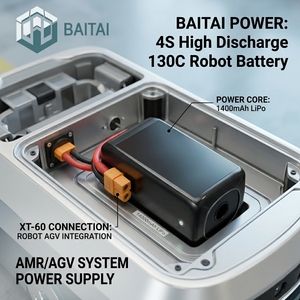
- Discharge Rate: 130C Continuous Burst
- Nominal Voltage: 14.8V (4S1P Configuration)
- Target Application: High-Torque Peak AGV Drives
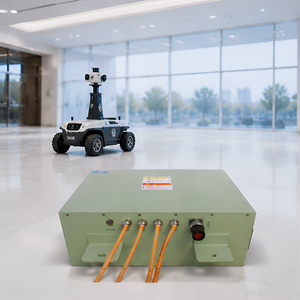
- Capacity & Chemistry: 72V 60Ah LFP Grade-A
- BMS Protocol: CANbus 2.0B / RS485 Telematic
- Cycle Life: >3,500 Cycles @ 80% DOD
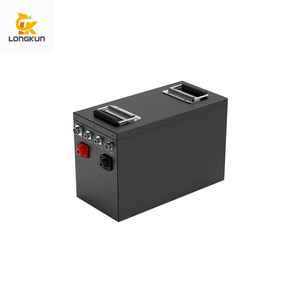
- Energy Rating: 720Wh Compact Modular Pack
- Operating Temp: -20°C to +60°C Thermal Core
- Protection: Overcharge, Thermal & Short Circuit
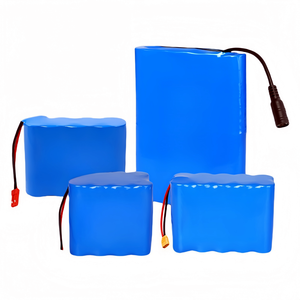
- Form Factor: Customizable Cylindrical Multi-S
- Enclosure: Flame-Retardant ABS / PVC Shrink
- Certification: UN38.3, CE, IEC 62133 Compliant
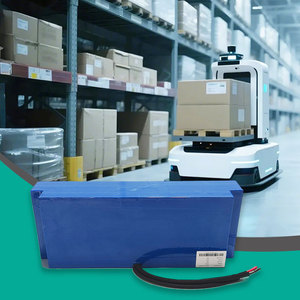
- Ultra Long Life: >20,000 Full Charge Cycles
- Fast Charge: 10C Charge Acceptance (6 Mins)
- Safety Index: Zero Thermal Runaway Hazard
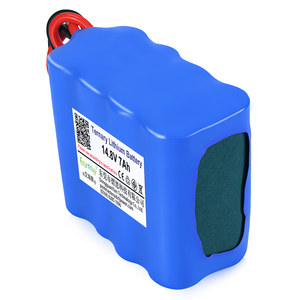
- Energy Density: High Wh/kg Lightweight Cell
- Configuration: 4S2P NMC 18650 Power Series
- Protective Rating: Sealed IP65 Waterproof Shell
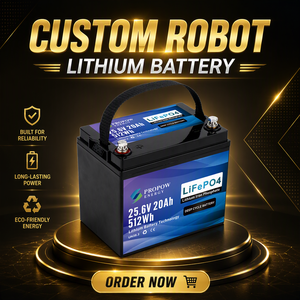
- Dual Voltage Options: 12.8V / 25.6V Nominal
- Communication: SMBus / I2C / CAN Monitoring
- Cycle Rating: 3,000+ Deep Cycles @ 25°C
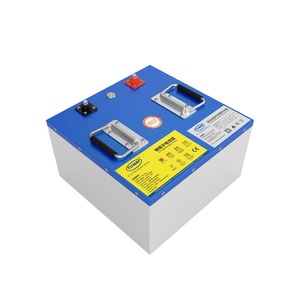
- Capacity Scaling: 50Ah / 60Ah / 80Ah / 100Ah
- Ruggedized Core: Heavy Vibe & Shock Resistance
- Service Life: 1500–4000 Cycles Extreme Duty
Architecting High-Reliability Battery Packs for the Australian Autonomous Mobile Robot (AMR) Market
The Australian industrial automation sector is accelerating at an unprecedented trajectory. Driven by severe labor constraints in remote geographic regions, surging warehouse expansion in major metropolitan corridors (Sydney, Melbourne, Brisbane), and aggressive decarbonization mandates across the resource sector, Autonomous Mobile Robots (AMRs) and Automated Guided Vehicles (AGVs) have shifted from operational luxuries to core industrial infrastructure.
However, deploying autonomous robotics platforms within the Australian continent presents engineering challenges rarely encountered in North America or Western Europe. OEM system integrators in Australia must navigate extreme ambient heat conditions exceeding 50°C in outdoor mining operations, vast operational distances, high mineral dust concentrations, and stringent national standards such as AS/NZS IEC 62619 for industrial lithium accumulators.
As a global pioneer with over four decades of precision battery pack design, cell sorting, and smart Battery Management System (BMS) manufacturing experience, our OEM factory specializes in manufacturing turn-key, custom lithium battery solutions explicitly designed to solve the harsh environmental and operational demands of the Australian market.
1. Navigating Australia's Unique Operating Thermal Envelope
Thermal degradation is the leading cause of premature lithium cell capacity loss and catastrophic thermal runaway in autonomous robot fleets. In regions like Western Australia's Pilbara or Queensland's Bowen Basin, ambient surface temperatures frequently cross 45°C to 55°C. Standard off-the-shelf lithium-ion packs lack the necessary internal heat dispersion architecture, causing BMS trip-outs or rapid capacity loss.
Our custom AMR battery packs engineered for Australia utilize multi-layered thermal dissipation matrixes:
- Phase-Change Material (PCM) Interlayer Cooling: Absorbs peak discharge heat spikes during heavy payload lifting or incline climbs, maintaining internal cell temperature under 45°C.
- High-Conductivity Aluminum Alloy Housings: Heavy-duty, CNC-machined IP65/IP67 enclosures acting as direct heatsinks for high-rate BMS MOSFET arrays.
- Active Thermal Derating Smart BMS: Real-time multi-point NTC thermistor monitoring that communicates dynamically via CANbus J1939 or Modbus RTU to the robot's main controller to throttles power smoothly rather than shutting down abruptly.
2. Chemistry Selection Strategy: LiFePO4 vs. LTO vs. NMC for AU Operators
Choosing the optimal electrochemistry is not a one-size-fits-all decision for Australian robot manufacturers. We provide fully customized pack builds across three core chemistry platforms based on duty-cycle intensity:
| Battery Chemistry | Nominal Cell Voltage | Cycle Life (80% DOD) | Charge Acceptance | Best Australian AMR Application |
|---|---|---|---|---|
| LiFePO4 (LFP) | 3.2V | 3,500 – 5,000 Cycles | 1C Continuous | 24V/48V Warehouse AMRs, Indoor Logistics, Agricultural Scouters |
| LTO (Lithium Titanate) | 2.3V | 20,000+ Cycles | 6C – 10C Opportunity Charge | 24/7 Automated Ports (Botany/Fremantle), High-Throughput Fulfillment |
| NMC (Nickel Manganese Cobalt) | 3.6V – 3.7V | 1,200 – 2,000 Cycles | 1C to 2C Peak | Compact Space-Constrained Service Robots, Medical AMRs, Lawn Harvesters |
| High Discharge LiPo | 3.7V | 500 – 800 Cycles | 130C Instant Burst | High-Torque Robotic Actuators, Emergency Lift Mechanism AGVs |
Where Our AMR Batteries Power Australia’s Autonomous Revolution
Tailored battery architecture engineered specifically for Australia's dominant industrial ecosystems.
Underground & Surface Mining AMRs (Pilbara & Goldfields)
Heavy-duty 48V & 72V LiFePO4 packs designed to sustain vibration levels up to 5G in autonomous explosive haulers, inspection rovers, and underground tunnel mapping platforms operating in iron ore and lithium mines.
Automated Logistics & Distribution Hubs (NSW & VIC)
Ultra-fast charging 24V & 48V LTO and LFP modules integrated into high-speed sorting AMRs, automated pallet jacks, and goods-to-person (G2P) shuttles working 24/7 in major ecommerce fulfillment networks.
AgriTech & Solar Farm Vegetation Control Robots
High-energy-density NMC and LiFePO4 packs equipped with IP67 dual-seal enclosures. Engineered to withstand intense UV radiation, red-dust ingress, and solar recharging spikes across rural South Australia and Queensland.
Healthcare & Commercial Sanitation AMRs
Compact 14.8V and 24V lithium battery systems powering hospital disinfection robots, autonomous floor scrubbers, and security surveillance rovers with silent operation and smart SOC fuel-gauging.
Port Container Terminals (Port Botany, Melbourne & Fremantle)
Extreme heavy-discharge high-voltage (>72V) custom battery packs for heavy payload autonomous container movers, handling continuous coastal saltwater breeze exposure and multi-ton towing forces.
Hazardous Zone & Defense Autonomous Platforms
Custom explosion-proof encapsulated battery assemblies complying with stringent Australian safety isolation guidelines for chemical processing plants, fuel depositories, and remote defense surveillance AGVs.
Key Localized Trends Shaping Australian AMR & AGV Battery Specifications
Trend 1: Rapid Transition from Lead-Acid to Opportunity-Charged Lithium
Historically, legacy Australian industrial facilities relied on lead-acid batteries for AGV traction. However, the operational cost of battery swapping rooms, long 8-hour charge cycles, and toxic acid fumes has proven unsustainable. Australian operators are now mandating Opportunity Charging (Fast Charging during 15-minute shift breaks). Our high-rate LiFePO4 and LTO chemistries allow AMRs to charge at 2C to 6C rates safely, achieving 80% charge in under 15 minutes without degrading overall cycle life.
Trend 2: Cloud Telemetry & Remote Fleet BMS Integration
Given Australia’s massive geographical footprint, industrial facilities in regional WA or Far North Queensland often operate without local technician support. Modern procurement demands smart BMS telemetry capable of transmitting cell-level State of Charge (SOC), State of Health (SOH), cycle count, and temperature alerts via IoT gateways directly to fleet management dashboards (ROS 2, Open-TCS, or custom cloud software).
Trend 3: Strict Compliance with AS/NZS IEC 62619 & UN38.3 Logistics Regulations
Australian customs authorities (ABF) and workplace health and safety boards are enforcing strict compliance regarding lithium battery imports. Uncertified battery assemblies face heavy border delays or site rejection. Every battery module produced in our manufacturing facility undergoes rigorous UN38.3 transport testing (altitude, thermal shock, vibration, impact, external short circuit) and is built using IEC 62619 safety framework principles to ensure seamless compliance for Australian OEMs.
Why Global & Australian OEMs Partner with Our Battery Manufacturing Works
Leveraging over 40 years of precision battery engineering, our facility combines automated cell sorting, custom BMS firmware design, structural enclosure prototyping, and end-of-line quality validation into a single transparent manufacturing service.
Grade-A Tier-1 Cell Selection
We source exclusively from top-tier cell manufacturers (CATL, EVE, Panasonic, Samsung SDI). Every cell undergoes automated internal resistance (IR) matching and capacity binning prior to laser welding.
Custom BMS Hardware & Firmware
Our in-house electronic engineering team designs custom PCBA management boards supporting CANopen, CANbus J1939, Modbus RTU, SMBus, and Bluetooth telemetry with active balancing technology.
Mechanical & Thermal Modeling
Using 3D CAD modeling and finite element thermal analysis, we design lightweight, structural aluminum or stainless steel cases with anti-vibration silicon dampers specifically tailored for mobile robots.
Vibration & Shock Resistance
All AMR battery modules feature heavy copper busbars with spot welding or laser welding matrices, eliminating mechanical loosening caused by rough Australian industrial floor conditions.
ISO 9001 Certified Quality
Every single batch undergoes automated charge/discharge cycle testing, high-pot insulation checks, water-immersion sealing tests, and 100% BMS safety trip validation before global shipping.
Turn-Key Charger Matching
We co-engineer matching smart battery chargers (100W to 5000W) pre-programmed with proprietary CC/CV charge profiles to maximize battery pack longevity and efficiency.
Frequently Asked Questions by Australian Engineers & Procurement Managers
What certifications do your AMR battery packs carry for import into Australia?
Our battery packs comply fully with UN38.3 for safe air/sea transport to Australian ports (Sydney, Melbourne, Brisbane, Fremantle). We also design modules in strict alignment with AS/NZS IEC 62619 safety standards, providing complete MSDS, UN38.3 test summaries, and CE compliance documentation required for Australian border clearance and workplace safety audits.
How do your custom BMS units handle CANbus communication with ROS (Robot Operating System)?
Our engineering team builds custom CANbus 2.0B / CANopen protocols into the BMS firmware. We supply complete DBC files and ROS / ROS 2 driver nodes, allowing your robotic control software to read real-time cell voltages, state of charge (SOC %), thermal sensors, and error flags instantly.
What is the typical lead time for custom battery prototypes shipped to Australia?
For custom engineering projects, design approval and initial 3D prototyping typically take 2 to 3 weeks. Following prototype sign-off, manufacturing and air-freight delivery to major Australian centers take approximately 3 to 4 weeks. Standard sample evaluations can be expedited via specialized courier shipping.
Can your battery packs operate in ambient temperatures above 50°C in outdoor Australian locations?
Yes. We specifically build high-temp customized packs utilizing Grade-A LiFePO4 cells rated up to 65°C operating limits, paired with aluminum heat-sink enclosures, thermal isolation pads, and active BMS thermal cut-off controls that prevent permanent cell degradation during heatwaves.
Do you support low-volume custom orders for Australian robotics start-ups?
Absolutely. We support the entire development lifecycle — from initial prototype runs of 5–10 packs for Australian startup incubators and university spin-offs to multi-thousand unit mass production runs for commercial AMR exporters.
What IP rating do you offer for battery enclosures used in dusty mining environments?
We engineer sealed aluminum alloy or heavy-duty polycarbonate enclosures rated at IP65, IP67, or IP68. These feature custom rubber gasket seals, waterproof M12/M19 power connectors, and Gore-Tex pressure relief vents to exclude fine dust particles like Pilbara iron ore powder completely.