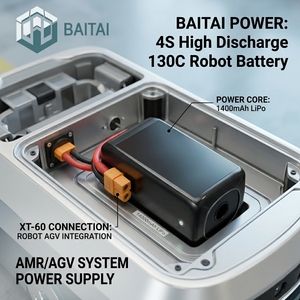
130C 1400mAh 4S High Discharge LiPo Battery for Service Robot AGV and Autonomous Mobile Robot Power System
Extreme burst current capabilities (130C rating) engineered for rapid torque demand, dynamic mobility platforms, and compact aerial vehicles.
Discover expert perspectives, custom battery design guides, charging solutions, and industry updates from USA engineers.
Explore our high-discharge, smart BMS integrated, zero-fail battery solutions manufactured under strict quality standards for the United States defense, industrial robotics, and aerospace sectors.
Extreme burst current capabilities (130C rating) engineered for rapid torque demand, dynamic mobility platforms, and compact aerial vehicles.
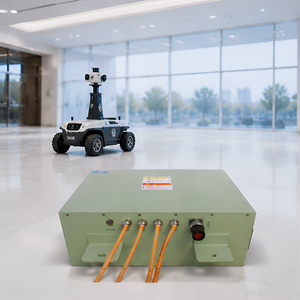
Heavy-duty 72V architecture equipped with CANbus-enabled Smart BMS, extreme thermal stability, and 3,500+ deep cycle endurance.
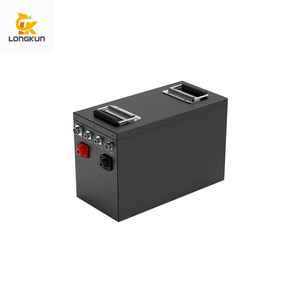
Industrial-grade 24V energy module engineered for continuous autonomous floor management, material handling, and warehouse automation systems.
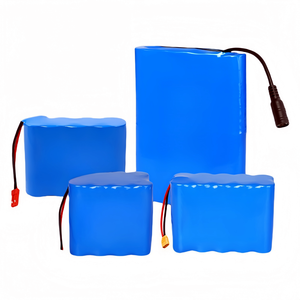
Modular cylindrical cell configurations utilizing Tier-1 18650, 26650, and 32650 cells with integrated protective circuitry.
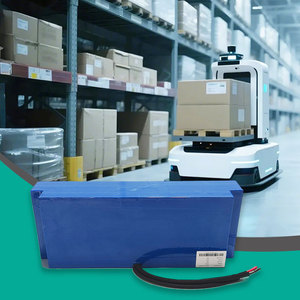
Ultra-safe Lithium Titanate Oxide (LTO) technology featuring 20,000+ cycle life, sub-zero fast charging (-30°C), and zero thermal runaway risk.
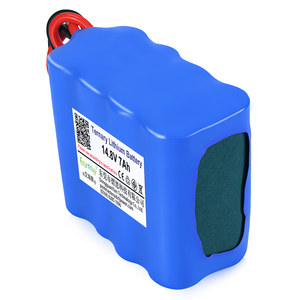
High energy density NMC chemistry in a 4S2P arrangement optimized for lightweight mobile platforms, power tools, and lawn automation.
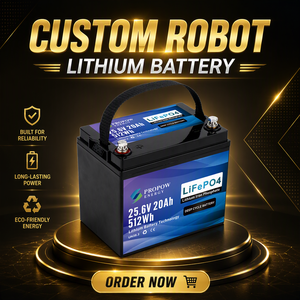
Versatile dual-voltage configurable LiFePO4 module designed for high shock resistance and persistent power delivery in industrial environments.
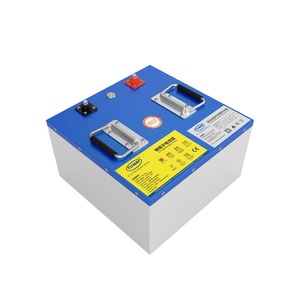
Wide-temperature range power solution (-20°C to +60°C) with scalable capacity options (50Ah to 100Ah) for extreme operational environments.
In aerospace, defense, and high-tier industrial robotics, power storage failure is not an option. United States original equipment manufacturers (OEMs) demand battery systems capable of operating flawlessly under extreme thermal fluctuations, intense mechanical vibration, high altitude, and severe electromagnetic interference (EMI). As a dedicated battery pack factory and supplier tailored to the North American market, our engineering methodology bridges the gap between commercial lithium-ion energy density and rigorous military/aerospace safety standards.
The transition toward zero-emission unmanned aerial vehicles (UAVs), Electric Vertical Takeoff and Landing (eVTOL) aircraft, defense sub-systems, and autonomous warehouse mobile platforms (AGVs/AMRs) requires custom energy management solutions. Standard off-the-shelf commercial batteries often fail when subjected to shock profiles defined by MIL-STD-810H or atmospheric decompression governed by RTCA DO-160G. Our custom-engineered power packs mitigate these failure vectors through advanced mechanical casing, active micro-BMS architecture, phase-change thermal management, and fail-safe cell matching.
Selecting the optimal electrochemical architecture requires evaluating energy density ($Wh/kg$), power density ($W/kg$), cycle durability, operating thermal windows, and intrinsic safety characteristics. Below is a comparative technical benchmark of chemistries engineered in our domestic assembly lines:
| Electrochemical Chemistry | Nominal Voltage | Energy Density (Wh/kg) | Cycle Life (80% DoD) | Thermal Runaway Threshold | Primary Aerospace / Defense Application |
|---|---|---|---|---|---|
| NMC (Nickel Manganese Cobalt) | 3.6V - 3.7V | 220 - 280 Wh/kg | 1,200 - 2,000 | ~210°C | eVTOL, Tactical UAVs, Portable Soldier Gear |
| LiFePO4 (Lithium Iron Phosphate) | 3.2V | 140 - 175 Wh/kg | 3,500 - 6,000+ | ~270°C (Extremely Safe) | Heavy AGVs/AMRs, Ground Support Equipment, Subsea Autonomous Systems |
| LTO (Lithium Titanate Oxide) | 2.3V - 2.4V | 80 - 110 Wh/kg | 20,000+ | Exceeds 300°C (Non-Combustible) | Sub-Zero Defense Operations (-30°C to +55°C Fast Charge), Avionics Fail-Safe Power |
| High-Discharge LiPo (Lithium Polymer) | 3.7V (Up to 4.35V) | 180 - 230 Wh/kg | 500 - 800 (At 50C+) | ~160°C | High-Torque Missile Actuators, Drone Interceptors, Burst-Power AGVs |
Thermal runaway propagation prevention is the cornerstone of aerospace airworthiness certification (FAA DO-311A compliance). Our factory integrates a multi-tier passive and active defense mechanism directly into every high-density custom enclosure:
The hardware engine behind our battery systems is a custom-designed, double-layer Smart Battery Management System (BMS). Designed to adhere to military and aerospace communication protocols, our BMS units continuously monitor individual cell voltages, temperature gradients, state-of-charge (SoC), and state-of-health (SoH).
Key intelligence capabilities built into our U.S. client packs include:
1.5A to 3A bidirectional active cell balancing equalizes state of charge across series strings during flight, extending usable system runtime by up to 18%.
Onboard EEPROM memory logs thermal cycles, over-current spikes, short-circuit attempts, and charge histories for mission analysis and predictive overhaul maintenance.
Native integration with CANbus 2.0B, J1939, SMBus, and ARINC 429 avionics buses ensures direct interoperability with defense flight controllers.
Our custom battery assemblies power mission-critical equipment across North America, operating under harsh environmental conditions and meeting rigorous federal specifications.
Deploying ultra-lightweight NMC and High-Discharge LiPo packs (up to 130C surge) engineered for prolonged flight endurance, high torque climbs, and rapid thermal dispersion in tactical reconnaissance drones and commercial air taxis.
Powering automated guided vehicles and mobile robots operating 24/7 inside distribution hubs across Texas, Illinois, and California. Utilizing 72V and 24V LiFePO4 packs supporting fast-opportunity charging and 15-year service lifetimes.
Providing ruggedized, high-shock resistant energy storage for unmanned ground vehicles (UGVs) and portable communications relay stations subjected to desert heat (+55°C) and sub-arctic frost (-30°C) per MIL-STD-810H standards.
Pressure-compensated lithium battery modules engineered to operate inside autonomous underwater vehicles (AUVs) and oceanographic data sensors at depths exceeding 3,000 meters under intense hydrostatic forces.
Ultra-reliable LTO and LiFePO4 emergency backup batteries designed for commercial airliners, military transports, and flight deck control computers, guaranteeing uninterrupted bus voltage during primary generator dropouts.
UL 2580 and IEC 62133 certified power supplies for life-support transit equipment, emergency medical evacuation helicopters, and specialized high-capacity power chairs used in clinical transport.
The U.S. energy storage and aerospace manufacturing ecosystem is undergoing unprecedented structural shifts. Driven by stringent federal mandates, trade policies, and security regulations, North American OEMs can no longer rely on unverified overseas supply chains for mission-critical power systems.
Recent United States National Defense Authorization Act (NDAA) enactments, specifically Section 822 and related Department of Defense procurement rules, mandate strict bans on purchasing lithium-ion battery cells manufactured by targeted foreign enterprises. Our factory works directly with vetted, non-restricted cell foundries (Japan, South Korea, Taiwan, and domestic US facilities) to guarantee 100% compliance for defense contractors and federal hardware grantees.
Federal transit initiatives, municipal infrastructure projects, and Department of Energy (DOE) backed commercialization programs require adherence to the Buy America Act. With engineering root heritage in Bedford, Pennsylvania and expanded global assembly capabilities, we provide complete domestic assembly options, transparent bill-of-materials (BOM) traceability, and local engineering support.
For commercial aviation and vertical takeoff mobility, the FAA has enforced strict compliance with RTCA DO-311A ("Minimum Operational Performance Standards for Rechargeable Lithium Battery Systems"). Our engineering team designs custom battery enclosures capable of containing containment-level thermal runaway events, passing nail-penetration tests, and providing dual-sensor CANbus telemetry required for FAR Part 23/25/27/29 aircraft type certifications.
U.S. industrial and aerospace sectors are rapidly phasing out legacy lead-acid and Nickel-Cadmium batteries due to heavy weight penalties, toxic environmental compliance costs, and low cycle life. Modern LiFePO4 and Lithium Titanate Oxide (LTO) solutions offer up to a 60% weight reduction, 10x longer cycle endurance, and zero routine maintenance overhead.
Combining four decades of engineering legacy with modern automated production capabilities to deliver zero-defect battery solutions.
Every battery pack undergoes rigorous testing including ultrasonic wire bonding validation, 100% automated end-of-line (EOL) cell-matching, thermal shock testing, and helium leak detection for IP68 seals.
From initial 3D mechanical CAD design, Finite Element Analysis (FEA) thermal simulation, custom PCB Smart BMS firmware development, to final UN 38.3 transport safety certification compliance.
Operating under strict security protocols to safeguard sensitive military intellectual property, supporting restricted technical data handling and defense contract fulfillment.
Direct answers to critical technical, regulatory, and commercial queries regarding aerospace-grade custom battery sourcing.
Yes. All battery packs manufactured or supplied for the North American market undergo mandatory UN 38.3 testing protocols (covering altitude simulation, thermal oscillation, vibration, shock, external short circuit, impact, overcharge, and forced discharge). We provide official UN 38.3 test summary documentation required by U.S. Department of Transportation (DOT) and IATA air freight regulations.
Absolutely. Our in-house firmware development team specializes in customizing CANbus (CANopen, J1939), SMBus, I2C, and RS-485 communication structures. We supply custom CAN dictionary files (.DBC) to ensure seamless plug-and-play integration with your vehicle control unit (VCU) or flight control computer.
We utilize a multi-layered safety isolation design compliant with RTCA DO-311A standards. This includes inter-cell ceramic thermal barriers, aerogel phase-change shielding, individual cell fusing, structural aluminum heat-sink sleeves, and automated over-temperature cutoffs programmed into both hardware and software BMS loops.
For extreme low-temperature performance down to -30°C or -40°C, we typically recommend Lithium Titanate Oxide (LTO) or specialized low-temperature LiFePO4 formulations integrated with internal self-heating thermal jackets powered during early charge cycles.
Initial engineering evaluations and 3D CAD modeling are typically completed within 5 business days. Rapid functional BMS and enclosure prototypes are generally delivered within 4 to 6 weeks. Mass production lead times range from 8 to 12 weeks depending on cell chemistry availability and certification requirements.
Yes. We maintain strict control over our raw material sourcing, utilizing non-restricted tier-1 lithium cell suppliers from allied nations to ensure full NDAA Section 822 and Department of Defense FAR compliance.
Partner with an established U.S. market battery factory and engineering team. Get complete technical datasheets, CAD drawings, BMS integration protocols, and competitive wholesale pricing tailored to your OEM application.