Battery Engineering Blog
Discover expert perspectives, custom battery design guides, charging solutions, and industry updates from USA engineers.
Flagship Active Balancing BMS Solutions for GCC Export
Engineered to mitigate cell voltage drift, prevent thermal degradation, and maximize state-of-charge (SoC) utilization in extreme Middle Eastern desert environments.

Smart BMS Battery Management System PCBA | Active Balancing Board | Turnkey Assembly
- IATF 16949 Automotive Grade SMT
- Capacitive & Inductive Dynamic Balancing
- Multi-protocol RS485 / CANbus / Bluetooth
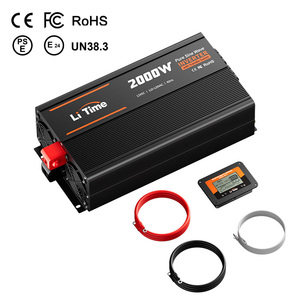
LiTime 48V 10A 4S Active Battery Balancer Energy Transfer Equalizer
- High-Current 10A Active Transfer Rate
- Heavy-duty M8 Brass Terminals & ABS Housing
- Designed for 48V LiFePO4 & NCM Banks
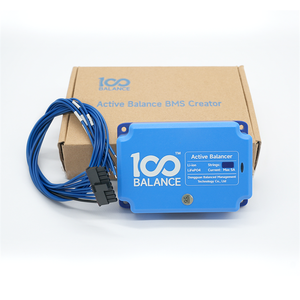
Active Balance Equalizer Capacitive LiFePO4 / NMC 48V 5A Module
- Capacitive Energy Lossless Balance
- Ultra-low Sleep Power < 0.1mA
- Cell Delta Voltage Accuracy < 5mV
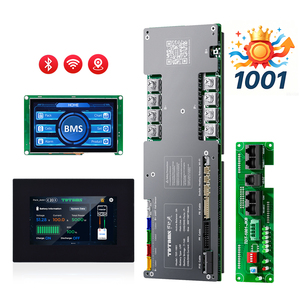
TDT Smart BMS PCBA 3A Active Balance 8S-16S 48V 100A-300A ESS BMS
- Integrated 3A Active Equalization
- High Continuous Current Output (300A Peak)
- Home & Commercial Solar ESS Optimized
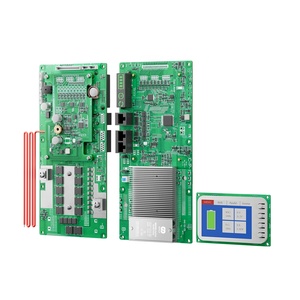
Daly Smart Active Balance Inverter ESS BMS 8S-16S 24V/48V 100A-200A
- Direct Inverter Protocol Matching (DEWA Standard)
- Integrated Active Equalizer & NTC Thermal Probe
- Smart App & Cloud Management System
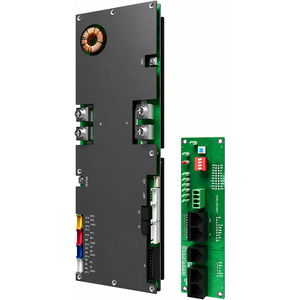
JKBMS PB2A16S20P Smart BMS 200A LiFePO4 2A Active Balance Inverter System
- 2A Bi-directional Active Transfer Current
- Built-in Heating Module Control for Harsh Weather
- Supports Parallel Battery Packs up to 16 Units
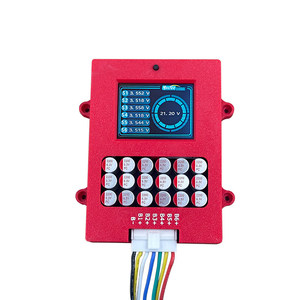
Active Balancer Module with Voltage Display for 4S 6S 8S LFP/NCM/LTO
- Real-time OLED Individual Cell Voltage Display
- Compatible with LiFePO4, NCM, and LTO Chemistries
- Dynamic Energy Shift Efficiency > 94%
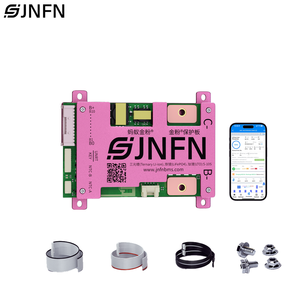
JNFN ANT BMS 1A Active Balance Smart BMS 3S-10S 50A-400A Heavy Duty
- Supports High-Amp Discharges up to 400A Peak
- Bluetooth Wireless Telemetry & RS485 Dual Link
- Short Circuit, Over-Current & Thermal Cutoff
Technical Whitepaper: Mitigating Thermal Drift & Cell Degradation in UAE Lithium Systems via Active BMS Balancing
As the United Arab Emirates accelerates its ambitious UAE Net Zero 2050 Strategic Initiative and expands flagship renewable infrastructures such as the Mohammed bin Rashid Al Maktoum Solar Park and Al Dhafra Solar Project, energy storage systems (ESS) have transitioned from auxiliary backups to core grid-stabilization assets. However, deploying lithium-iron-phosphate (LiFePO4) and nickel-manganese-cobalt (NCM) battery storage in the Arabian Peninsula presents an extraordinary operational challenge: extreme ambient thermal stress coupled with high daily cycling demands.
In environments like Dubai, Abu Dhabi, and Sharjah, ambient summer temperatures routinely exceed 48°C, with internal battery enclosure temperatures climbing past 65°C. Under these thermal conditions, standard passive balancing BMS architectures fail catastrophically. Passive balancing relies on burning off excess cell charge as thermal energy through bleed resistors ($P = I^2 R$). In high ambient heat, this extra resistive heat accelerates cell aging, causes severe internal impedance imbalance, triggers premature BMS thermal throttling, and significantly increases thermal runaway hazards.
To deliver robust reliability and extend operational lifespan, engineering teams and project developers across the GCC are mandating Active Balancing Battery Management Systems (Active BMS). Unlike passive systems, active balancing dynamically transfers energy from higher-voltage cells to lower-voltage cells via high-efficiency capacitive, inductive, or transformer-based circuits with minimal energy loss and virtually zero thermal dissipation.
Active vs. Passive Balancing Architecture: Engineering Analysis for UAE Solar & Industrial Microgrids
Understanding the physics of battery balancing is paramount for B2B system integrators, OEM engineering teams, and procurement directors sourcing power electronics for GCC distribution. When large-capacity cells (such as 280Ah or 314Ah prismatic LiFePO4 cells) are connected in series (16S, 32S, or high-voltage 1000V strings), manufacturing variances and localized thermal gradients lead to inevitable capacity drift.
During charging cycles, the cell with the lowest internal resistance or highest capacity charge rate reaches its upper voltage limit (e.g., 3.65V) first. In a system without active balancing, charging must stop immediately to prevent overcharging that single cell, leaving the remaining cells undercharged (e.g., at 3.35V). This reduces the usable energy output of the entire battery pack to the capacity of its weakest cell.
| Performance Parameter | Standard Passive BMS | Capacitive Active BMS | Inductive / Transformer Active BMS (Our Tech) |
|---|---|---|---|
| Equalization Mechanism | Resistive Heat Dissipation ($I^2R$) | Switched Capacitor Charge Transfer | Bi-directional Inductive Energy Transfer |
| Balancing Current Output | 30mA – 100mA (Static) | 1A – 5A (Dynamic) | 2A – 10A (High Speed Dynamic) |
| Energy Efficiency Rating | < 35% (Energy Wasted) | 90% - 94% | 95% - 98% (Lossless Shift) |
| Thermal Footprint in Enclosure | High (Generates severe extra heat) | Negligible | Ultra-Low (No heat accumulation) |
| Balancing Trigger Mode | Only during Charge Top-Off | Charge, Discharge & Standby | Continuous Real-Time Active Sync |
| Impact on Battery Bank CAPEX | Shortens pack lifespan to 2-3 years | Extends pack lifespan to 8-10 years | Maximizes ROI; Extends lifespan to 12+ years |
As demonstrated in the technical matrix above, our proprietary inductive active balancing BMS electronics transfer equalization currents up to 10 Amperes continuously. By shifting surplus energy across the busway in real time, our active balancers maintain cell voltage deviation within < 5 millivolts (±0.005V) across all series strings. This enables battery energy storage systems in desert climates to recover up to 15% of otherwise lost capacity while extending overall lifecycle longevity by over 40%.
Localized Application Scenarios Across the United Arab Emirates
Our engineered Active Balancing BMS PCBA and battery equalizers are tailor-manufactured to suit the stringent regulatory standards and unique climate conditions of the Middle East.
1. Utility-Scale & Commercial Solar Energy Storage (Dubai & Abu Dhabi)
Integrating with utility-scale PV plants under DEWA (Dubai Electricity and Water Authority) and TAQA guidelines requires flawless grid compliance. Our high-voltage Active BMS solutions support multi-string paralleling (up to 16 packs) with integrated RS485 and CANbus communications compatible with tier-1 hybrid inverters including Victron Energy, Deye, Sungrow, Growatt, and SMA. Active balancing eliminates thermal hotspots in containerized ESS units exposed to solar irradiance in desert solar parks.
2. Remote Telecom Tower Backup & Off-Grid Hybrid Stations (Empty Quarter / Rub' al Khali)
Off-grid telecom infrastructure operated by Etisalat and du in remote desert terrains relies heavily on solar-diesel-lithium hybrid systems. Frequent partial-state-of-charge (PSoC) cycling quickly degrades unbalanced cells. Our 2A to 5A active balancer boards continuously equalize cells during discharge and standby phases, eliminating site visits, preventing sudden tower outages, and reducing remote generator maintenance costs.
3. Heavy Port Automation & Marine Electrification (Jebel Ali & Port Khalifa)
Automated Guided Vehicles (AGVs), electric forklifts, and container handling equipment in major logistics hubs like JAFZA (Jebel Ali Free Zone) and KIZAD require ultra-high continuous discharge rates (up to 400A continuous, 800A peak). Our heavy-duty ANT and JKBMS series active balancing protection boards incorporate conformal anti-corrosion coatings to resist salt fog, high humidity, and airborne dust near maritime ports.
4. Desert Island Microgrids & Luxury Hospitality Resorts (Ras Al Khaimah & Fujairah)
Eco-resorts and private island developments operating off-grid in the Northern Emirates rely on premium zero-noise energy storage. Active balancing guarantees maximum usable power output per cubic meter of battery footprint, enabling compact, high-density energy storage deployments with real-time Bluetooth 5.0 cloud telemetry accessible via mobile applications.
Engineering for UAE Desert Climates: Thermal Management & Protocol Integration
Exporting high-reliability electronic sub-assemblies to the UAE market demands strict adherence to physical and electrical protective engineering. Dust storms (Shamal winds) carrying fine silica particles, combined with summer ambient moisture along coastal regions, can cause trace corrosion and micro-short circuits on unshielded printed circuit boards.
Our OEM manufacturing facility implements multi-stage defensive engineering for all BMS products exported to the Gulf Cooperation Council (GCC) region:
- Automated Conformal Coating (Polyurethane & Silicone): Every Active BMS board undergoes three-pass selective conformal coating to achieve IP67-equivalent moisture, salt spray, and dust resistance.
- High-Thermal-Conductivity Aluminum Heatsinks: Power MOSFET arrays are coupled with 3.5 W/mK thermal pads and anodized extruded heat dissipation plates to guarantee cool operation during 300A continuous discharge events.
- Integrated NTC Multi-Point Thermal Sensing: Independent thermal probes constantly sample temperature at the cell terminals, MOSFET bridge, and active balancing transformer core, triggering automated hardware cutoffs before damage occurs.
- Smart Communication Architecture: Pre-programmed with RS485, CAN 2.0B, and Modbus protocol stacks to enable seamless communication with IoT gateways, SCADA systems, and solar inverter communications buslines.
Frequently Asked Questions by UAE B2B Procurement Teams & System Integrators
Key technical and logistics inquiries regarding our active balancing BMS manufacturing and export services to the United Arab Emirates.
Passive balancing dissipates surplus energy as heat through resistors. In the UAE, where ambient enclosure temperatures frequently exceed 50°C to 60°C, burning additional energy inside the battery case accelerates cell breakdown, creates severe internal resistance imbalances, and triggers premature thermal safety shutdowns. Active balancing dynamically transfers energy between cells with >95% efficiency, producing zero localized heat build-up while extending total battery service life by up to 40%.
Yes. Our smart BMS controllers feature auto-configurable CANbus and RS485 communication protocols. They come pre-flashed with protocol profiles for leading solar inverters commonly used across the UAE, including Victron Energy, Deye, Sungrow, Growatt, Solis, Luxpower, and SMA. Custom protocol mapping is also available for OEM partners upon request.
For high-capacity stationary solar cells (280Ah – 314Ah LiFePO4), we recommend a minimum active balancing current of 2A to 5A. Systems subjected to fast charge/discharge profiles or partial state-of-charge (PSoC) operation benefit significantly from our 5A or 10A dynamic inductive balancers to maintain precise voltage alignment without throttling power delivery.
As an established exporter, our active balancing BMS products are manufactured under certified IATF 16949 and ISO 9001 quality management systems. We supply complete compliance documentation required for UAE import clearance, including CE, RoHS, FCC, UN38.3, and IEC 62619 safety test reports to support local ESMA (MoIAT) and civil defense compliance.
Standard stock modules ship within 3 to 5 business days. Custom turn-key PCBA orders (OEM design, custom board layouts, tailored firmwares) require approximately 2 to 3 weeks for engineering validation and SMT assembly. Air freight shipping to Dubai Airport (DXB) or Al Maktoum Airport (DWC) takes 3–5 days, while ocean freight shipments to Port Jebel Ali take approximately 18–22 days.
Yes. Our advanced Master-Slave active BMS systems (such as the JKBMS PB series and TDT ESS series) support multi-pack parallel expansion for up to 16 battery packs connected concurrently. The active balancing circuitry operates autonomously within each pack while communicating over a shared master bus to coordinate system-wide SoC management.
All circuit boards exported to Gulf coastal regions feature multi-pass automated conformal coating protecting delicate SMT components against moisture ingress, salt oxidation, and sulfurization. Terminal blocks are constructed from heavy-gauge nickel-plated copper or solid brass to guarantee reliable low-resistance electrical contacts.
Partner with a Global Leader in Active BMS Manufacturing & Custom PCBA
Whether you are an energy storage system integrator in Dubai, a telecom infrastructure contractor in Abu Dhabi, or a global distributor sourcing high-reliability power management electronics for the Middle East market, our engineering team is ready to deliver tailored hardware and software solutions.