Battery Engineering Blog
Discover expert perspectives, custom battery design guides, charging solutions, and industry updates from USA engineers.
High-Rate LiPo & Custom Industrial Battery Packs
Explore our flagship continuous high-discharge pouch cells, high-capacity AMR packs, and smart BMS battery modules designed for low internal resistance (IR) and long lifecycle stability.
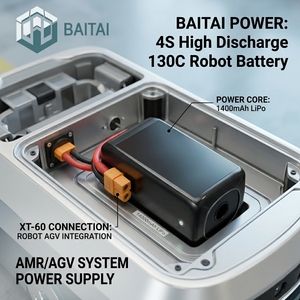
130C 1400mAh 4S High Discharge LiPo Battery for AGV & AMR
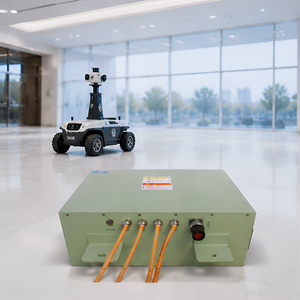
72V 60Ah LiFePO4 AMR Mobile Robot Battery Pack with Smart BMS
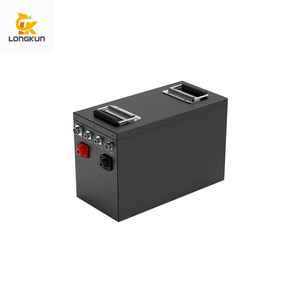
Longkun 24V 30Ah Lithium Ion Robot Battery Pack with BMS
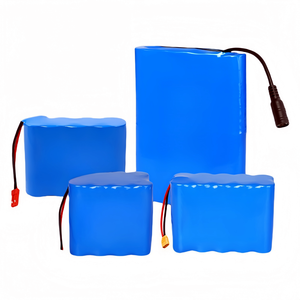
OEM Modular Lithium Battery Pack for Floor-Cleaning AMR
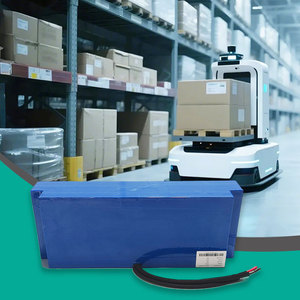
Customized Ultra-Fast Charge LTO AGV Battery Pack 9Ah
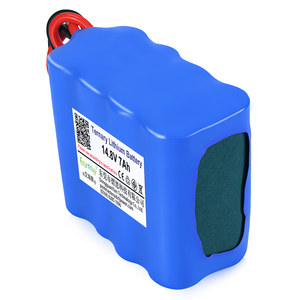
Custom 14.8V 7Ah NMC High Discharge Battery for Mobility & AMR
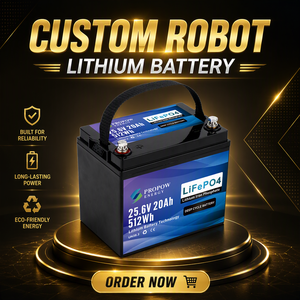
Industrial Grade 12V/24V 20Ah LiFePO4 Battery for Heavy Robots
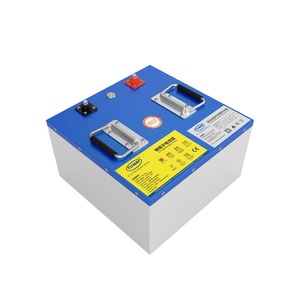
24V Heavy-Duty LiFePO4 Battery Module (50Ah to 100Ah)
High-Rate Lithium Polymer (LiPo) Engineering Architecture
A technical white paper on continuous discharge mechanics, nanometer stacked electrode chemistry, and thermal mitigation strategies for mission-critical power systems.
Nano-Matrix Stacked Electrodes
Our factory utilizes advanced laminated stacking (Z-folding) technology rather than conventional cylindrical winding. This dramatically reduces electron transport distance, achieving ultra-low impedance (<0.8mΩ per cell) and minimizing localized heat generation during heavy continuous current draws.
High-Conductivity Electrolyte Formulations
Custom-blended carbonate solvents enriched with functional additives form a highly stable Solid Electrolyte Interphase (SEI) layer. This prevents gas generation and cell swelling under severe 100C+ burst loads, extending shelf lifecycle and operational reliability.
Ultrasonic Tab & Multi-Tab Collector Design
To prevent current crowding at cell terminals, our high-rate pouch cells feature multi-tab current collectors welded via high-frequency ultrasonic equipment. Copper and nickel tabs are reinforced to handle sustained current spikes above 300 Amperes without thermal melting.
Engineering Formula: Thermal & Voltage Drop Control Under High C-Rates
Voltage drop during high discharge is governed by Ohm’s Law and internal polarization impedance: V_actual = V_ocv - I × (R_dc + R_polarization). By maintaining cell internal resistance (R_dc) below 1.0 mΩ through automated nano-coating of cathode active materials (LiCoO2/NMC), our cells minimize Joule heating (P = I²R), ensuring operational temperatures stay strictly under 65°C even during continuous 50C full-capacity discharge cycles.
High-Rate Battery Chemistries Benchmark
Direct comparative analysis for engineering teams selecting energy storage solutions for heavy industrial, AGV, and aerospace applications.
| Performance Parameter | High-Rate LiPo (LiCoO2/NMC) | Standard Li-Ion (18650 NMC) | High-Rate LiFePO4 (LFP) | Lithium Titanate (LTO) |
|---|---|---|---|---|
| Continuous C-Rate | 25C – 130C | 1C – 3C | 5C – 20C | 10C – 30C |
| Pulse Burst Rate (10s) | 50C – 260C | 5C – 10C | 30C – 50C | 50C – 100C |
| Energy Density (Wh/kg) | 180 – 240 Wh/kg | 220 – 280 Wh/kg | 130 – 160 Wh/kg | 70 – 110 Wh/kg |
| Cell Internal Resistance (IR) | < 0.8 mΩ | 15 – 35 mΩ | 2.0 – 5.0 mΩ | < 1.5 mΩ |
| Cycle Life (80% DOD) | 500 – 1,200 Cycles | 500 – 1,000 Cycles | 2,000 – 4,000 Cycles | > 20,000 Cycles |
| Fast Charge Capability | 3C – 10C Fast Charge | 0.5C – 1C Standard | 2C – 5C Fast Charge | 10C Ultra-Fast |
Future Procurement Trends in High-Rate Batteries
Strategic insights for enterprise purchasing directors, OEMs, and system integrators navigating the 2025–2030 energy landscape.
1. Shift Toward Semi-Solid-State Chemistries
The next decade will mark a commercial transition from liquid electrolyte high-rate pouch cells to semi-solid-state high-rate hybrid cells. By replacing flammable organic liquid solvents with gel-polymer or ceramic-matrix electrolytes, next-gen high-rate batteries achieve energy densities over 300 Wh/kg while eliminating thermal runaway risks under extreme mechanical puncture or short-circuit events.
2. AI-Integrated Smart BMS Telemetry
Modern industrial applications (such as autonomous warehouse AGVs and heavy medical mobility) no longer accept passive protection circuits. Modern B2B procurement mandates intelligent BMS boards integrated with CANbus 2.0B, SMBus, or RS485 communication protocols. Advanced machine-learning algorithms monitor real-time state-of-health (SOH), impedance degradation, and individual cell voltage balancing down to ±1mV accuracy.
3. Near-Zero Opportunity Charging Cycles
In autonomous logistics and fleet operations, downtime equals lost revenue. The industry is rapidly adopting 5C-10C opportunity fast-charging protocols. High-rate LiPo and LTO packs allow automated guided vehicles to top up 80% state-of-charge (SOC) within 6 to 12 minutes during automated docking intervals, enabling continuous 24/7 warehouse operations without battery swapping.
4. Stringent ESG & Closed-Loop Supply Chains
Global buyers face increasing regulatory scrutiny regarding carbon footprint tracking and ethical mineral sourcing (such as cobalt and nickel compliance under EU Battery Regulation 2023/1542). Leading factories must provide full material traceability, ISO 14001 environmental auditing, UN38.3 transport safety compliance, and clear end-of-life recycling pathways.
Why Partner with Our Factory?
Four decades of manufacturing excellence, advanced prototyping, and strict quality control systems built specifically for industrial OEMs.
Automated Cell Sorting & Pairing
Every batch of high-rate cells undergoes 100% automated voltage, capacity, and internal resistance sorting. We match cells within strict tolerances (ΔIR < 0.5mΩ, ΔV < 2mV) to prevent premature module out-of-balance and maximize pack longevity.
Custom Geometric Form Factors
Unlike rigid cylindrical formats, our custom LiPo pouch cells can be manufactured into flexible geometric dimensions—curved, ultra-thin (down to 0.8mm), L-shaped, or stacked modules designed to maximize tight space constraints in sleek electronic housings.
Global Regulatory Compliance
We handle complete safety certification support for enterprise clients. Our battery packs are engineered to meet UL 1642, UL 2054, IEC 62133-2, CE, FCC, RoHS, REACH, and UN38.3 air transport safety documentation.
Frequently Asked Sourcing & Engineering FAQs
Addressing the critical technical, operational, and procurement queries of industrial engineers and purchasing managers.
Power Your Next-Gen Industrial System Today
Partner with a certified factory backed by over 40 years of engineering innovation. Our technical team is ready to evaluate your high-rate discharge requirements, custom BMS protocols, and spatial pack parameters.