Battery Engineering Blog
Discover expert perspectives, custom battery design guides, charging solutions, and industry updates from USA engineers.
High-Performance Custom Battery Pack Engineering Lineup
Explore our engineered custom prototyping offerings optimized for high continuous discharge rates, extended deep-cycle lifespans, integrated smart BMS telemetry, and ruggedized physical enclosures.
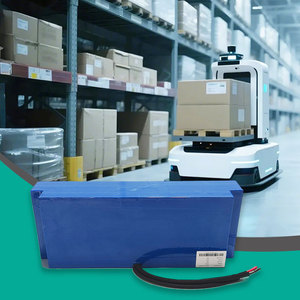
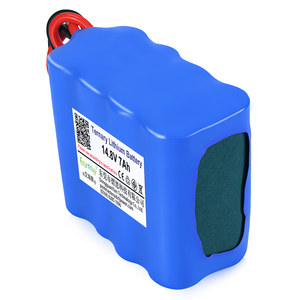
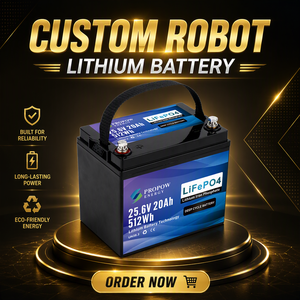
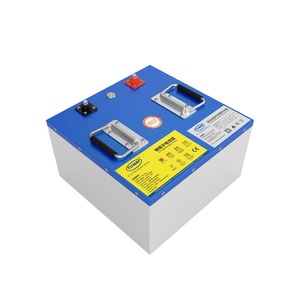
Engineering Whitepaper: Advanced Custom Battery Pack Prototyping
In modern robotics, industrial automation, and autonomous mobile robot (AMR) system designs, energy storage is no longer a off-the-shelf commodity component—it is a core structural and thermal subsystem. Selecting a top trusted custom battery pack prototyping factory and exporter requires deep verification of their electrochemical engineering, battery management system (BMS) customization, structural prototyping capabilities, and stringent international export quality control.
As an engineering-driven manufacturer with over 40 years of pioneering history in battery pack customization and charger integration, our facilities specialize in taking complex OEM specifications from preliminary CAD design and finite element analysis (FEA) through rapidly iteration-ready physical prototypes to mass manufacturing.
"True information gain in custom battery manufacturing relies on solving the trilemma between high volumetric energy density (Wh/L), thermal stability under high continuous C-rates, and real-time SMBus/CANbus telemetry communication under harsh operational environments."
Vertical Integration: From CAD Modeling to Precision Weld Assemblies
Our prototyping methodology utilizes advanced CAD structural layout tools to maximize internal packing fraction while optimizing heat dissipation channels. The structural design phase incorporates:
- Laser & Ultrasonic Micro-Tab Welding: Ensuring ultra-low internal resistance (IR) interconnects using pure nickel and copper-nickel composite busbars. This prevents localized Joule heating under extreme continuous discharge conditions (up to 130C bursts).
- Thermal Phase Change Material (PCM) Encapsulation: Integrating passive flame-retardant epoxy, silicone potting compounds, and PCM matrixes to prevent cell-to-cell thermal propagation in high-power applications.
- Smart BMS Architecture: Custom firmware development supporting CANbus 2.0B, RS485 MODBUS, and SMBus protocol integration to enable predictive state-of-charge (SoC) and state-of-health (SoH) data logging for autonomous industrial platforms.
Lithium Cell Chemistry Engineering Trade-off Matrix
Selecting the correct cell chemistry forms the fundamental baseline of any OEM battery pack prototype design. Below is a comparative engineering benchmark across dominant industrial chemistries engineered in our laboratory.
| Cell Chemistry Type | Gravimetric Density (Wh/kg) | Nominal Cell Voltage | Cycle Life (80% DoD) | Thermal Runaway Threshold | Max C-Rate (Continuous/Burst) | Primary Industrial Use Case |
|---|---|---|---|---|---|---|
| Lithium Titanate (LTO) | 70 - 110 | 2.3V - 2.4V | > 20,000 Cycles | Extreme (>250°C) | 10C / 30C Pulse | 24/7 Heavy-Duty Automated Guided Vehicles (AGV) |
| Lithium Iron Phosphate (LiFePO4) | 140 - 180 | 3.2V | 4,000 - 6,000 Cycles | High (~270°C) | 3C / 10C Pulse | Autonomous Mobile Robots (AMR), Floor Sweepers |
| NMC (Nickel Manganese Cobalt) | 200 - 260 | 3.6V - 3.7V | 1,200 - 2,000 Cycles | Moderate (~210°C) | 2C / 5C Pulse | Medical Carts, Electric Mobility, Compact Drones |
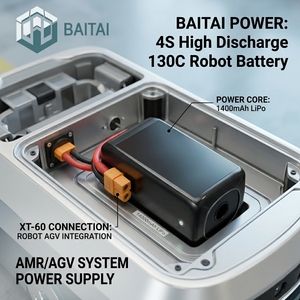
| High-Discharge LiPo (Pouch) | 160 - 210 | 3.7V | 500 - 800 Cycles | Low-Moderate (~160°C) | 50C / 130C Burst | Robotics Actuators, Rapid Response Service AGVs |
Why OEM Engineers Choose Our Prototyping & Export Infrastructure
Bridging the gap between engineering concept and global mass delivery requires rigid quality governance, full cell traceability, and modular factory capabilities.
ISO 9001 & ISO 13485 Certified
Our production lines adhere strictly to international quality management frameworks. Every prototype undergoes 100% automated end-of-line (EOL) testing including dielectric insulation testing, IR grading, and cell balancing verification.
Rapid NPI & Prototype Turnaround
Accelerate your New Product Introduction (NPI) timelines. Our in-house rapid prototyping laboratory can deliver fully functional custom lithium battery pack samples and 3D enclosure prototypes in as little as 10 to 14 business days.
Global Regulatory & Export Compliance
Navigating UN 38.3, UL 1642, UL 2054, IEC 62133, and CE compliance can be a major hurdle. We handle complete transport safety testing and provide Class 9 Dangerous Goods certified packaging for seamless export logistics worldwide.
Tier-1 Grade A Cell Sourcing
We maintain direct manufacturer-level procurement partnerships with premium Tier-1 cell vendors (EVE, CATL, Panasonic, LG Energy Solution, Samsung SDI) ensuring 100% capacity matching, precise impedance sorting, and zero counterfeit cells.
Smart Hardware & Active Balancing BMS
Our proprietary BMS designs incorporate high-accuracy Coulomb counting ICs, multi-point thermal monitoring sensors, active cell balancing circuits, and hardware-level secondary over-voltage protection circuits.
Full-Lifecycle OEM Co-Engineering
We assign a dedicated senior electrochemical engineer to every custom program, working alongside your R&D team from concept evaluation through volume manufacturing scale-up.
Future Procurement Trends & Technological Roadmap (2025–2030)
1. Transition Toward Cell-to-Pack (CTP) & Structural Battery Integration
Traditional modular pack assemblies rely on individual module housings, heavy wiring harnesses, and external brackets—adding unnecessary dead weight and volume. Industrial battery procurement is aggressively shifting toward Cell-to-Pack (CTP) and structural enclosure design. By eliminating module-level casings and direct-bonding high-capacity prismatic LiFePO4 or NMC cells into structurally reinforced IP67 chassis, overall energy density improves by up to 25% while reducing manufacturing assembly step costs.
2. Cloud-Connected IoT Telemetry & EU Battery Passport Compliance
Global supply chain regulations, including the European Union's New Battery Regulation (Directive 2023/1542), mandate full digital carbon footprint tracking, material provenance documentation, and state-of-health tracking via a digital Battery Passport. Prototyping modern industrial battery packs now requires BMS microcontrollers equipped with encrypted Bluetooth Low Energy (BLE), Cellular IoT (NB-IoT/LTE-M), or CAN-to-Cloud gateways. This enables real-time remote telemetry logging of temperature spikes, short-circuit events, cycle counts, and predictive maintenance algorithms.
3. Commercialization of Solid-State Electrodes & Silicon-Anode Microstructures
While standard graphite anodes approach their theoretical specific capacity limits (~372 mAh/g), prototyping labs are rapidly integrating silicon-composite anodes (>1,000 mAh/g capacity capability) and semi-solid-state gel electrolytes. For medical equipment manufacturers and aerospace OEMs, these advancements yield ultra-compact battery prototypes with volumetric energy densities exceeding 700 Wh/L without compromising cycle safety.
4. Ultra-Fast Opportunity Charging Architectures for Autonomous Logistics
In modern 24/7 automated fulfillment centers, mobile robots cannot afford multi-hour downtime for recharges. Future-proof procurement favors LTO (Lithium Titanate) and high-rate LiFePO4 configurations capable of accepting 5C to 10C continuous fast charging (0 to 80% SoC in under 8 minutes) via automated contact plates or inductive wireless charging pads.
Frequently Asked Questions by Industrial Procurement Teams
Key technical and logistical insights regarding custom battery prototyping, lead times, safety certifications, and low-volume initial production runs.
What is the typical lead time for a fully customized battery pack prototype?
Our standard fast-track engineering sample timeline is 2 to 3 weeks for mechanical layout, 3D casing prototyping, and sample assembly, provided standard cell chemistries are used. For custom tooling, complex aluminum CNC enclosures, or specialized custom BMS firmware development, prototype delivery typically ranges between 4 to 6 weeks.
How do you ensure cell voltage and internal resistance (IR) matching during assembly?
We utilize automated cell-sorting equipment to grade every single incoming cell. Cells are grouped into matching batches with voltage variance within ±2mV and internal resistance (IR) matching within ±0.5mΩ. This precise cell balancing ensures long cycle life, high Coulombic efficiency, and prevents premature BMS cut-off under heavy loads.
Which international certifications can your custom battery packs comply with?
We design packs specifically to pass strict international regulatory standards. We assist clients with full testing documentation and agency submittals for UN 38.3 (Lithium Battery Transport), UL 1642 / UL 2054, UL 2580 / UL 1973 (Industrial & EV), IEC 62133 (Global Portable Safety), CE, FCC, and RoHS/REACH compliance.
Can your BMS communicate natively with our autonomous vehicle's central MCU?
Yes. Our in-house firmware development team can program custom communication interfaces for CANbus 2.0B (SAE J1939 or CANopen), RS485 (MODBUS RTU), SMBus, or I2C. We provide customized register mapping documentation to enable your team to read live cell voltages, pack temperature, remaining capacity percentage, and error flags directly.
What is your Minimum Order Quantity (MOQ) for custom battery prototype programs?
We support low-volume initial prototyping runs for engineering validation (EVT/DVT phases) starting at 5 to 10 units. Once design validation is achieved, our flexible production lines scale seamlessly up to full-scale automated mass production of tens of thousands of units per month.
How are dangerous goods (Class 9) export shipments handled for overseas delivery?
As a licensed custom battery exporter, we provide full UN 38.3 testing reports, Material Safety Data Sheets (MSDS), and Dangerous Goods (DG) declarations. All exported prototype and production orders are packaged in UN-rated drop-tested hazardous materials boxes with certified fire-retardant cushioning via air or sea freight forwarders.
Ready to Accelerate Your Custom Battery Prototype Project?
Consult directly with our engineering team today to review your mechanical, electrical, and thermal requirements. Get a detailed technical proposal and initial prototyping quotation within 24 hours.
Contact Us