Technical Articles & Insights
Battery Engineering Blog
Discover expert perspectives, custom battery design guides, charging solutions, and industry updates from USA engineers.
OEM / ODM Fleet Solutions
Featured Industrial Smart Battery Packs
Engineered with high-precision telemetry, integrated CAN bus BMS, and heavy-duty thermal management for autonomous mobile platforms, service robotics, and high-rate industrial applications.
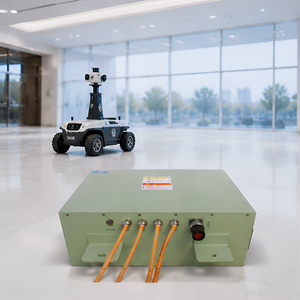
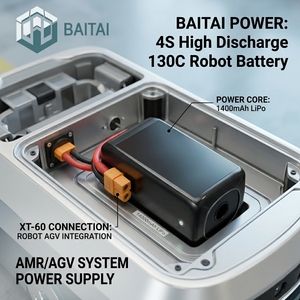
72V 60Ah LiFePO4 AMR Mobile Robot Battery Pack for Autonomous Robot System High Discharge Smart BMS Custom OEM ODM Wholesale
Get a Quote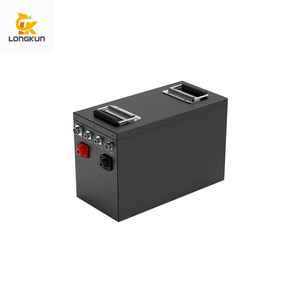
Longkun 24V 30Ah Lithium Ion Robot Battery Pack with BMS Rechargeable Li-ion Battery for AGV AMR Mobile Robots
Get a Quote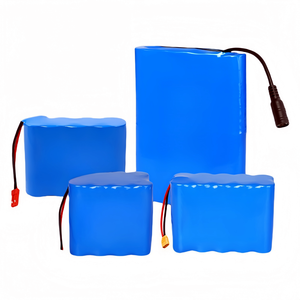
OEM Li-ion Battery Pack 3.7V 7.4V 11.1V 14.8V 18650 32650 26650 Lithium Ion Battery Pack for Autonomous Floor-Cleaning AMR Robot
Get a Quote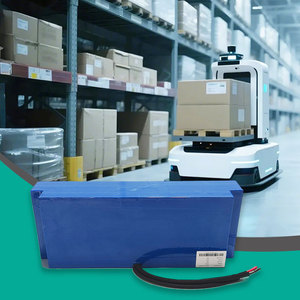
Customized Rechargeable LTO Agv Battery Pack 9Ah Autonomous Mobile Robot Agv Battery
Get a Quote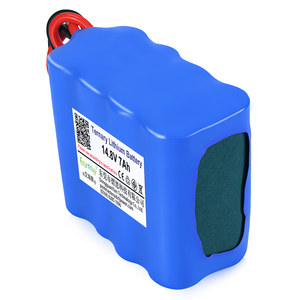
Custom Lithium Battery 14.8V 7Ah NMC 4S2P High Capacity for Autonomous Mobile Robot Electric Wheelchair Lawn Mower
Get a Quote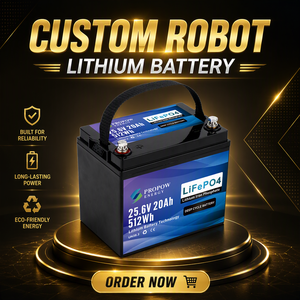
Custom Robot Lithium Battery 12V 24V 20Ah Lithium Battery for Robot, Rechargeable LiFePO4 Battery Pack for AGV AMR Mobile Robots
Get a Quote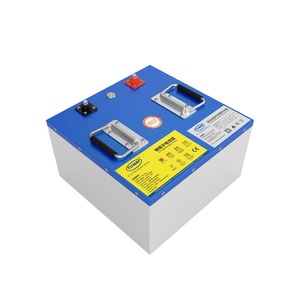
24V LiFePO4 Battery Pack 50Ah 60Ah 80Ah 100Ah with BMS 1500 Cycles -20C~60C for AGV AMR Robot Mobile Platform
Get a Quote40+
Years Industry Excellence
CAN 2.0B
ISO 11898 Standard Bus
±0.5%
SOC Telemetry Accuracy
ISO 9001
Certified OEM Production
Technical Whitepaper
Engineering Architecture of CAN Bus Smart Battery Packs
Modern Autonomous Mobile Robots (AMR), Automated Guided Vehicles (AGV), and medical platforms demand far more than basic energy storage; they require intelligent power nodes integrated seamlessly into the system control architecture.
ISO 11898 CAN Bus Physical Layer
Controller Area Network (CAN) technology operates over differential signal lines (CAN-H and CAN-L), engineered specifically to mitigate Electromagnetic Interference (EMI) in high-noise industrial robot environments. By utilizing 120-ohm bus termination and high-speed transceivers, data speeds up to 1 Mbps are maintained flawlessly.
Smart BMS Telemetry & Control
An advanced battery management system continuously samples individual cell voltages, pack current via precise shunt resistors, and multi-point NTC thermistor matrix data. Using proprietary algorithms, the BMS dynamically calculates State of Charge (SOC), State of Health (SOH), and State of Power (SOP) with sub-1% deviation.
Multi-Tier Safety & Active Balancing
Dual hardware safety cutoffs protect against short-circuit events within microsecond thresholds. Integrated active balancing redistributes charge across cell strings during operation, preventing cell drift, prolonging system cycle life by up to 30%, and ensuring maximum usable energy capacity.
Information Gain Insight: Unlike standard non-communicative lithium packs, a true CAN Bus Smart Battery Pack (supporting CANopen CiA 418 / CiA 454 profiles or SAE J1939) acts as an active diagnostic node on the vehicle bus. It actively requests optimal charging profiles from the smart charger, negotiates automated dock-charging currents, and issues early diagnostic warnings before thermal or electrical thresholds are breached.
Protocol Analysis
CAN Bus Protocol Comparison Matrix for Industrial Battery Systems
Selecting the correct industrial communication standard directly impacts robot software integration, real-time diagnostic reporting, and system reliability.
| Communication Protocol | Data Rate (Max) | Network Topology | Key Strengths & Diagnostics | Primary Industrial Applications |
|---|---|---|---|---|
| CANopen (CiA 418 / 454) | 1 Mbps | Multi-Master / Slave Bus | Standardized device profiles, Object Dictionary (OD), real-time PDO monitoring for battery state. | Industrial Robotics, Automated Guided Vehicles (AGVs), Autonomous Warehousing AMRs. |
| SAE J1939 | 250 kbps / 500 kbps | Broadcast Multi-Drop Bus | High fault tolerance, standardized PGN messages, heavy diagnostic trouble codes (DTCs). | Heavy Material Handling Equipment, Electric Wheelchairs, Agriculture & Outdoor Utility Vehicles. |
| SMBus / I2C | 100 kbps / 400 kbps | Short-Distance Master/Slave | Low power consumption, standardized Smart Battery Data (SBD) set, lower hardware cost. | Portable Medical Devices, Floor Scrubbers, Small Commercial AMRs, Inspection Drones. |
| Modbus RTU (RS485) | 115.2 kbps | Single-Master / Multi-Slave | Robust long-distance noise immunity, universal PLC compatibility, low software overhead. | Stationary Energy Storage (ESS), Industrial Battery Charging Racks, Telecom Backup Power. |
Strategic Procurement
Future Sourcing & Technology Trends in Smart Battery Packs
Procurement directors and system engineering managers must evaluate key multi-year technological shifts when negotiating OEM battery manufacturing contracts.
1. Cloud Telemetry & Predictive Maintenance Gateways
Fleet operators are increasingly demanding CAN-to-Cloud IoT telemetry modules embedded directly into battery packs. Real-time tracking of internal impedance elevation, cycle count decay, thermal stress metrics, and cell balance history allows fleet managers to schedule predictive battery replacement, eliminating costly unplanned warehouse downtime.
2. Ultra-Fast Opportunity Charging (1C to 5C Rates)
With the expansion of 24/7 autonomous logistics, battery systems must support high-current opportunity charging during brief idle intervals. Chemistries such as Lithium Titanate (LTO) and specialized LiFePO4 configurations, combined with CAN-controlled automated dock chargers, enable 0% to 80% state of charge replenishment in under 15 minutes without compromising cycle longevity.
3. Multi-Chemistry Diversification (LFP, NMC, LTO, High-C LiPo)
OEMs are pivoting away from single-chemistry strategies toward application-optimized cell selections: high volumetric density NMC for space-constrained robots, ultra-safe LiFePO4 for indoor logistics, high-C pulse discharge LiPo for fast-maneuvering service robots, and cold-weather resilient LTO for freezer warehouse robotics (-30°C operational environment).
4. Stringent Global Compliance (UL 2580, IEC 62619, UN 38.3)
Regulatory agencies and enterprise buyers require full functional safety certification. Modern Smart BMS architectures must conform to ISO 26262 ASIL-D or IEC 60730 requirements, supported by comprehensive UN 38.3 transport safety documentation and IEC 62619 industrial storage cell approvals to ensure smooth international customs clearance.
Manufacturer Expertise
Why OEM Engineers Partner with Cell-Con Capabilities
Backed by over 40 years of precision design and USA-assembled battery manufacturing, our facilities deliver uncompromised quality, rigorous cell screening, and full lifecycle support.
Custom Hardware & Firmware Engineering
We do not provide off-the-shelf compromises. Our dedicated electrical and software engineers customize CAN bus matrix mapping, fault code behavior, LED gauge indicators, and charge rate parameters to match your vehicle host controller perfectly.
Precision Cell Grading & Welding
Every cell batch undergoes automated testing to match internal resistance (IR) within ±0.5mΩ and capacity within ±0.5%. Automated laser welding and custom busbar geometry minimize resistance, preventing localized thermal hotspots under high pulse loads.
Ruggedized Mechanical & IP Enclosures
Designed for tough industrial floors, outdoor mowing systems, or marine environments. We engineer custom extruded aluminum or heavy-duty polycarbonate enclosures rated up to IP67 with integrated shock mounts and internal vibration dampers.
Procurement Guide
Frequently Asked Questions (FAQ)
Essential technical and commercial answers for B2B procurement managers and system integration engineers.
Q: What is the advantage of using CAN Bus over SMBus or RS485 in AMR battery systems?
A: CAN Bus (Controller Area Network) offers superior multi-master communication, robust differential noise immunity, hardware-based arbitration, and high error detection capabilities essential for harsh industrial electromagnetic environments. Unlike SMBus (limited to short internal wire lengths) or standard RS485, CAN Bus supports fast broadcast diagnostic speeds up to 1 Mbps, long distance runs across larger robot chassis, and direct native integration into industrial robot microcontrollers without signal degradation.
Q: Can Cell-Con custom program the CAN Bus protocol (CANopen / J1939) for our proprietary robot controller?
A: Yes. Our embedded firmware team routinely develops custom CAN matrix configurations, custom CANopen Object Dictionaries, or specialized SAE J1939 PGN parameter groups. Whether your host system requires custom heartbeat signals, specific baud rates (125k, 250k, 500k, 1M), or proprietary error messaging, we tailor the BMS firmware to guarantee plug-and-play communication.
Q: How does a Smart BMS protect against thermal runaway in high-capacity lithium battery packs?
A: A multi-layered safety protection system is implemented. First, an NTC thermistor matrix continuously samples cell and busbar temperatures across multiple pack zones. If temperatures exceed predefined safe charging/discharging limits, the BMS dynamically throttling current requests via CAN communication. If temperatures continue to rise toward critical thresholds, independent hardware MOSFET or contactor cutoffs disconnect the load instantly (under 10ms), isolating the battery before thermal propagation can occur.
Q: What chemistry should we specify for cold-storage warehouse AGVs operating at sub-zero temperatures?
A: For cold-storage applications down to -30°C (-22°F), Lithium Titanate Oxide (LTO) or specialized low-temperature LiFePO4 cells with integrated internal heating pads are recommended. LTO cells maintain superior ionic conductivity and charge acceptance without lithium plating hazards in freezing environments, delivering exceptionally long cycle life (over 15,000 to 20,000 cycles) even under continuous cold-chain duty.
Q: What certifications are required for international shipping of custom OEM smart battery packs?
A: All lithium battery packs exceeding 100Wh must pass UN 38.3 testing (covering altitude simulation, thermal tests, vibration, shock, external short circuit, impact, overcharge, and forced discharge) to legally ship via air or sea transport. For medical and industrial equipment compliance, packs should also be designed to meet IEC 62619, UL 2580, UL 2271 (for light electric vehicles), and CE standards.
Q: Can firmware updates be pushed to the battery BMS via the host vehicle's CAN Bus network?
A: Yes, our advanced BMS hardware options feature an integrated CAN bootloader. This allows fleet operators to push firmware updates, refine diagnostic threshold parameters, or update charge algorithm profiles remotely via the robot’s main control unit without physically opening the battery enclosure or removing the unit from service.
Request a Custom CAN Bus Battery Design Consultation
Collaborate directly with our senior application engineers to design, build, and certify a custom smart battery solution tailored to your exact mechanical, electrical, and CAN protocol requirements.
Get a Quote