Battery Engineering Blog
Discover expert perspectives, custom battery design guides, charging solutions, and industry updates from USA engineers.
Industrial Grade Battery Packs & Charging Systems
High-discharge, smart BMS-integrated power solutions specifically engineered for Autonomous Mobile Robots (AMR), Automated Guided Vehicles (AGV), and industrial energy storage systems.
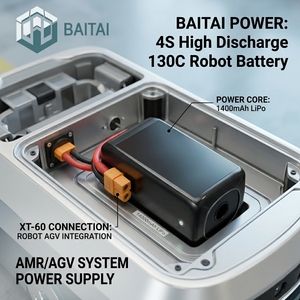
130C 1400mAh 4S High Discharge LiPo Battery for Service Robot AGV and Autonomous Mobile Robot Power System
Contact Us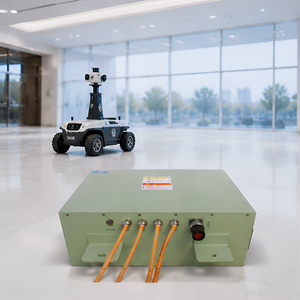
72V 60Ah LiFePO4 AMR Mobile Robot Battery Pack for Autonomous Robot System High Discharge Smart BMS Custom OEM ODM Wholesale
Contact Us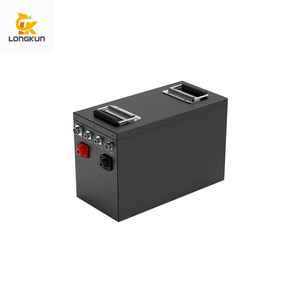
Longkun 24V 30Ah Lithium Ion Robot Battery Pack with BMS Rechargeable Li-ion Battery for AGV AMR Mobile Robots
Contact Us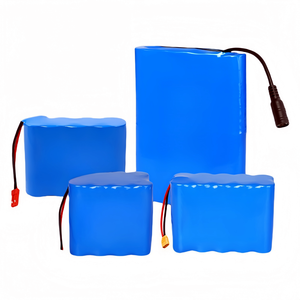
OEM Li-ion Battery Pack 3.7V 7.4V 11.1V 14.8V 18650 32650 26650 Lithium Ion Battery Pack for Autonomous Floor-Cleaning AMR Robot
Contact Us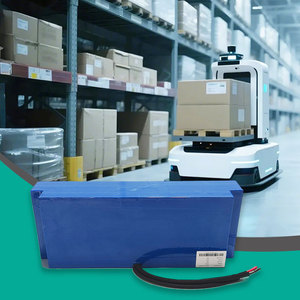
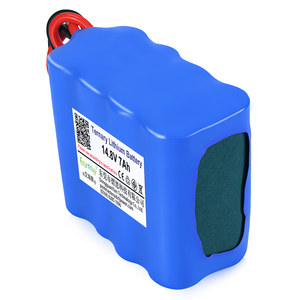
Custom Lithium Battery 14.8V 7Ah NMC 4S2P High Capacity for Autonomous Mobile Robot Electric Wheelchair Lawn Mower
Contact Us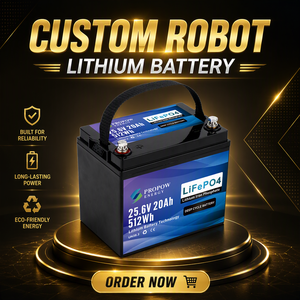
Custom Robot Lithium Battery 12V 24V 20Ah Lithium Battery for Robot, Rechargeable LiFePO4 Battery Pack for AGV AMR Mobile Robots
Contact Us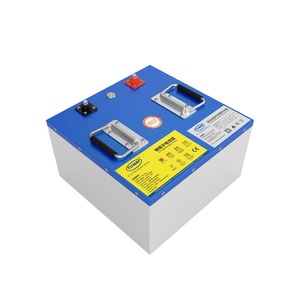
24V LiFePO4 Battery Pack 50Ah 60Ah 80Ah 100Ah with BMS 1500 Cycles -20C~60C for AGV AMR Robot Mobile Platform
Contact UsThe Evolution of Bi-Directional Power Conversion Systems
Exploring how two-way energy conversion topologies are redefining industrial automation, electric vehicles (EV/V2G), smart grid buffering, and robotic dynamic charging.
As global industrial infrastructure transitions toward decentralized energy resources (DERs) and autonomous electrification, Bi-Directional Battery Chargers have emerged as pivotal building blocks in modern power electronics. Unlike traditional unidirectional charging architectures that function purely as sink loads drawing energy from grid to battery, bidirectional topologies enable seamless, microsecond-level power reversals. This dual-capability allows energy to flow back into microgrids, industrial DC buses, or dynamic load nodes on demand.
Core Technical Definition: Bi-Directional Power Flow
A bi-directional battery charger incorporates a integrated dual-stage topology: a high-efficiency active front end (AFE) dual-quadrant AC/DC power factor correction (PFC) stage coupled with an isolated bi-directional DC-DC converter (such as Dual Active Bridge [DAB] or CLLC resonant topologies). This architecture enables both G2V (Grid-to-Vehicle / Charge Mode) and V2G / V2X (Vehicle-to-Grid / Discharge Mode) operation with power conversion efficiencies reaching 97.5%+ in both vectors.
Wide Bandgap (SiC/GaN) Integration
Modern bidirectional systems leverage Silicon Carbide (SiC) MOSFETs and Gallium Nitride (GaN) HEMTs, enabling switching frequencies up to 500 kHz. This reduces magnetics volume by over 40% while sustaining peak thermal performance under continuous full-load power reversals.
Active Regenerative Brake Harvesting
In heavy industrial AGV and AMR robotics, bidirectional chargers intercept dynamic back-EMF generated during regenerative braking or descending ramps, instantly feeding excess kinetic power back into centralized lithium storage buffers (LiFePO4, LTO, NMC).
Smart BMS Dual-Bus Telemetry
Featuring CANbus 2.0B, Modbus RTU/TCP, and EtherCAT telemetry, our power systems communicate continuously with battery packs. Voltage matching, active cell balancing, state-of-charge (SoC) estimation, and thermal safeguards operate synchronously to eliminate over-stress during reverse power export.
Bi-Directional Topology Comparison Matrix
Selecting the appropriate internal power stage architecture based on operational parameters, efficiency targets, galvanic isolation needs, and target battery chemistry.
| Converter Topology | Peak Efficiency (Charge/Export) | Galvanic Isolation | Primary Battery Chemistries | Ideal Application Sector | Key Advantage |
|---|---|---|---|---|---|
| CLLC Resonant Converter | 97.8% / 97.4% | High Frequency Transformer | LiFePO4, LTO (Titanate) | AGV / AMR Autonomous Charging Docks | Zero Voltage Switching (ZVS) across wide voltage range |
| Dual Active Bridge (DAB) | 96.5% / 96.2% | Planar Magnetics | NMC, High-Voltage Li-ion | V2G Electric Vehicle Fleet Inverters | Symmetrical bi-directional control simplicity |
| Non-Isolated Buck-Boost (Bi-Dir) | 98.5% / 98.2% | None (Direct Coupled) | Standard 12V/24V/48V Li-ion | Industrial Microgrid DC Buffer Nodes | Maximum energy density & lowest thermal loss |
| Interleaved Bi-Dir AC/DC AFE | 97.1% / 96.8% | Line Frequency / HF Isolated | Industrial LiFePO4 (24V - 72V) | Heavy Duty Logistics Platforms & Cleaners | Ultra-low Total Harmonic Distortion (THD < 3%) |
Future Procurement & Technology Trends (2025–2035)
Navigating technical shifts in high-power bidirectional conversion, energy storage chemistry integration, and international regulatory mandates.
1. Autonomous Docking & Wireless Bi-Directional Inductive Charging
Industrial procurement for mobile robotics (AMR/AGV) is shifting rapidly from physical contact plates to high-frequency inductive (wireless) bidirectional charging pads. Operating at 85 kHz under SAE J2954 standards, wireless bidirectional links allow autonomous platforms to draw dynamic top-up charges while parked over pick-and-place stations and return excess capacity during peak grid billing intervals, completely eliminating mechanical contact wear.
2. Widespread Transition to Lithium Iron Phosphate (LiFePO4) & LTO
While traditional Nickel Manganese Cobalt (NMC) offer high initial volumetric density, thermal stability concerns during aggressive reverse-discharge cycles are driving procurement managers toward LiFePO4 (LFP) and Lithium Titanate (LTO). LTO battery packs tolerate up to 20,000 deep bidirectional cycles and continuous high C-rate pulses (-20°C to 60°C), making them ideal for high-duty service robots.
3. Microgrid Integration & Grid Compliance Standards (UL 1741 SB / IEEE 1547)
Global exporters and OEM buyers must comply with strict anti-islanding and grid interconnection standards. Modern bi-directional battery chargers incorporate digital signal processors (DSPs) capable of autonomous Volt-VAR and Frequency-Watt regulation. This turns distributed industrial battery systems into dynamic grid-stabilizing assets capable of supplying instant frequency response.
4. Predictive Maintenance via AI & Embedded Edge BMS
Smart bidirectional power units now embed telemetry microcontrollers running real-time electrochemical impedance spectroscopy (EIS). By continuously analyzing internal battery impedance during both charge and discharge strokes, the system predicts remaining useful life (RUL), detects lithium dendrite formation, and prevents thermal runaway events long before failure occurs.
Enterprise Manufacturing Excellence & Global OEM Capability
Leveraging over four decades of custom battery assembly, intelligent charger engineering, and certified USA-based production facilities.
When procuring specialized bi-directional power systems, customized lithium battery packs, and smart chargers, choosing a qualified supplier with end-to-end design control is critical to project risk mitigation. Operating with over 40 years of continuous engineering heritage, our enterprise facilities deliver complete single-source manufacturing solutions.
ISO 9001 Certified Quality Control
Every custom battery assembly, BMS logic circuit, and bidirectional power stage undergoes 100% automated optical inspection (AOI), full-load burn-in testing, and computerized thermal mapping prior to export packaging.
Complete Custom OEM / ODM Tailoring
We tailor every technical dimension: custom enclosure dimensions, IP67 waterproof sealing, wide input voltage windows (90V AC to 480V AC phase-to-phase), custom firmware protocols, and tailored mechanical mounting brackets.
Global Certification & Logistics Support
Our solutions comply fully with UL 2580, UL 1741, IEC 62133, UN 38.3 transport testing, CE, and RoHS directives, simplifying smooth customs clearance and regulatory sign-offs worldwide.
Frequently Asked Questions (FAQ)
Expert responses to critical engineering, safety, procurement, and integration queries regarding bi-directional battery charging hardware.
What is the functional difference between a unidirectional charger and a bi-directional charger?
A unidirectional charger converts alternating current (AC) from the grid into direct current (DC) to charge a battery pack. A bi-directional charger utilizes a dual-quadrant power stage that operates in reverse. It can draw stored DC energy from the battery, convert it into synchronized AC or regulated DC, and feed it back to power localized industrial equipment, emergency backup systems, or the broader electrical microgrid (V2G/V2X).
How fast can a bi-directional converter switch power directions?
Advanced Silicon Carbide (SiC) based bidirectional power converters can execute full-scale power reversals (from +100% full charge mode to -100% full export mode) in under 10 milliseconds. This rapid response time is necessary for microgrid frequency stability, instantaneous uninterruptible power supply (UPS) transfer, and dynamic kinetic energy recovery in high-speed AGVs.
Are custom smart BMS communications required for bi-directional charging?
Yes. Bi-directional charging subjects battery cells to dynamic charge and discharge cycles. The Battery Management System (BMS) must communicate directly with the charger via CANbus, RS485, or EtherCAT to provide real-time limits for continuous and pulse currents, maximum allowable cell voltages, minimum discharge thresholds, and temperature limits to prevent premature cell degradation or thermal runaway.
Which battery chemistries are best suited for bi-directional power systems?
Lithium Iron Phosphate (LiFePO4) and Lithium Titanate (LTO) are preferred for bi-directional applications due to their exceptional thermal safety, low degradation rates under frequent cycling, and long cycle life (typically 3,000 to 20,000 cycles). Standard NMC chemistries can be used, but require conservative current limits during discharge export to maximize battery lifespan.
What thermal management mechanisms are integrated into your industrial chargers?
Our chargers incorporate active forced-air cooling with smart PWM fans or closed-loop liquid cold-plate options for high IP-rated outdoor/dusty industrial environments. Internal heat sinks utilize thermal interface materials (TIM) and heat pipes designed to distribute heat evenly across both AC/DC and DC/DC conversion stages.
Do your bi-directional charging products hold international safety certifications?
Yes, our standard models and custom OEM designs are manufactured to meet global regulatory requirements including UL 1741 SB, UL 2580, IEC 61851-23/24, CE, FCC Part 15 Class A, UN 38.3 for transport, and RoHS/REACH compliance standards.
Can your bi-directional systems support autonomous mobile robot (AGV/AMR) fleets?
Absolutley. We engineer ultra-compact, high power density bidirectional chargers and matching lithium battery packs (ranging from 12V to 72V+) specifically designed for high-duty AGV/AMR operating profiles. Features include automatic copper-paddle contact charging, wireless inductive power transfer, and fast opportunistic charging support.
What is your typical OEM prototype and production lead time?
Standard stock chargers and battery modules ship within 1 to 2 business weeks. Custom engineered OEM battery packs, specialized BMS development, and custom bi-directional power supplies typically follow a 4-to-6 week prototype timeline, followed by rapid mass assembly upon client sign-off.