Battery Engineering Blog
Discover expert perspectives, custom battery design guides, charging solutions, and industry updates from USA engineers.
Industrial & Smart Wireless BMS Lithium Modules
Explore high-precision smart battery management circuit boards, active balance modules, and wireless telemetry hardware engineered by China's leading OEM/ODM suppliers.
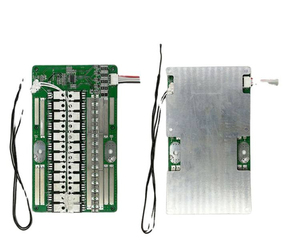
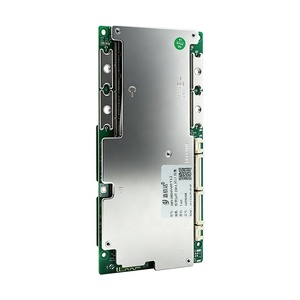
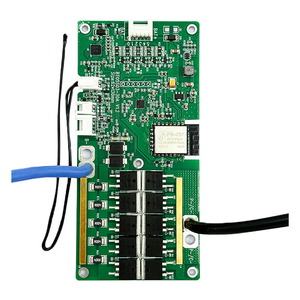
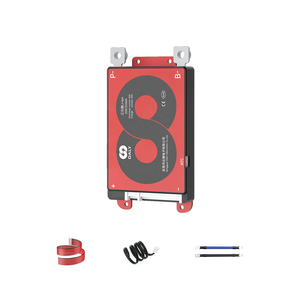
The Paradigm Shift to Wireless BMS (wBMS) Architecture
Why B2B OEM Buyers Are Transitioning to Wireless BMS
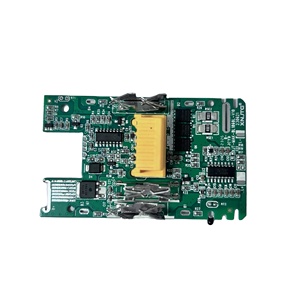
In modern high-capacity energy storage systems (ESS), electric mobility platforms, and heavy industrial battery units, traditional wired Battery Management Systems present critical engineering bottlenecks. Heavy copper wiring harnesses, complex connector pins, and manual soldering points represent up to 16% of total battery pack manufacturing failures. Wireless BMS (wBMS) replaces bulky mechanical communication cables with secure, ultra-reliable 2.4 GHz wireless mesh nodes embedded directly onto each cell module board.
By eliminating physical wiring harnesses, global procurement teams achieve significant structural and financial advantages:
- Elimination of Mechanical Points of Failure: Fretting corrosion, wire chafing under high vibration, and harness short-circuits are completely eradicated.
- Modular Plug-and-Play Scalability: Wireless cell monitoring modules automatically join the mesh network, enabling seamless stacking from 48V industrial packs to 800V high-voltage storage banks.
- Granular Lifecycle Tracking: Each module operates as an independent node, logging localized voltage, temperature, and State of Health (SOH) memory data across decades of continuous operation.
Future Procurement Trends in Wireless BMS & Lithium Modules
Understanding technological vectors is essential for engineering leaders and procurement managers selecting long-term manufacturing partners in China.
1. Edge-AI & Electrochemical State Prediction
Leading Chinese manufacturers are embedding neural-network microcontrollers into wireless modules. Instead of simple voltage threshold checks, on-chip AI runs real-time Extended Kalman Filtering (EKF) to predict thermal runaway micro-anomalies up to 72 hours before catastrophic failure occurs.
2. High-Current Active Balancing Integration
Procurement is shifting away from wasteful passive balance resistors (which dissipate energy as heat). Advanced 2A to 10A dynamic inductor-based wireless active balance modules transfer charge efficiently between cells, expanding pack usable capacity by 8-12%.
3. ISO 26262 ASIL-D & Cyber-Security Protocols
With wireless data transmission comes the requirement for robust encryption. Top-tier suppliers now integrate hardware security modules (HSM) featuring AES-128/256 encryption and ISO 26262 ASIL-D functional safety compliance for global OEM deployment.
Technical Comparison: Wired vs. Next-Gen Wireless BMS
Evaluate hardware parameters when sourcing Lithium Iron Phosphate (LiFePO4) and NMC management modules from Chinese OEMs.
| Engineering Benchmark | Legacy Wired Harness BMS | Standard Smart Bluetooth/WiFi BMS | Industrial Grade Wireless Mesh BMS (wBMS) |
|---|---|---|---|
| RF Protocol & Reliability | N/A (Copper CAN Bus) | Single Point BLE 5.0 / 2.4GHz WiFi | Time-Synchronized Channel Hopping Mesh (2.4GHz) |
| Harness Assembly Labor | High (Manual Routing & Crimping) | Moderate (Sensor Harness Required) | Zero (Direct PCB Module Surface Mount) |
| Sampling Precision | ±5mV to ±10mV | ±2mV to ±5mV | ±1mV High-Precision AFE ADC |
| Vibration Immunity | Vulnerable to wire chafing/freting | Moderate connector wear risk | 100% Solid-State Conformal Coated Resistance |
| Balancing Method | Passive Heat Dissipation (30mA-100mA) | Passive / Low Active (0.6A-1A) | Bidirectional Active Inductive/Capacitive (2A-10A) |
| Safety Certifications | CE, RoHS | CE, FCC, RoHS | UL9540A, IEC 62619, ISO 26262 ASIL-D, UN38.3 |
Why Partner with Premier China Wireless BMS Suppliers
Leveraging over 40 years of combined electronic manufacturing heritage, customized engineering workflows, and robust global supply chain ecosystems.
Full Turnkey SMT & Automated Testing
China’s leading BMS manufacturers utilize high-speed Yamaha and Fuji SMT lines capable of mounting 0201 micro-components with 100% Automated Optical Inspection (AOI), X-ray solder joint verification, and automated high-voltage burn-in testing chambers to eliminate infant mortality defects.
Comprehensive Protocol Customization
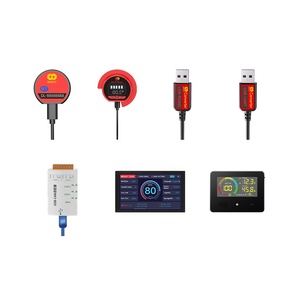
Suppliers support extensive communication protocols including dual CAN-BUS 2.0B, CAN-FD, RS485 Modbus, SMBus, UART, and custom wireless BLE/WiFi/Zigbee telemetry interfaces. Firmware can be customized for compatibility with global inverter brands (Victron, SMA, Deye, Growatt, Sol-Ark).
Wireless BMS Sourcing & Technical FAQs
Essential questions answered by senior battery management software engineers and global procurement specialist directors.
Industrial grade wireless BMS modules utilize 2.4 GHz Time-Synchronized Channel Hopping (TSCH) combined with ultra-wideband (UWB) or direct-sequence spread spectrum (DSSS) modulation. Signals bounce constructively inside metallic battery racks while automatically switching to noise-free frequency channels in milliseconds, ensuring 99.999% data packet reliability.
For regulatory clearance and insurance approval, smart lithium battery modules must comply with UN38.3 (transport safety), UL 9540A (large-scale fire safety testing), IEC 62619 (industrial lithium safety), CE-EMC, FCC Part 15 (wireless radio compliance), and RoHS/REACH environmental standards.
Standard stock smart BMS boards (such as Daly 4S-16S or JBD series) have MOQs as low as 1 to 10 units with lead times of 3 to 7 days. Fully customized OEM wireless PCB projects (custom dimensions, higher string counts 24S-32S, or specific CAN protocol mapping) require 3 to 4 weeks for layout & prototype samples, and 4 to 6 weeks for mass production.
Passive balancing burns off excess energy from high-voltage cells as thermal heat through resistors (usually limited to low currents like 35mA-100mA). Active balancing uses capacitive or inductive energy transfer circuits to actively shuttle power from higher-voltage cells to lower-voltage cells at high currents (1A to 10A), eliminating thermal buildup and preserving maximum energy efficiency.
Connect with Leading China Wireless BMS Engineers Today
Whether you require off-the-shelf Daly, JBD, or YDE smart BMS modules, or require custom wireless battery management system prototyping for 12V to 800V lithium projects, our technical sales team is ready to evaluate your CAD schematics and power requirements.