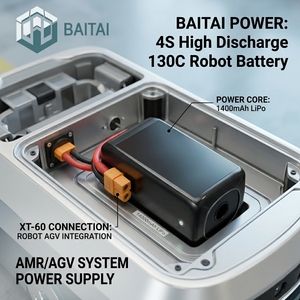
130C 1400mAh 4S High Discharge LiPo Battery Pack for AGV and AMR
14.8V Nominal
130C Continuous
Service Robotics
Inquire Now
Discover expert perspectives, custom battery design guides, charging solutions, and industry updates from USA engineers.
Engineered for high-discharge Autonomous Mobile Robots (AMR), Automated Guided Vehicles (AGV), and demanding industrial automation power systems.
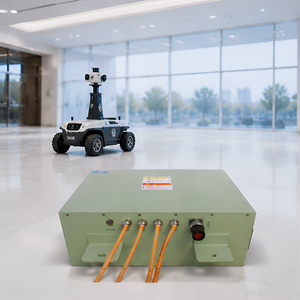
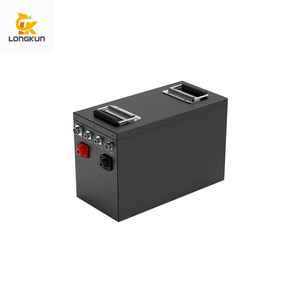
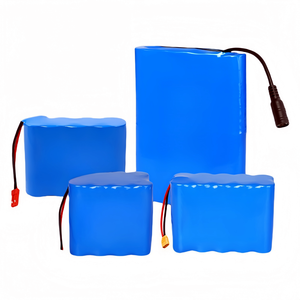
In the rapidly advancing landscape of industrial automation, autonomous logistics, and electric mobility, the Smart Battery Management System (Smart BMS) has transitioned from a passive protective circuit board to the central intelligence hub of advanced energy storage systems. Original Equipment Manufacturers (OEMs) and System Integrators searching for top China Smart Battery Management System Modules suppliers and exporters require far more than off-the-shelf component sourcing; they demand engineering co-development, rigorous thermal management design, compliance with international transport standards, and high-gain software customization.
China's manufacturing ecosystem has emerged as the global nexus for smart BMS innovation, housing state-of-the-art SMT (Surface Mount Technology) assembly facilities, specialized firmware development laboratories, and comprehensive battery testing infrastructure. However, navigating this extensive supplier base requires a clear framework evaluating engineering E-E-A-T (Experience, Expertise, Authoritativeness, and Trustworthiness). This whitepaper breaks down critical hardware topologies, communication protocols, procurement trends, and quality benchmarks required when evaluating high-reliability suppliers for AMR, AGV, and commercial applications.
Leveraging over four decades of legacy battery design expertise combined with cutting-edge electronics manufacturing, leading Smart BMS exporters deliver single-source responsibility. From custom printed circuit board layout (PCB/PCBA) to microchip programming, our engineering workflow ensures seamless hardware-firmware synergy.
Custom multi-layer PCB design featuring low internal resistance shunt resistors, high-side MOSFET switching arrays, and automotive-grade Analog Front End (AFE) ICs for voltage detection accurate down to ±1mV per series cell.
Native integration of isolated CANbus 2.0B (CANopen / J1939), RS485 (Modbus RTU), SMBus, and Bluetooth LE telematics, empowering real-time fleet diagnostics, remote firmware update capabilities, and cloud telemetry connection.
Multi-point NTC thermistor placement monitoring individual cell modules, power FETs, and terminal connectors. Automated thermal throttling and hardware-level secondary fuse protection against severe short-circuits.
A fundamental criteria during B2B supplier evaluation is determining whether a passive or active balancing architecture matches your application's duty cycle. Modern smart battery packs for autonomous mobile platforms demand optimal energy extraction and minimized heat buildup.
| BMS Metric / Feature | Passive Balancing Topology | Active Balancing (Inductive/Capacitive) | Engineering Selection Guidance |
|---|---|---|---|
| Energy Redistribution | Dissipates excess charge as heat via resistors | Transfers energy from high to low cells | Active balancing reduces energy waste by >92% |
| Balancing Current | Typically 30mA to 200mA (Limited by thermal dissipation) | 1.0A to 5.0A High-Current transfer | Active balancing recommended for pack capacities >50Ah |
| Thermal Impact | Generates localized heat inside battery enclosure | Minimal thermal dissipation | Passive balancing requires careful NTC heat mapping |
| Component Cost | Cost-effective, simple component count | Higher upfront MCU & inductive circuit cost | Passive suited for stationary energy; Active for heavy AMR/AGV |
| Cell Life Extension | Standard protection against over-voltage drift | Extends overall cycle life by up to 25% | Crucial for high-cycle LTO & LiFePO4 fleet systems |
Basic protection boards estimate remaining capacity purely based on open-circuit voltage (OCV), leading to massive inaccuracies under variable load conditions—especially with LiFePO4 cells which exhibit an extremely flat discharge curve between 20% and 80% SOC. Premium China Smart BMS exporters utilize advanced Coulomb Counting enhanced by Extended Kalman Filtering (EKF) algorithms. This software approach calculates internal cell impedance in real time, dynamically compensating for ambient operating temperatures (-20°C to +60°C) and cell aging (SOH - State of Health monitoring).
No single cell chemistry suits every industrial environment. Competent BMS exporters engineer specialized protection parameters and firmware curves tailored to specific chemistry behaviors:
Nominal 3.2V per cell. Extremely stable thermal runaway threshold (>270°C). Ideal for AGV/AMR robotics operating over 2,000 to 5,000 charge cycles.
Nominal 3.6V/3.7V per cell. Superior gravimetric energy density (up to 250 Wh/kg). Suitable for compact floor-cleaning AMRs, wheelchairs, and power tools.
Nominal 2.3V per cell. Supports 10C–20C continuous fast charge and sub-zero operation down to -30°C. Delivers 20,000+ cycle life for 24/7 automated warehouses.
Supports massive continuous discharge bursts (50C to 130C). Ideal for high-torque robotic actuators, defense UAVs, and emergency payload acceleration.
As global energy regulations tighten and autonomous robotics fleets expand, B2B buyers sourcing Smart BMS modules from China suppliers must anticipate key industry paradigm shifts over the coming decade:
Driven by the European Union Battery Regulation (EU 2023/1542), future smart BMS modules must record and report lifecycle parameters including carbon footprint data, recycled material content percentage, total energy throughput, and safety incidents. Top Chinese exporters are embedding secure EEPROM and crypto-element hardware onto BMS boards to satisfy international blockchain-ready battery passport requirements.
Traditional battery packs utilize complex wiring harnesses to route voltage and temperature signals from individual cells to the central BMS board. Wireless BMS technology utilizes secure sub-GHz or 2.4GHz mesh communication networks between smart cell monitors and the main control module. This eliminates heavy wiring harnesses, reduces mechanical point-of-failure risks due to vibration in heavy industrial AGVs, and improves overall pack energy density.
Modern smart BMS boards are increasingly paired with integrated IoT gateways (4G-LTE / 5G / Wi-Fi). By continuously streaming cell-level telemetry data to cloud analytics platforms, fleet managers can predict thermal runway events days in advance, optimize opportunity-charging schedules for AMR fleets, and perform zero-downtime Over-The-Air (OTA) firmware updates across global equipment deployments.
To ensure seamless project execution and eliminate supply chain risks, technical procurement managers should utilize the following 4-step validation checklist when auditing Chinese manufacturers:
Verify in-house hardware schematic design capability, C/C++ firmware mastery, and custom GUI software development for field tuning of over-voltage/under-voltage protection thresholds.
Confirm presence of automated SMT inspection (AOI), thermal shock test chambers, vibration simulation beds, and high-current automated charge/discharge test stations.
Ensure the manufacturer offers complete certification support including UN 38.3 (Transport Safety), UL 1973 (Stationary/Industrial), UL 2580 (EV/AGV), CE, and IEC 62133 safety standard reports.
Assess component procurement sourcing pathways for core IC microcontrollers (NXP, STMicroelectronics, Texas Instruments) to prevent counterfeit chip risks and long lead times.
Need a high-reliability Smart BMS, custom LiFePO4/NMC pack assembly, or specialized power system for your next AMR/AGV robotics project? Our senior application engineering team is ready to review your technical specifications.
Inquire Now