Technical Articles & Insights
Battery Engineering Blog
Discover expert perspectives, custom battery design guides, charging solutions, and industry updates from USA engineers.
Factory Direct Catalog
Featured High Energy Density Lithium Battery Cells & Packs
Explore our tier-1 engineered cell formats optimized for UAV drones, eVTOL aviation, commercial robotic platforms, and high-capacity renewable energy storage systems.
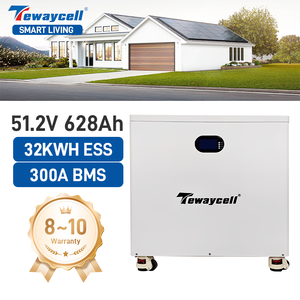
51.2V 16Kwh 20KWH 32KWH Lifepo4 Lithium Solar Battery 314Ah 628Ah Home Energy Storage System
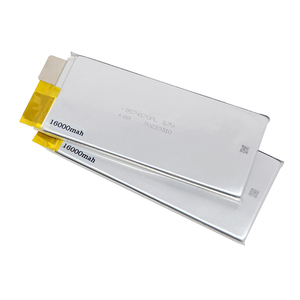
Drone Cell Mass Stock 3.7v 3.85v 3.95V 4.45V 22000mah 44000mah High Energy Density Semi Solid State Lipo LIHV Battery Cell
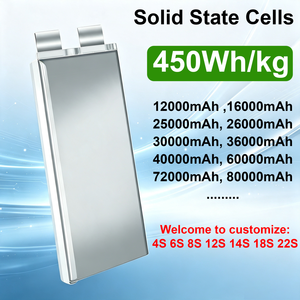
450Wh/kg Solid State Cells 3.7V 12000mAh 16000mAh 25000mAh 26000mAh High Energy Density Lipo Pouch Battery Cell For UAV Drones
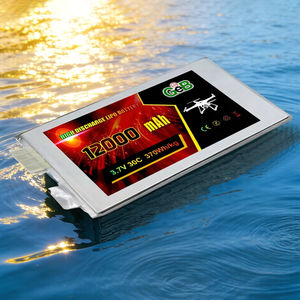
500Wh/KG 370Wh/KG semi-solid Batteries 400Wh/KG 450Wh/KG 5C 30C 30Ah 39Ah 50Ah High Density Lipo Battery Cell for UAV FPV Drone
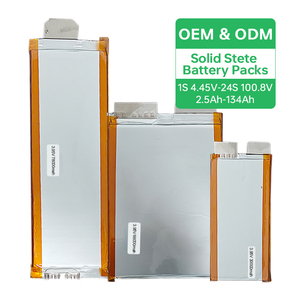
High Density 350Wh/kg Semi Solid State 4.45V NMC Lithium Ion Battery CE Certified 1000 Cycle 22ah 35Ah Capacities For UAV
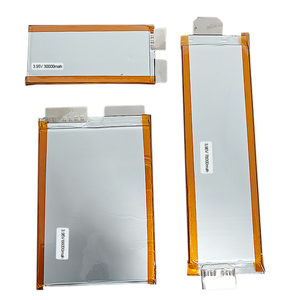
Factory Price 3.95V Solid State LiHv Cell 4.45V 5500mah 6500mah 11000mah 10C 20c High Energy Density Single Cell for Drone FPV
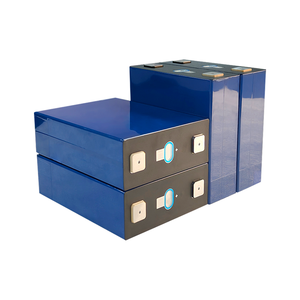
Factory 3.2V 345Ah 330Ah 314Ah 300Ah 280Ah 200Ah 100Ah Lithium Ion Batteries Home Energy Storage LiFePo4 Prismatic Battery Cell
Understanding High Energy Density Lithium Battery Architectures
In modern electrical engineering, gravimetric energy density (Wh/kg) and volumetric energy density (Wh/L) determine payload capacity, operational endurance, and structural design limits for unmanned aerial vehicles (UAVs), electric vertical takeoff and landing (eVTOL) aircraft, and stationary storage powerhouses.
The Technical Benchmark: Breakthrough Beyond standard 240Wh/kg NMC Cells
Traditional liquid-electrolyte Lithium-ion cells (such as standard NMC 622 or graphite-anode LiCoO2) plateau at approximately 240–260 Wh/kg due to thermal instability and cathode degradation at higher voltages. Tier-1 Chinese manufacturers have unlocked 350Wh/kg to 500Wh/kg thresholds through four core advancements: Silicon-Carbon (Si-C) composite anodes, ultra-high nickel cathode chemistry (NMC 811), solid-state gel polymer electrolytes, and high-voltage LiHV (4.45V) cell balancing.
High Energy Density Cell Chemistry Comparison Matrix
| Battery Chemistry | Gravimetric Density (Wh/kg) | Nominal Voltage (V) | Max Discharge C-Rate | Cycle Life (80% DOD) | Primary Industrial Applications |
|---|---|---|---|---|---|
| Next-Gen Solid State Cell | 450 – 500 Wh/kg | 3.7V – 3.85V | 5C – 30C Continuous | 800 – 1,200 Cycles | Long-range UAVs, Tactical Military Drones, eVTOL |
| Semi-Solid State LiHV Cell | 350 – 400 Wh/kg | 3.85V – 4.45V Cut-Off | 10C – 20C Peak | 1,000+ Cycles | Mapping Drones, Commercial Inspection UAV, FPV |
| High-Voltage LiHV (NMC 811) | 300 – 350 Wh/kg | 3.8V – 4.4V | 15C – 35C Continuous | 600 – 800 Cycles | High-speed Racing FPV, Payload Drones |
| High-Density Prismatic LiFePO4 | 160 – 180 Wh/kg | 3.2V | 1C – 3C Continuous | 6,000 – 10,000 Cycles | Grid Energy Storage, Industrial BESS, Home Solar |
Global Supply Chain Intelligence
Future Procurement Trends for High-Density Lithium Batteries
As global OEM buyers and defense contractors migrate toward high-end power systems, sourcing strategy has shifted from basic commodity price per kWh to multi-dimensional value metrics: safety architecture, customized pouch geometry, and BMS integration capability.
1. Semi-Solid State Dominance in UAV Flight Times
Procurement engineers are replacing legacy 220Wh/kg LiPo packs with 350Wh/kg to 450Wh/kg semi-solid state pouch cells. This transition extends aerial flight duration by 40% to 75% without increasing takeoff weight (MTOW), enabling single-battery surveillance and agricultural spraying operations that were previously impossible.
2. In-Situ Polymer Electrolyte Safety
Safety is the leading procurement evaluation metric. Semi-solid cells utilize gelled polymer electrolytes that eliminate liquid leakage, reduce internal short-circuit risk under physical puncture tests, and maintain structural integrity up to higher thermal breakdown temperatures compared to standard organic liquid electrolytes.
3. High Capacity Grid Cells (314Ah & 345Ah)
For utility-scale energy storage system (BESS) procurement, the industry standard has rapidly migrated from 280Ah cells to high-volumetric 314Ah and 345Ah LiFePO4 prismatic formats. These cells increase containerized energy density by over 20% in standard 20ft storage enclosures, drastically reducing land footprint and balance of plant (BOP) installation costs.
Technological Innovations Driving China Battery Factories
China accounts for over 75% of global lithium cell production capacity. Leading factories maintain technological supremacy through continuous material science innovations across anode chemistry, cathode coating, and smart manufacturing process automation.
Silicon-Carbon (Si-C) Anode Scaling
By supplementing pure graphite anodes with nano-silicon structures, theoretical specific anode capacity increases from 372 mAh/g to over 1,500 mAh/g. Advanced surface coating prevents volume expansion during lithiation, locking in superior cycle life alongside groundbreaking Wh/kg gains.
Ultra-Thin Current Collector Foil
Utilizing 4.5μm copper foils and 8μm aluminum foils coated with conductive carbon layers lowers internal cell resistance (IR) while stripping unnecessary dead weight, raising net usable energy ratios in pouch and prismatic cells alike.
Integrated Smart BMS & Custom Enclosures
High-density packs require precise cell balancing due to tighter voltage windows. Advanced China factories assemble turn-key battery packs featuring integrated CANbus/SMBus protocols, dynamic temperature monitoring, and ultra-light carbon-fiber structural housings.
Why Partner With Us
State-of-the-Art China Factory Manufacturing Capabilities
We combine multi-decade battery engineering experience with rigorous quality management protocols, serving as a reliable single-source OEM/ODM partner for global high-tech industries.
Custom Cell Geometry & Tailored Packs
From ultra-slim pouch designs (under 3mm thickness) to curved, L-shaped, and high-voltage multi-series packs (6S to 14S UAV assemblies), our engineering team customizes dimensions, tabs, and connectors to fit exact client CAD specifications.
100% Automated Cell Matching & Sorting
Cell longevity depends on initial capacity, internal resistance (IR), and voltage uniformity. Our production line incorporates automated sorting machines that pair pouch and prismatic cells within strict tolerance bands (IR delta < 0.5mΩ, Capacity delta < 5mAh).
Global Safety Certifications & Compliance
All battery cells and integrated packs undergo rigorous safety testing protocols and hold international certifications, including CE, UN38.3 (air transportation safety), MSDS, UL1642, UL2054, and IEC62133, ensuring frictionless global distribution.
Technical FAQ
High Energy Density Lithium Battery Procurement FAQ
Common technical questions answered by our senior electrochemistry research team for OEM procurement managers and design engineers.
Q1:
What is the real-world flight time improvement when upgrading from standard LiPo to 350Wh/kg semi-solid state cells?
Standard LiPo cells typically range between 200–240 Wh/kg. Upgrading to a 350Wh/kg semi-solid state battery pack reduces total battery mass by approximately 35% for the same watt-hour capacity. In commercial quadcopter and fixed-wing mapping UAVs, this net mass reduction directly translates to a 40% to 65% increase in total hover and cruise flight endurance under equivalent payload conditions.
Q2:
How do semi-solid state batteries perform in extreme cold operating environments (-20°C to -40°C)?
Semi-solid state batteries featuring modified gel polymer electrolytes demonstrate significantly superior low-temperature performance compared to liquid Li-ion cells. At -20°C, semi-solid cells retain up to 85% of their nominal capacity, whereas conventional liquid batteries suffer severe capacity drops below 50% due to liquid electrolyte freezing and increased internal resistance (impedance).
Q3:
What safety advantages do semi-solid pouch cells provide during physical penetration or overcharging events?
Because the electrolyte matrix is partially polymerized and gel-bound, the free liquid volume is minimized. Under severe mechanical nail penetration or high-voltage overcharging tests, semi-solid cells exhibit minimal smoke, zero violent fire explosion, and reduced flame propagation compared to traditional liquid pouch cells, drastically upgrading safety margins for high-value aerial payloads.
Q4:
What continuous and peak C-rates can your 450Wh/kg high-density battery cells sustain?
Our 450Wh/kg solid-state and semi-solid pouch cells are optimized for continuous discharge rates of 5C to 10C, with burst peak discharge capabilities up to 20C–30C (for 5–10 second tactical maneuvers). For applications demanding continuous 30C+ high-power discharge (e.g., FPV racing), we offer specialized LiHV high-C rate chemistry formulations rated at 300-330Wh/kg.
Q5:
What is the typical factory MOQ and prototyping lead time for custom battery pack assemblies?
For standard stock cell sizes, sample orders have no minimum order quantity (MOQ 1 Piece). For fully customized pouch dimensions, tab locations, or integrated smart BMS packs, engineering sample lead times typically range from 15 to 25 business days following CAD drawing sign-off. Mass production volume orders average 3 to 4 weeks production turnaround.
Q6:
Why are 314Ah and 345Ah LiFePO4 prismatic cells replacing 280Ah cells in BESS solar storage projects?
314Ah and 345Ah prismatic cells utilize the standard 7117320 dimensions (same physical footprint as 280Ah cells) while increasing volumetric energy density by 12% to 23%. This allows energy storage system integrators to fit 5MWh+ into a standard 20-foot shipping container system, significantly lowering transport, installation, cabling, and civil works costs per megawatt-hour.
Q7:
What documentation and export certifications are included for dangerous goods (DG) ocean/air freight?
All factory shipments include comprehensive UN38.3 test reports, 1.2 Meter Drop Test summaries, MSDS documentation, CE compliance certificates, and Class 9 DG packaging verification. We handle full customs declaration and air/sea freight logistics via authorized DG-certified freight forwarders for seamless global door-to-door delivery.
Q8:
How does high-voltage LiHV (4.45V cut-off) cell architecture differ from standard 4.2V Li-ion chemistry?
Standard Li-ion cells operate with a upper charging limit of 4.20V. LiHV chemistry utilizes doped cathode coatings and high-voltage stable electrolytes that permit charging up to 4.35V, 4.40V, or 4.45V per cell. Charging to 4.45V extracts additional lithium ions from the cathode matrix, yielding an immediate 15% to 20% boost in usable capacity within the exact same cell physical mass.
Q9:
Can your factory integrate customized Smart BMS with CANbus, SMBus, or UART communications?
Yes. Our in-house electronics department designs custom Smart BMS boards featuring hardware-level overcurrent, overvoltage, thermal protection, active cell balancing, and SoC state-of-health tracking. Supported telemetry communication protocols include CANbus (CANopen/J1939), SMBus, UART, RS485, and Bluetooth mobile app monitoring.
Q10:
What cycle life retention guarantees does the factory provide for semi-solid high-density cells?
Our 350Wh/kg to 400Wh/kg semi-solid battery cells are engineered to maintain 80% or greater of their initial rated capacity after 1,000 complete charge-discharge cycles under standard 1C/1C rating conditions at 25°C. For industrial LiFePO4 cells, cycle life guarantees range from 6,000 to 10,000 cycles at 80% DOD.