Battery Engineering Blog
Discover expert perspectives, custom battery design guides, charging solutions, and industry updates from USA engineers.
Industrial Lithium Battery Solutions
High-discharge, smart BMS integrated Li-ion, LiFePO4, NMC, and LTO battery packs tailored for AGVs, autonomous mobile robots (AMR), and demanding industrial automation.
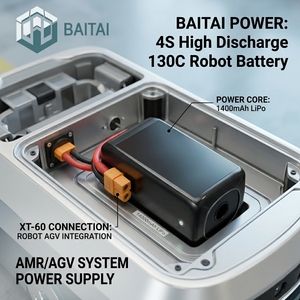
130C 1400mAh 4S High Discharge LiPo Battery for Service Robot AGV and Autonomous Mobile Robot Power System
Get Catalog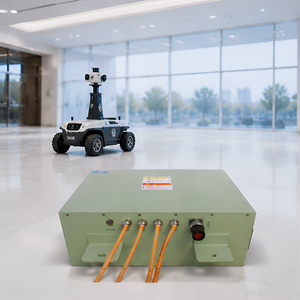
72V 60Ah LiFePO4 AMR Mobile Robot Battery Pack for Autonomous Robot System High Discharge Smart BMS Custom OEM ODM Wholesale
Get Catalog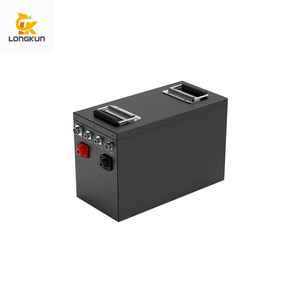
Longkun 24V 30Ah Lithium Ion Robot Battery Pack with BMS Rechargeable Li-ion Battery for AGV AMR Mobile Robots
Get Catalog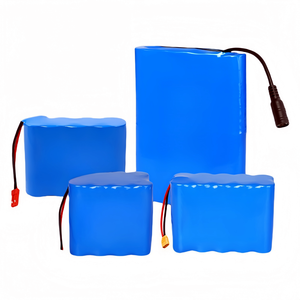
OEM Li-ion Battery Pack 3.7V 7.4V 11.1V 14.8V 18650 32650 26650 Lithium Ion Battery Pack for Autonomous Floor-Cleaning AMR Robot
Get Catalog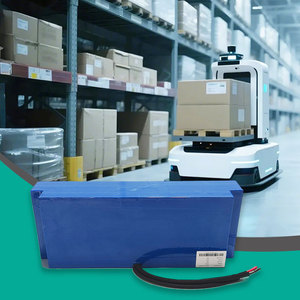
Customized Rechargeable LTO Agv Battery Pack 9Ah Autonomous Mobile Robot Agv Battery
Get Catalog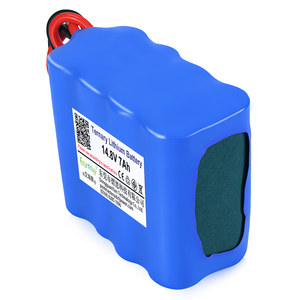
Custom Lithium Battery 14.8V 7Ah NMC 4S2P High Capacity for Autonomous Mobile Robot Electric Wheelchair Lawn Mower
Get Catalog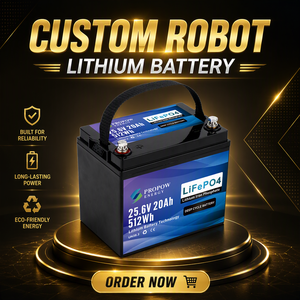
Custom Robot Lithium Battery 12V 24V 20Ah Lithium Battery for Robot, Rechargeable LiFePO4 Battery Pack for AGV AMR Mobile Robots
Get Catalog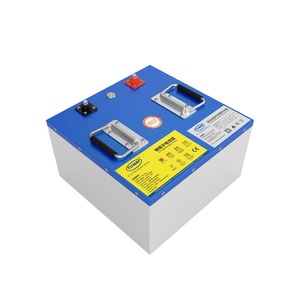
24V LiFePO4 Battery Pack 50Ah 60Ah 80Ah 100Ah with BMS 1500 Cycles -20C~60C for AGV AMR Robot Mobile Platform
Get CatalogThe Evolution of Industrial Multi-Channel Charging Architecture
As automated material handling, AMR fleets, medical mobility devices, and unmanned systems scale globally, industrial power engineering has undergone a fundamental paradigm shift from single-port charging bricks to intelligent, multi-channel energy replenishment hubs.
Independent Channel Isolation
Traditional parallel charging exposes battery arrays to cross-channel voltage imbalance and thermal runaways. Modern multi-channel chargers utilize galvanically isolated micro-converters per port, allowing simultaneous fast-charging of lithium iron phosphate (LiFePO4), nickel manganese cobalt (NMC), and lithium titanate (LTO) battery packs without voltage interference.
Dynamic Load Balancing Algorithms
Next-generation multi-channel lithium battery charging stations employ real-time current distribution logic. By continuously monitoring State-of-Charge (SOC), Internal Resistance (IR), and surface temperature across all connected channels via CANbus, the power engine dynamically channels current to depleted packs while trickle-charging near-full units.
Telemetry & Smart BMS Interfacing
Industry 4.0 demands actionable battery analytics. Leading multi-channel suppliers integrate RS485, SMBus, Modbus, and CAN 2.0B interfaces. Chargers operate not merely as power delivery units, but as edge IoT nodes communicating battery health logs directly to cloud-based Enterprise Resource Planning (ERP) engines.
Top 10 Multi Channel Lithium Battery Chargers Manufacturer Analysis
Rigorous engineering evaluation comparing market leadership, custom engineering responsiveness, safety compliance, and technological advancements across major global B2B charger manufacturers.
| Manufacturer / Supplier | Primary HQ | Supported Chemistries | Max Port Count | Protocol Support | Key Regulatory Certifications |
|---|---|---|---|---|---|
| Cell-Con, Inc. | USA (Bedford, PA) | LiFePO4, NMC, Li-Ion, NiMH, LTO | 12 Channels (Custom) | CANbus, SMBus, Modbus, UART | UL 60601-1, UL 1310, ISO 9001, CE, UN 38.3 |
| Delta-Q Technologies | Canada | Li-Ion, Lead-Acid | 4 Channels | CANbus (CANopen, J1939) | UL 1564, CE, IP66 |
| Elcon Power Systems | China / USA | LiFePO4, NMC | 6 Channels | CANbus | CE, UL, IP67 |
| EnerSys (Nexus) | USA | LiFePO4, Lead-Acid | 8 Channels | Ethernet, Modbus | UL, CE, ISO 14001 |
| Green Power Solutions | Italy | Li-Ion, LTO | 6 Channels | RS485, CANbus | CE, IEC 62133 |
| Custom Power Design | UK | LiFePO4, NiMH | 4 Channels | SMBus | CE, Medical IEC 60601 |
| E-Bility Technology | Taiwan | Li-Ion, LiPo | 8 Channels | UART, CANbus | CE, PSE, UL |
| ProMariner Industrial | USA | Li-Ion, AGM | 4 Channels | NMEA 2000 | UL 1236, CSA |
| Current Ways Inc. | USA | LiFePO4, NMC | 6 Channels | CAN 2.0B | UL 2202, CE |
| Mastervolt Energy | Netherlands | Li-Ion, LiFePO4 | 3 Channels | MasterBus, CZone | CE, ABYC, UL |
Future Procurement & Technology Trends in Multi-Channel Charging
Insights for B2B procurement managers, systems integration engineers, and OEM designers planning next-generation energy replenishment infrastructure.
1. Adoption of Gallium Nitride (GaN) Semiconductors
Traditional silicon MOSFET power supplies suffer from thermal loss during high-current conversion. The industry is rapidly shifting toward Gallium Nitride (GaN) switching topologies. GaN allows chargers to run at significantly higher switching frequencies, decreasing physical charger volume by 40% while achieving power conversion efficiencies beyond 96.5%.
2. Universal Multi-Chemistry Auto-Recognition
Warehouse and robotic fleets often deploy mixed battery chemistries (LiFePO4 for heavy payload AGVs, NMC for ultra-compact robots, LTO for fast cold-storage operations). Modern multi-channel chargers automatically handshake with individual BMS units via CANbus to select programmed CC/CV curves without operator intervention.
3. Modular "Hot-Swappable" Channel Bays
System downtime translates directly to operational financial loss. OEM buyers are increasingly specifying modular charging bays where individual channel circuit cards can be hot-swapped without taking the rest of the multi-port charging station offline. This modularity dramatically lowers Total Cost of Ownership (TCO).
4. Strict Compliance with Medical & Military Standards
Procurement teams are establishing stricter safety thresholds. Chargers deployed in healthcare and defense applications must comply with UL 60601-1 4th Edition (Medical EMC) and ruggedized MIL-STD-810G standards. Sub-standard commercial chargers are being phased out in favor of fully certified, traceable domestic solutions.
B2B Procurement & Engineering FAQ
Answers to common technical, regulatory, and integration questions faced by original equipment manufacturers (OEMs) when sourcing multi-channel lithium battery chargers.
Q1: What is the technical advantage of an independent multi-channel charger over parallel charging stations?
Independent multi-channel chargers feature isolated power converters per output port. In parallel charging systems, batteries of varying State-of-Charge (SOC) or internal degradation draw unequal currents, causing high circulation currents, uneven cell heating, and premature capacity loss. Multi-channel systems treat each battery pack individually, delivering precise Constant Current/Constant Voltage (CC/CV) profiles engineered specifically for that pack’s exact status.
Q2: How does CANbus integration prevent thermal runaway during multi-pack charging?
CANbus (Controller Area Network) facilitates continuous digital communication between the Smart BMS inside each battery pack and the charging channel processor. The BMS reports real-time internal cell temperatures, cell voltages, and fault flags. If any single cell exceeds thermal safety limits (e.g., above 55°C), the charger instantly throttles back current or shuts off that specific channel while leaving other channels running safely.
Q3: Can a single multi-channel charger support different lithium chemistries simultaneously?
Yes, provided the charger is engineered with per-channel microcontroller control. For instance, Cell-Con’s custom multi-channel systems can charge a 24V LiFePO4 pack on Channel 1, a 14.8V NMC pack on Channel 2, and a 7.4V Li-Ion battery on Channel 3 simultaneously. The charger identifies the battery chemistry via BMS handshaking or pre-configured software profiles.
Q4: What safety certifications are required for multi-channel chargers used in North American and European industrial markets?
Key certifications include UL 1310 (Class 2 Power Units), UL 62368-1 / UL 60950-1 (Information Technology and Industrial Equipment), UL 60601-1 (Medical Electrical Equipment), CE Marking, and compliance with FCC Part 15 Class B for electromagnetic interference. For worldwide transport compliance, battery packs charged must also be certified under UN 38.3.
Q5: How does active cell balancing differ when executed by the charger versus internal BMS?
Internal BMS balancing is usually passive (bleeding excess voltage off full cells via resistors as heat during top-of-charge). Charger-assisted balancing utilizes high-accuracy telemetry from individual series cell taps. The charger can modulate charge pulse rates or communicate with active balancing circuits within the battery, redistributing charge energy efficiently and shortening the final balancing phase by up to 50%.
Q6: What is the typical power efficiency rating for industrial-grade multi-port charging hubs?
Modern multi-channel industrial chargers achieve power efficiencies between 92% and 97%. High-end units utilizing Gallium Nitride (GaN) switching circuits and active Power Factor Correction (PFC > 0.98) operate near 97%, minimizing thermal dissipation inside electrical cabinets and significantly reducing enterprise utility expenses.
Q7: How does dynamic power allocation work in a multi-channel charger?
If a multi-channel station has a total system power cap (e.g., 2000W), dynamic power allocation intelligently splits power based on demand. If Channel 1 connects to a completely depleted AGV battery, the charger assigns 1200W to Channel 1 while distributing the remaining 800W across Channels 2-4. As Channel 1 enters the constant voltage stage, power is automatically reallocated to accelerate charging on other channels.
Q8: What custom OEM parameters can be specified when commissioning a custom multi-channel charger project?
OEMs can specify customized output voltage/current curves, port counts (2 to 12+ channels), custom enclosure footprints (rack-mount, wall-mount, or embedded robot dock), connector interfaces (Anderson, Molex, custom pogo pins), custom LED/LCD displays, IP ratings (up to IP67 water/dust protection), and specific software communication protocols (CANopen, J1939, Modbus RTU).
Q9: What protection mechanisms prevent damage if a operator accidentally plugs a reversed-polarity cable into a channel?
Industrial-grade chargers incorporate electronic reverse-polarity protection using power MOSFET circuits rather than simple fuses. If a reversed connection is detected, the channel output relay remains physically open, preventing current flow, and triggers an error LED code without causing blown fuses or internal circuit degradation.
Q10: What are standard B2B production lead times and Minimum Order Quantities (MOQ) for custom chargers?
Stock or modular multi-channel charger platforms typically carry low MOQs (10–50 units) with 2-4 week lead times. Fully customized OEM/ODM projects requiring dedicated PCB layouts, tooling, and specific agency certifications generally require 8–12 weeks for prototype delivery, with production MOQs scaled according to project scope.
The Cell-Con Engineering Advantage
Established in 1983 in Bedford, Pennsylvania, Cell-Con, Inc. has served as a trusted manufacturer of custom smart battery packs and matching chargers for over four decades. We eliminate supplier friction by offering unified battery and charger co-engineering under one roof.