Battery Engineering Blog
Discover expert perspectives, custom battery design guides, charging solutions, and industry updates from USA engineers.
Featured Modular Lithium Battery Packs & Systems
Engineered for heavy-duty industrial AGVs, autonomous mobile robots (AMRs), rack energy storage, and mission-critical power systems.
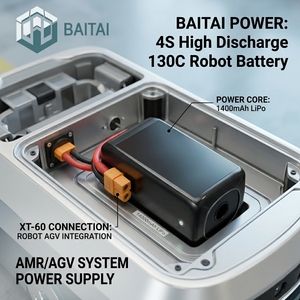
130C 1400mAh 4S High Discharge LiPo Battery for Service Robot AGV and Autonomous Mobile Robot Power System
Send an Inquiry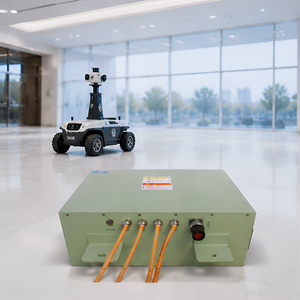
72V 60Ah LiFePO4 AMR Mobile Robot Battery Pack for Autonomous Robot System High Discharge Smart BMS Custom OEM ODM Wholesale
Send an Inquiry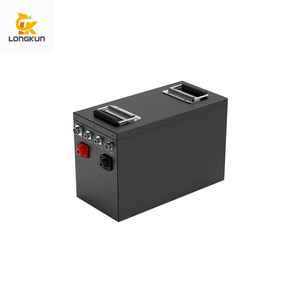
Longkun 24V 30Ah Lithium Ion Robot Battery Pack with BMS Rechargeable Li-ion Battery for AGV AMR Mobile Robots
Send an Inquiry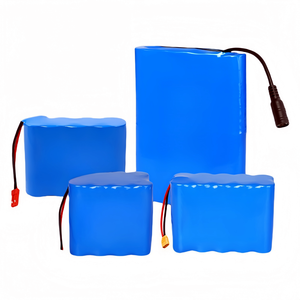
OEM Li-ion Battery Pack 3.7V 7.4V 11.1V 14.8V 18650 32650 26650 Lithium Ion Battery Pack for Autonomous Floor-Cleaning AMR Robot
Send an Inquiry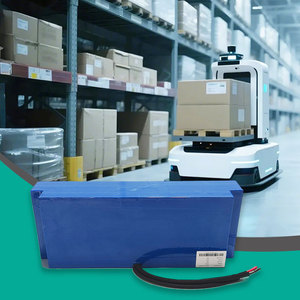
Customized Rechargeable LTO Agv Battery Pack 9Ah Autonomous Mobile Robot Agv Battery
Send an Inquiry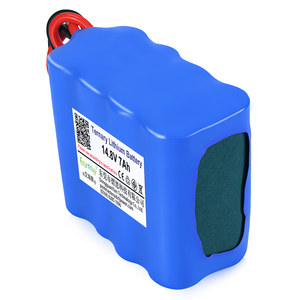
Custom Lithium Battery 14.8V 7Ah NMC 4S2P High Capacity for Autonomous Mobile Robot Electric Wheelchair Lawn Mower
Send an Inquiry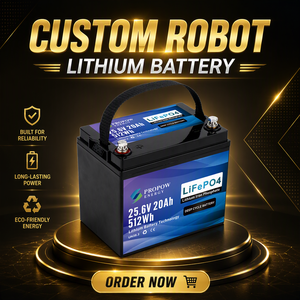
Custom Robot Lithium Battery 12V 24V 20Ah Lithium Battery for Robot, Rechargeable LiFePO4 Battery Pack for AGV AMR Mobile Robots
Send an Inquiry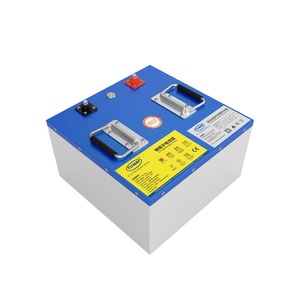
24V LiFePO4 Battery Pack 50Ah 60Ah 80Ah 100Ah with BMS 1500 Cycles -20C~60C for AGV AMR Robot Mobile Platform
Send an InquiryExecutive Summary: The Shift Toward Modular Lithium Battery Racks in Industrial & Robotic Power
The global industrial power landscape is undergoing a systemic paradigm shift. As automation, smart logistics, industrial robotics (AGV/AMR), and stationary energy storage systems (ESS) scale exponentially, traditional legacy lead-acid and monolithic battery configurations are rapidly being phased out. Modern enterprises demand modular lithium battery rack systems that deliver high energy density, thermal safety, hot-swappable serviceability, and seamless digital telemetry integration via advanced Battery Management Systems (BMS).
When engineering high-throughput robotics or industrial rack enclosures, system architects face stringent constraints: volumetric energy limits, thermal dissipation challenges, high continuous discharge currents (up to 130C peak rates for specialized robotic actuators), and strict international transport compliance (UN 38.3, UL 1973, IEC 62619). Selecting the optimal modular lithium battery factory and OEM/ODM supplier is no longer merely a procurement transaction—it is a core engineering decision that dictates equipment uptime, total cost of ownership (TCO), and operational safety.
This technical whitepaper provides B2B procurement managers, electrical engineers, and OEM project leaders with an in-depth evaluation framework. We examine cell chemistry trade-offs, modular hardware architecture, smart BMS telematics, procurement criteria, and future technological vectors shaping the modular battery rack industry through 2030.
Technical Deep-Dive: Modular Architecture & Chemistry Comparison
Modular battery rack systems rely on building block battery modules—typically configured in 19-inch sub-racks or compact industrial sub-assemblies—connected in series and parallel to achieve targeted voltage levels (from 12V, 24V, and 48V up to high-voltage 72V–800V bus architectures). The foundational core of any modular system is its electrochemical cell chemistry.
LiFePO4 (Lithium Iron Phosphate)
Recognized as the gold standard for industrial stationary storage, heavy AGVs, and high-duty AMRs. LiFePO4 provides superior thermal stability (thermal runaway threshold >270°C), an exceptional cycle life (3,500 to 6,000+ cycles at 80% DOD), and absolute chemical safety without cobalt dependencies.
LTO (Lithium Titanate Oxide)
Designed for ultra-fast opportunity charging and extreme temperature operating environments (-30°C to +60°C). LTO modules deliver ultra-high charge/discharge C-rates (10C–20C continuous) and an extreme longevity profile exceeding 20,000 operational cycles, ideal for 24/7 autonomous logistics.
NMC & High-Discharge LiPo
Optimized for lightweight autonomous platforms, medical robotics, and power-dense floor-cleaning AMRs. Nickel Manganese Cobalt (NMC) and specialized LiPo cells provide ultra-high gravimetric energy density (up to 250 Wh/kg) and extreme pulse current discharge capabilities (up to 130C).
Electrochemical & Operational Comparison Matrix
To assist engineering teams in cell chemistry selection for modular rack enclosures, the following matrix outlines key technical metrics across industrial lithium chemistries:
| Performance Metric | LiFePO4 (LFP) | Lithium Titanate (LTO) | NMC (LiNiMnCoO2) | High-Discharge LiPo |
|---|---|---|---|---|
| Nominal Cell Voltage | 3.2 V | 2.3 V | 3.6 V – 3.7 V | 3.7 V |
| Energy Density (Gravimetric) | 140 – 180 Wh/kg | 70 – 110 Wh/kg | 200 – 260 Wh/kg | 160 – 210 Wh/kg |
| Cycle Life (80% DoD) | 3,500 – 6,000+ Cycles | 15,000 – 25,000 Cycles | 1,200 – 2,500 Cycles | 500 – 1,000 Cycles |
| Thermal Runaway Temp | ~270°C (Extremely Safe) | >300°C (Inherently Safe) | ~210°C (Requires Active Cooling) | ~160°C (Requires Precision BMS) |
| C-Rate Capability | 1C Continuous / 3C Pulse | 10C Continuous / 20C Pulse | 2C Continuous / 5C Pulse | up to 130C Peak Pulse |
| Target Application | AGV/AMR, Rack ESS, Telecom | 24/7 Automated Logistics | Compact AMR, Wheelchairs | High-Torque Service Robots |
Evaluation Criteria: How Top 10 Modular Lithium Battery Suppliers Are Ranked
Determining the premier factories and OEM suppliers of modular lithium battery systems involves rigorous quantitative and qualitative auditing. In accordance with international Search Quality Rater Guidelines and manufacturing quality standards, enterprise buyers must evaluate suppliers across four fundamental pillars of technical authority:
- Cell Tier & Traceability: Top-tier factories utilize strictly Tier-1 Grade-A prismatic or cylindrical cells (such as CATL, EVE, Panasonic, or proprietary internal precision matching). Cell matching must enforce strict tolerances: internal resistance (IR) delta < 0.5 mΩ and voltage matching delta < 5mV across all series strings prior to pack welding.
- Smart BMS & Digital Telemetry: A modular system is only as robust as its management architecture. Industry-leading suppliers integrate custom-engineered Smart BMS supporting CANbus 2.0B, RS485, Modbus RTU, and Ethernet/IoT communication. Key telemetry parameters include active cell balancing, precise coulomb-counting State of Charge (SOC) estimation, State of Health (SOH) tracking, and dual-layer hardware/software overcurrent protection.
- Mechanical Modular Enclosure Design: Rack-mountable modules must withstand rigorous vibration profiles (testing to MIL-STD-810G or IEC 60068 standards). Premium modular manufacturers feature robust cold-rolled steel or extruded aluminum 19-inch rack chassis with integrated blind-mate blind connectors, thermal isolation barriers between cell groups, and IP54 to IP67 ingress protection.
- Certifications & Regulatory Compliance: True manufacturing authority requires full global compliance certifications. Verified suppliers must possess mandatory UN 38.3 transport testing, UL 1973 (for stationary batteries), UL 9540 (system-level safety), IEC 62619 (industrial lithium systems), and CE/FCC marks.
Future Sourcing & Procurement Trends in Modular Lithium Battery Systems (2025–2030)
As logistics automation accelerates and energy costs fluctuate, procurement teams must align with forward-looking technology roadmaps. Several macro trends are defining the future of industrial battery rack procurement:
1. High-Voltage (HV) Decentralized Rack Architectures
Legacy 24V and 48V systems are increasingly shifting toward higher voltage DC bus topologies (300V to 800V DC) in large-scale mobile robotics and commercial microgrids. High-voltage modular racks drastically reduce copper cabling weight, minimize $I^2R$ resistive heating losses, and enhance overall system efficiency by up to 8% during high-power fast-charging cycles.
2. Cloud-Connected Predictive BMS & Digital Twins
Modern enterprise procurement requires real-time insight into battery fleet analytics. Leading factories are embedding IoT gateways directly into modular rack units. Through cloud-based machine learning models, telemetry data (individual cell voltages, temperature gradients, impedance shifts) is analyzed continuously to create digital twins of installed battery banks. This enables predictive maintenance, notifying operators of impending cell degradation months before a functional failure occurs.
3. Rapid Opportunity Charging & LTO Adoption
For warehouse automation operators running continuous 24/7 shifts, eliminating battery swapping downtime is paramount. Sourcing trends show a marked increase in customized LTO (Lithium Titanate) and high-rate LiFePO4 packs capable of accepting 4C to 10C charge rates. This allows AGVs and AMRs to recharge from 10% to 80% State of Charge within 6 to 10 minutes during automatic dock-station pauses.
4. USA & Localized Custom OEM Design Collaboration
Global supply chain volatility has highlighted the necessity of localized engineering and domestic technical support. Forward-thinking OEMs are establishing dual-track sourcing strategies: partnering with high-capacity overseas cell manufacturers while relying on experienced domestic engineering facilities (such as specialized US-based battery pack integrators with 40+ years of operational history) for custom BMS firmware tuning, enclosure prototyping, and rapid warranty service.
Require a Custom Battery Engineering Assessment?
Our senior engineering team designs bespoke modular lithium battery racks, high-discharge LiPo packs, and smart BMS solutions customized to your platform's exact mechanical and electrical specifications.
Send an InquiryOur Factory & OEM/ODM Manufacturing Advantages
Leveraging over 40 years of pioneering battery engineering experience (with heritage roots establishing industry benchmarks since 1983), our manufacturing and engineering facilities provide unmatched single-source capabilities for global OEMs:
Custom Smart BMS Development
In-house electrical engineering teams design hardware and software BMS boards with custom firmware protocols (CANopen, J1939, RS485). Advanced active balancing circuits ensure dynamic capacity management across every connected module string.
Modular Enclosure Prototyping
Full 3D CAD mechanical modeling and thermal simulation capabilities. We fabricate ruggedized 19-inch rack chassis, custom sheet-metal enclosures, and shock-resistant molded housings designed for harsh industrial environments.
ISO 9001 End-to-End Quality Control
Every battery module undergoes 100% automated end-of-line (EOL) testing, including dynamic load testing, thermal imaging under high continuous discharge, insulation resistance testing, and communication verification prior to shipment.
Frequently Asked Questions (FAQ) for Modular Lithium Battery Procurement
Modular lithium rack systems consist of standardized, interconnected battery sub-modules housed within a central frame or 19-inch rack enclosure. Unlike monolithic battery packs—which require full replacement upon cell group failure—modular architectures allow individual module replacement, scalable capacity expansion (hot-swapping in parallel or series), easier transport under UN 38.3 limits, and localized thermal management. This reduces maintenance overhead and total cost of ownership significantly over an equipment's lifecycle.
A Smart BMS uses either passive or active cell balancing. Passive balancing bleeds off excess energy from fully charged cells as heat through resistive elements. Active cell balancing—preferred in high-capacity modular racks—transfers energy from higher-voltage cells to lower-voltage cells using capacitive or inductive DC-DC converter circuits. Active balancing operates continuously during charge and discharge cycles, preserving overall pack capacity and extending total system service life by up to 20%.
For international transport and commercial deployment, modular lithium racks require:
- UN 38.3: Mandatory international safety standard covering altitude simulation, thermal testing, vibration, shock, external short circuit, and impact.
- UL 1973: Safety standard for batteries used in stationary, vehicle auxiliary power, and light electric rail applications.
- UL 9540 / UL 9540A: System-level safety certification for Energy Storage Systems (ESS) evaluating thermal runaway fire propagation.
- IEC 62619 / CE: European regulatory standards for safety requirements of secondary lithium cells and modules used in industrial applications.
Standard lithium-ion and LiFePO4 cells suffer severe capacity degradation and cannot be charged safely below 0°C without lithium plating risks. However, custom engineered modular racks designed for cold-storage AGVs or outdoor utility systems incorporate internal silicone heating elements or PTC heating jackets controlled by the BMS. Additionally, selecting Lithium Titanate (LTO) chemistry allows safe continuous discharge and fast charging down to -30°C without active thermal assistance.
Our OEM modular battery systems support all major industrial communication interfaces. The internal Smart BMS can be programmed to communicate via CANbus 2.0B (CANopen, J1939 protocols for industrial vehicles), RS485 (Modbus RTU for stationary energy racks), SMBus, or Bluetooth/Wi-Fi wireless telemetry for cloud monitoring dashboards.
Initial engineering consultation, 3D mechanical housing design, and BMS specification mapping typically take 1 to 2 weeks. Prototype sample assembly—including sheet-metal fabrication, custom circuit board assembly (PCBA), and initial safety validation—is generally completed within 4 to 6 weeks. Full-scale production lead times range from 6 to 8 weeks following client approval of sample units.
Connect With Our Senior Battery Designers Today
Whether you require standard 24V/48V LiFePO4 modules, ultra-high discharge 130C LiPo packs, or bespoke 19-inch rack energy storage solutions, our team is ready to analyze your technical requirements.
Send an Inquiry