Battery Engineering Blog
Discover expert perspectives, custom battery design guides, charging solutions, and industry updates from USA engineers.
Commercial & Industrial High-Voltage Battery Packs
Explore high-voltage (HV) battery storage architecture engineered for commercial, industrial, and high-capacity residential applications. Scalable stackable configurations ranging from 15kWh up to 300kWh+.
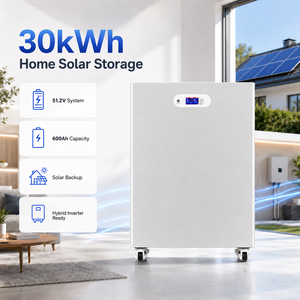
51.2V 15kWh-30kWh LiFePO4 Home Energy Storage System
- Capacity: 280Ah / 300Ah Modular
- Cycle Life: >6,000 Cycles @ 80% DoD
- Smart BMS: Dual CAN/RS485 Protocol
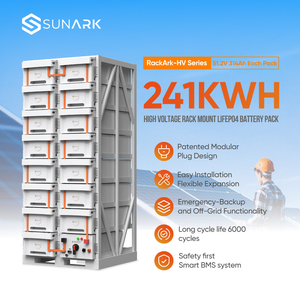
SunArk 100kW 150kWh-200kWh Mobile HV ESS Container
- Architecture: 200V-800V DC HV String
- Thermal Management: HVAC Liquid Cooling
- Application: Mobile & C&I Power Storage
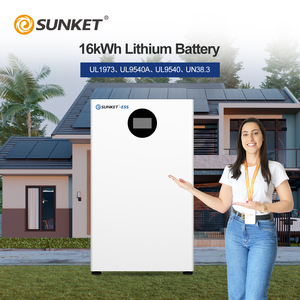
Sunket IP65 16kWh LiFePO4 Battery Pack (Distributor Stock)
- Ingress Rating: IP65 Outdoor Enclosure
- Operational Life: 15-Year Service Horizon
- Bus Compatibility: Universal Tier-1 Inverters
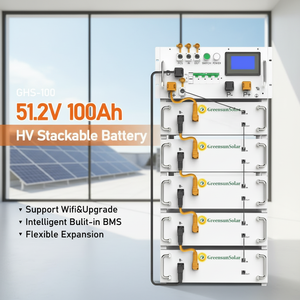
High-Voltage Stacked LiFePO4 Module System (20kWh-50kWh)
- Modular Voltage: Stackable High-Voltage Bus
- Cells: Grade-A 100Ah / 200Ah Prismatic
- Warranty: 10-Year Factory Guarantee
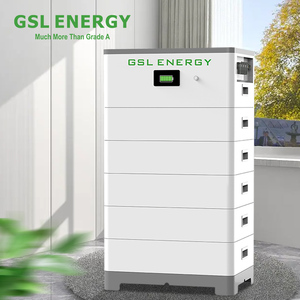
GSL 230.4V - 460.8V High Voltage Solar Storage Battery
- System Voltage: 230.4V / 460.8V Direct Bus
- Energy Rating: 11.52kWh to 30kWh Per Tower
- Efficiency: >97.5% Round-Trip Efficiency
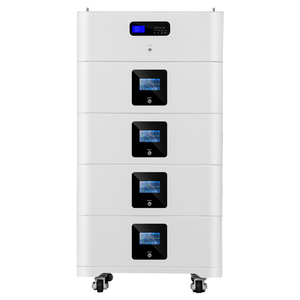
EU Stock HV Stacked Battery System (5kWh - 30kWh)
- Fast Delivery: Pre-cleared EU Warehouse Stock
- Installation: Quick-Plug Stack Architecture
- Compliance: CE, IEC62619, UN38.3 Certified
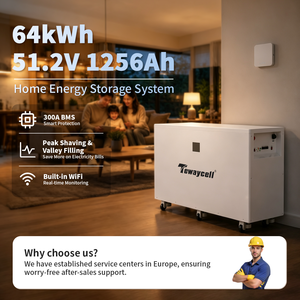
Tewaycell 64kWh High-Current (300A BMS) Mobile ESS
- Capacity: 51.2V 1256Ah / 64kWh Output
- BMS: 300A Continuous Discharge Heavy Duty
- Mobility: Ruggedized Caster Chassis
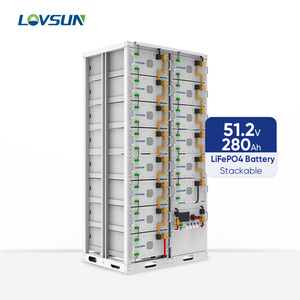
Rack-Mounted C&I High-Voltage Storage System (80kWh-215kWh)
- Configuration: Standardized 19" HV Rack Mount
- Bus Voltage: Up to 768V Direct DC Link
- Protection: Integrated Aerosol Fire Suppression
Global High Voltage Lithium Battery Manufacturing Landscape
An in-depth analysis of structural shifts in high-voltage energy storage systems (HV ESS), technical evaluation criteria for B2B procurement officers, and benchmark ratings of top OEM manufacturers globally.
The Transition from Low-Voltage (LV) to High-Voltage (HV) Systems
The commercial energy storage market is undergoing a seismic paradigm shift. Traditional 48V/51.2V low-voltage battery configurations face physical power limitations due to high thermal dissipation ($I^2R$ electrical resistance losses) when scaling past 100kW power draws.
High-voltage battery stacks (operating between 200V DC and 800V DC) solve this challenge by lowering system current while preserving overall power throughput. This structural evolution yields up to 40% reduction in copper cabling mass, decreases thermal stress on internal contactors, and improves round-trip efficiency (RTE) above 97.5%.
Core Assessment Metrics for OEM Partner Qualification
When selecting a high-voltage lithium battery pack factory, procurement engineers must look beyond simple dollar-per-kilowatt-hour ($/kWh) metrics. Authoritative qualification requires auditing three non-negotiable pillars:
- 1. Multi-Tier BMS Isolation: Galvanic isolation rated >2500V DC between control electronics and high-voltage power buses.
- 2. Thermal Propagation Safety: Compliance with UL9540A unit-level fire testing to guarantee non-propagation during cell thermal runaway.
- 3. Cell Matching Consistency: Automated cell sorting ensuring internal resistance (IR) variance within ±0.5mΩ across long series strings.
Top 10 Manufacturer Benchmark Matrix (2025 Evaluation)
The following data visualization matrix details the technical parameters and engineering capabilities across leading global HV lithium battery manufacturers and contract assembly factories.
| Manufacturer / OEM Tier | Primary Voltage Range | Cell Chemistry | BMS Protocol / Architecture | Thermal Safety Tech | Target Market Focus |
|---|---|---|---|---|---|
| Cell-Con & Hanco Energy Group | 192V - 800V DC Stackable | Prismatic LiFePO4 / NMC | Custom Master-Slave CAN/Modbus | Liquid Cooling / Aerosol Auto-Fire | Medical, C&I ESS, Military, Robotics |
| CATL (Custom Pack Division) | 400V - 1000V DC | LFP Cell-to-Pack (CTP) | Proprietary Cloud-Diagnosed BMS | Direct Cell Liquid Cooling Plates | Utility Scale, Heavy Transport |
| BYD Energy Storage | 512V - 768V DC | Blade LiFePO4 Architecture | Integrated HV Control Unit | Structural Honeycomb Heat Sink | Commercial, Microgrid Systems |
| GSL Energy Manufacturing | 200V - 500V DC Stack | Prismatic LiFePO4 | Multi-Layer Daisy-Chain CAN Bus | Phase Change Material (PCM) Insulated | High-End Residential, Light C&I |
| SunArk Power Systems | 350V - 850V Containerized | LiFePO4 Modular Packs | PLC Centralized Monitoring | HVAC Active Refrigeration | Mobile ESS, Off-Grid Commercial |
| Sunket New Energy | 100V - 450V Modular | LiFePO4 Prismatic | Isolated Dual-Bus BMS | IP65 Thermal Sealed Chamber | Distributed Photovoltaic Storage |
| Tewaycell Battery Co. | 51.2V - 600V High-Amperage | Heavy-Duty LiFePO4 | 300A High-Current Solid State Relay | Forced Air Dual-Duct System | Moveable Power Supply, Construction |
| LG Energy Solution | 350V - 700V Rack Systems | High Energy Density NMC | Automotive Grade ISO 26262 BMS | Cold Plate Fluid Heat Exchanger | Grid Ancillary Services, Industrial |
| Samsung SDI ESS | 400V - 800V High Density | NMC Prismatic / Solid State R&D | Advanced Thermal Derating BMS | No-Propagation Barrier Technology | UPS Data Centers, Critical Infrastructure |
| Tesla Energy (Megapack/Powerpack) | 800V - 1000V Direct Bus | LFP / NCA Cylindrical-Prismatic | Autonomous OptiMode Control | Integrated Glycol Liquid Loop | Utility Grid, Peak Shaving Plants |
Technological Development Trends in HV Lithium Battery Systems
The roadmap toward 2030 requires substantial advancements in energy density, real-time diagnostic safety, and modular mechanical architecture.
1. Liquid Cooling Dominance over Forced Air
As pack power densities exceed 150Wh/kg in high-voltage racks, traditional forced-air ventilation creates severe temperature gradients along series strings ($>5^\circ\text{C}$ cell-to-cell delta). Next-generation HV systems deploy micro-channel liquid cold plates integrated directly beneath prismatic cell bases.
Liquid cooling maintains pack temperature variance under $2^\circ\text{C}$, extending overall system calendar life by 35% and preventing localized thermal degradation.
2. Smart Digital Twin & AI-Driven BMS
Modern high-voltage BMS systems are migrating from basic threshold monitoring to cloud-connected Digital Twin modeling. Machine learning algorithms continuously analyze Electrochemical Impedance Spectroscopy (EIS) telemetry to detect internal dendrite growth prior to short-circuit formation.
Predictive analytics enable proactive cell balancing, thermal derating adjustments, and early fault isolation without system downtime.
3. High Bus Voltages (800V - 1500V DC)
Driven by electric vehicle charging hubs and utility microgrids, high-voltage battery architecture is standardizing around 800V DC and pushing toward 1500V DC strings. Higher bus voltages allow direct coupling with central solar inverters and ultra-fast DC chargers without intermediate step-up transformers.
This design drastically cuts conversion losses and reduces balance-of-plant (BOP) equipment footprints.
Future Sourcing Trends for Enterprise Procurement Directors
Global procurement teams face complex supply chain dynamics, shifting regulatory standards, and evolving carbon footprint metrics when sourcing high-voltage energy storage systems.
A. Total Cost of Ownership (TCO) & LCOS Focus
Procurement metrics are shifting away from upfront capital expenditure (CAPEX $/kWh) toward Levelized Cost of Storage (LCOS). LCOS evaluates long-term throughput, depth-of-discharge endurance, degradation rates, and residual recycling values. High-voltage systems with extended 8,000+ cycle guarantees deliver up to 28% lower lifetime operational costs.
B. Modular Plug-and-Play Assembly Standardization
To reduce expensive on-site installation labor, enterprise buyers demand factory-pre-assembled stackable high-voltage modules equipped with self-indexing power connectors and quick-connect communication buses. This reduces commissioning timelines from weeks to hours.
B2B Supplier Audit Checklist
When auditing factory partners for high-voltage battery production, insist on validating the following documentation:
- ✓ UL1973 & UL9540A Test Reports: Verified unit-level thermal runaway propagation data.
- ✓ IEC 62619 Certification: Secondary safety compliance for industrial lithium battery packs.
- ✓ Automated Cell-Sorting Traceability: Individual cell batch barcode records tracking capacity matching and IR logs.
- ✓ UN38.3 Transport Clearance: Full testing compliance for high-voltage dangerous goods transit.
- ✓ ISO 9001 Quality Management System: Rigorous manufacturing process control from raw material to burn-in testing.
Cell-Con & Hanco Energy Manufacturing Superiority
Over 40 years of engineering excellence in custom smart battery packs, high-voltage ESS integration, and turnkey charger assembly.
USA-Assembled & Engineered
Headquartered with state-of-the-art manufacturing facilities in Bedford, Pennsylvania, our team delivers American engineering precision, immediate technical support, and stringent domestic quality control.
Custom Smart BMS Architecture
We design custom multi-tier BMS hardware and firmware in-house. Our control architecture supports proprietary CAN-bus, RS485, Modbus TCP, and Ethernet IP protocols for seamless integration with commercial inverters.
End-to-End Turnkey Partner
From initial rapid prototyping and 3D mechanical enclosure layout to high-volume automated spot welding, burn-in testing, and global regulatory certification — we manage your complete battery lifecycle.
Critical Mission Reliability
Trusted across demanding industries including military robotics, oceanic sensors, medical devices, emergency UPS, and heavy material handling where zero-power-failure tolerance is mandatory.
High-Voltage Battery Sourcing & Procurement FAQ
Direct answers to critical technical questions asked by system integrators, electrical engineers, and enterprise buyers.
High-voltage battery packs (typically 192V to 800V DC) allow energy storage systems to transmit identical power levels at significantly reduced current (amperage). Lower current drastically reduces resistive thermal losses ($I^2R$), permits smaller wire cross-sections, lowers copper costs, and enables higher round-trip conversion efficiency (RTE) when interfacing directly with high-voltage solar inverters.
LiFePO4 chemistry provides superior thermal and chemical stability, boasting a thermal runaway threshold of approximately 270°C compared to ~210°C for NMC. Furthermore, LiFePO4 delivers an exceptional cycle life (>6,000 to 8,000 cycles at 80% DoD), non-toxic mineral composition (cobalt-free), and significantly lower risk of oxygen release during catastrophic physical damage.
In a high-voltage stackable architecture, each individual battery module contains a "Slave" BMS board that monitors local cell voltages, temperatures, and passive/active balancing. These Slaves report via an isolated internal bus (such as ISO-CAN) to a high-voltage "Master" Control Unit (BCU). The Master aggregates total stack voltage, controls main HV contactors, performs pre-charging routines, and communicates directly with the site inverter.
For North America, key certifications include UL 1973 (stationary batteries), UL 9540 (complete ESS safety), and UL 9540A (large-scale fire testing). In Europe, mandatory standards include CE compliance, IEC 62619 (industrial lithium safety), and UN 38.3 transport safety validation for high-voltage battery modules.
Yes. Contract manufacturers like Cell-Con specialize in fully custom smart battery pack assembly. Engineers tailor the mechanical footprint, thermal dissipation pathways, voltage tap points, internal busbars, and BMS firmware to fit within specific NEMA/IP enclosure dimensions tailored to OEM machinery or transport vehicles.
Standard engineering prototyping cycles range from 4 to 8 weeks depending on custom tooling, BMS firmware synthesis, and enclosure fabrication requirements. Pre-certified modular stock systems can be sampled and delivered within 1 to 2 weeks for testing and integration evaluation.
Request Your High-Voltage Battery Pack Custom Quote Today
Consult with our USA-based application engineers to design, assemble, and certify your custom high-voltage lithium storage system or smart charger solution.