Technical Articles & Insights

Battery Engineering Blog

Discover expert perspectives, custom battery design guides, charging solutions, and industry updates from USA engineers.

Industry Whitepaper & Engineering Directory

Top 10 Custom Battery Pack Engineering Solutions Factories & Factory Directory

A Comprehensive Technical Guide on OEM Battery Architecture, Smart BMS Integration, Cell Chemistry Selection, and Global Supplier Procurement for Autonomous Robotics, AGVs, and Medical Systems.

Engineering Authority

40+ Years of Custom Smart Battery Excellence

Providing single-source, end-to-end battery engineering solutions from initial chemistry consulting to ISO 9001 certified mass production.

40+
Years Engineering Experience
ISO 9001
Quality Certified Assembly
100%
Traceable Cell Matching
UN 38.3
Compliant Transport Design

USA-Engineered Custom Power Solutions for Global OEMs

Since 1983, our engineering team has stood at the forefront of custom lithium battery pack design, smart BMS firmware development, and automated assembly. Operating out of state-of-the-art facilities, we specialize in high-reliability battery systems for mission-critical robotics, Autonomous Mobile Robots (AMR), Automated Guided Vehicles (AGV), medical equipment, and heavy industrial machinery.

Unlike off-the-shelf component assemblers, our engineering methodology integrates rigorous thermal modeling, finite element analysis (FEA) for mechanical shock, precision nickel/copper busbar laser welding, and multi-tier electronic safety systems compliant with UL 1642, UL 2054, and IEC 62133 standards.

Smart BMS Architecture (CANbus, RS485, SMBus)
Active Cell Balancing & State-of-Charge (SoC) Gauging
Ruggedized IP67 Mechanical & Flame Retardant Enclosures
High-C-Rate Discharge (LiPo, LiFePO4, LTO & NMC)
Industrial & Robotics Power Systems

Top Engineered Custom Battery Packs

Featured custom battery engineering builds engineered for demanding robotics, industrial mobile platforms, and autonomous cleaning equipment.
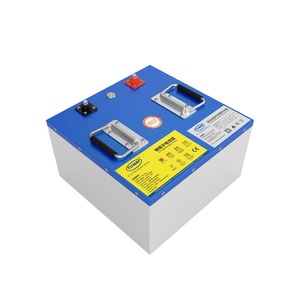
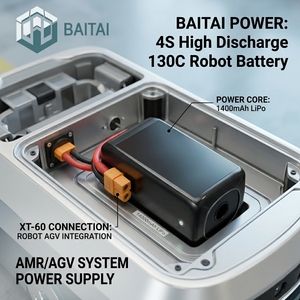
High Discharge 130C 1400mAh 4S High Discharge LiPo Battery Pack

130C 1400mAh 4S High Discharge LiPo Battery for AGV & AMR Power System

  • Chemistry: Ultra High-Rate LiPo
  • Continuous Discharge: 130C Burst
  • Application: Fast Response AGV / Robotics
Smart LiFePO4 72V 60Ah LiFePO4 AMR Mobile Robot Battery Pack

72V 60Ah LiFePO4 AMR Mobile Robot Battery Pack with Smart Custom BMS

  • Nominal Voltage & Cap: 72V 60Ah
  • Cycle Life: >3500 Deep Cycles
  • BMS: CANbus / RS485 Telemetry
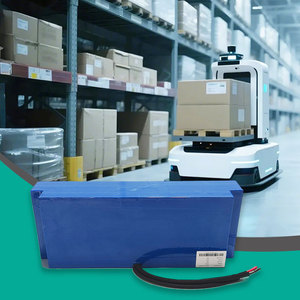
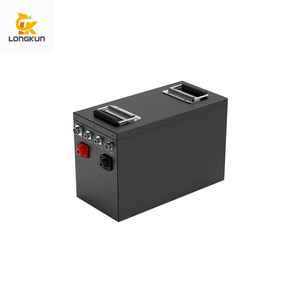
OEM Standard Longkun 24V 30Ah Lithium Ion Robot Battery Pack

Longkun 24V 30Ah Lithium Ion Robot Battery Pack with Integrated BMS

  • Voltage & Output: 24V 30Ah (720Wh)
  • Protection: Over-charge/Discharge/Temp
  • Fitment: Industrial Mobile Robots
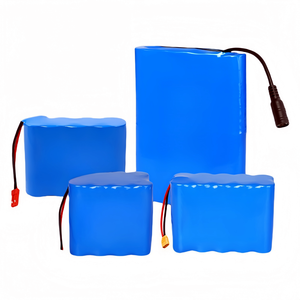
Modular Series OEM Li-ion Battery Pack 3.7V 7.4V 11.1V 14.8V

OEM Multi-Voltage 3.7V–14.8V Li-ion Pack for Floor-Cleaning AMR Robots

  • Cell Types: 18650 / 26650 / 32650
  • Configurations: 1S to 4S Custom Arrays
  • Ideal For: Commercial Cleaning Robots
Extreme Life Customized Rechargeable LTO Agv Battery Pack 9Ah

Customized Rechargeable LTO 9Ah Battery Pack for AGV Rapid Charging

  • Technology: Lithium Titanate Oxide (LTO)
  • Cycle Life: 20,000+ Cycles (10C Charge)
  • Operating Temp: -30°C to +60°C
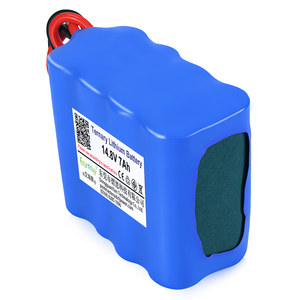
High Energy Custom Lithium Battery 14.8V 7Ah NMC 4S2P

Custom 14.8V 7Ah NMC 4S2P Pack for AMR, Electric Wheelchairs & Lawn Mowers

  • Chemistry: High Energy Density NMC
  • Configuration: 4S2P Compact Footprint
  • Feature: Low Internal Resistance
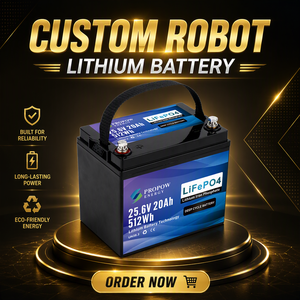
Heavy Duty Custom Robot Lithium Battery 12V 24V 20Ah LiFePO4

Custom 12V / 24V 20Ah Rechargeable LiFePO4 Pack for Industrial Mobile Robots

  • Voltage Options: 12V / 24V Dual Array
  • Safety: Thermal Runaway Mitigation
  • Application: AGV / AMR Material Handling
Wide Temp 24V LiFePO4 Battery Pack 50Ah-100Ah

24V LiFePO4 Battery Pack (50Ah–100Ah) with BMS (-20°C to +60°C Extended Range)

  • Capacity Range: 50Ah / 60Ah / 80Ah / 100Ah
  • Cycle Life: >1500 Full Cycles
  • Temp Operational Window: -20°C to +60°C

Engineering Whitepaper: Evaluating Top Custom Battery Pack Factories

In high-reliability OEM sectors such as robotics, medical devices, and defense equipment, selecting a custom battery engineering partner is one of the most critical structural decisions in product development. A battery system is not merely a commodity power source; it is an electro-chemical, thermal, and digital sub-system that governs device runtime, user safety, regulatory compliance, and total cost of ownership (TCO).

This technical whitepaper breaks down the core engineering evaluation criteria for OEM procurement teams and design engineers seeking top-tier custom battery pack factories.

1. Cell Chemistry Selection & Electro-Chemical Optimization

Top battery pack engineering factories must possess deep expertise across multiple electro-chemical platforms to match specific power-to-weight, cycle life, and thermal boundary conditions:

Battery Chemistry Nominal Cell Voltage Energy Density (Wh/kg) Cycle Life (80% DoD) Primary OEM Strengths
Lithium Iron Phosphate (LiFePO4) 3.2V 140 – 180 3,000 – 6,000+ Maximum thermal stability, long cycle life, high safety for AGVs and stationary energy storage.
Lithium Nickel Manganese Cobalt (NMC) 3.6V – 3.7V 200 – 260 800 – 1,500 High gravimetric & volumetric energy density; ideal for medical handhelds, robotics, and drones.
Lithium Titanate Oxide (LTO) 2.3V – 2.4V 70 – 110 15,000 – 25,000+ Ultra-fast charging (<10 mins), extreme operational temperature window (-30°C to 60°C).
Lithium Polymer (LiPo / High-Discharge) 3.7V – 3.85V 180 – 230 300 – 800 Extreme burst discharge (up to 130C continuous), thin profile, flexible form-factors.
Information Gain Benchmark: Cell Grade & Capacity Matching

Tier-1 battery engineering factories strictly utilize Grade-A prismatic, pouch, or cylindrical cells (from Tier-1 cell manufacturers like Panasonic, CATL, EVE, Samsung SDI) with tight delta tolerances: Internal Resistance (ΔIR ≤ 1.5 mΩ) and Capacity (ΔCap ≤ 10mAh) prior to pack assembly to prevent premature pack degradation.

2. Smart Battery Management System (BMS) Firmware & Telemetry

Modern battery architecture relies heavily on digital governance. An advanced custom battery pack factory designs propriety PCBAs integrated with multi-protocol communication bridges:

  • Communication Bus Integration: Real-time data reporting via CANbus (J1939 / CANopen), RS485, SMBus, Modbus, or Bluetooth LE telemetry for remote fleet monitoring.
  • Fuel Gauge Algorithms: High-precision coulomb counting and Impedance Track™ State-of-Charge (SoC) and State-of-Health (SoH) monitoring with less than 1% error margins.
  • Active vs. Passive Cell Balancing: Dynamic active balancing circuits (1A–5A balancing current) for heavy-duty series packs, preventing cell voltage divergence during rapid charge cycles.
  • Hardware & Software Redundant Protections: Dual-tier over-voltage, under-voltage, over-current, short-circuit, and multi-point NTC temperature monitoring.

3. Structural Mechanics, Thermal Management & Ingress Protection

Custom battery packaging must withstand intense mechanical vibration, drop impacts, and severe thermal environments. High-capability engineering factories provide:

  1. Thermal Runaway Containment: Aerogel insulation pads, phase-change materials (PCM), and engineered pressure-relief vent valves to prevent cascade thermal propagation.
  2. Precision Busbar Interconnects: Pure nickel or copper-nickel composite busbars joined via automated micro-laser welding, minimizing internal ohmic heat generation.
  3. IP67 / NEMA 4X Sealed Enclosures: Custom CNC-machined aluminum alloy or flame-retardant ABS/PC enclosures with potted silicone resins for underwater or dust-heavy industrial applications.
Industry Outlook

Future Technology & Global Procurement Trends

Key technological shifts and supply chain strategies shaping the custom battery manufacturing landscape over the next decade.

Procurement & Technical Guidance

Custom Battery Procurement FAQs

Answers to crucial technical and contractual questions asked by OEM product managers and engineering leaders.

What mandatory regulatory certifications are required for custom OEM lithium battery packs?
Custom lithium battery packs intended for commercial deployment typically require UN 38.3 (Transport Safety Testing for altitude, thermal, vibration, shock, external short circuit, and impact). For medical and industrial equipment, UL 1642 (Cell Safety), UL 2054 (Pack Safety), and IEC 62133 (Global Safety Standard) are required. European market entry necessitates CE marking and RoHS/REACH chemical compliance.
How do engineers determine the optimal choice between LiFePO4 and NMC for robotics?
The choice depends on volume/weight constraints versus cycle life demands. Choose NMC if weight and volumetric space are severely constrained (e.g., handheld devices, aerial drones, or slim mobile platforms). Choose LiFePO4 if long operational lifespan (3,000+ to 6,000+ cycles), maximum safety against thermal runaway, and lowest total cost of ownership per cycle are the primary engineering metrics (e.g., heavy AGVs, warehousing AMRs).
What is the typical NPI (New Product Introduction) timeline for a custom battery build?
A standard custom battery engineering lifecycle spans 8 to 16 weeks. Phase 1 (Concept & Electrical Architecture): 1–2 weeks. Phase 2 (PCB Layout, BMS Firmware & 3D Mechanical Enclosure Design): 3–4 weeks. Phase 3 (Prototype Assembly & Internal Testing): 3–4 weeks. Phase 4 (Regulatory Certification UN 38.3 / UL): 4–6 weeks. Fast-track NPI programs using pre-certified cell platforms can compress this timeline significantly.
Why is custom BMS design superior to off-the-shelf protection boards?
Off-the-shelf protection boards offer basic hardware cut-offs without fine-tuned current thresholds, precise fuel gauging, or system communication. A custom smart BMS is programmed to your device’s exact load profiles, integrates directly with your host controller over CANbus/RS485, logs fault history, controls active cell balancing, and prevents unexpected field shut-downs during transient motor surges.

Ready to Engineer Your Custom Battery Pack?

Consult directly with our experienced battery engineering team. We provide full technical proposals, cell chemistry analysis, BMS design schematics, and prototype quotes tailored to your exact OEM specifications.