Technical Articles & Insights

Battery Engineering Blog

Discover expert perspectives, custom battery design guides, charging solutions, and industry updates from USA engineers.

Industrial OEM Engineering Whitepaper

Top 10 Bluetooth Smart Battery Solutions Manufacturer & Factories

A Comprehensive Engineering Guide to Smart BMS Telemetry, Bluetooth 5.4 Integration, and Next-Gen Lithium Power Systems for Autonomous Robotics & Industrial Automation

Featured Smart Battery Packs & Robotics Energy Systems

Explore our high-performance custom lithium-ion, LiFePO4, and LTO battery solutions engineered with integrated Smart BMS telemetry for AGVs, AMRs, service robots, and industrial equipment.
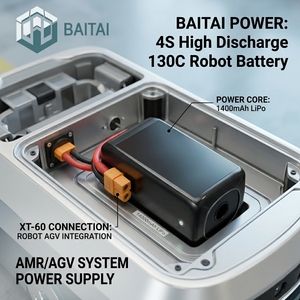
130C 1400mAh 4S High Discharge LiPo Battery Pack for AGV AMR
High Discharge | 130C Rate
130C 1400mAh 4S High Discharge LiPo Battery for Service Robot AGV and Autonomous Mobile Robot Power System
Contact Us
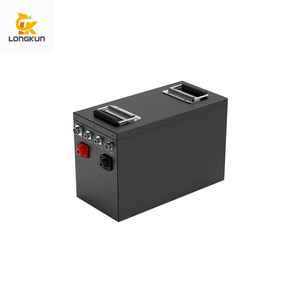
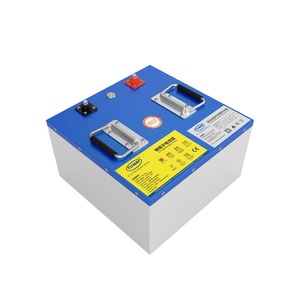
72V 60Ah LiFePO4 AMR Mobile Robot Battery Pack with Smart BMS
72V 60Ah | Smart BMS
72V 60Ah LiFePO4 AMR Mobile Robot Battery Pack for Autonomous Robot System High Discharge Smart BMS Custom OEM ODM Wholesale
Contact Us
24V 30Ah Lithium Ion Robot Battery Pack with BMS
24V 30Ah | Active Balancing
Longkun 24V 30Ah Lithium Ion Robot Battery Pack with BMS Rechargeable Li-ion Battery for AGV AMR Mobile Robots
Contact Us
OEM Li-ion Battery Pack 3.7V to 14.8V for AMR Robot
Modular 18650 / 32650
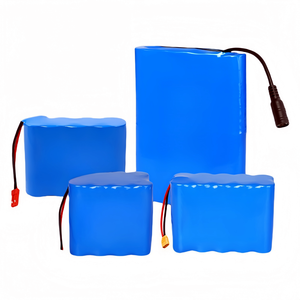
OEM Li-ion Battery Pack 3.7V 7.4V 11.1V 14.8V 18650 32650 26650 Lithium Ion Battery Pack for Autonomous Floor-Cleaning AMR Robot
Contact Us
Customized Rechargeable LTO AGV Battery Pack 9Ah
LTO Chemistry | 20,000+ Cycles
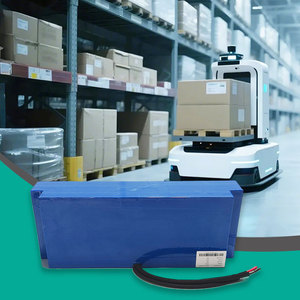
Customized Rechargeable LTO Agv Battery Pack 9Ah Autonomous Mobile Robot Agv Battery
Contact Us
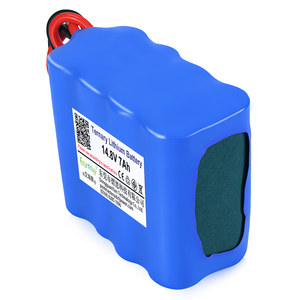
Custom Lithium Battery 14.8V 7Ah NMC 4S2P High Capacity
14.8V 7Ah NMC | Compact
Custom Lithium Battery 14.8V 7Ah NMC 4S2P High Capacity for Autonomous Mobile Robot Electric Wheelchair Lawn Mower
Contact Us
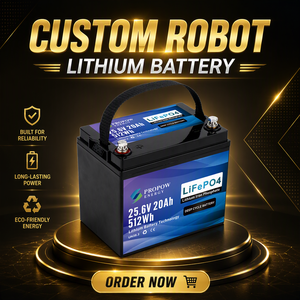
Custom Robot Lithium Battery 12V 24V 20Ah LiFePO4
12V/24V 20Ah | LiFePO4
Custom Robot Lithium Battery 12V 24V 20Ah Lithium Battery for Robot, Rechargeable LiFePO4 Battery Pack for AGV AMR Mobile Robots
Contact Us
24V LiFePO4 Battery Pack 50Ah-100Ah with BMS 1500+ Cycles
Wide Temp -20°C~60°C
24V LiFePO4 Battery Pack 50Ah 60Ah 80Ah 100Ah with BMS 1500 Cycles -20C~60C for AGV AMR Robot Mobile Platform
Contact Us
40+
Years Engineering Excellence
< 1 ms
BMS Short-Circuit Response
20,000+
LTO Cell Max Cycle Life
BLE 5.4
Wireless Telemetry Standard

Executive Whitepaper: The Evolution of Bluetooth Smart Battery Systems in Industrial Automation

In modern industrial robotics, Autonomous Mobile Robots (AMRs), Automated Guided Vehicles (AGVs), and critical medical equipment, energy storage is no longer a passive chemical component—it has evolved into a fully connected, intelligent node within corporate IoT ecosystems. Selecting top-tier Bluetooth Smart Battery Solutions Manufacturers & Factories requires an intricate understanding of hardware integration, Wireless Battery Management System (wBMS) protocols, and cellular-level thermal dynamics.

Real-Time Wireless Telemetry

Integrated Bluetooth 5.0 to 5.4 Transceivers enable continuous transmission of individual cell voltages, State of Charge (SOC), State of Health (SOH), cycle counts, and real-time MOSFET thermal metrics directly to industrial host controllers or mobile apps, bypassing physical wiring harness constraints.

Smart Active Cell Balancing

Unlike conventional passive balancing that dissipates excess cell energy as heat, advanced Bluetooth BMS architectures utilize capacitive or inductive active balancing (up to 2A–5A balancing current). This maximizes pack energy yield, reduces micro-thermal stress, and extends pack lifespan by over 30%.

Predictive Fault Protection

Edge microcontrollers running Kalman Filter SOC/SOH algorithms detect subtle impedance spikes or cell degradation early. Automated warning alerts trigger via Bluetooth before catastrophic failure occur, enabling preventative maintenance during scheduled maintenance windows.

Architecture Overview: High-Precision Smart BMS Hardware & Software Layers

A true commercial-grade smart battery pack integrates multi-layered safety mechanisms. Below are the key architectural elements designed into Cell-Con engineered power solutions:

AFE (Analog Front End): 16-bit multi-channel voltage resolution
Dual Bus Telemetry: Bluetooth Low Energy (BLE) + CANbus 2.0B / RS485
Multi-Point NTC Sensors: Direct cell-cap and MOSFET thermal tracking
Solid-State MOSFET Switch: Fast cutoff (<100 microseconds short-circuit response)

Strategic Procurement Trends: Smart Battery Sourcing (2025–2030)

Global procurement teams and OEM system designers are shifting away from off-the-shelf "dumb" lithium packs toward custom-engineered, intelligence-backed battery architectures. Understanding these key sourcing trends ensures long-term operational resilience and lower Total Cost of Ownership (TCO).

Battery Chemistry Nominal Cell Voltage Cycle Life (80% DOD) Thermal Runaway Threshold Best Industrial Application Procurement Preference Grade
Lithium Iron Phosphate (LiFePO4) 3.2 V 3,500 – 6,000 Cycles ~270°C (Highly Stable) AMR, Heavy AGV, Material Handling, UPS Top Choice for Durability
Lithium Nickel Manganese Cobalt (NMC) 3.6 V – 3.7 V 1,200 – 2,000 Cycles ~210°C (Requires Thermal Mgmt) Compact Service Robots, Drones, Medical Carts High Energy Density
Lithium Titanate Oxide (LTO) 2.3 V – 2.4 V 15,000 – 25,000 Cycles > 300°C (Extremely Safe) 24/7 Fast-Charge AGVs, Extreme Cold Environments Ultra Long Life
Lithium Polymer (High C-Rate) 3.7 V 500 – 800 Cycles ~160°C (Sensitive) High Peak Discharge Actuators, Robotic Arms Peak Surge Power

1. Mandatory Digital Battery Passports

Driven by EU regulations and global sustainability mandates, OEMs are now specifying smart battery factories capable of flashing unique digital battery passports via Bluetooth/NFC. This logs manufacturing batch details, cell origin, recycled content percentage, and total operational carbon footprint.

2. Wireless Fleet Integration (Over-The-Air Firmware)

Modern AMR operators demand remote firmware updates. Smart BMS units equipped with BLE transceivers allow field technicians to perform wireless BMS tuning, adjust over-current thresholds, or update SOC algorithms across hundreds of deployed units without opening the chassis.

3. Co-Engineering & Custom Mechanical Form Factors

Off-the-shelf rectangular cases rarely optimize internal AMR/AGV spatial constraints. Top manufacturers provide end-to-end mechanical co-engineering, utilizing custom CNC aluminum enclosures, internal silicone damping sheets, and IP67 sealed connectors to combat heavy structural vibration.

Engineering Capability & Manufacturing Authority

With over 40 years of pioneering experience in custom battery design, Cell-Con delivers USA-engineered precision energy systems. Our vertically integrated manufacturing facility provides complete quality control from raw cell procurement to final EOL testing.

ISO 9001 Certified Quality Management

Our manufacturing and assembly processes strictly follow ISO 9001 quality systems. Every cell batch undergoes automated incoming capacity screening, internal resistance matching, and automated ultrasonic spot welding for flawless cell-to-busbar connection reliability.

Custom BMS & Hardware Development

We do not rely on generic off-the-shelf protection boards. Our electrical engineering team custom-designs PCB/PCBA protection boards featuring custom Bluetooth antenna layouts, SMBus/CANbus protocols, active cell balancing circuits, and multi-tier thermal shutdown logic.

Global Regulatory Pre-Certification Support

Navigating global battery shipping and safety certifications can delay product launch timelines. We design all custom packs to easily pass UN38.3 (transport safety), IEC 62133, UL 2054 / UL 2271, and CE compliance standards with complete documentation support.

100% End-of-Line (EOL) Automated Testing

Before packing, every single smart battery pack undergoes computerized EOL testing. This validates high-current discharge curves, short-circuit protection cutoff timing, Bluetooth pairing handshake, thermal sensor accuracy, and low-power sleep mode draw.

Frequently Asked Questions: Smart Battery Procurement & Design

Technical guidance for OEM mechanical engineers, electronics designers, and procurement managers considering custom smart Bluetooth battery solutions.

What are the key advantages of selecting a Bluetooth-enabled Smart BMS over a standard BMS?
A standard BMS provides internal protection against over-voltage, under-voltage, over-current, and short circuits, but operates as a "black box" with no external visibility. A Bluetooth-enabled Smart BMS continuously broadcasts real-time telemetry (individual cell voltages, cycle counts, State of Charge (SOC), State of Health (SOH), MOSFET temperature, and fault logs). This allows engineers and operators to monitor battery performance wirelessly via mobile apps or integrate telemetry directly into industrial fleet management software without opening sealed battery enclosures.
How does Bluetooth signal penetration perform when the battery pack is housed inside a heavy metal AMR chassis?
Metal enclosures (such as steel or thick aluminum AMR frames) act as Faraday cages, attenuating wireless signals. To overcome this, our engineering team custom-designs BMS boards with external coaxial SMA or IPEX antenna extensions. The antenna can be routed to a small non-metallic window (such as a rubber grommet, plastic housing, or composite bumper) on the vehicle, ensuring reliable BLE 5.0/5.4 wireless range up to 15–30 meters even in high EMI industrial environments.
What is the difference between active and passive cell balancing in smart battery packs?
Passive balancing bleeds off excess charge from higher-voltage cells through resistors as heat, typically operating at low balancing currents (30mA – 100mA). Active balancing transfers energy from higher-voltage cells to lower-voltage cells using inductive or capacitive charge-shunting circuits at much higher currents (1A – 5A). Active balancing is ideal for large-capacity packs (e.g., 50Ah – 200Ah AGV batteries) as it minimizes internal heat generation, reclaims up to 98% of charge energy, and balances cells significantly faster.
Which chemistry is best for continuous 24/7 AGV operation: LiFePO4, NMC, or LTO?
For standard industrial AGVs requiring high safety and long life (3,500–5,000 cycles at moderate charging rates), LiFePO4 offers the ideal balance of cost, safety, and energy density. However, for 24/7 continuous operation utilizing automated "opportunity charging" (fast charging at 5C–10C rates in 10 minutes), Lithium Titanate Oxide (LTO) is superior. LTO supports over 20,000 continuous cycles and operates safely from -30°C to +55°C without thermal runaway risks.
What safety certifications are required to ship smart lithium battery packs globally?
All lithium battery packs shipped commercially require UN 38.3 certification (covers altitude simulation, thermal tests, vibration, shock, external short circuit, impact, overcharge, and forced discharge). For OEM device integration, IEC 62133-2 (global safety standard for portable sealed secondary cells), UL 2054 or UL 2271 (for industrial motive power), and CE/FCC marks for the integrated Bluetooth transmitter are necessary. Cell-Con provides full certification management for custom OEM packs.
Can the Bluetooth BMS interface simultaneously with an onboard PLC or host computer via physical cables?
Yes. Our smart BMS hardware architecture features dual-communication topologies. The BMS can communicate directly with the vehicle's host controller (PLC, ROS-based computer, or motor drive) via CANbus (CANopen / J1939 protocols) or RS485 (Modbus RTU), while simultaneously broadcasting wireless telemetry over Bluetooth BLE to field maintenance smartphones, tablets, or local telemetry receivers.
What is the minimum NRE (Non-Recurring Engineering) lead time for a custom smart battery pack?
Standard prototype design, mechanical CAD layout, BMS firmware customization, and initial sample assembly typically take 4 to 6 weeks. UN38.3 testing and official regulatory certification add an additional 3 to 4 weeks. For urgent OEM projects, Cell-Con offers accelerated prototyping schedules utilizing pre-qualified stock smart BMS platforms and modular enclosures.
How does low-temperature charging protection function inside the Smart BMS?
Charging standard lithium-ion or LiFePO4 cells below 0°C (32°F) causes irreversible lithium plating on the anode, resulting in micro-short circuits and severe capacity loss. Our Smart BMS utilizes precision NTC thermistors to monitor internal cell temperatures. If charging is attempted below freezing, the BMS instantly opens the charge MOSFET. For cold-storage or outdoor robotics, we can integrate internal self-heating silicone pads that use incoming charger power to heat the cells to +5°C before initiating the charge cycle.

Partner with a Leading USA Smart Battery Engineering Factory

Need a customized high-performance smart battery solution with Bluetooth telemetry, active BMS balancing, or custom IP-rated mechanical enclosure? Our engineering team is ready to evaluate your project specifications.