Battery Engineering Blog
Discover expert perspectives, custom battery design guides, charging solutions, and industry updates from USA engineers.
Recommended OEM Smart Battery & Programmable Charger Systems
High-discharge, high-density Lithium Iron Phosphate (LiFePO4), NMC, LTO, and LiPo smart power modules designed for autonomous mobile platform integration.
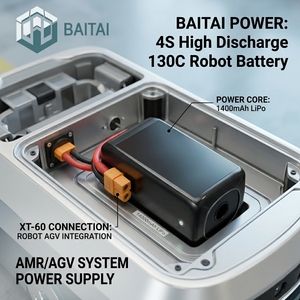
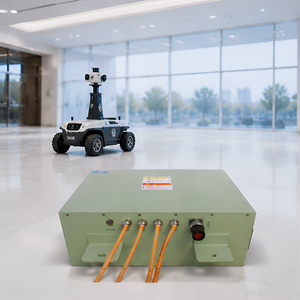
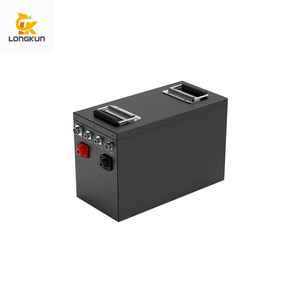
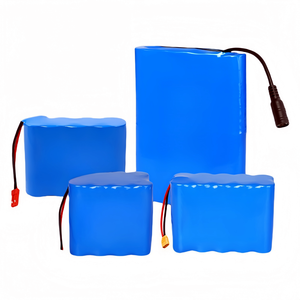
1. Technical Architecture of OEM/ODM Programmable Smart Chargers
In modern industrial electrification—spanning Autonomous Mobile Robots (AMRs), Automated Guided Vehicles (AGVs), medical telemetry systems, and defense equipment—battery chargers are no longer rudimentary constant-voltage power supplies. They function as micro-processor-controlled dynamic energy delivery nodes. As an established USA OEM/ODM battery and charger manufacturer since 1983, Cell-Con engineers programmable smart charging systems that establish real-time closed-loop communication with internal Battery Management Systems (BMS).
Programmable charge profile flexibility is critical for optimizing cell longevity, minimizing operational downtime, and maintaining safety across diverse lithium-based chemistries (LiFePO4, NMC, LTO, Solid-State) and legacy nickel-based architectures (NiMH, NiCd).
Multi-Stage Algorithm Control
Micro-controller driven state machines executing Pre-charge, Constant Current (CC), Constant Voltage (CV), Conditioning, and Programmable Floating profiles tailored to exact cell manufacturer electrochemical curves.
Bi-Directional Telemetry
Integration of industrial CANbus 2.0B, SMBus 1.1, Modbus RTU, and UART communication protocols for microsecond telemetry transfer between cell pack monitoring ICs and charger power stages.
Thermal Throttling Matrix
NTC thermistor feedback network executing dynamic current throttling during thermal spikes, preventing metallic lithium plating during sub-zero charging and thermal runaway at high ambient temperatures.
| Architecture Aspect | Legacy Off-the-Shelf Charger | OEM/ODM Programmable Smart Charger |
|---|---|---|
| Voltage & Current Control | Fixed trim resistors (Static V/I outputs) | Software-defined via Digital-to-Analog MCU (0-100% stepless tuning) |
| BMS Integration | Open loop (Independent cut-off dependent on charger output) | Closed-loop SMBus / CANbus handshake; auto-matches BMS commands |
| Efficiency & Thermal Load | 82% - 88% efficiency (Standard Silicon MOSFETs) | 94% - 96.5% peak efficiency using Wide Bandgap GaN/SiC power stages |
| Field Upgradability | Non-upgradable hardware | Encrypted OTA (Over-The-Air) or USB flashable firmware updates |
| Environmental Protection | Vented plastic/sheet metal (IP20 indoor) | Custom die-cast IP65 / IP67 sealed thermal conductive enclosures |
2. Technology Roadmap & Procurement Trends for Industrial Battery Charging (2025–2030)
As industrial platforms scale towards total autonomy, procurement teams and systems integration engineers must anticipate major technological shifts in energy management. Based on OEM design telemetry and global battery technology trajectories, we identify four critical trends driving next-generation power system procurement:
Wide Bandgap (GaN & SiC) Semiconductors
Silicon Carbide (SiC) and Gallium Nitride (GaN) switching components enable switching speeds up to 10x faster than traditional silicon MOSFETs. This drastically reduces inductor magnetics size, cutting charger form-factor volumes by 40% while elevating energy conversion efficiency beyond 96%.
Wireless & Automated Contact Charging
Next-generation AGVs/AMRs are shifting away from mechanical pin contacts toward high-frequency inductive charging pads (10kHz-85kHz resonant coupling) and automated high-current side contact plates capable of 1C-5C opportunity charging during 30-second warehouse stopovers.
Software-Defined Multi-Chemistry Profiles
Procurement teams are standardizing on universal programmable power platforms. A single hardware SKU can be dynamically reflashed via software to charge Lithium Iron Phosphate (3.65V/cell), NMC (4.2V/cell), or Lithium Titanate (2.85V/cell) without hardware redesign.
Predictive Fleet Telemetry & IoT Cloud Integration
Smart chargers are evolving into IoT edge gateways. By capturing charging impedance, internal cell resistance delta, and thermal response curves during every cycle, cloud platforms can predict cell degradation 6 months before catastrophic failure.
3. Corporate Engineering Advantages & OEM Manufacturing Excellence
With over four decades of continuous operation since 1983 in Bedford, Pennsylvania, Cell-Con, Inc. has established an unrivaled reputation as a single-source OEM/ODM partner for mission-critical power systems. Our vertically integrated approach bridges electrical design, mechanical enclosure engineering, software safety architecture, and automated assembly under one quality system.
Turnkey OEM/ODM Engineering
In-house PCB schematic capture, 3D CAD enclosure design, custom thermal dissipation modeling, firmware development, and prototyping under ISO 9001 certified protocols.
Regulatory Certification Assistance
Pre-compliance testing and full agency management for global approvals including UL 60601-1 (Medical), UL 2595, IEC 62368-1, UN 38.3 (Transport Safety), CE, and FCC Class B.
Automated End-of-Line (ATE) Testing
100% of manufactured smart packs and programmable chargers undergo automated full-load burn-in, dielectric withstand testing, thermal imaging, and digital protocol validation prior to shipment.
4. Frequently Asked Questions (Industrial OEM & Procurement FAQ)
Accelerate Your OEM Battery & Charger Program
Partner with USA engineering leadership for your next-generation custom battery packs, BMS, and programmable charging systems. Request technical catalogs and schedule a engineering consultation today.
Get Catalog