Battery Engineering Blog
Discover expert perspectives, custom battery design guides, charging solutions, and industry updates from USA engineers.
Featured Custom OEM/ODM Battery Pack & Enclosure Solutions
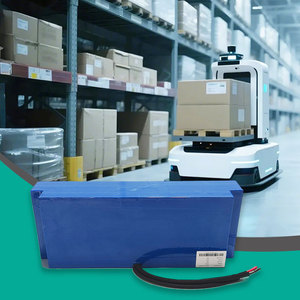
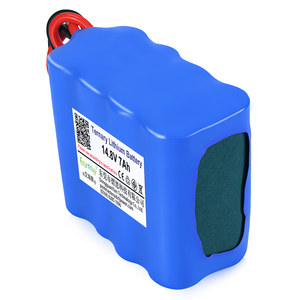
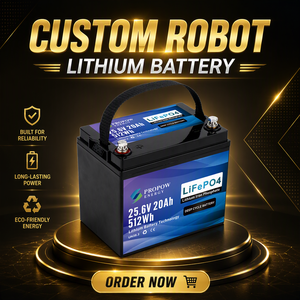
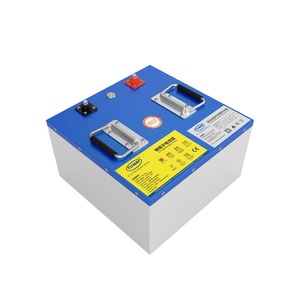
Engineered specifically for Autonomous Mobile Robots (AMR), Automated Guided Vehicles (AGV), Medical Devices, and Heavy Industrial Robotics. High-discharge, thermal-regulated, and smart BMS embedded systems.
Technical Fundamentals: Engineering Custom OEM/ODM Battery Enclosures
As modern industries rapidly transition toward autonomous automation, electric mobility, and mission-critical remote power units, the demand for OEM/ODM custom battery enclosures has evolved from simple mechanical housings into complex, highly integrated thermal and electrical protection systems. Designing a custom lithium-ion, LiFePO4, or LTO battery enclosure requires a multi-disciplinary approach encompassing mechanical stress analysis, thermal dissipation modeling, ingress protection (IP ratings), electromagnetic interference (EMI) shielding, and international regulatory compliance.
At our USA-centered and global manufacturing facilities, we specialize in transforming raw electrochemistry into ruggedized, deployment-ready energy storage systems. Whether designing ultra-thin housings for medical devices or heavy-duty, shock-resistant steel enclosures for Autonomous Mobile Robots (AMR) and Automated Guided Vehicles (AGV), our engineering framework prioritizes safety, thermal stability, and structural longevity.
Structural Integrity & Crash Resistance
Enclosures designed to withstand 50G mechanical shock impacts, structural vibration profiles (MIL-STD-810G), and drop tests. Utilizing high-tensile extruded aluminum alloys (6061-T6), deep-drawn stainless steel, and flame-retardant engineered polymers.
Precision Thermal Management
Integrated passive and active thermal management channels. Incorporating phase-change materials (PCM), internal heat-pipe dissipation routes, liquid-cooling cold plates, and thermally conductive potting materials to eliminate hot spots.
Hermetic Ingress Protection (IP67 / IP68)
Custom gasket architecture utilizing fluorosilicone and molded EPDM liquid seals. Engineered pressure-equalization vents (Gore vents) prevent differential pressure build-up while blocking dust, moisture, and chemical exposure.
Engineering Insight: Thermal Runaway Propagation Prevention
In high-capacity NMC or LiFePO4 battery modules, enclosure design plays a critical role in safety containment. Modern OEM battery enclosures engineered by our team feature directional gas exhaust valves and aerogel insulation barriers between adjacent cell matrices. This ensures that even in the unlikely event of single-cell thermal failure, internal directional venting directs hot gases harmlessly outward without propagating thermal runaway to adjacent modules.
Material Selection Matrix: Mechanical, Thermal & Environmental Dynamics
Selecting the optimal material substrate for a custom battery enclosure requires balancing weight constraints, mechanical rigidity, flame resistance (UL94-V0), thermal conductivity, and tooling economics. Below is a comparative engineering reference table used during our initial OEM architectural review phase:
| Material Substrate | Tensile Strength | Thermal Conductivity | Protection Rating Potential | Primary Industrial Application | Cost Profile & Lead Time |
|---|---|---|---|---|---|
| 6061-T6 / 6063 Aluminum Extrusion | 290–310 MPa | 160–200 W/m·K | IP67 / IP68 / NEMA 4X | AGV/AMR Autonomous Robots, Heavy Electric Vehicles, Military Energy Storage | Moderate Tooling Cost / Medium Lead Time |
| 304 / 316 Stainless Steel (Sheet Metal) | 515–620 MPa | 16 W/m·K | IP68 / Explosion-Proof Ex-d | Hazardous Area Industrial Equipment, Oceanic Subsea Units, Oil & Gas Monitoring | Low Initial Tooling / Rapid Prototyping |
| Flame-Retardant Polycarbonate (PC/ABS) | 60–75 MPa | 0.20–0.25 W/m·K | IP65 / IP67 (Molded Gasket) | Medical Devices, Wearable Power Packs, Commercial Lawn Care & Drones | High Injection Mold Tooling / Low Unit Cost |
| Carbon Fiber Composite / Resin Transfer | 600–1200 MPa | 1.5–5.0 W/m·K | IP67 / Lightweight Structural | Aerospace UAVs, High-Speed Race Robotics, Portable Defense Power Kits | High Prototype Cost / Specialized Fabrication |
Custom Mechanical Tooling & Rapid Prototyping
Our facility bridging North America and global manufacturing hubs offers zero-gap transitions from CAD concept modeling (SolidWorks, ANSYS mechanical simulation) to physical prototyping. We utilize CNC precision machining, sheet metal laser cutting, turret punching, robotic TIG/MIG welding, and high-speed plastic injection molding to yield prototypes within 10 to 15 business days.
- CNC Tolerance: Down to ±0.02mm for precision cell retention frames.
- Surface Treatments: Hard-coat anodizing, powder coating, chromate conversion (MIL-DTL-5541F), and nickel plating for EMI shielding.
- Cell Fixing Matrix: Custom silicone cell holders, die-cut polycarbonate spacers, and vibration-isolating polyurethane cushions.
Electrical & Internal Sub-Assembly Integration
A custom battery enclosure is more than an outer shell—it is an electrical housing that must safely manage high-current busbars and micro-electronic signals. Our complete OEM factory services integrate internal wiring harnesses, nickel-plated copper busbars, pre-charge resistors, contactors, and high-density connectors directly into the enclosure assembly.
- Busbar Insulation: Thermally bonded epoxy coating or heat-shrinkable insulation rated up to 1500V DC.
- Smart BMS Mounting: Isolated standoff bridges ensuring zero thermal transfer from high-discharge FETs to chemical battery cells.
- External Interface: Waterproof Anderson, Amphenol, Deutsch, or custom magnetic pogo-pin charging connectors.
Smart BMS Architecture & Thermal Management Integration
Modern smart battery enclosures must accommodate sophisticated Electronic Battery Management Systems (BMS). A seamless synergy between mechanical housing design and electronic controls ensures maximal cycle life (ranging from 1,500 to over 5,000 cycles depending on chemistry) and continuous telemetry reporting via industrial communication protocols.
Communication Telemetry
Enclosures engineered with specialized RF-transparent windows or isolated connector ports supporting CANbus 2.0B, CANopen, RS485, SMBus, Modbus, and Bluetooth/Wi-Fi IoT monitoring platforms.
Active Balancing & Monitoring
Dedicated mounting structures for high-current active cell balancers (1A to 5A balancing current) ensuring voltage equilibrium across large multi-series (12S to 24S+) battery configurations.
Safety Disconnect & Fusing
Integrated compartments for service disconnect switches, pyrofuses, high-breaking-capacity semiconductor fuses, and automated thermal-cutoff relays mounted directly inside the battery housing.
Future Procurement & Technology Trends in Battery Enclosures (2025–2035)
As global OEM procurement teams plan product roadmaps for the coming decade, several critical technological shifts are redefining how custom battery enclosures are specified, manufactured, and recycled. Sourcing directors must anticipate these trends to prevent supply chain obsolescence and ensure long-term regulatory compliance.
1. Modular Cell-to-Pack (CTP) & Cell-to-Chassis Architecture
Traditional battery modules are increasingly being replaced by Cell-to-Pack (CTP) designs where individual prismatic or pouch cells are bonded directly into the structural enclosure shell. This increases volumetric energy density by 15–25% while reducing overall structural weight. Enclosure factories must now possess advanced structural adhesive dispense technology and laser welding capabilities.
2. Sustainability Passport & Recyclable Enclosure Materials
Under new European Union (EU) Battery Regulations and global ESG mandates, enclosures must be engineered for automated disassembly and 100% material traceability. Fastening mechanisms are shifting away from permanent epoxy potting toward mechanical mechanical fasteners, recyclable aluminum alloys, and flame-retardant thermoplastics designed for rapid second-life recycling.
3. Solid-State Chemistry Adaptability
With solid-state battery commercialization accelerating, next-generation enclosures require high-pressure internal clamping mechanisms. Solid-state cells expand and contract differently during charge-discharge cycles, demanding spring-loaded compression plates integrated directly within the enclosure walls to maintain uniform stack pressure.
4. Automated Wireless BMS (wBMS) Housing Integration
Elimination of heavy wiring harnesses inside battery packs is becoming standard in high-voltage robotics and automotive platforms. Enclosure designs must incorporate integrated RF-shielded inner cavities to optimize internal wireless communication while protecting the control system from external high-frequency industrial noise.
Frequently Asked Questions (FAQ): OEM/ODM Battery Procurement
Essential answers for procurement officers, system architects, and mechanical design engineers evaluating custom battery enclosure manufacturers.
Why Partner with Our Custom Battery Manufacturing Facilities
For over 40 years, our engineering team (headquartered in Bedford, Pennsylvania with global support hubs) has built an unshakeable reputation for technical reliability, quality assurance, and supply chain transparency. We serve as a vertically integrated single-source manufacturer, handling everything from electrochemistry cell selection to final custom enclosure testing.
ISO 9001:2015 Quality Assurance
Full lot traceability, 100% automated end-of-line electrical testing, optical weld inspection, and complete environmental chamber stress screening (ESS).
Single-Source Engineering
Eliminate project fragmentation. We design the battery cells, smart BMS firmware, wiring harnesses, and custom protective enclosure under one single engineering roof.
Global Supply Chain Resilience
Strategic cell supply partnerships with Tier-1 cell manufacturers (CATL, Samsung SDI, LG Energy Solution, Panasonic, EVE) coupled with robust domestic enclosure assembly capabilities.
Ready to Engineer Your Custom OEM/ODM Battery Enclosure?
Connect directly with our senior mechanical and electrical engineering team today for technical consultation, CAD review, and formal quotation.
Send an Inquiry