Technical Articles & Insights
Battery Engineering Blog
Discover expert perspectives, custom battery design guides, charging solutions, and industry updates from USA engineers.
Featured Flame Retardant Battery Assemblies
Engineered to prevent thermal runaway propagation with certified fireproof materials, heavy-duty enclosures, and intelligent safety controls.
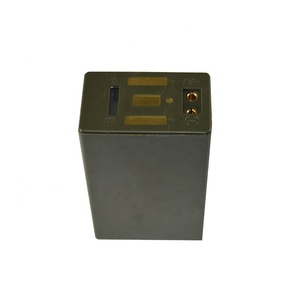
Durable IP67 Waterproof and Fireproof Lithium Ion BB-2847/U Tactical Radio Battery Pack Manpack Compatible
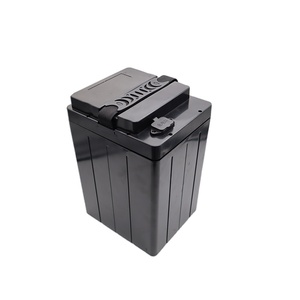
Cedley Hot Sale Custom Waterproof 48V Lithium Battery Storage Pack Kit Model 4830 ABS+PC Plastic Bracket Box Flame Retardant 5
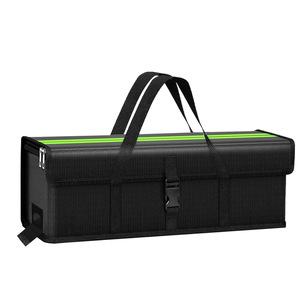
New Models Electrical Vehicle Safety Fireproof Battery Pack Lithium Iron Phosphate with Large Capacity and Flame Resistance Bag
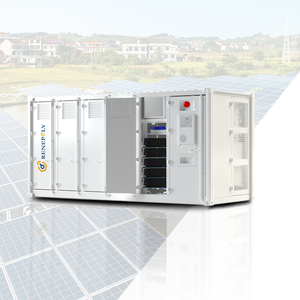
Renepoly 4180kWh BESS Fireproof Lithium Ion Battery Storage Container for Industrial Commercial Safe Microgrid Energy Storage
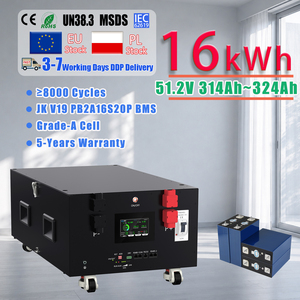
EU Stock 8000+ Cycle Long Life Stackable Battery Pack JK V19 BMS+Heating Pad+Fireproof Device for Solar Storage Systems
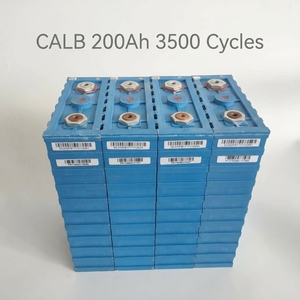
Flame Retardant Plastic Shell 3.2V 3500 Cycles 200Ah LiFePO4 Battery Cell with Cooling Slots for Home Energy Storage System HESS
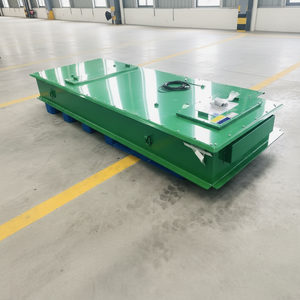
300AH Custom Lithium Ion Battery 15kw 22kw Flameproof Power with Engine for Mining Locomotive & Tunneling
Technical Deep-Dive: Engineering Flame Retardant Battery Assemblies for Critical Applications
In modern energy storage and industrial electrification, battery safety has evolved from a secondary compliance feature into the primary design architecture. High-energy-density chemistries such as Nickel Manganese Cobalt (NMC) and Lithium Iron Phosphate (LiFePO4) offer unprecedented performance, but they require robust thermal mitigation measures to eliminate fire hazards caused by thermal runaway events. OEM/ODM custom flame retardant battery assemblies represent the intersection of electrochemistry, thermal management, structural physics, and intelligent BMS control.
Thermal runaway occurs when an internal short circuit, physical damage, overcharging, or external heat input causes an exothermic reaction within a cell. If unmitigated, temperatures can rapidly exceed 600°C (1,112°F), causing adjacent cells to fail sequentially in a catastrophic chain reaction known as thermal propagation. Our specialized OEM/ODM flame retardant battery pack manufacturing focuses on multi-layered thermal containment strategies designed to suppress, isolate, and extinguish flame generation at the cell, module, and pack levels.
Core Safety Principle: True flame-retardant battery engineering does not merely enclose cells in fire-resistant plastic. It integrates active ceramic thermal barriers, micro-encapsulated phase change materials (PCM), intumescent gaskets, and pressure-relieving safety valves to guarantee zero thermal propagation across adjacent cells during internal failure.
Multi-Layer Thermal Isolation Architecture
To achieve strict international certifications such as UL 9540A, UL 1973, and UN 38.3, modern flame retardant battery assemblies utilize a layered defense strategy:
UL94 V-0 Polymer Enclosures
Utilizing high-impact ABS+PC blends or specialized polyphenylene ether (PPE) resins modified with brominated or halogen-free flame retardants. Materials self-extinguish within 10 seconds of flame application with zero flaming drips.
Aerogel Thermal Spacers
Nanoporous silica aerogel sheets inserted between individual pouch or prismatic cells exhibit exceptionally low thermal conductivity (under 0.020 W/m·K), preventing heat transfer even when an adjacent cell hits 800°C.
Intumescent Fire Barriers
Coatings and seals that expand up to 50 times their original thickness upon exposure to extreme heat, forming a carbonaceous insulating char layer that smothers flames and blocks toxic off-gassing channels.
Engineering Material Comparison for Battery Pack Enclosures
Selecting the optimal flame-retardant structural material requires balancing thermal conductivity, mechanical resilience, volumetric energy density impact, and total production cost. Below is an engineering evaluation matrix implemented by our OEM/ODM custom division:
| Material Class | Flame Retardancy Standard | Thermal Resistance (°C) | Tensile Strength (MPa) | Weight Impact | Primary Industrial Application |
|---|---|---|---|---|---|
| UL94 V-0 ABS + PC Blend | UL94 V-0, 5VA (3.0mm) | 120°C - 140°C | 55 - 75 | Low (Lightweight) | Portable Medical & Tactical Electronics |
| Anodized Aluminum-Magnesium Alloy | Non-combustible (Class A1) | 500°C - 600°C | 200 - 320 | Medium | Electric Vehicles & Commercial BESS |
| Flame-Retardant Epoxy Glass (FR-4) | UL94 V-0 | 140°C - 180°C | 280 - 350 | Medium-Low | Internal Cell Separation & Interconnect Brackets |
| Carbon Fiber Reinforced Intumescent Shell | ISO 3795 / UL94 V-0 | > 1000°C (Short Exposure) | 600 - 1200 | Ultra-Low | Aerospace, Robotics & Heavy Mining Equipment |
| Explosion-Proof Stainless Steel Enclosure | ATEX / IECEx Flameproof | > 1200°C | 500 - 700 | High | Underground Mining Locomotives & Hazardous Oil/Gas |
Future Procurement & Technology Trends in Battery Assemblies (2025–2030)
As global safety regulations tighten across North America, the European Union, and Asia-Pacific, procurement officers and engineering directors must align their supply chain strategies with emerging technological shifts. Sourcing flame retardant battery assemblies is no longer just a purchasing decision—it is a risk mitigation strategy for global market access.
1. Shift Towards Cell-to-Pack (CTP) & Cell-to-Chassis (CTC) Fireproofing
Traditional battery modules rely on plastic module housings arranged inside a secondary container. Next-generation designs bypass module structures to maximize energy density. However, eliminating module walls removes a primary thermal barrier. As a result, procurement is shifting toward custom structural adhesives, flame-retardant potting compounds, and aerogel blankets engineered directly into the pack layout.
2. Mandatory Integration of Internal Aerosol & Fire Suppression Modules
Future BESS (Battery Energy Storage System) and heavy industrial mobile equipment contracts increasingly specify micro-encapsulated fire suppression units within the pack interior. These autonomous devices trigger automatically when temperatures cross 170°C or gas sensors detect electrolyte decomposition (such as dimethyl carbonate vapor), releasing potassium salt aerosol to neutralize active combustion before thermal propagation starts.
3. AI-Driven Smart BMS with Early Thermal Runaway Early Warning Systems
Hardware flame retardancy is now augmented by intelligent Software Safety Controls. Modern OEM battery assemblies incorporate Multi-Sensor Array BMS units capable of monitoring single-cell impedance fluctuations, subtle micro-voltage drops, and localized off-gassing pressure changes. Cloud-connected telematics allow fleet managers to predict thermal risks hours before physical smoking occurs.
Higher Regulatory Standards
Compliance with NFPA 855, UL 9540A unit-level fire test data, and UN 38.3 Rev 7 is becoming a non-negotiable prerequisite for US and EU customs clearance.
Eco-Friendly Halogen-Free Polymer Demand
Global ESG initiatives are accelerating the phase-out of halogenated flame retardants in favor of phosphorus-nitrogen and bio-based intumescent additives that eliminate toxic dioxin release during disposal.
Localized Modular Customization
OEM buyers are prioritizing manufacturers capable of offering rapid-turn tooling, custom geometry enclosures, and flexible production volumes for niche industrial applications.
Why Partner With Our OEM/ODM Flame Retardant Battery Manufacturing Facilities?
With over four decades of engineering leadership, our manufacturing infrastructure combines US-engineered quality management with scalable volume production. We serve as a single-source custom manufacturing partner for global OEMs across medical, industrial robotics, military communications, underground mining, and grid energy storage markets.
Full-Spectrum Customization Engineering Workflow
Our vertically integrated facility handles every phase of flame retardant battery assembly design and fabrication under one roof:
1. Thermal Finite Element Analysis (FEA)
Before cutting physical molds, our thermal simulation software calculates internal heat dissipation, fluid dynamics, and temperature distribution across all cells during 3C continuous discharge cycles.
2. Precision Cell Matching & Sorting
Using automated grading lines, Tier-1 Grade-A LiFePO4 or NMC cells are sorted to micro-tolerances (voltage difference ≤ 5mV, internal resistance variance ≤ 0.5mΩ) to minimize localized hot spots during operational life.
3. Robotic Laser & Busbar Welding
High-precision fiber laser welding ensures zero contact resistance on nickel-copper composite busbars, reducing thermal buildup at electrical connection joints under peak current demands.
4. Custom Potting & Encapsulation
For IP67 waterproof and explosion-proof requirements, battery cavities are filled with flame-retardant silicone or polyurethane potting gels that absorb mechanical shock and extinguish localized arcing.
5. Smart BMS Software Tailoring
In-house firmware engineers configure custom CANbus, Modbus, or SMBus communication protocols with multi-tier hardware overcurrent, overvoltage, short circuit, and overtemperature cutoffs.
6. Regulatory Certification Support
We provide turn-key testing and documentation packages to ensure fast, guaranteed approval for UN 38.3, UL 1642, UL 1973, IEC 62619, and CE international standards.
Frequently Asked Questions (FAQ) for OEM/ODM Buyers
Below are authoritative technical answers to common queries raised by procurement teams, system integrators, and electrical engineers when sourcing flame-retardant lithium battery assemblies.
What is the difference between UL94 V-0, V-1, and V-2 flame retardant ratings?
UL94 is the global benchmark for plastic flammability. V-2 permits flaming drips and burns within 30 seconds. V-1 stops burning within 30 seconds with no flaming drips. UL94 V-0 is the highest standard, requiring flaming to cease within 10 seconds on a vertical specimen, with no flaming drips allowed to ignite cotton placed underneath. Our flame retardant battery enclosures strictly employ UL94 V-0 or 5VA rated materials.
How does a flame retardant battery assembly prevent thermal runaway propagation?
Thermal runaway prevention relies on physical isolation and thermal energy dissipation. By placing ceramic aerogel barriers between individual cells, heat from a failing cell cannot transfer across to adjacent healthy cells. Integrated directional pressure release valves vent high-temperature gases safely away from electrical contacts, while flame-arresting mesh prevents atmospheric oxygen from igniting vent gases.
Can custom flame retardant enclosures achieve IP67 or IP68 ingress protection?
Yes. Our custom engineering team designs dual-sealed enclosures utilizing flame-retardant silicone gaskets combined with waterproof pressure-equalization vents (e.g., Gore membranes). This allows gas exchange for pressure equalization without allowing water or dust ingress, achieving complete IP67 submersion resistance.
What chemistry is recommended for high-safety flameproof battery applications?
Lithium Iron Phosphate (LiFePO4) is chemically the safest mainstream chemistry due to its robust P-O covalent atomic bonds, which remain stable up to 500°C without releasing oxygen. However, for weight-sensitive applications (such as tactical military radios or aerospace drones), high-density NMC cells combined with ceramic-coated separators and active aerosol fire suppression systems are utilized.
What lead times can we expect for custom OEM flame-retardant prototype development?
Standard engineering sample prototypes—including custom enclosure 3D modeling, thermal simulation, BMS configuration, and sample assembly—typically range from 3 to 5 weeks. Mass production tooling and volume manufacturing are completed within 6 to 8 weeks depending on raw material sourcing and certification requirements.
Are custom OEM battery assemblies certified for international shipping?
Yes. All custom battery packs are engineered and tested to comply with UN 38.3 transport safety rules (covering altitude simulation, thermal shock, vibration, impact, external short circuit, and forced discharge). We supply full SDS, UN 38.3 test reports, and dangerous goods packaging declarations for air, sea, and land transport.
Ready to Engineer Your Custom Flame Retardant Battery Solution?
Submit your project specs, operational temperature limits, dimensional constraints, and electrical requirements to consult directly with our senior battery engineering team.