Battery Engineering Blog
Discover expert perspectives, custom battery design guides, charging solutions, and industry updates from USA engineers.
Certified Medical-Grade Battery Assemblies
Explore our range of precision-engineered, multi-certified medical lithium battery packs designed for emergency, diagnostic, surgical, and portable therapeutic devices.
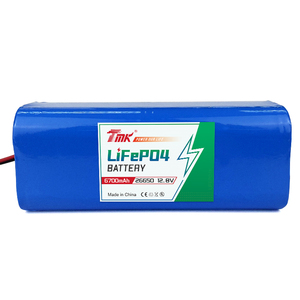
- Chemistry: Lithium Iron Phosphate (LiFePO4)
- Nominal Voltage: 12.8V / 24V Options
- Application: Portable Electronics & Monitoring
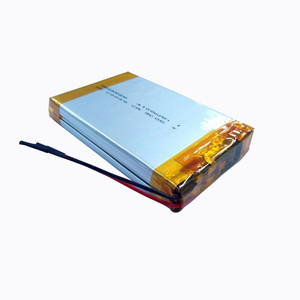
- Certification: IEC62133 / CE / UN38.3
- Configuration: 3S1P Ultra-Slim Profile
- Application: Clinical Diagnostics & Wearables
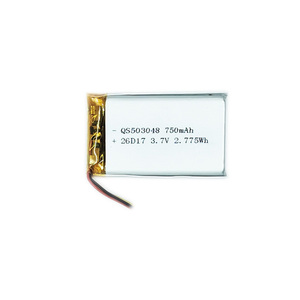
- Safety Standard: IEC 62133 Certified
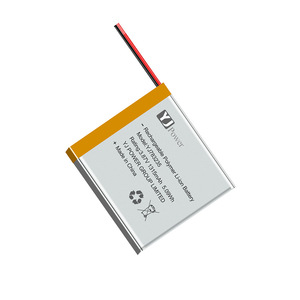
- Form Factor: Miniaturized Soft Pack
- Application: Compact Medical Devices & Sensors
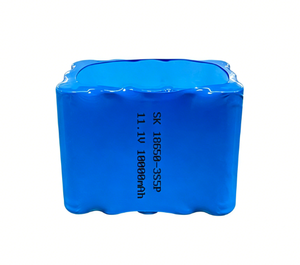
- BMS Protection: Overcharge/Over-discharge/Short
- Capacity: 10Ah High Output Current
- Application: Mobile ECG Monitors & Sprayers
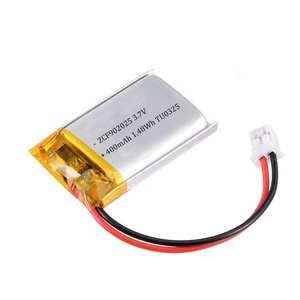
- Energy Density: High Density Voltage Platform
- Compliance: IEC62133 / RoHS Certified
- Application: Sleep Instruments & Monitoring
- Certification: KC (Korea Certification) Approved
- Safety Circuit: Integrated PCM Module
- Application: Micro Medical Devices / POS / GPS
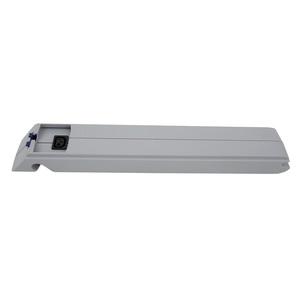
- Compatibility: Arjo Lift Replacement Compatible
- Certifications: Multi-Standard Certified Pack
- Application: Heavy-Duty Patient Handling Equipment
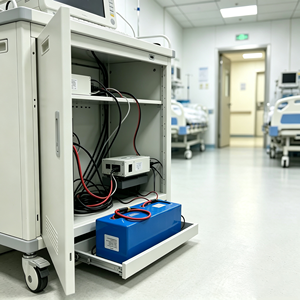
- Cell Standard: Tier-1 Grade A Automotive/Medical
- Life Cycle: >2000 Cycles @ 80% DOD
- Application: Surgical Tools & Hospital Carts
Engineering Standards & Manufacturing Architecture for Medical Power Assemblies
Medical-grade energy storage units differ fundamentally from consumer and commercial battery solutions. Where consumer electronics prioritize cost per watt-hour, OEM medical devices demand absolute operational uptime, fail-safe redundant protection, precise telemetry reporting (SMBus / I2C), and long-term chemical stability. Whether powering life-critical surgical tools, mobile electrocardiogram (ECG) monitors, or automated patient lift systems, battery failure is not an option.
1. Cell Chemistry Selection & Comparative Performance
Selecting the optimal electrochemical pairing is the foundational step in OEM/ODM medical custom battery pack engineering. The primary chemistries deployed across medical applications are Lithium Iron Phosphate (LiFePO4) and Lithium Nickel Manganese Cobalt Oxide (NMC / Li-Polymer). Each offers unique performance profiles suited for distinct medical environments:
| Electrochemical Parameter | LiFePO4 (LFP) Cylindrical | Li-Polymer (LiPo) Soft Pack | Lithium Ion (NMC) 18650/21700 |
|---|---|---|---|
| Nominal Cell Voltage | 3.2V - 3.3V | 3.7V - 3.87V | 3.6V - 3.7V |
| Gravimetric Energy Density | 140 - 170 Wh/kg | 200 - 260 Wh/kg | 220 - 280 Wh/kg |
| Cycle Life (80% DOD) | 2,000 - 4,000+ Cycles | 500 - 1,000 Cycles | 800 - 1,500 Cycles |
| Thermal Runaway Temp | ~270°C (Ultra-Stable) | ~150°C (Requires Thermal Barriers) | ~210°C (Requires Advanced BMS) |
| Primary Medical Target | Patient Lifts, Surgical Carts, Ventilators | Wearables, Sleep Monitors, Handheld Sensors | Infusion Pumps, Portable Diagnostic Kits |
2. Redundant Smart BMS Architecture & Communications
A certified medical battery pack is an intelligent subsystem containing specialized Battery Management System (BMS) hardware and custom firmware. In compliance with IEC 60601-1 risk management requirements, our medical battery assemblies integrate dual-layer protection circuitry:
Primary & Secondary Hardware Fusing
Primary MOSFET switches handle over-voltage, under-voltage, over-current, and temperature limits. A secondary independent hardware IC triggers a physical Chemical Fuse (C-Fuse) to permanently isolate the cell matrix in catastrophic short-circuit conditions.
Precision Telemetry & Fuel Gauging
Using System Management Bus (SMBus v1.1), I2C, or CANbus protocols with TI Impedance Track™ Coulomb-counting ICs, our packs deliver precise State of Charge (SOC), State of Health (SOH), and Remaining Operating Time data to the host device.
ESD & EMI Suppression Shielding
To prevent disruption to sensitive electrocardiograms (ECG) or magnetic resonance environments, medical batteries feature custom copper/ferrite shielding and transient voltage suppressors (TVS) rated to withstand 15kV ESD strikes.
Future Procurement & Technology Trends for Medical Battery Packs
As healthcare systems shift toward continuous patient monitoring, remote diagnostics, and mobile operating rooms, procurement managers and OEM design engineers must anticipate major technological paradigm shifts over the next decade.
1. Predictive AI-Driven Battery Diagnostics
Next-generation medical devices are moving beyond simple voltage sensing. Future procurement frameworks will mandate smart BMS units equipped with predictive artificial intelligence models that analyze real-time internal resistance degradation, forewarning hospital biomedical engineers before a battery reaches end-of-life.
2. Mandatory IEC 62133-2 & EU MDR 2017/745 Compliance
Global regulatory bodies are enforcing stricter supply chain oversight. Procurement contracts will require 100% component-level batch traceability, toxic substance audits (RoHS 3 / REACH), and international transportation safety compliance under UN 38.3 for all lithium battery shipments.
3. Ultra-Fast Charging in Sterile Clinical Environments
Hospital workflows demand zero downtime. Development is accelerating around high-current charge protocols (2C-3C rate) using active thermal cooling and hermetically sealed inductive wireless charging bases to maintain sterile barriers in surgical theatres.
4. Solid-State Chemistry & Silicon-Anode Integration
Solid-state electrolyte systems are transitioning from research labs to specialized medical applications. Offering zero thermal runaway risk and up to 40% higher volumetric energy density, solid-state batteries will redefine implantable and micro-wearable diagnostic medical devices.
5. Closed-Loop Sustainability & Circular Sourcing
OEM buyers are increasingly prioritizing battery exporters with sustainable end-of-life recycling programs and eco-friendly manufacturing methods. Low-carbon battery manufacturing and ethically sourced raw materials (cobalt-free chemistries like LiFePO4) are rapidly becoming critical RFP criteria.
6. Modular Swap-and-Go Battery Standards
Standardized, hot-swappable battery modules (such as 24V 4Ah systems for patient lifts and mobile carts) enable uninterrupted healthcare delivery. Universal mounting interfaces and unified communication buses streamline fleet management for large hospital systems.
Why Partner with Our Medical Battery Assembly Facilities?
With four decades of specialized engineering experience, our vertically integrated OEM/ODM manufacturing capability ensures that your medical device receives a certified, ultra-reliable power solution.
Full OEM/ODM Turnkey Engineering
From early-stage 3D CAD enclosure design, custom nickel strip spot-welding layouts, and PCB assembly (PCBA) to custom software programming of SMBus/I2C communication profiles.
Rigorous Multi-Tier Quality Testing
Every single battery assembly undergoes 100% automated cycle testing, high-potential voltage insulation checks, thermal imaging under load, and vibration tolerance stress testing.
International Regulatory Approval Assistance
We streamline your medical product launch by managing third-party certification processes including IEC 62133-2, UL 2054, UL 1642, CE, KC, PSE, and UN 38.3 safety filings.
Medical Battery Procurement & Engineering FAQs
Answers to technical, regulatory, and supply chain questions commonly raised by medical device manufacturers and procurement specialists.
- Phase 1 (Weeks 1-3): Engineering review, CAD modeling, and BMS architecture design.
- Phase 2 (Weeks 4-6): Prototype sampling, functional testing, and customer validation.
- Phase 3 (Weeks 7-12): Regulatory testing and certification filings (IEC 62133 / UN 38.3).
- Phase 4 (Weeks 13+): Pilot tooling approval and initiation of mass production.
Partner with a Certified Medical Battery Manufacturer
Need a custom battery assembly, specialized BMS design, or multi-certified replacement battery pack for your medical equipment? Speak directly with our senior battery engineering team today.
Inquire Now