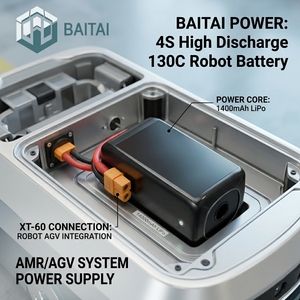
130C 1400mAh 4S High Discharge LiPo Battery for Service Robot AGV & AMR Power System
Voltage: 14.8V (4S) | Rate: 130C Burst | High-Peak Output
Discover expert perspectives, custom battery design guides, charging solutions, and industry updates from USA engineers.
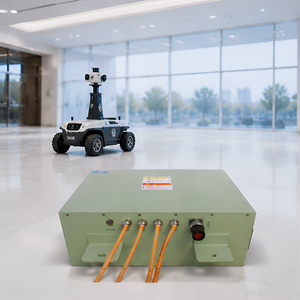
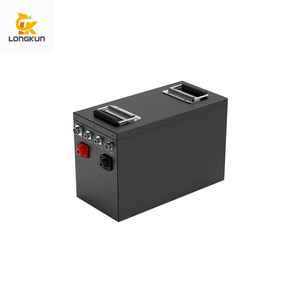
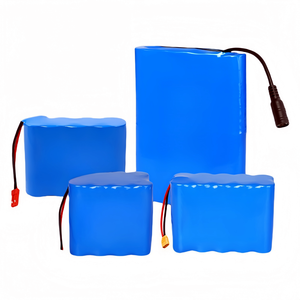
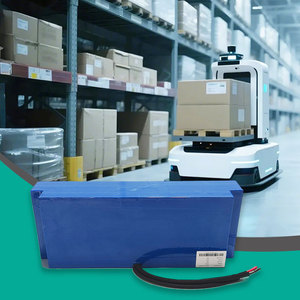
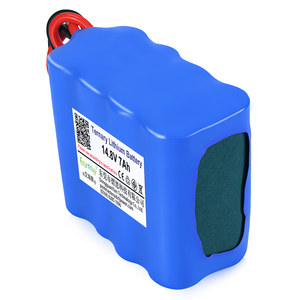
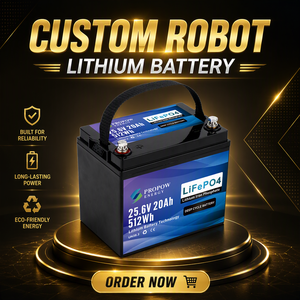
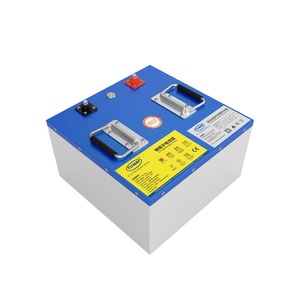
In modern high-reliability applications—ranging from Autonomous Mobile Robots (AMRs) and Automated Guided Vehicles (AGVs) to critical medical equipment and aerospace systems—standard unmanaged lithium battery configurations are no longer sufficient. Original Equipment Manufacturers (OEMs) require granular real-time diagnostics, deterministic state reporting, and fail-safe automated protection mechanisms. The implementation of the System Management Bus (SMBus) protocol within customized lithium battery architecture serves as the vital digital bridge connecting cell chemistries to host systems.
SMBus, derived from the I2C physical layer, establishes a standardized two-wire communication channel (SMBCLK clock line and SMBDAT data line) operating under strict Smart Battery System (SBS) data specifications. By embedding dedicated smart gas gauge ICs (such as TI BQ40z50 or BQ76952 family microcontrollers) directly into the Battery Management System (BMS) PCB, custom SMBus lithium battery packs deliver unmatched operational transparency to host systems. Host controllers can continuously read real-time parameters including State-of-Charge (SOC %), State-of-Health (SOH %), individual cell voltages, pack temperature profiles, cycle counts, and remaining run-time predictions under dynamic load conditions.
While legacy systems utilized basic SMBus v1.1 operating at 100 kHz, high-performance OEM robotics and industrial platforms are rapidly adopting SMBus v3.2 running at 1 MHz with Packet Error Checking (PEC). PEC inserts an 8-bit Cyclic Redundancy Check (CRC-8) into every transaction packet, ensuring that high-voltage electrical noise generated by industrial AGV drive motors does not corrupt critical battery state updates transmitted to the main vehicle controller.
A properly engineered OEM SMBus lithium battery pack goes beyond simple cell assembly. It integrates custom-engineered enclosures, precision cell matching protocols (delta impedance < 2mΩ, voltage tolerance < 5mV), multi-tiered hardware/software fault protections, and tailored firmware configuration parameters aligned with specific host system current draw profiles.
Selecting a custom battery pack factory is a strategic procurement decision that directly dictates end-product field reliability, brand reputation, and long-term warranty liability. Grounded in four decades of engineering legacy—with state-of-the-art assembly facilities based in the United States and strategic global production capacity—our facility delivers full lifecycle engineering solutions tailored for demanding enterprise partners.
Our production protocols adhere strictly to ISO quality management systems. Every custom SMBus battery pack undergoes automated end-of-line (EOL) testing, thermal indexing, and digital serialization for full lot traceability.
We do not rely on off-the-shelf basic protective circuits. Our in-house firmware engineers configure custom SMBus register maps, charge algorithms (CC/CV, step-charging), safety thresholds, and broadcast flag conditions.
Direct supply-chain agreements with primary cell manufacturers (Panasonic, Samsung SDI, LG Energy Solution, CATL, EVE) ensure access to authentic A-grade Lithium Iron Phosphate (LiFePO4), NMC, LTO, and LiPo cells.
We streamline international regulatory approval. Our engineering team assists OEMs in securing UL 2054, UL 62133, UN 38.3 transport safety validation, CE, and FCC approvals directly for their complete power system assembly.
From CAD molded plastics to sheet-metal laser-welded structural casings with IP67 ingress sealing, our mechanical engineers optimize heat dissipation, vibration isolation, and structural integrity under high stress.
Our relationship extends far beyond manufacturing. We provide hardware design reviews, host-BMS SMBus handshake integration support, protocol troubleshooting, and long-term lifecycle product management.
The global energy storage landscape is experiencing a paradigm shift driven by automation, electrification, and intelligent fleet management. As OEM product teams prepare next-generation devices, several key technological and procurement trends are reshaping the requirements for customized SMBus lithium battery packs:
Modern industrial equipment operations require centralized fleet visibility. Procurement directors are increasingly specifying smart battery packs equipped with hybrid SMBus/CANbus interfaces linked to cellular or Wi-Fi telemetry gateways. By aggregating SMBus SBS register data (such as internal cell impedance growth and ambient operational temperatures) into cloud platforms, predictive maintenance models can automatically flag degrading battery packs before field failure occurs, reducing machine downtime by up to 40%.
While Lithium Iron Phosphate (LiFePO4) remains the dominant chemistry for high-cycle industrial mobile platforms due to its inherent thermal safety (>3,500 cycle life), high-throughput robotic hubs are rapidly transitioning to Lithium Titanate (LTO) and advanced silicon-anode cell architectures. LTO cell chemistries permit ultra-fast 10C charging rates (achieving 80% SOC within 6 minutes) while operating reliably down to -30°C. SMBus gas gauge ICs are now customized with multi-chemistry lookup algorithms to maintain ±1% SOC precision across extreme non-linear discharge curves.
As smart devices become interconnected nodes within enterprise networks, unauthenticated battery replacements pose significant cyber-physical security risks. Future OEM specifications mandate SMBus gas gauges integrated with SHA-256 or ECC (Elliptic Curve Cryptography) hardware authentication keys. When a battery pack is inserted into a medical device or military AMR, the host controller performs a cryptographic challenge-response validation over the SMBus line. Unapproved third-party or counterfeit battery packs are immediately restricted to emergency limp-home power modes, protecting OEM hardware integrity and safety compliance.
Global regulatory frameworks (such as the EU Battery Regulation mandate and US EPA guidelines) require clear supply chain documentation regarding carbon footprint, recycled material content, and end-of-life recovery protocols. Enterprise OEMs are partnering with factories capable of providing digital "Battery Passports." Through SMBus static flash memory registers, vital manufacturing metadata—including cell batch origin, cathode chemistry breakdown, and cumulative lifetime throughput (kWh)—is permanently recorded and accessible during end-of-life recycling processing.
To assist host system software engineers in architecting deterministic battery polling loops, the matrix below details the standard SMBus command set (Protocol Version 1.1/2.0/3.2) implemented within our factory's custom smart BMS modules:
| Cmd Code | SMBus Function Name | Data Format | Units / Resolution | Engineering Description & Fault Thresholds |
|---|---|---|---|---|
| 0x08 | Temperature() | Unsigned Int | 0.1 °K (Kelvin) | Monitors internal pack thermistor array. Triggers over-temperature shutdown at >65°C charge / >70°C discharge. |
| 0x09 | Voltage() | Unsigned Int | 1 mV (Millivolts) | Reports total battery stack potential. Triggers low-voltage cut-off protection when individual cell drops below 2.5V. |
| 0x0A | Current() | Signed Int | 1 mA (Milliamps) | Real-time current flow (+ Charge, - Discharge). Enables dynamic load shedding on host controller during peak bursts. |
| 0x0D | RelativeStateOfCharge() | Unsigned Int | 1 % (Percent) | Compensated SOC percentage calculated via TI Impedance Track™ algorithm taking temperature & aging into account. |
| 0x0F | RemainingCapacity() | Unsigned Int | 1 mAh / 10 mWh | Estimated remaining electrical energy under current discharge rate before pack reaches zero-capacity threshold. |
| 0x16 | BatteryStatus() | Hex Word (16-bit) | Bitmap Flags | Critical error alert register (OVER_TEMP_ALARM, TERMINATE_CHARGE_ALARM, FULLY_DISCHARGED, DISCHARGE_INHIBIT). |
| 0x17 | CycleCount() | Unsigned Int | 1 Cycle | Cumulative equivalent full charge/discharge cycles. Used for SOH degradation modeling and preventive service warnings. |
| 0x3C-0x3F | CellVoltage1..4() | Unsigned Int | 1 mV per cell | Individual cell series monitoring for active/passive balancing algorithms. Max delta threshold limit: 30mV. |
To minimize project risk and accelerate time-to-market for complex hardware programs, our factory employs a structured 5-stage OEM battery engineering methodology:
Definition of electrical envelope (V/Ah/Wh), continuous/peak current spikes, SMBus register requirements, mechanical constraints, IP rating, and environmental operating temperature targets.
Schematic capture and PCB layout of custom Smart BMS, SMBus routing, gas gauge parameter programming, CAD mechanical layout, structural vibration simulations, and thermal profiling.
Assembly of functional engineering prototypes (EVT/DVT phases). Electrical characterization, temperature chamber testing, SMBus handshake verification, and host system compatibility validation.
Execution of UN 38.3 transport safety testing, UL/IEC compliance auditing, and small batch Pre-Production Pilot (PVT) run to validate tooling and automated testing jigs.
Full-scale automated production utilizing precise nickel-tab laser welding, automated EOL cell cycling, barcode serialization, and scheduled JIT supply-chain fulfillment.
Whether you require a high-discharge LiPo battery for autonomous robotics or a high-capacity LiFePO4 battery pack with custom SMBus telemetry, our engineering team is ready to analyze your requirements.