Battery Engineering Blog
Discover expert perspectives, custom battery design guides, charging solutions, and industry updates from USA engineers.
Custom OEM Smart Lithium Battery Systems Showcase
High-discharge, long-cycle life lithium power assemblies customized with intelligent BMS communication protocols for autonomous robots, industrial AGVs/AMRs, and heavy-duty utility platforms.
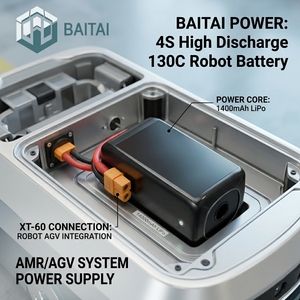
130C 1400mAh 4S High Discharge LiPo Battery for Service Robot AGV and Autonomous Mobile Robot Power System
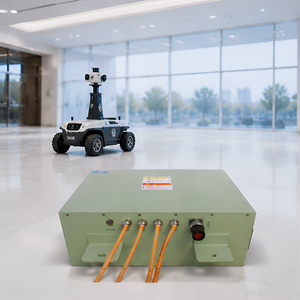
72V 60Ah LiFePO4 AMR Mobile Robot Battery Pack for Autonomous Robot System High Discharge Smart BMS Custom OEM ODM Wholesale
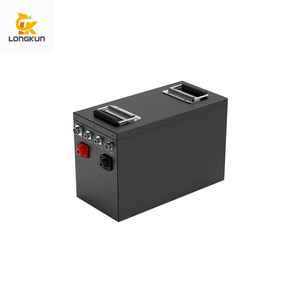
Longkun 24V 30Ah Lithium Ion Robot Battery Pack with BMS Rechargeable Li-ion Battery for AGV AMR Mobile Robots
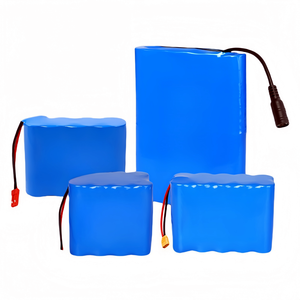
OEM Li-ion Battery Pack 3.7V 7.4V 11.1V 14.8V 18650 32650 26650 Lithium Ion Battery Pack for Autonomous Floor-Cleaning AMR Robot
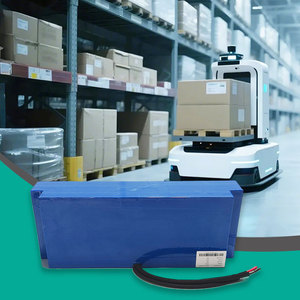
Customized Rechargeable LTO Agv Battery Pack 9Ah Autonomous Mobile Robot Agv Battery
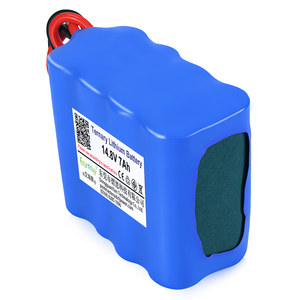
Custom Lithium Battery 14.8V 7Ah NMC 4S2P High Capacity for Autonomous Mobile Robot Electric Wheelchair Lawn Mower
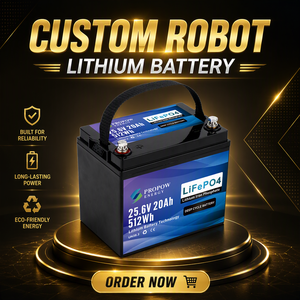
Custom Robot Lithium Battery 12V 24V 20Ah Lithium Battery for Robot, Rechargeable LiFePO4 Battery Pack for AGV AMR Mobile Robots
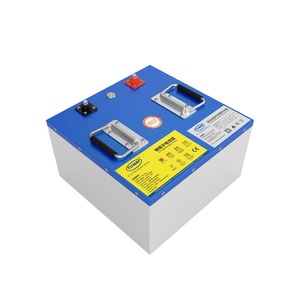
24V LiFePO4 Battery Pack 50Ah 60Ah 80Ah 100Ah with BMS 1500 Cycles -20C~60C for AGV AMR Robot Mobile Platform
Custom OEM Smart Lithium-Ion Power Architectures: Chemistry & BMS Matrix
Selecting the optimal energy storage system requires balancing gravimetric energy density, volumetric efficiency, continuous C-rate discharge capabilities, thermal stability parameters, and cycle life requirements.
| Battery Chemistry | Nominal Cell Voltage | Energy Density (Wh/kg) | Cycle Life (80% DOD) | Thermal Runaway Temp | Primary Industrial Applications |
|---|---|---|---|---|---|
| LiFePO4 (Lithium Iron Phosphate) | 3.2V | 140 - 180 Wh/kg | 3,500 - 6,000 Cycles | > 270°C (Ultra Safe) | Heavy-Duty AGVs, AMRs, Material Handling, Energy Storage |
| NMC (Nickel Manganese Cobalt) | 3.6V - 3.7V | 200 - 260 Wh/kg | 1,200 - 2,000 Cycles | ~ 210°C | Floor-Cleaning Robots, Electric Mobility, Portable Medical OEM |
| LTO (Lithium Titanate Oxide) | 2.3V - 2.4V | 70 - 110 Wh/kg | 15,000 - 20,000 Cycles | > 300°C (Extremely Safe) | Ultra-Fast Opportunity Charge AGVs (10C Charging), Extreme Cold -30°C |
| High-Discharge LiPo (Polymer) | 3.7V | 180 - 220 Wh/kg | 500 - 800 Cycles (at high C) | ~ 170°C | High Peak Current Robotics, Emergency Ejection Systems, Servos |
Future Procurement Trends in OEM Lithium Power Systems
As industrial automation accelerates globally, B2B procurement models for battery infrastructure are pivoting from commodity purchasing to high-integrated, smart power ecosystem partnerships.
1. Smart BMS Telematics & IoT Cloud Integration
Modern B2B OEMs demand custom power systems equipped with CANbus (J1939/CANopen), SMBus, or RS485 communication interfaces. Real-time telemetry monitoring State of Charge (SOC), State of Health (SOH), and predictive cell degradation vectors are now non-negotiable for enterprise fleet management.
2. Opportunity Charging & High C-Rate Acceptance
To maximize operational uptime in automated warehouses and manufacturing facilities, power packs are engineered for fast charging (1C to 5C rates). Utilizing high-purity LiFePO4 and specialized LTO architectures allows AGVs and AMRs to replenish 80% capacity within 10 to 15-minute operational breaks.
3. Strict Global Compliance & Functional Safety
Global export compliance requires compliance with stringent safety standards such as UN38.3 (transportation safety), UL2580, IEC 62133, and CE regulations. Modern OEMs demand single-source suppliers offering fully certified battery packs equipped with multi-tiered hardware and software protection against thermal runaway.
Why Global Tier-1 OEMs Partner With Us
With over four decades of dedicated battery system manufacturing, our engineering infrastructure delivers custom power solutions tailored to complex OEM requirements across North America, Europe, and the Asia-Pacific region.
Custom OEM Engineering Workflow
- Requirements Definition: Electrical specs, continuous/peak current, dimensions, communication protocols, and target environmental operating envelope.
- Chemistry & Architecture Selection: Choosing optimal Grade-A cells (LiFePO4 / NMC / LTO) and configuring S/P cell arrangements.
- Smart BMS Customization: Engineering over-voltage, over-current, short-circuit, low-temp charge cutoff, and balancing circuits.
- Prototyping & Validation: Rapid 3D enclosure prototyping, thermal imaging under full discharge load, and environmental stress screening (ESS).
- Mass Production & Certification Support: Scaling up production lines while facilitating UN38.3, UL, and IEC export certifications.
Custom OEM Smart Lithium Power Systems FAQ
Comprehensive engineering and procurement answers covering chemistry selection, BMS telemetry integration, safety standards, and global exporter logistics.
What makes a lithium battery pack "Smart" compared to standard battery packs?
A "Smart" Lithium Battery System integrates an intelligent Battery Management System (BMS) equipped with microcontrollers and digital communication interfaces (CANbus, SMBus, RS485, Modbus, or Bluetooth). Unlike basic battery packs with passive protection, a smart battery actively monitors cell voltage, state of charge (SOC), state of health (SOH), cycle count, internal impedance, and individual cell temperatures. It communicates this telemetry directly to the host equipment (e.g., AGV main controller), enabling dynamic power management, predictive maintenance alerts, and graceful system shutdowns before safety limits are breached.
How do I choose between LiFePO4, NMC, and LTO chemistries for autonomous mobile robots (AMRs)?
Selection depends on your vehicle's physical payload constraints, operational duty cycle, and charging strategy:
• LiFePO4 (Lithium Iron Phosphate): Best choice for industrial AGVs and heavy AMRs requiring maximum cycle life (3,500+ cycles), low operational cost per hour, and thermal safety.
• NMC (Nickel Manganese Cobalt): Ideal for lightweight service robots, compact floor-cleaning AMRs, and portable equipment where volumetric space and high gravimetric energy density (Wh/kg) are critical.
• LTO (Lithium Titanate): Recommended for heavy-duty 24/7 continuous operation requiring ultra-fast opportunity charging (full charge in 10-15 minutes) or operating in extreme sub-zero temperatures (-30°C to -20°C).
What certifications are required for international export of custom lithium battery packs?
For global export, custom lithium power systems must comply with international transport and product safety standards:
1. UN38.3 / MSDS: Mandatory UN transport testing (altitude simulation, thermal test, vibration, shock, external short circuit, impact/crush, overcharge, forced discharge) required for air and ocean freight.
2. IEC 62133 / EN 62133: Global safety standard for secondary cells and batteries containing alkaline or non-acid electrolytes.
3. UL 2580 / UL 2271: Required for batteries used in electric vehicles, light industrial EV, and autonomous industrial platforms in North America.
4. CE / FCC / RoHS: Required for European Union and US electronic device marketing compliance.
Can your engineering team design custom battery enclosures for harsh outdoor or wet environments?
Yes. We specialize in custom industrial enclosure design using extruded aluminum alloy, stainless steel, or heavy-duty molded ABS/PC materials. Our design options include IP65, IP67, and IP68 dust- and water-ingress protection ratings, integrated waterproof connectors (Deutsch, Amphenol, Rosenberger), internal silicone potting compounds, vibration-dampening mounting isolators, and thermal heating pads for sub-zero operating conditions.
What are the typical lead times for custom OEM lithium battery prototypes and mass production?
Standard engineering design and functional prototyping typically take 3 to 5 weeks, which includes initial CAD enclosure modeling, custom BMS schematic design, sample assembly, and preliminary functional testing. Once the prototype is validated and UN38.3 certification testing is initiated, mass production lead times generally range from 4 to 7 weeks depending on cell availability, enclosure complexity, and batch volume requirements.
How does your custom Smart BMS handle thermal management and prevent thermal runaway?
Our Smart BMS architecture incorporates multi-point thermal monitoring using precision NTC thermistors placed directly on cell interconnections, power MOSFETs, and main terminal busbars. If any thermal anomaly is detected:
1. The BMS adjusts or limits the charge/discharge current via CANbus feedback to the vehicle controller.
2. If temperature thresholds exceed safe operational limits (e.g., >60°C during charge), solid-state electronic switches hardware-isolate the battery pack within milliseconds.
3. Physical cell layout incorporates flame-retardant structural holders (UL94-V0 rated) and thermal barrier insulation layers between cells to prevent thermal runaway propagation.
Empower Your OEM Products with Custom Smart Lithium Technology
Connect directly with our senior battery design engineers. We provide comprehensive technical consultation, customized circuit schematics, 3D CAD modeling, and rapid prototype turnarounds for your industrial applications.
Contact Us