Battery Engineering Blog
Discover expert perspectives, custom battery design guides, charging solutions, and industry updates from USA engineers.
Export-Grade OEM Smart Battery Packs & Energy Units
Engineered for autonomous robotics, AGV platforms, microgrids, and high-discharge industrial energy storage systems.
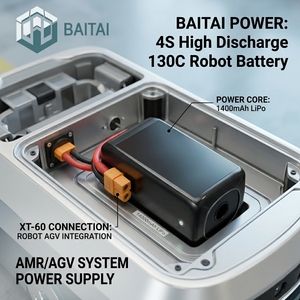
130C 1400mAh 4S High Discharge LiPo Battery for Service Robot AGV and Autonomous Mobile Robot Power System
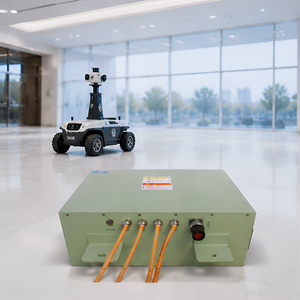
72V 60Ah LiFePO4 AMR Mobile Robot Battery Pack for Autonomous Robot System High Discharge Smart BMS Custom OEM ODM Wholesale
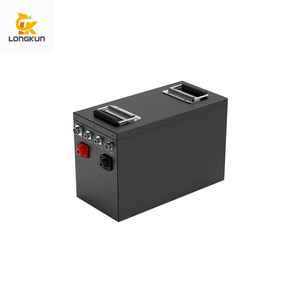
Longkun 24V 30Ah Lithium Ion Robot Battery Pack with BMS Rechargeable Li-ion Battery for AGV AMR Mobile Robots
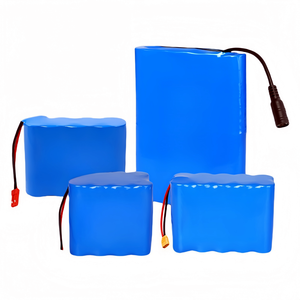
OEM Li-ion Battery Pack 3.7V 7.4V 11.1V 14.8V 18650 32650 26650 Lithium Ion Battery Pack for Autonomous Floor-Cleaning AMR Robot
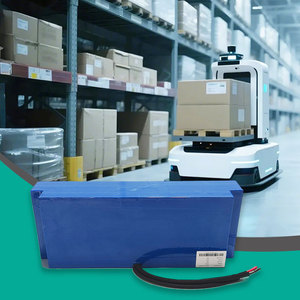
Customized Rechargeable LTO Agv Battery Pack 9Ah Autonomous Mobile Robot Agv Battery
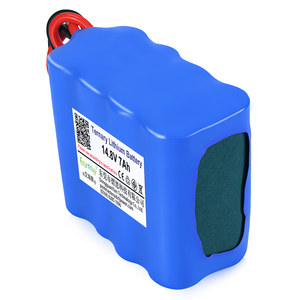
Custom Lithium Battery 14.8V 7Ah NMC 4S2P High Capacity for Autonomous Mobile Robot Electric Wheelchair Lawn Mower
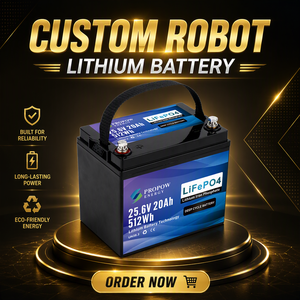
Custom Robot Lithium Battery 12V 24V 20Ah Lithium Battery for Robot, Rechargeable LiFePO4 Battery Pack for AGV AMR Mobile Robots
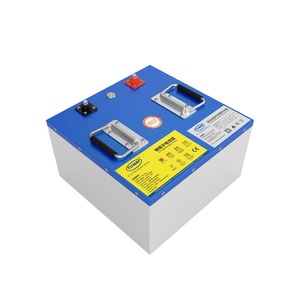
24V LiFePO4 Battery Pack 50Ah 60Ah 80Ah 100Ah with BMS 1500 Cycles -20C~60C for AGV AMR Robot Mobile Platform
Smart Grid Energy Storage Systems (ESS): Technical Architecture & International OEM Sourcing Guide
An authoritative analysis on cell chemistry selection, AI-integrated BMS protocols, grid compliance, and commercial procurement strategies for energy storage exporters.
The global transition toward decentralized renewable energy microgrids and localized load balancing has accelerated the demand for premier Custom OEM Smart Grid Energy Storage Systems. As electrical grids worldwide face unprecedented stress from variable solar and wind generation, commercial and industrial (C&I) facilities, alongside utility developers, are deploying modular battery storage solutions to stabilize local voltage, perform peak shaving, and guarantee uninterrupted backup power. Selecting an qualified OEM/ODM exporter who maintains strict ISO 9001 quality controls, deep electrochemical engineering experience, and full regulatory compliance is paramount for project bankability.
1. The Evolution of Smart Grid Energy Storage System (BESS) Architecture
Modern Smart Grid Battery Energy Storage Systems (BESS) represent far more than static banks of electrochemical cells. They are sophisticated, dynamic power electronics ecosystems capable of millisecond-level response times to frequency fluctuations on the grid. A high-efficiency BESS seamlessly integrates three fundamental architectural pillars:
Core Battery Cell Modules & Pack Assemblies
Formulated utilizing advanced Lithium Iron Phosphate (LiFePO4), Lithium Titanate Oxide (LTO), or Nickel Manganese Cobalt (NMC) chemistries designed for high volumetric energy density, thermal safety, and extended cycle endurance spanning up to 6,000+ deep discharge cycles.
Smart Battery Management System (BMS) & Telemetry
Integrated multi-tier BMS architectures featuring active cell balancing, precise State of Charge (SoC) and State of Health (SoH) calculation algorithms, real-time thermal sensing, and dual-redundant circuit protection against over-current, over-voltage, and short circuits.
Smart Grid Interoperability & Communication Protocols
Industrial-grade network connectivity incorporating CANbus, Modbus RTU/TCP, DNP3, and IEC 61850 protocol stacks to allow seamless plug-and-play integration with hybrid Power Conversion Systems (PCS) and central Energy Management Systems (EMS).
In grid-connected environments, operational efficiency hinges upon minimizing round-trip losses (RTE). Premier OEM exporters leverage ultra-low internal resistance busbars, automated laser-welded cell interconnects, and dynamic thermal management systems (liquid cooling or direct-expansion refrigeration) to ensure optimal operational temperatures between 20°C and 25°C, yielding system-level efficiency ratings exceeding 92%.
2. Electrochemical Comparison: LiFePO4 vs. NMC vs. LTO in OEM Grid Applications
Selecting the optimal battery cell chemistry is a crucial decision for OEM equipment integrators, procurement managers, and utility project managers. Each chemical composition delivers specific performance tradeoffs concerning cycle life, thermal runaway resistance, operational temperature thresholds, and specific energy density.
| Electrochemical Parameter | Lithium Iron Phosphate (LiFePO4) | Nickel Manganese Cobalt (NMC) | Lithium Titanate Oxide (LTO) |
|---|---|---|---|
| Nominal Cell Voltage | 3.2V - 3.3V | 3.6V - 3.7V | 2.3V - 2.4V |
| Gravimetric Energy Density | 140 - 180 Wh/kg | 200 - 260 Wh/kg | 70 - 110 Wh/kg |
| Cycle Endurance (80% DoD) | 4,000 - 6,000+ Cycles | 1,500 - 2,500 Cycles | 15,000 - 25,000+ Cycles |
| Thermal Runaway Onset | Ultra-Safe (~270°C) | Moderate (~210°C) | Extremely Safe (>300°C) |
| Operating Temp Range | -20°C to 60°C | -20°C to 55°C | -40°C to 65°C |
| Primary OEM Application Target | Stationary C&I ESS, Microgrids, Heavy AGV/AMR Platforms | Weight-Sensitive Robotics, Compact Mobility, Portable Power Packs | Ultra-Fast Charge AGVs, Extreme Cold Microgrids, Frequency Regulation |
For standard stationary grid-tied storage and autonomous mobile robotics (AGVs/AMRs), LiFePO4 has emerged as the definitive global benchmark due to its structural crystal lattice stability, intrinsic thermal safety, and superior cycle life-to-cost ratio. However, for specialized industrial applications operating under harsh freezing conditions or requiring sub-10-minute ultrafast charging, LTO custom battery packs offer unparalleled operational uptime.
3. Future Procurement & Emerging Technological Trends in Smart Grid ESS
As international energy policies push toward net-zero targets and microgrid resilience, procurement directors and B2B buyers must evaluate technological developments that will dictate market competitiveness over the next decade:
A. Cloud-Native BMS with Predictive AI Diagnostics
Legacy battery management relied on simple voltage thresholds. Next-generation smart grid energy storage exporters are integrating edge-computing microcontrollers that stream real-time operational metrics to cloud platforms. AI models analyze micro-variations in internal impedance and cell temperature profiles to predict potential cell degradation or insulation breakdown weeks before a critical system fault occurs.
B. Solid-State and Semi-Solid State Integration
While full solid-state commercial batteries are undergoing rapid development, semi-solid state electrolytes are already entering custom OEM prototyping. These cells offer energy densities approaching 350 Wh/kg while eliminating flammable liquid electrolytes—dramatically simplifying fire suppression requirements in high-density urban energy storage installations.
C. Dynamic Vehicle-to-Grid (V2G) and Autonomous Fleet Balancing
Industrial Autonomous Mobile Robots (AMRs) and Automated Guided Vehicles (AGVs) operating in automated distribution centers are no longer viewed merely as material handling assets. Equipping AMR fleets with bidirectional smart BMS units enables warehouse operators to utilize idle robot batteries as a distributed energy storage resource (DER) during peak utility pricing hours.
4. Critical Engineering Considerations for International OEM Export Orders
Exporting high-capacity lithium energy storage systems across international borders requires stringent adherence to international transport safety and grid connection codes. When selecting an OEM/ODM manufacturing partner, buyers must verify compliance across several critical vectors:
- UN 38.3 & DOT Transport Certification: All lithium battery assemblies must pass rigorous altitude simulation, thermal shock, vibration, impact, external short-circuit, and forced discharge testing to enable safe ocean and air freight logistics.
- Grid Interoperability (IEEE 1547 / UL 1741 SA): Inverters and Smart BMS interfaces integrated into exported energy storage cabinets must comply with regional grid interconnection requirements, supporting advanced grid-forming and grid-following features.
- Structural & Ingress Protection (IP65 / NEMA 4X): Outdoor commercial battery cabinets must withstand extreme weather, humidity, and salt spray. Heavy-gauge galvanized steel enclosures with powder coating prevent environmental degradation.
- Layered Thermal Runaway Suppression: Tier-1 export systems utilize multi-stage fire mitigation, including cell-level aerogel thermal insulation barriers, automated aerosol fire suppression units, and gas detection sensors (CO and H2) tied directly to emergency shutdown contactors.
Partner with a Proven USA Engineering & Assembly Exporter
From custom low-voltage AMR battery packs to containerized multi-megawatt smart grid energy storage solutions, Cell-Con delivers world-class engineering precision, ISO 9001 certified manufacturing, and global export support.
Talk to an OEM Battery Engineer5. Enterprise Advantages: Cell-Con’s 40+ Years of Manufacturing Leadership
Since 1983, Cell-Con, Inc. has served as a trusted single-source engineering and assembly partner for Original Equipment Manufacturers (OEMs) globally. Headquartered in Bedford, Pennsylvania, our team provides full lifecycle capabilities—from initial chemistry trade studies and prototype CAD modeling to automated mass production and international export compliance.
Custom Smart BMS Development
In-house electrical hardware and firmware design tailored precisely to your application’s communication requirements (CANopen, J1939, Modbus, Bluetooth LE telemetry).
Rigorous ISO 9001 Quality Control
100% automated end-of-line testing, including capacity grading, internal resistance checks, high-potential insulation verification, and thermal imaging validation.
Turnkey Export Supply Chain
Comprehensive logistical management, export documentation, dangerous goods handling, and regulatory agency approvals (UL, CE, IEC, UN 38.3).
Whether your application requires high-discharge LiPo battery modules for AGVs, long-duration LiFePO4 storage packs for telecom towers, or custom large-format battery enclosures for grid stabilization, Cell-Con delivers engineered excellence designed to lower total cost of ownership (TCO) while maximizing system uptime.
Custom OEM Smart Grid Energy Storage FAQ
Answers to common technical, logistical, and manufacturing inquiries from international B2B buyers and project engineers.
What minimum order quantities (MOQs) apply for custom OEM battery packs?
We work flexibly with global OEM partners. For fully custom engineered smart battery packs involving custom tooling and proprietary BMS development, prototype quantities (5 to 10 units) are typically supplied during evaluation, followed by production minimums structured around specific project scope and cell volume requirements.
How does your Smart BMS interface with our existing Power Electronics or EMS?
Our Smart BMS platforms support standard industrial protocols including CANbus (CANopen, J1939), Modbus RTU/TCP, RS485, and Ethernet. We provide customized communication memory maps to ensure your central energy management controller or inverter seamlessly reads real-time parameters such as SOC, SOH, cell voltages, temperature, and fault flags.
What safety certifications can you provide for international export?
We engineer battery packs to meet international regulatory standards including UN 38.3 (transport safety), UL 1642 / UL 1973 (stationary storage), UL 2580 (EV/AGV standards), IEC 62619, CE, and RoHS compliance. Full UN 38.3 test summary reports are provided with every export shipment.
How do you guarantee long cycle life in extreme temperature environments?
Our engineering team integrates cell selection from Tier-1 manufacturers with specialized thermal pad insulation, aluminum cold plates, or integrated internal PTC heating elements. Combined with active BMS balancing that prevents individual cell overcharging, our packs maintain 80%+ retained capacity even after 4,000–6,000 deep cycles.
Can you provide custom mechanical enclosures for specialized dimensions?
Yes. We offer turnkey mechanical design services including custom extruded aluminum, sheet metal enclosures with IP65/IP67 ingress ratings, or durable molded ABS plastic housings designed to withstand high shock, vibration, and outdoor environmental conditions.
What is the typical engineering lead time from initial inquiry to prototype delivery?
Standard design review and specification finalization takes 1 to 2 weeks. Custom BMS hardware and enclosure prototyping typically requires 4 to 6 weeks. Fast-track prototyping options are available for urgent OEM development schedules.
Accelerate Your Smart Grid & Battery Storage Project
Contact our engineering leadership team to discuss custom OEM battery specifications, request technical drawings, or request project cost estimates.