Technical Articles & Insights
Battery Engineering Blog
Discover expert perspectives, custom battery design guides, charging solutions, and industry updates from USA engineers.
Industrial Smart Battery Packs & Integrated Charging Solutions
Explore our certified, ultra-reliable energy storage systems and matching OEM on-board charger compatibility matrices designed for autonomous robotics, AGV platforms, and heavy-duty industrial mobile equipment.
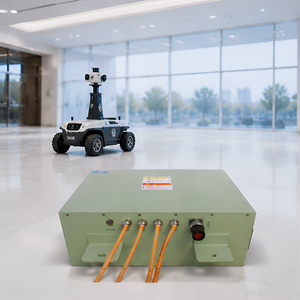
72V 60Ah LiFePO4 AMR Mobile Robot Battery Pack with Smart BMS Custom OEM
Get Catalog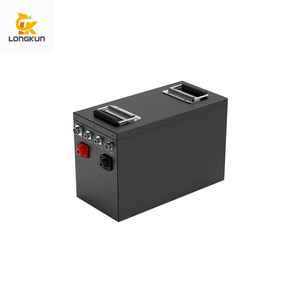
Longkun 24V 30Ah Lithium Ion Robot Battery Pack with Smart BMS for AGV AMR
Get Catalog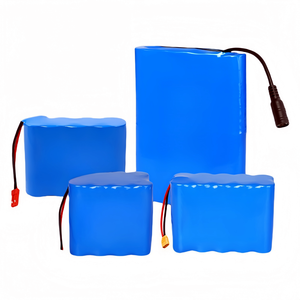
OEM Modular Lithium Ion Battery Pack 3.7V-14.8V for Autonomous Floor-Cleaning AMR
Get Catalog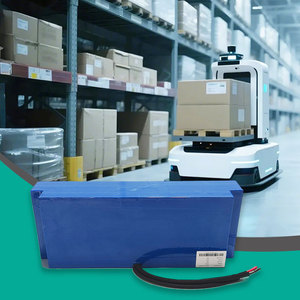
Customized Ultra-Fast Charging LTO AGV Battery Pack 9Ah Autonomous Robot Module
Get Catalog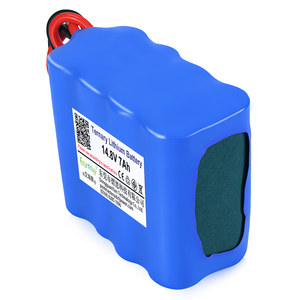
Custom Lithium Battery 14.8V 7Ah NMC High Capacity for Mobile Robot & Lawn Mower
Get Catalog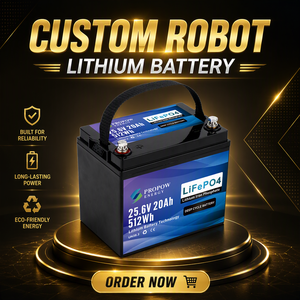
Custom Robot LiFePO4 Battery 12V 24V 20Ah Pack for Heavy-Duty Industrial AGV AMR
Get Catalog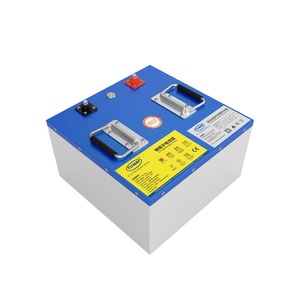
24V LiFePO4 Battery Pack 50Ah-100Ah with BMS (-20°C~60°C Wide Temp Operational)
Get Catalog>96.5%
Peak Charging Efficiency
IP67 / IP68
Ingress Protection Standard
CAN 2.0B
Isolated Bus Communication
SiC FETs
Silicon Carbide Semiconductor
White Paper: Engineering Next-Generation OEM On-Board EV Battery Chargers (OBC)
The rapid transition toward industrial automation, electrified mobility platforms, Autonomous Mobile Robots (AMRs), Automated Guided Vehicles (AGVs), and light commercial Electric Vehicles (EVs) has radically altered power electronics requirements. As a premier global Custom OEM On Board EV Battery Chargers Manufacturer & Exporter, our engineering division designs and manufactures high-density power conversion systems engineered for rigorous operating environments.
Modern On-Board Chargers (OBC) are no longer passive power converters; they function as intelligent neural hubs within the vehicle's electrical framework. By converting AC grid power (single-phase 110V/220V or three-phase 380V/480V) into precise DC voltage to recharge high-voltage battery chemistry (LiFePO4, NMC, LTO), on-board chargers must guarantee thermal stability, electromagnetic compatibility (EMC), high power factor correction (PFC), and seamless Battery Management System (BMS) handshakes.
1. Advanced Circuit Topology: Silicon Carbide (SiC) & Resonant LLC Architecture
Traditional silicon (Si) MOSFET-based chargers face distinct physical barriers regarding switching frequency, switching losses, and heat dissipation. Our custom OEM on-board EV chargers leverage wide bandgap (WBG) Silicon Carbide (SiC) Power MOSFETs within an isolated LLC or CLLC resonant converter topology.
- Reduced Switching Losses: SiC devices exhibit up to 75% lower switching losses compared to legacy silicon IGBTs, permitting high switching frequencies from 100 kHz to over 300 kHz.
- Volumetric Power Density: Higher switching frequencies dramatically decrease the physical footprint and weight of passive inductive components (transformers and chokes), yielding power densities exceeding 3.0 kW/L.
- Active Power Factor Correction (PFC): Integrated totem-pole interleaved PFC circuits achieve a power factor greater than 0.99 with Total Harmonic Distortion (THD) maintained below 3%, fully conforming to IEEE 519 and IEC 61000-3-2 standards.
Ultra-High Efficiency
SiC MOSFET topology guarantees system operating efficiency exceeding 96.5%, drastically cutting internal thermal load and operational energy expenses.
Ruggedized IP67 Enclosure
Hermetically sealed die-cast aluminum alloy chassis designed to resist intense shock, constant industrial vibration, moisture, and chemical exposure.
Isolated CAN Bus Protocol
Fully compliant with CAN 2.0B, CANopen, and SAE J1939 protocols for dynamic voltage/current handshake and real-time fault telemetry logging.
2. Thermal Engineering & Environmental Protection (IP67 / IP68)
Industrial vehicles operating in logistics warehouses, mining sites, agricultural fields, and seaport facilities encounter harsh environmental stresses. Our OEM charging solutions utilize fully potted silicone resin encasements coupled with heavy-duty structural die-cast aluminum housings.
Thermal dissipation pathways are mathematically modeled via Computational Fluid Dynamics (CFD) to support both passive natural convection cooling, forced air cooling, and liquid cooling cold-plate integration for high-kilowatt platforms (6.6kW to 22kW).
Engineering Parameter Comparison Matrix
To assist OEM design engineers in selecting the optimal charger configuration, the following matrix outlines standardized specifications across our modular product lines:
| Performance Metrics | Light Robotics / AGV Series | Industrial AMR / Equipment Series | Heavy EV / Logistics Series |
|---|---|---|---|
| Nominal Output Voltage Range | 12V, 24V, 36V, 48V DC | 48V, 72V, 96V DC | 100V – 750V DC (High Voltage) |
| Max Power Output | 300W – 1.5 kW | 1.8 kW – 3.3 kW | 6.6 kW – 22 kW (Parallelable) |
| Peak Efficiency | ≥ 95.0% | ≥ 96.2% | ≥ 97.0% (SiC Architecture) |
| AC Input Voltage | 85~264 VAC (Universal) | 90~264 VAC Single Phase | 380~480 VAC 3-Phase + Neutral |
| Communication Interfaces | CAN 2.0B / RS485 / UART | Galvanic Isolated CANopen | SAE J1939 / CANopen / Ethernet |
| Ingress Protection Rating | IP65 / IP67 | IP67 Sealed | IP67 / IP68 Liquid Cooled |
| Supported Battery Chemistries | LiFePO4, NMC, LiPo, LTO | LiFePO4, NMC, LTO, SLA | Solid-State, LiFePO4, High-NMC |
| Regulatory Standards | UL 2202, CE, FCC Part 15 Class B | UL 2202, IEC 61851, ISO 26262 | IATF 16949, CE, UL, UN 38.3 Compliant |
Strategic OEM Procurement & Technology Future Trends
Procurement directors and system integration engineers must evaluate technical roadmap compatibility when selecting an OEM battery charging manufacturing partner. Over the next decade, several key technological shifts will redefine the EV charging ecosystem:
1. High-Voltage Architecture Transition (48V to 72V, 96V, and 400V/800V)
While legacy industrial equipment operated predominantly on 24V or 48V bus architectures, modern automated fleets require higher voltage systems (72V, 96V, and up to 800V for heavy duty transport). Higher voltages minimize resistive line losses ($I^2R$), drastically reduce cabling copper mass, and facilitate accelerated charging rates. Our OEM charging platforms are engineered with broad output voltage windows to natively accommodate high-voltage battery configurations without requiring redesigns.
2. Bi-Directional Charging Capabilities (V2G / V2X Integration)
Future-proof industrial procurement mandates the inclusion of bi-directional power conversion. Vehicle-to-Grid (V2G) and Vehicle-to-Everything (V2X) functionality allows fleet-deployed mobile platforms and AGVs to act as distributed energy storage assets. When idle, mobile units can backfeed excess energy into localized microgrids or warehouse energy management systems (EMS), offsetting peak demand tariffs.
3. Autonomous Wireless Charging & Contact-Based Hybrid Charging
The elimination of manual charging interventions is paramount for true warehouse and factory automation. Modern on-board chargers are increasingly integrated with dual-mode inputs: supporting traditional AC plug-in grid connections alongside automated conductive floor plates or near-field inductive wireless charging receiver modules. Our firmware supports auto-sensing protocol switching for immediate charging deployment upon docking.
4. Cloud Diagnostic Telemetry & Predictive Thermal Maintenance
Industry 4.0 integration demands actionable operational data. Our custom chargers embed onboard flash memory to log charging cycles, ambient temperatures, ripple voltages, and state-of-health (SoH) diagnostics. Transmitted via CAN bus to IoT telemetry gateways, fleet operators can predict component fatigue, optimize battery lifecycle performance, and minimize unexpected equipment downtime.
Enterprise Manufacturing Advantages & E-E-A-T Capabilities
Selecting an OEM/ODM charging manufacturing partner requires assessing engineering depth, quality control rigorousness, and global supply chain resilience. As a fully integrated manufacturer and exporter, Cell-Con and our global production facilities enforce stringent quality protocols across all power system builds.
Full Vertical Integration
From in-house SMT PCB assembly, high-frequency transformer winding, and aluminum CNC machining to automated potting and final burn-in testing, we retain complete quality ownership.
Strict Quality Management
Operated under IATF 16949 automotive and ISO 9001:2015 quality management standards. Every unit undergoes 100% full-load thermal burn-in testing prior to export shipping.
Custom Hardware & Firmware Engineering
Our dedicated R&D engineering team offers bespoke hardware customization (custom physical form factors, tailored mounting brackets) and custom CAN bus protocol programming within 4 to 6 weeks.
Global Compliance & Certification Support
We provide full engineering documentation, EMC test reports, and turnkey support to assist your equipment in obtaining UL, CE, FCC, PSE, and KC safety certifications.
Frequently Asked Questions (FAQ) for OEM Buyers & Procurement Engineers
Below are technical answers to common queries raised during product specification evaluations for custom on-board chargers and battery systems:
What customization parameters can your engineering team modify for OEM applications?
We offer comprehensive hardware and software modifications. Hardware customizations include mechanical dimensions, IP ratings (IP65/IP67/IP68), liquid-cooling port placement, custom wiring harnesses, pinouts, and custom aluminum enclosure colors. Software/firmware customizations include dynamic charging profiles (CC/CV/CP, pulse charging), proprietary CAN bus protocol mappings, auto-wakeup thresholds, LED indicator behaviors, and diagnostic fault thresholds.
How do your on-board chargers interface with custom Battery Management Systems (BMS)?
Our chargers communicate directly via galvanically isolated CAN 2.0B interfaces using CANopen, SAE J1939, or custom message structures. The charger acts as a intelligent slave device, adjusting output voltage and current in real time based on BMS commands. If communication is lost, internal safety watchdog timers immediately shut down power output to prevent overcharging or thermal runaway.
What safety mechanisms are built into your high-voltage charger series?
Safety is built-in across multiple redundant hardware and software layers. Key protection systems include Input Over-Voltage/Under-Voltage Protection (OVP/UVP), Output Over-Current Protection (OCP), Short Circuit Protection (SCP), Reverse Polarity Protection, Over-Temperature Protection (OTP) with automatic thermal derating, Battery Temperature Monitoring via NTC, and high-voltage isolation breakdown resistance exceeding 2500V AC.
Why choose Silicon Carbide (SiC) over standard Silicon (Si) MOSFET chargers?
Silicon Carbide allows significantly higher switching frequencies with minimized thermal dissipation. This translates into a 30%-50% reduction in charger physical volume and mass, higher continuous efficiency (reaching over 96.5%), and reduced heat stress on adjacent vehicle components—critical for space-constrained AGVs, AMRs, and compact EVs.
What is the typical engineering sample lead time for custom OEM chargers?
Standard modified samples (custom voltage/current profiles on pre-existing tooling) are delivered within 2 to 3 weeks. Fully customized designs requiring structural mold tooling, bespoke PCB layouts, and specialized enclosure development are typically delivered for sample evaluation within 6 to 8 weeks.
Do your chargers support global grid input standards?
Yes. Our single-phase on-board chargers feature active wide-range universal AC inputs (85 VAC to 264 VAC, 45Hz–65Hz), allowing identical vehicles to operate seamlessly across North America, Europe, Asia, and Latin America. Three-phase industrial units support universal 380 VAC to 480 VAC input standards.
How do you ensure electromagnetic compatibility (EMC) in high-noise robotic environments?
Our chargers integrate multi-stage EMI filter networks, common-mode chokes, shielded magnetics, and isolated communication tranceivers. They are fully tested in certified anechoic chambers to comply with FCC Part 15 Class B, EN 55032 (CISPR32), and IEC 61000-4 immunity standards, preventing electrical noise interference with sensitive onboard LIDAR, radar, and sensor systems.
What certifications do your manufacturing facilities hold for global export?
Our manufacturing facilities are certified under ISO 9001:2015 and compliant with IATF 16949 automotive standards. Products are designed to comply with UL 2202, UL 1564, CE, IEC 61851, KC, PSE, and UN 38.3 transport standards for international export.
Accelerate Your OEM Project with Custom Battery & Charging Engineering
Partner directly with an industry-leading manufacturer. Contact our power system engineers today to request technical datasheets, CAD models, customized firmware configurations, or complete product catalogs.
Get Catalog