Technical Articles & Insights

Battery Engineering Blog

Discover expert perspectives, custom battery design guides, charging solutions, and industry updates from USA engineers.

Custom OEM Industrial Drone Battery Solutions Manufacturers & Supplier

Next-Generation Solid-State, High-Voltage LiHV & Anode-Free Energy Systems for Mission-Critical UAV Operations

40+
Years Engineering Heritage
500 Wh/kg
Peak Energy Density
1000+
LiCoO2 Cycle Life
ISO 9001
Certified OEM Standard

High-Performance Industrial Drone Power Solutions

Engineered for maximum flight endurance, extreme temperature resilience, and rapid discharge rates across commercial, agricultural, and defense applications.

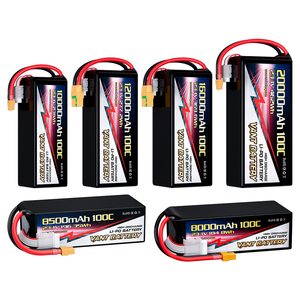
100C High Discharge VANT Drone Battery LiHV 6S FPV LiPo Battery Pack

VANT Drone Battery LiHV 6S FPV LiPo Battery 23.1V 8500-22000mAh 100C

  • Nominal Voltage: 23.1V (LiHV)
  • Capacity Range: 8500 - 22000mAh
  • Continuous Rating: 100C Peak Burst
  • Primary Application: Industrial FPV & Cinema UAVs
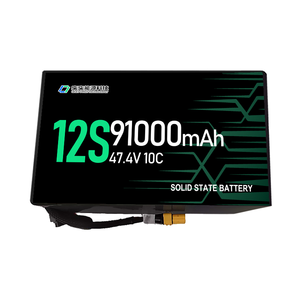
Solid-State Tech Industrial Drone Solid-State Battery Pack

Industrial Drone Solid-State Battery 91000mAh 120000mAh Stock

  • Voltage Support: 6S, 12S, 14S, 18S, 24S
  • Ultra Capacity: Up to 120,000mAh
  • Energy Density: > 380 Wh/kg
  • Primary Application: Long-Range Surveying & Mapping
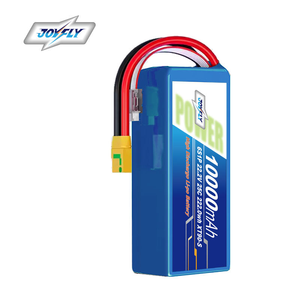
1000+ Cycles Professional Grade 6S 22.2V LiCoO2 Drone Battery

Professional Grade 6S 22.2V 10000mAh LiCoO2 Drone Battery

  • Chemistry: Lithium Cobalt Oxide (LiCoO2)
  • Cycle Durability: 1,000 Cycles @ 80% DoD
  • Customization: Custom Smart BMS & Wiring
  • Primary Application: Commercial Inspection UAVs
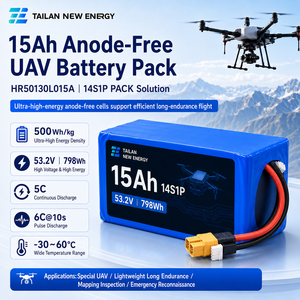
500Wh/kg Anode-Free Anode-free High Energy Industrial Drone Battery Pack

Long Endurance 500Wh/kg Anode-Free Battery Pack 12S-16S 15Ah

  • Gravimetric Density: 500 Wh/kg Benchmark
  • Configuration: 12S / 14S / 16S Options
  • Weight Savings: -42% vs Standard LiPo
  • Primary Application: Extended Recon & Military UAV
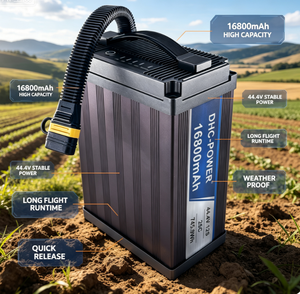
Agri-Spraying Heavy Payload Smart LiPo Battery Pack for Agricultural Spraying Drones

44.4V 12S 16800mAh 25C Smart LiPo Battery Pack for Agri Drones

  • Nominal Voltage: 44.4V (12S Pack)
  • Smart BMS Features: CANbus & Battery Health SoC
  • Housing Protection: Anti-Corrosion IP65
  • Primary Application: Crop Protection & Heavy Cargo
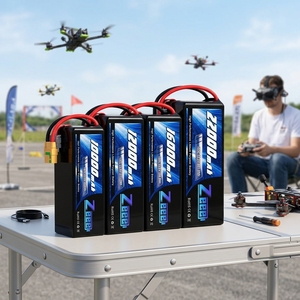
Heavy-Lift LiHV Zeee FPV Drone Battery 6S 22.8V LiHV Battery

Zeee FPV Drone Battery 6S 22.8V 10000-22000mAh 100C LiHV

  • Cut-off Voltage: 4.35V Per Cell
  • Discharge Capacity: 100C High Output
  • Internal Resistance: < 1.2 mΩ Per Cell
  • Primary Application: Heavy Payload FPV Aerial Logistics
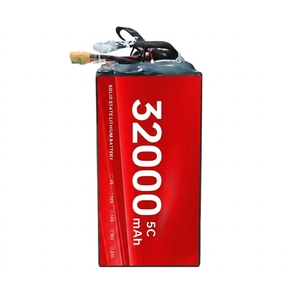
Fixed-Wing High Volts 32000mAh Solid State HV Lithium Ion Battery Pack

32000mAh Solid State HV 6S-24S Lithium Ion Battery Pack

  • Module Scalability: 6S up to 24S Modular
  • Cell Architecture: Semi-Solid Electrolyte
  • Thermal Envelope: -20°C to 60°C Flight Range
  • Primary Application: Fixed-Wing & eVTOL Operations
Sodium-Ion Innovation Sodium Ion Custom Drone Battery Pack

OEM/ODM Custom Semi-Solid Sodium-Ion Drone Battery 6S-24S

  • Chemistry Core: Sodium-Ion (Na-Ion) Cell
  • Sub-Zero Flight: Operates at -40°C
  • Safety Index: Zero Thermal Runaway Risk
  • Primary Application: Sub-Zero Mining & Arctic Inspection

Next-Generation UAV Power Systems Architecture & Technology Evolution

An in-depth technical analysis on high-density electrochemical breakthroughs, smart telemetry integration, and the transition toward next-generation unmanned aerial vehicle energy systems.

Solid-State & Semi-Solid Electrolyte Migration

The commercial UAV industry is undergoing a structural transition from liquid organic electrolytes to polymer and ceramic solid-state materials. Solid-state drone batteries eliminate volatile liquid separators, achieving gravimetric energy densities exceeding 380–450 Wh/kg while providing intrinsic safety against mechanical punctures and thermal runaway.

Key Benefit: Extends operational flight times by up to 45% compared to conventional LiPo packs while eliminating explosion risks during heavy-payload missions.

Anode-Free Lithium Metal Chemistries

By stripping out host graphite or silicon anode structures and plating lithium directly onto copper current collectors, anode-free battery packs set a milestone peak energy density of 500 Wh/kg. This architecture significantly shrinks battery volume and total takeoff mass (MTOW), opening up long-range capabilities for ISR defense systems and autonomous cargo delivery.

Engineering Breakthrough: Delivers high gravimetric density for specialized long-endurance missions, maximizing lift capacity for complex sensors and optics.

High-Voltage LiHV (4.35V - 4.45V) Optimization

Lithium High-Voltage (LiHV) chemistry elevates the upper charge cut-off voltage per cell from standard 4.20V to 4.35V or 4.45V. This elevated potential delivers higher instantaneous power output and lower thermal losses under high continuous current discharges (up to 100C continuous), tailored specifically for FPV aerial cinematography and heavy-lift agricultural quadcopters.

Operational Impact: Provides higher operating voltage platforms, mitigating voltage sag during aggressive thrust maneuvers and rapid altitude climbs.

Sodium-Ion (Na-Ion) Sub-Zero Extreme Flight

Where conventional lithium batteries suffer severe capacity fade and drop-off below -10°C, custom Sodium-Ion chemistry retains up to 85% of its rated capacity down to -40°C. Sodium-ion power systems offer lower bill-of-materials raw costs and thermal safety, unlocking year-round UAV operation in extreme arctic and high-altitude mining environments.

Climatic Resilience: Eliminates the requirement for heavy active internal heating elements when operating in cold climates, preserving net usable flight power.

Smart BMS Telemetry & Protocol Integration

Modern industrial UAV batteries function as intelligent network nodes. Custom Smart Battery Management Systems (BMS) integrate Texas Instruments SMBus, CANbus, or DroneCAN communication protocols, delivering real-time telemetry on cell voltage, State-of-Charge (SoC), State-of-Health (SoH), temperature profiles, and predictive cycle wear to flight controllers.

Fleet Telemetry: Enables automated safety return-to-home (RTH) routines and active cell balancing, ensuring maximum cycle lifespan across commercial fleets.

Enclosure & Thermal Management Innovation

Protecting lithium and solid-state cells against extreme vibrations and moisture requires advanced structural engineering. Custom carbon-fiber and poly-carbonate enclosures featuring IP67 ingress sealing, combined with phase-change material (PCM) heat dissipation linings, ensure stable thermal operating temperatures under continuous peak discharges.

Ruggedized Reliability: Meets stringent MIL-STD-810H vibration, impact, and moisture protection metrics for heavy industrial field deployment.

Industrial Drone Cell Chemistries Comparison Matrix

Select the optimal battery architecture based on key operational parameters including density, lifecycle, C-rate, and ambient temperature performance.

Chemistry System Energy Density (Wh/kg) Cycle Life (80% DoD) Continuous C-Rate Operating Temp Range Key OEM Application Focus
Solid-State / Semi-Solid 380 - 450 Wh/kg 800 - 1,200 Cycles 5C - 15C Continuous -20°C to +60°C Long-range mapping, surveillance, VTOL drones
Anode-Free Lithium Metal 450 - 500 Wh/kg 300 - 500 Cycles 2C - 5C Continuous 0°C to +45°C Extreme endurance payloads, high-altitude ISR
High-Voltage LiHV (4.35V) 260 - 300 Wh/kg 500 - 800 Cycles 50C - 100C Peak -10°C to +50°C Heavy-lift logistics, FPV cinema, rapid maneuvers
Lithium Cobalt Oxide (LiCoO2) 240 - 280 Wh/kg 1,000+ Cycles 15C - 30C Continuous -10°C to +55°C Commercial inspection, high-use fleet operations
Sodium-Ion (Na-Ion) 160 - 200 Wh/kg 2,000+ Cycles 10C - 25C Continuous -40°C to +65°C Sub-zero mining, extreme arctic, budget-conscious fleets

Future B2B Procurement & Sourcing Trends for Industrial Drones (2025–2030)

Strategic guidelines for OEM program directors, supply chain leads, and drone system engineers navigating global battery sourcing complexities.

1. Shift to Total Cost of Ownership (TCO) & Flight-Minute Economics

Forward-thinking UAV procurement teams are moving away from initial cell acquisition costs toward Cost-per-Flight-Minute (CFM) and lifetime operational value. High-cycle LiCoO2 and solid-state systems significantly decrease battery replacement cycles, reducing maintenance downtime and yielding lower long-term program expenses.

2. Modular Hot-Swapping Standards for Autonomous DIB Stations

With the expansion of automated Drone-in-a-Box (DIB) infrastructure for pipeline and perimeter inspection, procurement demands modular battery configurations with blind-mate connectors, auto-latching mechanisms, and unified CANbus handshakes for robotic swapping arms.

3. Supply Chain Traceability & Regulatory Compliance

Navigating defense and international markets requires adherence to regulatory compliance frameworks including UN 38.3 transport certification, UL 2580/UL 1642 safety standards, IEC 62133, and NDAA supply chain traceability. Sourcing partners must maintain full lot-traceability for battery raw materials.

4. Vertically Integrated OEM Custom Design Partnerships

Off-the-shelf packs frequently introduce compromises in weight distribution, thermal efficiency, and voltage matching. Modern drone manufacturers partner directly with vertically integrated battery custom pack assemblers to engineer bespoke enclosures, custom PCBA smart BMS units, and tailored wire harnesses.

Why Partner with Our Custom Battery Engineering Hub?

Combining 40+ years of technical heritage with advanced automated pack assembly, testing facilities, and strict quality control standards.

40+ Years of Manufacturing Heritage

Operating since 1983, our engineering foundation brings extensive experience in custom smart battery development across military, aerospace, robotics, and medical markets. We transform technical challenges into reliable power products.

ISO 9001 Certified Quality Rigor

Every cell batch undergoes internal resistance sorting, thermal testing, ultrasonic wire bonding, and 100% automated end-of-line cycle screening. Our US-engineered quality control protocols ensure reliable field performance.

Complete Turnkey Engineering Workflow

From initial thermal and mechanical CAD modeling to rapid prototyping, PCB smart BMS firmware design, mold tooling, and international safety certifications—we manage every stage of your custom battery program.

Frequently Asked Questions for Custom Industrial Drone Batteries

Clear, direct answers regarding custom battery parameters, BMS integration, testing standards, and order logistics.

What voltage configurations (S-rating) can you manufacture for custom UAV platforms?
We engineer custom battery packs spanning 6S (22.2V / 23.1V LiHV) up to 24S (88.8V / 100.8V peak) architectures. Our team configures series/parallel cell grouping to match your electronic speed controller (ESC) and motor torque requirements precisely.
How does a Solid-State battery differ from a standard LiPo pack in flight operations?
Solid-State drone batteries replace liquid organic electrolytes with solid conductive materials. This modification increases gravimetric energy density up to 380–450 Wh/kg (compared to ~240 Wh/kg in standard LiPo), yielding extended flight times. Furthermore, solid-state cells eliminate fire and explosion risks caused by punctures or heavy drop impacts.
Can your Smart BMS communicate directly with standard flight controllers like Pixhawk or Cube?
Yes. Our engineering team integrates smart BMS boards supporting DroneCAN, CANbus, SMBus, I2C, and UART communications. The BMS outputs real-time cell telemetry—including individual cell voltages, current drain, temperature, accurate SoC percentage, and remaining flight time—directly to PX4, ArduPilot, and proprietary flight control software.
What certification requirements are necessary for global shipping of custom drone batteries?
All air and ocean transport of commercial lithium packs requires UN 38.3 certification (covering altitude simulation, thermal test, vibration, shock, external short circuit, and impact). Additionally, we design to comply with UL 2580, UL 1642, IEC 62133, and CE regulations depending on target destination markets.
What options are available for low-temperature flight operations down to sub-zero levels?
For cold-weather missions, we provide two primary approaches: (1) Integrating custom internal PTC self-heating film elements managed by the smart BMS to preheat cells prior to takeoff, or (2) Utilizing Sodium-Ion (Na-Ion) cell chemistries, which naturally retain ~85% usable capacity at sub-zero temperatures as low as -40°C without active heating power draw.
What are the Minimum Order Quantities (MOQ) and sample lead times for OEM projects?
We support prototype and low-rate initial production (LRIP) programs starting from low MOQs (typically 10 to 50 custom packs). Prototype sample development generally ranges from 3 to 5 weeks depending on custom casing and BMS requirements, followed by scaled mass production upon design approval.
How do you ensure proper IP-rated water and dust sealing for agricultural spraying drones?
For severe environment deployments like agricultural chemical spraying or washdown operations, we build sealed enclosures using high-impact polycarbonate/ABS or aluminum alloys with liquid silicone gaskets and conformal-coated BMS circuit boards, achieving certified IP65 to IP67 ingress protection levels.
What thermal management features are integrated into high C-rate discharge battery packs?
For high-discharge applications (50C-100C), we utilize phase-change heat-sink materials (PCM), nickel-plated copper busbars to minimize internal resistance heating, aluminum heat-dissipating plates, and strategic air-flow channel spacing inside the pack to prevent thermal hot spots.
Ready to Upgrade Your UAV Flight Endurance & Performance?

Consult directly with our custom battery design team to receive detailed engineering drawings, electrical schematics, and a competitive OEM price quote.