Battery Engineering Blog
Discover expert perspectives, custom battery design guides, charging solutions, and industry updates from USA engineers.
Featured OEM Mobile Robot & Electric Mobility Battery Modules
High-discharge, long-cycle lithium battery packs integrated with intelligent BMS telematics designed for continuous duty industrial automated systems.
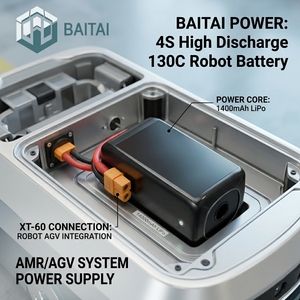
130C 1400mAh 4S High Discharge LiPo Battery for Service Robot AGV and Autonomous Mobile Robot Power System
Get a Quote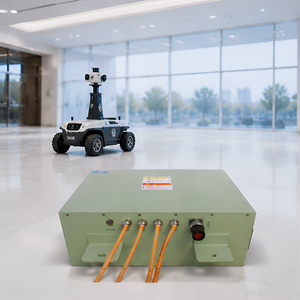
72V 60Ah LiFePO4 AMR Mobile Robot Battery Pack for Autonomous Robot System High Discharge Smart BMS Custom OEM ODM Wholesale
Get a Quote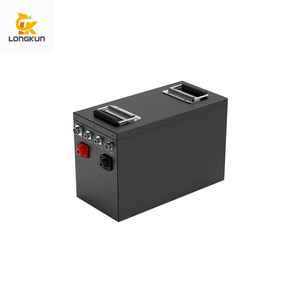
Longkun 24V 30Ah Lithium Ion Robot Battery Pack with BMS Rechargeable Li-ion Battery for AGV AMR Mobile Robots
Get a Quote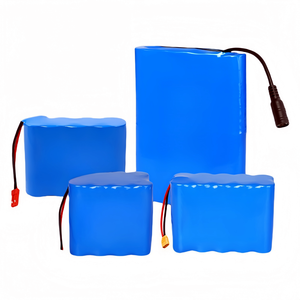
OEM Li-ion Battery Pack 3.7V 7.4V 11.1V 14.8V 18650 32650 26650 Lithium Ion Battery Pack for Autonomous Floor-Cleaning AMR Robot
Get a Quote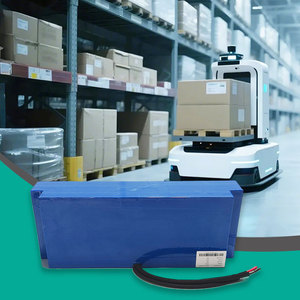
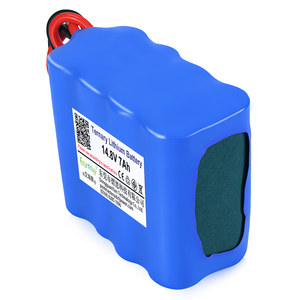
Custom Lithium Battery 14.8V 7Ah NMC 4S2P High Capacity for Autonomous Mobile Robot Electric Wheelchair Lawn Mower
Get a Quote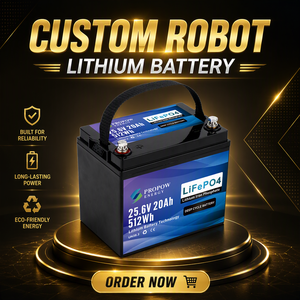
Custom Robot Lithium Battery 12V 24V 20Ah Lithium Battery for Robot, Rechargeable LiFePO4 Battery Pack for AGV AMR Mobile Robots
Get a Quote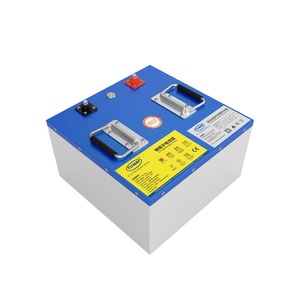
24V LiFePO4 Battery Pack 50Ah 60Ah 80Ah 100Ah with BMS 1500 Cycles -20C~60C for AGV AMR Robot Mobile Platform
Get a QuoteState of the Art in Electric Mobility Power: Custom OEM Battery Engineering for AGV & AMR Systems
The electrification of industrial automated material handling, service robotics, and autonomous mobile platforms requires an evolved approach to power storage engineering. As global OEMs transition away from heavy, low-efficiency legacy lead-acid chemistry, Custom OEM Electric Mobility Battery Modules have emerged as the foundational cornerstone of 24/7 uptime, fast opportunity charging, and intelligent fleet management.
In high-throughput logistics, autonomous floor cleaning, medical transport, and automated guided vehicle (AGV) applications, power system downtime directly degrades operational throughput. Modern OEM system architects demand specialized cell chemistry matching, active thermal balancing, smart Battery Management System (BMS) integration, and structural housing design that withstands rigorous vibration, thermal extremes, and rapid current pulses.
1. Technical Deep-Dive: Electrochemical Cell Chemistry Selection Matrix
Selecting the optimal electrochemical architecture depends directly on operational duty cycles, charge acceptance limits, ambient environment constraints, and total cost of ownership (TCO) goals. Below is a comparative engineering matrix detailing the primary chemistries deployed in electric mobility battery packs:
| Chemistry Vector | Lithium Iron Phosphate (LiFePO4) | Lithium Nickel Manganese Cobalt (NMC) | Lithium Titanate Oxide (LTO) | High-Discharge LiPo |
|---|---|---|---|---|
| Nominal Cell Voltage | 3.2 V | 3.6 V – 3.7 V | 2.3 V | 3.7 V – 3.85 V |
| Gravimetric Density | 140 – 170 Wh/kg | 200 – 260 Wh/kg | 70 – 110 Wh/kg | 180 – 230 Wh/kg |
| Cycle Life (80% DOD) | 3,500 – 6,000+ Cycles | 1,200 – 2,500 Cycles | 15,000 – 30,000+ Cycles | 500 – 1,000 Cycles |
| Continuous C-Rate | 1C – 3C Continuous | 1C – 5C Continuous | 6C – 10C Continuous | 50C – 130C Burst |
| Fast Charge Capability | 1C (60 min full charge) | 1C – 2C (30-45 min) | 10C (6 min 90% SOC) | 2C – 5C (15 min) |
| Thermal Stability | Extreme (Thermal Runaway >270°C) | Moderate (Thermal Runaway ~210°C) | Ultra-High (Inherently Safe) | Moderate (Requires Strict Voltage Cutoffs) |
| Primary Target Application | Heavy Industrial AGV/AMR Platforms | Compact Service Robots & Wheelchairs | Ultra-Fast Opportunity Charging AGVs | High Peak Pulse Drones & Grippers |
LiFePO4 (Lithium Iron Phosphate): Celebrated for its extraordinary thermal stability and 3,500+ cycle operational lifetime, LiFePO4 remains the preferred choice for heavy-duty material handling equipment, warehouse AGVs, and high-payload robot platforms where battery replacement frequency must be minimized.
LTO (Lithium Titanate Oxide): LTO eliminates solid-electrolyte interphase (SEI) film formation issues, permitting ultra-fast charging (up to 10C) in sub-zero operational environments (down to -30°C) without lithium plating risk. This chemistry idealizes automated 24/7 assembly lines utilizing automated dock opportunity charging.
High-Discharge LiPo & NMC Form Factors: For compact footprint autonomous mobility, such as stair-climbing robotics, surgical mobility units, or robotic arms, NMC and high-C LiPo offer maximum energy-to-weight ratios to conserve vehicular energy consumption during dynamic motion.
2. Intelligent BMS Telematics & Communication Protocols
A custom mobility module is incomplete without an integrated, industrial-grade Smart Battery Management System (BMS). Modern autonomous systems require active monitoring and real-time state reporting to prevent sudden vehicle stoppage on warehouse corridors.
CANbus / CANopen Integration
High-speed differential bus telemetry reporting State of Charge (SOC), State of Health (SOH), individual cell voltages, and thermal gradients directly to the vehicle control unit (VCU).
Active Dynamic Cell Balancing
Redistributes energy from higher-voltage cells to lower-voltage cells during both charge and discharge cycles, maximizing usable pack capacity and extending battery pack cycle life by up to 25%.
Multi-Tier Safety Protection
Hardware and firmware protection against over-voltage, under-voltage, over-current, short circuits, low-temperature charge inhibition, and dual-sensor thermal runaway isolation.
3. Global Procurement Trends in Electric Mobility Power Modules (2025–2030)
Procurement directors and engineering executives face evolving supply chain challenges and stringent regulatory frameworks. Key procurement trends shaping the industry include:
- Automated Wireless & Contactless Opportunity Charging: Transitioning from manual plug-in charging to autonomous floor-plate induction or brush contact pads, necessitating battery packs with instant high-current charge acceptance without thermal degradation.
- Standardized Modular Scalability: OEM system builders are requesting modular, stackable battery architectures (e.g., 24V or 48V building blocks) that can be connected in parallel or series to scale across variable vehicle chassis sizes.
- Comprehensive Certification Compliance: Stringent international customs and transportation standards demand pre-certified battery modules complying with UN 38.3, UL 2054, UL 2271, IEC 62133, and CE regulations prior to global export.
- Supply Chain Resiliency & Regional Manufacturing: Mitigating single-source risks by partnering with established manufacturers offering US/European engineering oversight paired with certified international export facilities.
4. Industry Procurement & Engineering FAQ
Essential engineering and procurement questions answered by senior battery architects:
Ready to Engineer Your Custom OEM Mobility Power Solution?
Connect directly with our senior application engineers to review your voltage, capacity, mechanical footprint, and certification requirements.