Battery Engineering Blog
Discover expert perspectives, custom battery design guides, charging solutions, and industry updates from USA engineers.
Featured Industrial & Robotics Battery Modules
High-discharge, long-cycle sodium-ion and custom lithium power solutions engineered for AGVs, AMRs, service robots, and heavy-duty industrial platforms.
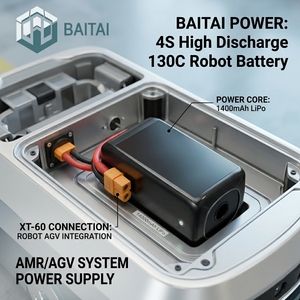
130C 1400mAh 4S High Discharge LiPo / Sodium-Ion Module for Service Robot AGV & Autonomous Mobile Robot
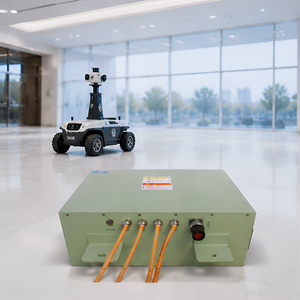
72V 60Ah AMR Mobile Robot Battery Pack for Autonomous Systems Smart BMS Custom Wholesale
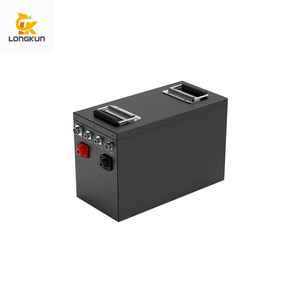
Longkun 24V 30Ah Industrial Robot Battery Pack with Smart BMS for AGV & Warehouse AMR Platforms
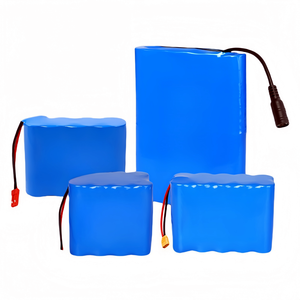
OEM Battery Pack 3.7V 7.4V 11.1V 14.8V Cylindrical SIB/Li-ion for Floor-Cleaning AMR Robots
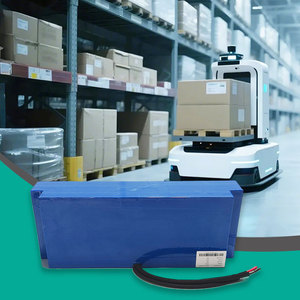
Customized Rechargeable High-Safety AGV Battery Pack 9Ah Autonomous Mobile Robot Module
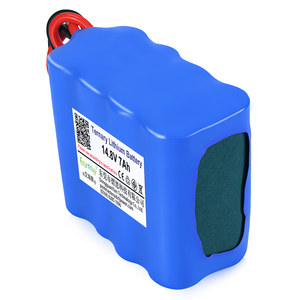
Custom Battery 14.8V 7Ah High Capacity for Autonomous Mobile Robot, Wheelchair & Lawn Mower
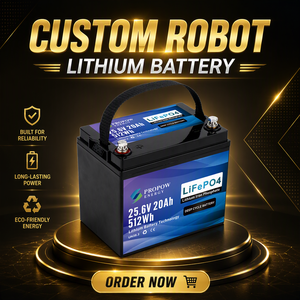
Custom Robot Battery 12V 24V 20Ah Rechargeable SIB / Pack for AGV AMR Mobile Logistics
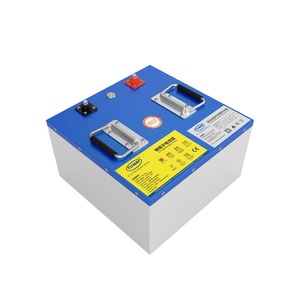
24V Heavy Duty Battery Pack 50Ah 60Ah 80Ah 100Ah with BMS (-20°C to 60°C Operating Temp)
State of the Art: Wholesale Sodium-Ion Battery Module Engineering
As global industrial energy storage, electric mobility, and autonomous logistics platforms face unprecedented supply chain volatility and geopolitical lithium concentration, Sodium-Ion Battery (SIB) technology has emerged as the definitive second-pillar electrochemical energy storage mechanism. China’s advanced gigafactory manufacturing ecosystem currently commands over 85% of global sodium-ion cell synthesis, cathode material refinement, and intelligent Battery Management System (BMS) integration. For global procurement officers, OEM design engineers, and industrial battery exporters, sourcing direct from specialized Chinese SIB module factories provides an unassailable strategic cost advantage, superior thermal safety, and unrivaled low-temperature performance retention.
Unlike Lithium-Ion (NMC/LFP) systems, which suffer severe capacity degradation and lithium plating risks at sub-zero temperatures, Sodium-Ion battery modules maintain up to 88% capacity retention at -20°C and remain fully operational down to -40°C. Furthermore, because sodium ions do not alloy with aluminum at low potentials, SIB battery cells utilize inexpensive aluminum foil for both the cathode and anode current collectors. This technical distinction completely eliminates the need for expensive copper foil, driving raw material cell-level BOM costs down by 30% to 40% compared to traditional LFP cells under stabilized market conditions.
Core Procurement Takeaway: Sodium-ion battery modules provide zero-volatility cost structures, absolute resistance to thermal runaway up to 800°C thermal stability thresholds, and the unique ability to be stored and transported at 0 Volts (completely discharged state) without damaging the SEI layer or causing copper dissolution shorts.
Why SIB Architecture is Transforming Industrial AGV/AMR Platforms
Autonomous Mobile Robots (AMRs) and Automated Guided Vehicles (AGVs) operating in automated cold-storage fulfillment centers, high-duty manufacturing floors, and outdoor logistics yards demand rapid charging rates, extreme cycle longevity, and zero risk of catastrophic thermal runaway. Custom 24V, 48V, and 72V sodium-ion battery packs offer 3C continuous discharge rates and pulse burst capability up to 130C, matching the peak torque acceleration demands of heavy-payload AGV drivetrains while enabling 15-minute ultra-fast opportunity charging (0-80% SOC) during automated dock station cycles.
Enterprise OEM/ODM Manufacturing Capabilities
Rooted in over 40 years of precision battery assembly heritage, our ISO 9001:2015 certified manufacturing base in China integrates state-of-the-art automated cell matching, laser busbar welding, environmental stress testing, and proprietary BMS firmware compilation. Serving global Tier-1 OEMs across medical, military, industrial robotics, and grid-scale ESS industries, our enterprise infrastructure guarantees complete end-to-end traceability and zero-defect quality control.
ISO 9001 & UN38.3 Certified
Full regulatory compliance across ISO 9001, UN38.3, CE, IEC 62619, and UL 1973 standards. Certified for zero-volt risk-free air, sea, and land export logistics.
Custom Smart BMS Engineering
In-house Hardware & Software design for CANbus, RS485, SMBus, and Modbus RTU communication protocols with real-time SOC/SOH state estimation and thermal pre-heating algorithms.
Automated Pack Assembly
High-precision automatic cell-sorting, micro-resistance impedance grading, and robotic ultrasonic wire-bonding ensuring micro-ohm internal resistance uniformity across series-parallel modules.
Whether your project requires custom prismatic sodium-ion module enclosures, cylindrical 32140/4680 SIB cell matrix designs, or drop-in lead-acid replacement battery packs, our engineering team provides turnkey support—from rapid CAD modeling and prototype samples within 14 days to high-volume giga-scale production lines.
Electrochemical Comparison: Sodium-Ion vs. LFP vs. NMC vs. LTO
To empower engineering teams with objective technical data, the following matrix compares key operational metrics across major commercial battery chemistries utilized in industrial and mobile applications.
| Electrochemical Parameter | Sodium-Ion (SIB - Layered Oxide) | Lithium Iron Phosphate (LiFePO4) | Lithium Nickel Manganese Cobalt (NMC) | Lithium Titanate Oxide (LTO) |
|---|---|---|---|---|
| Cell Energy Density | 140 - 165 Wh/kg | 160 - 190 Wh/kg | 240 - 300 Wh/kg | 70 - 90 Wh/kg |
| Low-Temp Capacity (-20°C) | 88% - 92% Retention | 55% - 65% Retention | 70% - 75% Retention | 80% - 85% Retention |
| Extreme Temp Range (-40°C) | Fully Operational (~70%) | Severe Voltage Drop / Inoperable | Poor (~35% Retention) | Operational (~65%) |
| Thermal Runaway Start Temp | > 350°C (Ultra Safe) | ~ 270°C | ~ 210°C (High Risk) | > 400°C |
| 0V Transport & Storage | Safe (Al-foil Current Collector) | Destructive (Cu Dissolution) | Destructive (Cu Dissolution) | Safe |
| Fast Charge Rate (0-80% SOC) | 15 Minutes (4C Rate) | 45 - 60 Minutes (1C) | 30 - 45 Minutes (1.5C) | 10 Minutes (6C) |
| Cycle Life (80% DoD, 25°C) | 3,500 - 5,000 Cycles | 3,000 - 6,000 Cycles | 1,500 - 2,500 Cycles | 15,000+ Cycles |
| Estimated Raw Material Cost Risk | Extremely Low (Abundant Na) | Moderate (Lithium Risk) | High (Co, Ni, Li Volatility) | High (Titanium & Li Cost) |
Technology Development Trends of Sodium-Ion Batteries (2025-2035)
The rapid evolution of sodium-ion battery chemistries is entering a transformative commercial phase, driven by aggressive R&D breakthroughs in cathode material synthesis, hard carbon anode engineering, and solid-state electrolyte integration.
1. Cathode Chemistry Divergence
Commercial SIB cathode development has bifurcated into two dominant chemical pathways:
- Layered Transition Metal Oxides (NaxMO2): Offering higher gravimetric energy density (up to 165 Wh/kg), making them ideal for light EVs, AGVs, and high-density industrial power packs.
- Prussian Blue / Prussian White Analogs (PBA): Featuring lower material costs, open 3D framework structures for fast Na+ diffusion, and extraordinary cycle life, ideally tailored for stationary ESS and telecom back-up power.
2. Biomass-Derived Hard Carbon Anodes
The bottleneck of SIB cost reduction lies in hard carbon anode manufacturing. Chinese research institutions are pioneering low-cost precursor materials derived from bio-mass waste (coconut shells, agricultural husks, pitch resin), increasing irreversible capacity efficiency from 85% to over 92% while boosting tap density to narrow the volumetric energy gap with graphite anodes.
3. Dual-Chemistry Hybrid Battery Packs
Major OEM automotive and industrial equipment manufacturers are commercializing hybrid battery systems that integrate Sodium-Ion and Lithium Iron Phosphate (Na+/Li+) cells inside a unified module controlled by an intelligent dual-algorithm BMS. This hybrid topology leverages sodium's sub-zero performance and fast charging alongside lithium's volumetric energy density, solving cold-weather range anxiety for commercial fleets.
4. High-Voltage Modular Scaling
Next-generation wholesale SIB module engineering is shifting toward high-voltage architectures (400V - 800V bus voltages). High-voltage sodium modules reduce system-level current draw, minimize cable weight, lower thermal resistance losses, and streamline direct integration into utility-scale solar/wind battery energy storage systems (BESS).
Future Procurement Trends for Industrial Sodium-Ion Buyers
Global B2B battery procurement is transitioning from pure upfront dollar-per-kilowatt-hour ($/kWh) capital expenditure evaluation to a holistic Levelized Cost of Storage (LCOS) and total supply chain security model. Global distributors, system integrators, and OEMs sourcing from Chinese wholesale factories must navigate several macro procurement trends over the coming decade:
A. Supply Chain De-Risking & Raw Material Independence
Unlike lithium, nickel, and cobalt—whose geographic concentration and volatile spot pricing create immense procurement exposure—sodium supply (derived from abundant sea salt and soda ash) is virtually limitless and geographically decentralized. International buyers are incorporating SIB modules into their product roadmaps specifically to buffer against future lithium market squeezes and commodity spikes.
B. Extreme Climate & Cold-Chain Logistics Dominance
Procurement requirements in northern Europe, North America, East Asia, and cold-storage logistics environments increasingly specify sodium-ion batteries over LFP. Eliminating costly external heating blankets and thermal management parasitical energy draw allows cold-storage AGVs to achieve 25% longer operational run-times per shift.
C. Zero-Volt Logistics & Simplified Aviation Safety Certification
Standard lithium batteries must be shipped under strict UN38.3 regulations at a 30% State of Charge (SOC), presenting continuous fire risks during long-distance maritime freight or air transport. Sodium-ion modules can be fully discharged to 0 Volts, creating a passive, zero-energy state that guarantees absolute safety during oceanic container shipping, simplifies customs clearance, and drastically lowers international logistics insurance premiums.
Frequently Asked Questions (FAQ) for Sodium-Ion Battery Sourcing
Key technical and commercial queries addressed by our senior battery engineering and export compliance team:
Partner with China’s Premier Sodium-Ion Battery Module Exporters
Contact our senior application engineering team today for technical whitepaper datasheets, custom BMS protocol consultation, and factory-direct wholesale quotations tailored to your operational requirements.
Get a Quote