Battery Engineering Blog
Discover expert perspectives, custom battery design guides, charging solutions, and industry updates from USA engineers.
Featured High-Reliability Battery Packs
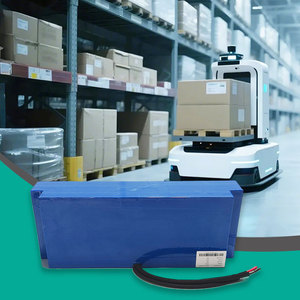
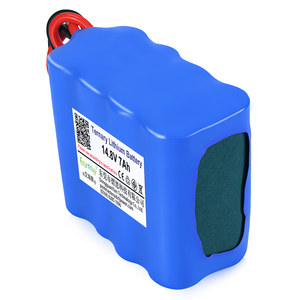
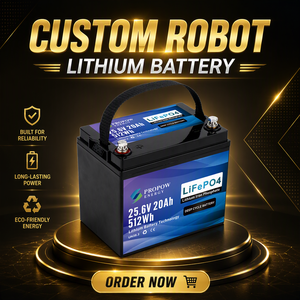
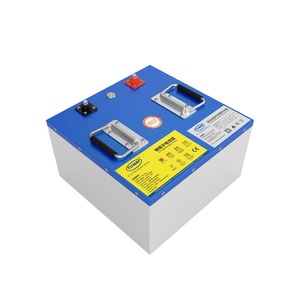
Explore our defense-grade and heavy-industrial autonomous mobile robot (AMR/AGV) energy solutions engineered with advanced BMS protection, ultra-high discharge rates, and wide-temperature stability.
Technical Blueprint: Defense-Grade Power Engineering
Modern defense systems, unmanned ground vehicles (UGVs), tactical autonomous mobile robots (AMRs), and military communication arrays demand power sources that perform flawlessly under conditions where failure is not an option. As global defense strategies shift toward electrification, modular energy storage, and uncrewed autonomous platforms, selecting a qualified China wholesale high-reliability defense power packs factory and exporter requires examining rigorous technical metrics beyond standard commercial battery specifications.
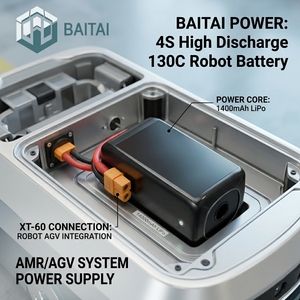
Defense battery pack architecture relies on three primary pillars: chemically stable battery cells, ruggedized structural containment, and smart multi-layer Battery Management Systems (BMS) featuring real-time diagnostic reporting. Whether deploying lithium titanate (LTO) for Arctic missions down to -40°C or high-discharge Lithium Polymer (LiPo) cells capable of delivering sustained 130C bursts for dynamic drone actuation, custom battery engineering must balance energy density, volumetric efficiency, and combat safety.
MIL-STD Compliance & Hardening
Enclosures designed to withstand intense shock, ballistic vibration, and altitude decompression per MIL-STD-810H standards. IP67/IP68 hermetic sealing ensures protection against water submersion and sand ingress.
Tactical Smart BMS Architecture
Integrated isolated CANbus, RS485, SMBus, and J1939 telemetry allow real-time monitoring of State of Charge (SOC), State of Health (SOH), cell voltage balancing, and proactive thermal isolation.
Thermal Runaway Mitigation
Utilizing phase-change materials (PCM), flame-retardant potting agents, and ceramic cell separators to prevent cascading thermal runaway even under mechanical puncture or localized cell failure.
Defense & Industrial Power Pack Recommendation Matrix
Different tactical operational theaters demand distinct battery cell chemistry profiles. The matrix below details key engineering choices available for custom OEM production.
| Cell Chemistry | Nominal Voltage Range | Cycle Life (80% DOD) | Operating Temperature | Key Defense & Industrial Applications |
|---|---|---|---|---|
| Lithium Titanate (LTO) | 2.3V - 2.4V per cell | > 20,000 Cycles | -40°C to +65°C | Extreme sub-zero military AGVs, tactical fast-charge systems, subsea UUVs |
| Lithium Iron Phosphate (LiFePO4) | 3.2V per cell (24V, 48V, 72V packs) | 3,500 - 6,000 Cycles | -20°C to +60°C | Heavy-duty AMR platforms, logistics AGVs, tactical field energy storage units |
| High-Discharge LiPo (130C Burst) | 3.7V per cell (4S - 14S configurations) | 500 - 800 Cycles | -10°C to +50°C | Counter-UAV strike platforms, high-speed robotics actuators, rapid launch systems |
| High-Density NMC / Li-Ion | 3.6V - 3.7V per cell (18650/21700/32650) | 1,000 - 2,000 Cycles | -20°C to +55°C | Wearable soldier power, autonomous floor sweepers, portable tactical radios |
Heavy AMR & Autonomous Platform Batteries (72V / 48V / 24V)
For high-capacity autonomous mobile platforms requiring long operational runtimes, our custom LiFePO4 and NMC packs (such as the 72V 60Ah and 24V 100Ah variants) deliver sustained continuous discharge rates with zero thermal degradation. Integrated smart BMS boards provide passive/active balancing, high-current MOSFET protection, and RS485/CAN communication to monitor pack temperature across dual sensor arrays.
Extreme Environment & Fast-Charging LTO Modules
When operating in frigid combat zones or high-throughput industrial facilities, Lithium Titanate (LTO) battery packs represent the pinnacle of reliability. Capable of receiving a 10C charge (full charge in 6 minutes) and discharging in temperatures down to -40°C without lithium dendrite formation, LTO custom battery packs prevent operational downtime in critical defense supply chains.
Future Procurement Trends in Defense & Mobile Power (2025–2030)
As global defense procurement departments and Tier-1 prime contractors restructure their supply chains, several macroeconomic and technological shifts are redefining how high-reliability power systems are specified, sourced, and integrated.
1. Standardized COTS + Custom Hybrid Modules
Defense procurement officers are increasingly mandating Commercial Off-The-Shelf (COTS) internal cell standards combined with custom modular enclosures. This "COTS-Plus" approach significantly reduces development lead times from years to months while lowering initial engineering non-recurring costs (NRE). OEMs can quickly customize mechanical form factors while retaining certified internal battery core architectures.
2. Transition to Solid-State & Silicon Anodes
Over the next five years, defense power packs will shift from conventional liquid electrolytes toward semi-solid-state and high-silicon anode chemistries. Sourcing partners in China are pioneering bulk production of semi-solid cells offering volumetric energy densities exceeding 350 Wh/kg. This shift enables tactical AGVs and uncrewed aerial vehicles (UAVs) to achieve double the operational loiter time within the exact same payload footprint.
3. Zero-Trust Firmware & Cyber-Secure BMS
Modern defense power packs are no longer passive chemical containers; they are networked digital nodes. Future export regulations require smart BMS boards to incorporate encrypted microcontroller architectures (AES-256 telemetry protection) to prevent unauthorized side-channel attacks, reverse-engineering of operating logs, or remote tampering over field CANbus networks.
4. Multi-Battery Hybrid Energy Buffering
Tactical robotic power systems are adopting hybrid power pack topologies—combining ultra-high-density NMC/LiFePO4 chemical batteries with high-power supercapacitors or high-C LiPo buffer cells. This allows heavy ground vehicles to draw massive surge currents during rapid acceleration or slope climbing without degrading the primary energy reservoir's cycle life.
Next-Generation Technology Trends in Battery Manufacturing
The manufacturing landscape for high-reliability energy storage is undergoing rapid innovation. Key technological developments engineered into our China manufacturing facilities include:
AI-Assisted SOC & SOH Predictive Analytics
By embedding neural network micro-models directly onto the BMS microcontroller, power packs can accurately calculate State of Charge (SOC) and State of Health (SOH) with less than 1% variance, adjusting discharge limits dynamically based on historical load stress and ambient temperature profiles.
Laser-Welded Direct Busbar Interconnects
Replacing traditional wire bonding with high-precision fiber laser welding of nickel-copper clad busbars minimizes internal resistance (IR), prevents vibration-induced fatigue failure, and allows continuous 200A+ current flow without excessive localized resistive heating.
Environmental Structural Potting
Encapsulating internal cell matrices in specialized two-part polyurethane or silicone structural foam absorbs mechanical shock vectors up to 50G, prevents moisture condensation during rapid thermal cycles, and isolates cell-to-cell thermal propagation.
Enterprise Advantages: Why Partner with Our Manufacturing Facility
With over four decades of collective battery engineering expertise, our ISO 9001 certified manufacturing infrastructure serves as a single-source OEM/ODM partner for global prime contractors, system integrators, and robotics developers.
Full Vertical Integration & Customization
From custom plastic injection molding and sheet metal enclosure fabrication to surface-mount PCB assembly (SMT) for BMS control boards, we manage every phase of battery development under one roof. Our engineering team customizes voltage outputs (3.7V to 72V+), capacities (1.4Ah to 100Ah+), cell layout geometry, and wiring harness connectors (Amphenol, Deutsch, XT90, Anderson) to meet your exact mechanical constraints.
- Custom enclosure prototyping (IP65, IP67, IP68 rated)
- BMS firmware customization (CANopen, Modbus, SMBus v1.1)
- Strict cell matching (ΔIR < 2mΩ, ΔCapacity < 50mAh)
Rigorous Quality Assurance & Global Compliance
Every single power pack manufactured in our facility undergoes 100% automated end-of-line (EOL) testing, including thermal chamber aging, high-current load testing, and vibration testing. Our export operations are fully compliant with international shipping and safety regulations, ensuring seamless transit and rapid customs clearance worldwide.
- UN38.3 & MSDS Certified for Air / Sea Freight Transport
- UL1642, UL2054, IEC62133 Compliance Engineering
- Full traceability from raw cell lot numbers to finished packs
Procurement & Technical FAQ
Common questions answered by our chief battery engineering team regarding custom defense and industrial power pack sourcing.
Accelerate Your Custom Battery Project
Connect directly with our senior application engineers to review your technical specs, request custom sample CAD models, and receive wholesale manufacturer pricing for defense-grade power systems.