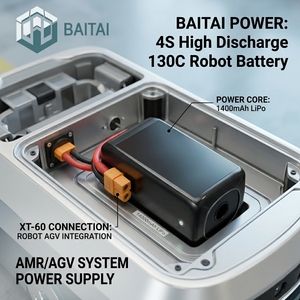
130C 1400mAh 4S High Discharge LiPo Battery for Service Robot AGV and Autonomous Mobile Robot Power System
- Chemistry: High-Rate Lithium Polymer
- Continuous Discharge: 130C Pulse
- Target: High-Torque Robotics & AGVs
Discover expert perspectives, custom battery design guides, charging solutions, and industry updates from USA engineers.
Browse our certified lithium battery assemblies tailored for Autonomous Mobile Robots (AMR), Automated Guided Vehicles (AGV), explosion-rated service robotics, and hazardous industrial energy storage.
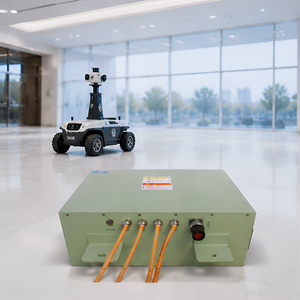
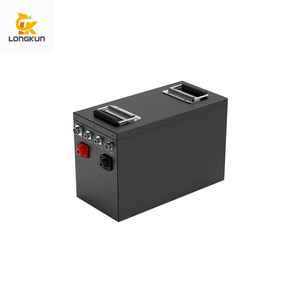
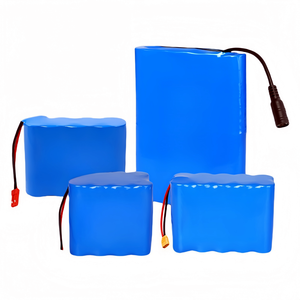
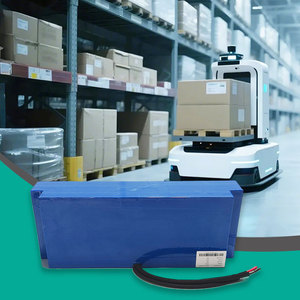
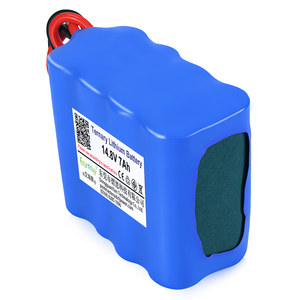
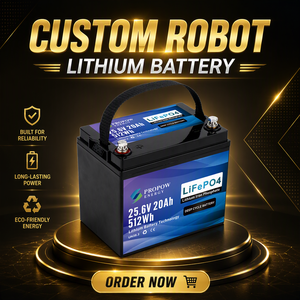
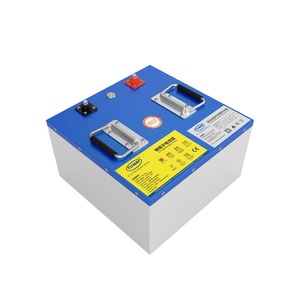
Operating autonomous robotics, heavy material handling platforms, and continuous industrial monitoring systems within Class I Division 1/2 or ATEX Zone 1/2 environments introduces severe thermal and electrochemical risks. As China’s premier wholesale supplier and exporter of custom explosion-proof battery solutions, our engineering methodology bridges the gap between high-energy density storage and rigorous intrinsic safety standards.
Explosion protection in energy storage relies on preventing three simultaneous conditions: flammable substance, oxygen, and an ignition source (the fire triangle). Lithium-ion energy systems can potentially act as an ignition source through arc flashes, electrical short circuits, or thermal runaway venting. Our certified explosion-proof battery packs mitigate these risks via three primary protection methodologies:
Constructed with heavy-duty die-cast aluminum alloys or stainless steel housings engineered to withstand internal explosion pressure without rupturing, preventing internal thermal flames from propagating to surrounding explosive gas atmospheres.
Electronic circuit design limiting thermal and electrical energy within the Battery Management System (BMS) to levels lower than the ignition energy of surrounding hazardous vapors, even under dual-fault conditions.
Utilizing high-grade dielectric silicone or epoxy potting compounds to completely isolate live electrical components, cell interconnects, and sensitive control boards from moisture, explosive dust, and gas ingress.
Technical Insight: Thermal Runaway Propagation Prevention
Our OEM battery packs integrate ceramic aerogel thermal barriers between individual cells along with flame-retardant Phase Change Materials (PCM). If a single cell experiences internal short-circuiting, thermal propagation to adjacent cells is blocked, keeping external skin temperatures well below the T-Class ignition rating (T4/T5 standard compliance).
| Battery Chemistry | Nominal Voltage | Cycle Life (80% DOD) | Thermal Runaway Onset | Hazardous Zone Suitability | Key OEM Application |
|---|---|---|---|---|---|
| Lithium Iron Phosphate (LiFePO4) | 3.2V / cell | 3,500 – 6,000 Cycles | ~270°C (Highly Stable) | ATEX Zone 1, Zone 2 / Class I Div 2 | Heavy AMRs, AGV Fleets, Stationary Power |
| Lithium Titanate Oxide (LTO) | 2.3V / cell | 15,000 – 25,000 Cycles | >300°C (Extremely Safe) | ATEX Zone 1 / Underground Mining | 24/7 Fast-Charging AGVs, Extreme Cold (-40°C) |
| Nickel Manganese Cobalt (NMC) | 3.6V / cell | 1,500 – 2,500 Cycles | ~210°C (Requires Ex-d Enclosure) | Ex-d Sealed Flameproof Systems | Weight-Critical Service Robotics, Drones |
| Lithium Polymer (High Discharge LiPo) | 3.7V / cell | 500 – 1,000 Cycles | ~160°C (Burst Power Optimized) | Potted / Intrinsically Shielded Devices | High-Torque Actuators, Emergency Burst AMRs |
As global manufacturing shifts toward Industry 4.0 automation and net-zero sustainability targets, international B2B buyers must navigate evolving compliance standardizations, supply chain dynamics, and battery tech innovations. Based on market analysis across North American, European, and Asian markets, several key procurement trends will redefine the explosion-proof battery landscape over the next decade:
Procurement teams are prioritizing smart battery packs featuring integrated CANopen, Modbus, or wireless IoT connectivity. Real-time monitoring of State of Charge (SOC), State of Health (SOH), and cell-level temperatures allows predictive maintenance before explosive risk thresholds are reached.
Modern automated warehouses and chemical processing plants require continuous 24/7 uptime. Procurement is rapidly shifting toward LTO and high-rate LiFePO4 systems capable of 0% to 80% charge cycles in under 15 minutes without causing internal gas pressure buildup.
Emerging solid-state battery chemistries eliminate liquid organic electrolytes, drastically reducing flammability. Next-generation explosion-proof designs will leverage solid-state architectures to achieve higher volumetric energy density in ATEX Zone 0 environments.
With over four decades of combined engineering legacy, our state-of-the-art manufacturing facility in China serves as a premier OEM/ODM supplier for global Fortune 500 enterprises, system integrators, and robotics developers. We deliver turnkey custom battery designs from initial concept to certified mass production.
Automated fiber-laser welding machinery guarantees low-resistance cell-to-cell interconnects, preventing micro-arcs and micro-sparking under extreme vibration profiles encountered by AMRs and industrial lawn mowers.
Our custom battery packs undergo comprehensive testing to guarantee compliance with international safety protocols including UN 38.3 (transport safety), IEC 62133, UL 2054, UL 1642, ATEX Directive 2014/34/EU, and IECEx certification standards.
In-house electrical engineering teams customize BMS hardware and firmware to deliver active cell balancing, multi-redundant temperature sensing, current limiting, and customized protocol integration (CANbus, RS485).
Get expert answers regarding technical custom specifications, international shipping compliance, explosion-proof testing, and wholesale order procedures.
An explosion-proof battery system is engineered to prevent any potential spark, short-circuit thermal arc, or high-temperature surface from igniting surrounding flammable gases, dust, or vapors. This is achieved by combining certified intrinsically safe (Ex-i) BMS circuitry, flameproof sealed enclosures (Ex-d), thermal isolation barriers between cells, potted encapsulations (Ex-m), and pressure-relief valves designed to extinguish thermal flames before venting gas reaches the exterior environment.
ATEX is the mandatory European directive for equipment used in explosive atmospheres. IECEx is an international certification scheme recognized globally across member countries. Class I Division 1/2 is the standard classification system used in North America (NEC/CEC). While ATEX/IECEx categorize hazardous environments into Zones (Zone 0, 1, 2 for gas; Zone 20, 21, 22 for dust), North American standards use Divisions (Div 1 for continuous/intermittent hazard presence; Div 2 for abnormal presence). Our engineering team designs custom packs compliant with all three global frameworks.
For standard industrial indoor AMRs requiring high energy density and long cycle life, LiFePO4 (Lithium Iron Phosphate) offers the optimal balance of safety, thermal stability (~270°C runaway threshold), and cost-effectiveness (3,500+ cycles). However, for extreme low-temperature applications (down to -40°C) or ultra-fast charging requirements (under 15 minutes), Lithium Titanate Oxide (LTO) is the superior choice, delivering over 20,000 cycles with virtually zero risk of thermal runaway micro-dendrite formation.
Yes. As a direct wholesale manufacturer and exporter, we specialize in OEM/ODM customization. We engineer battery pack enclosures (sheet metal, extruded aluminum, stainless steel, or molded flame-retardant ABS/PC), custom wiring harnesses, heavy-duty industrial connectors (Anderson, Deutsch, Phoenix, Amphenol), and internal structural bracing to fit your specific vehicle chassis or equipment space constraints.
Our custom Smart BMS incorporates multi-tiered hardware and firmware protections: real-time monitoring of individual cell voltages, dual/quad thermal sensors placed inside cell modules, high-speed MOSFET or contactor cut-offs, active balancing to keep cell voltages synchronized, short-circuit trip responses in under 100 microseconds, and redundant hardware fuses that isolate the battery string if electronic components fail.
Every battery export shipment from our factory is fully documented for dangerous goods (DG) transport compliance. Standard documentation includes UN 38.3 Test Reports, Summary Test Reports (STR), Safety Data Sheets (MSDS), Transport Air/Sea Dangerous Goods Certificates, Drop Test Reports, and CE/UL/IEC compliance documentation requested during custom ordering.
For standard custom battery prototypes and sample evaluation, our typical lead time is 2 to 3 weeks following mechanical design sign-off. Bulk wholesale production MOQs depend on cell format and casing specs, but generally range from 10 to 50 units for heavy-duty industrial packs, and 100+ units for compact custom lithium assemblies.
We maintain strict ISO 9001 certified Quality Assurance protocols. All incoming cells undergo automated capacity grading, internal resistance (IR) testing, and thermal sorting. During assembly, automated laser welding and optical inspection are supplemented by 100% full-cycle charge/discharge aging tests on automated test benches before sealing and potting.
Looking for certified explosion-proof battery packs, custom AMR energy modules, or high-discharge lithium power systems for your global product lineup? Contact our engineering team to discuss your project requirements.