Battery Engineering Blog
Discover expert perspectives, custom battery design guides, charging solutions, and industry updates from USA engineers.
High-Performance Solid-State Battery Systems
Explore our flagship solid-state and semi-solid battery packs engineered for unmanned aerial vehicles (UAVs), fixed-wing VTOL drones, robotics, and high-demand industrial power equipment.
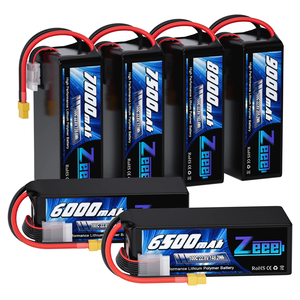
Zeee High-Discharge Solid-State Enhanced Pack 6S 22.2V (7500mAh - 12000mAh)
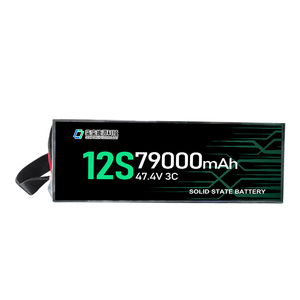
Qiqi Industrial UAV Solid-State Pack 79000mAh (6S to 24S Modular Series)
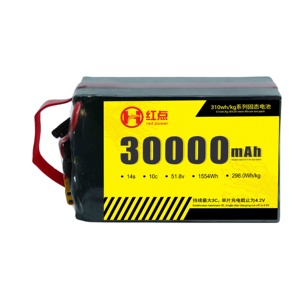
Fixed-Wing VTOL Solid-State Lithium Pack 30Ah 14S 51.8V (310Wh/kg)
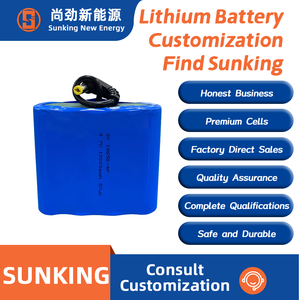
SUNKING SK18650-4P Industrial Solid-State Lithium Pack 37V 10Ah
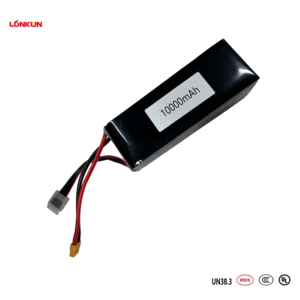
Longkun Ultra-Flight Solid-State Battery Assembly 30Ah 44.4V 12S (354Wh/kg)
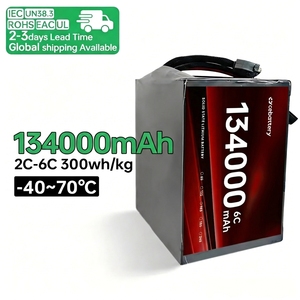
High-Density 300Wh/kg Solid-State NMC811 Battery Assembly 134Ah (12S/24S)
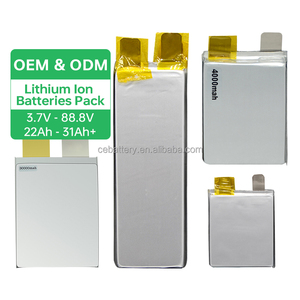
Solid-State Graphene High Energy Density Cell Series 3.8V-3.95V (5.5Ah - 67Ah)
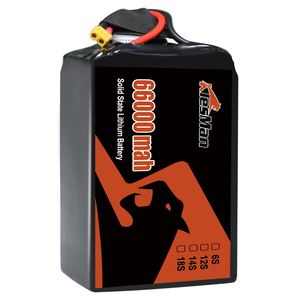
Klesman Tactical HV Drone Battery System 350Wh/kg (6S/12S/14S/18S/24S)
Solid-State Assembly Capability Metrics
Quantifiable superiority in gravimetric density, thermal endurance, volumetric efficiency, and structural safety engineered at our state-of-the-art Chinese manufacturing base.
1. Solid-State Battery Technological Evolution & Information Gain Analysis
The global energy storage matrix is undergoing a seismic paradigm shift from conventional liquid-electrolyte lithium-ion (Li-ion) systems to advanced solid-state and semi-solid-state battery assemblies. As a leading manufacturer based in China's industrial battery corridor, our engineering teams are solving the fundamental thermodynamic and mechanical challenges associated with high-voltage, high-capacity portable power assemblies.
Traditional organic liquid electrolytes exhibit extreme vulnerability to thermal runaway when exposed to physical puncture, overcharging, or operational environments exceeding 60°C. In contrast, our solid-state battery assemblies utilize solid polymer-matrix composites, oxide ceramic electrolytes (LLZO/LATP), and sulfide-based ion conductors that provide an operational thermal threshold far exceeding legacy systems.
Technical Information Gain: By replacing volatile liquid carbonates with a hybrid solid electrolyte matrix, ionic conductivity reaches 10⁻³ S/cm at room temperature while suppressing lithium dendrite growth at high C-rate charging phases. This structural innovation increases usable gravimetric density to between 300 Wh/kg and 354 Wh/kg.
A. Electrochemical Comparison: Liquid vs. Semi-Solid vs. All-Solid-State Assemblies
To assist OEM procurement managers and senior engineering teams in selecting optimal power architectures, the matrix below details the key physical and operational parameters across modern cell technologies:
| Performance Metric | Conventional Liquid LiPo | Semi-Solid (Pouch Assembly) | All-Solid-State (China Factory Standard) |
|---|---|---|---|
| Gravimetric Energy Density | 180 – 240 Wh/kg | 280 – 320 Wh/kg | 320 – 354+ Wh/kg |
| Volumetric Energy Density | 450 – 550 Wh/L | 600 – 720 Wh/L | 750 – 880 Wh/L |
| Electrolyte Flammability | High (Flash point < 30°C) | Self-Extinguishing / Ultra-Low | Non-Flammable Inorganic Ceramic |
| Operating Temperature Window | -10°C to +50°C | -20°C to +60°C | -30°C to +65°C |
| Nail Penetration / Thermal Runaway | Combustion / Explosion | Smoke without open flame | Zero Reaction / Structural Stability |
| Cell Pack Volumetric Expansion | 6% – 12% over lifecycle | 2% – 4% constrained | < 1.5% Solid Phase Stability |
B. Anode and Cathode Material Innovations
Achieving a system-level energy density of 350 Wh/kg requires complementary engineering at both electrodes. Our factory incorporates High-Nickel NMC811 (LiNi0.8Mn0.1Co0.1O2) cathodes enhanced with graphene conductive networks. On the anode side, we transition from pure synthetic graphite to Silicon-Carbon (Si/C) composite anodes and pre-lithiated metal foils. This combination reduces passive battery weight while expanding lithium storage capacity per square millimeter of electrode surface.
2. Future B2B Procurement & Sourcing Trends (2025–2030)
As unmanned systems, commercial eVTOL (electric Vertical Take-Off and Landing) aircraft, robotics, and defense platforms demand longer range and higher payload capacity, global procurement strategies are shifting rapidly. Buying standalone battery cells is no longer sufficient; international B2B clients now mandate fully customized, turn-key battery assemblies with built-in telemetry, structural enclosures, and active thermal management.
Trend 1: Smart BMS & CAN-Bus Telemetry
Modern B2B buyers require real-time tracking of State of Charge (SOC), State of Health (SOH), individual cell voltage balancing, and temperature gradients via CAN 2.0B, SMBus, or UART communications.
Trend 2: High-Voltage (HV) Modular Stacking
Power demand is scaling up from standard 6S (22.2V) to high-voltage platforms like 12S (44.4V), 14S (51.8V), 18S (66.6V), and 24S (94.8V) to minimize copper cable resistance and overall system current heat losses.
Trend 3: Supply Chain Verification & Traceability
Procurement audits now prioritize tier-1 factories with full raw-material batch tracking, automated laser welding inspection, and comprehensive international shipping certifications (UN 38.3, MSDS, DG Class 9).
Lowering Total Cost of Ownership (TCO) for Commercial UAV Fleets
In commercial mapping, agricultural spraying, surveillance, and logistics, battery replacement represents a primary operating expense. Semi-solid state assemblies extend cycle life while reducing pack weight by up to 25% compared to liquid LiPo packs of identical capacity. This mass reduction yields a direct increase in payload capacity or extended flight duration, allowing fleet operators to reduce flight missions per square kilometer by 30%.
3. Factory Manufacturing Capabilities & Quality Engineering
As a leading solid-state battery manufacturer based in China, our facilities combine automated cell manufacturing with flexible pack assembly lines. Over decades of dedicated electrochemical engineering, we have built a manufacturing framework certified to ISO 9001:2015 quality standards, serving original equipment manufacturers (OEMs) and brand owners across North America, Europe, and Asia-Pacific.
Automated Cell Grading & Impedance Matching
Every single cell undergoes a 14-day aging and capacity verification process. Internal resistance (IR) matching is strictly controlled within ±0.5 mΩ, and voltage variance is held under 3mV per pack assembly to ensure balanced cell degradation during high-rate discharges.
Laser-Welded Busbars & Vibration-Damped Housings
Pouch cells are joined using high-precision ultrasonic and fiber laser welding techniques to minimize contact resistance. Custom structural enclosures utilize flame-retardant polycarbonate (UL94-V0) or lightweight carbon fiber composites engineered for extreme vibration environments.
Full Testing & Validation Protocol
Our quality assurance lab subjects assemblies to thermal shock (-40°C to +85°C), 3-axis vibration sweeps, mechanical drop tests, altitude simulation (11.6 kPa), and continuous short-circuit protection testing before issuing final shipping clearance.
Global Compliance & Logistics Execution
We provide turn-key global logistics services backed by complete documentation, including UN38.3 test reports, SDS/MSDS certificates, CE-EMC validation, and compliance with Dangerous Goods (DG) Class 9 shipping regulations.
4. Procurement FAQ & Semantic Intent Analysis
Key technical and commercial queries addressed by our chief engineering and sales team for international OEM clients:
Q: What makes solid-state battery assemblies superior to standard LiPo batteries for UAV applications?
Solid-state battery assemblies deliver up to 40% higher gravimetric energy density (reaching 310 Wh/kg to 354 Wh/kg) compared to traditional liquid LiPo batteries (typically 180–220 Wh/kg). Additionally, the elimination of volatile liquid electrolytes significantly reduces thermal runaway risks, allowing drones to fly longer distances safely under heavy electrical loads.
Q: How do solid-state battery packs perform in extreme low-temperature environments?
Our solid-state cell chemistries maintain stable ionic conductivity at low temperatures. While traditional liquid batteries suffer severe voltage drop below 0°C due to increased electrolyte viscosity, our solid-state formulations deliver over 85% usable capacity at -20°C and remain functional down to -30°C, making them ideal for high-altitude aerial survey and arctic missions.
Q: Can your factory customize the BMS communication protocol for proprietary ground stations?
Yes. Our in-house electronics engineering team develops custom Smart BMS solutions supporting CAN-bus 2.0B, SMBus, Modbus over RS485, and UART. We work directly with your software engineering team to implement custom data frames, enabling your autopilot or host controller to monitor individual cell voltages, temperatures, SOH, SOC, and cycle counts in real time.
Q: What is the typical minimum order quantity (MOQ) and lead time for custom solid-state pack development?
For standard off-the-shelf solid-state models (such as 6S 22.2V or 12S 44.4V flight packs), sample orders are available from 1 to 5 units. For custom OEM assemblies requiring specialized mechanical dimensions or custom BMS programming, prototype tooling and sample validation typically require 3 to 4 weeks, followed by mass production delivery in 4 to 6 weeks.
Q: What international safety and transport certifications do your solid-state packs hold?
Our battery assemblies comply with UN 38.3 (air/sea transport testing), IEC 62133-2, CE, and RoHS standards. Because solid-state technology reduces thermal hazard ratings, international shipping clearance through air freight (ICAO/IATA Dangerous Goods regulations) is significantly streamlined.
Request Custom Solid-State Battery Specifications & Quotations
Partner with China's premier solid-state battery assembly factory. Contact our engineering team today to receive detailed technical datasheets, CAD drawings, and volume wholesale pricing.