Battery Engineering Blog
Discover expert perspectives, custom battery design guides, charging solutions, and industry updates from USA engineers.
As global power grids transition toward decentralized renewable energy microgrids and demand-side load balancing, Rack-Mount Lithium Battery Systems have emerged as the foundational cornerstone for residential, commercial, industrial (C&I), and telecommunications energy storage installations. Powered by Lithium Iron Phosphate (LiFePO4) chemistry, high-density server rack battery architectures deliver unmatched thermal stability, high cycle lifespans (exceeding 6,000 to 8,000 deep discharge cycles), and modular scalability. This comprehensive technical whitepaper provides Tier-1 procurement directors, system integrators, and engineering consultants with actionable intelligence on factory sourcing, smart Battery Management System (BMS) integration, total cost of ownership (TCO) optimization, and future market trajectory.
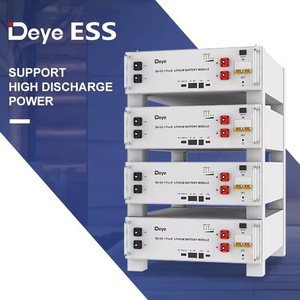
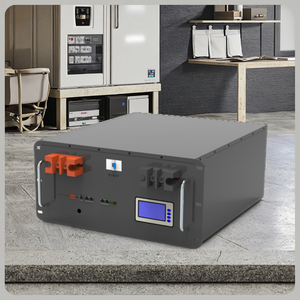
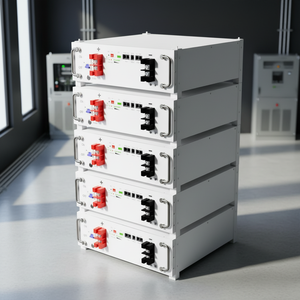
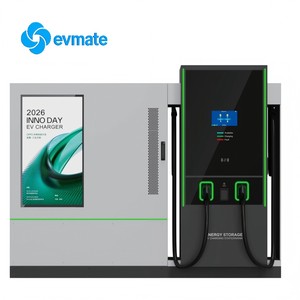
Top Recommended Rack Mount Lithium Battery Systems
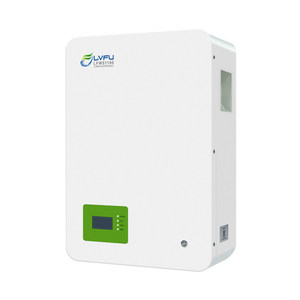
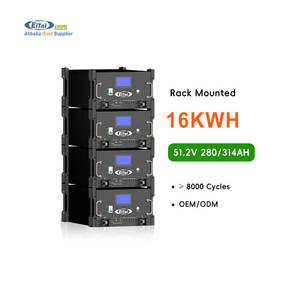
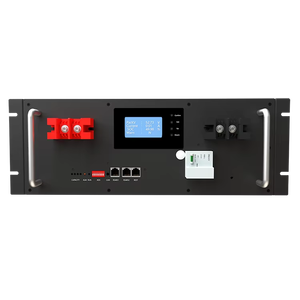
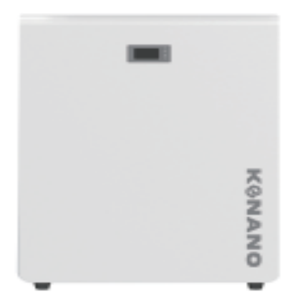
Explore our certified catalog of factory-direct 48V/51.2V rack-mounted and stackable energy storage products. Engineered with A-grade prismatic LiFePO4 cells, active equalization BMS controllers, and multi-protocol inverter compatibility for global deployment.
China Enterprise Manufacturing Strengths & OEM Quality Engineering
When selecting a Chinese factory partner for rack-mounted lithium battery systems, buyers must look beyond initial cell cost and evaluate full vertical engineering capabilities. Leading Chinese manufacturers leverage state-of-the-art automated manufacturing infrastructure, strict ISO 9001:2015 quality management systems, and proprietary smart BMS firmware design.
Grade-A Prismatic Cells Only
Direct sourcing partnerships with Tier-1 cell foundries (CATL, EVE, REPT, HITHIUM). 100% capacity matching and internal resistance grading prior to module assembly ensure zero degradation bottlenecks.
Proprietary Active Balancing BMS
Advanced 2A-5A active equalization microcontrollers dynamically redistribute charge across individual cells, mitigating passive heat loss and boosting total usable pack capacity by up to 8%.
Global Inverter Interoperability
Pre-programmed protocol auto-matching for major inverter brands including Deye, Victron Energy, Growatt, GoodWe, SMA, Solis, Luxpower, Sofar, and Schneider Electric.
Key Industry Trends in Rack Mount Energy Storage (2025–2030)
The rack-mounted battery sector is undergoing rapid technological refinement driven by commercial microgrids, high-power telecom towers (5G nodes), and residential solar-plus-storage mandates. B2B buyers must align their product roadmaps with the following four structural trends:
1. Transition from 100Ah (5.12kWh) to High-Density 314Ah (16.07kWh) Form Factors
While standard 19-inch 3U rack units historically relied on 51.2V 100Ah configurations, the industrial market is rapidly shifting toward 200Ah and 314Ah large-format prismatic cells packaged in compact 4U and 5U chassis. This shift increases volumetric energy density by over 40%, reducing cabinet footprint, cabling complexity, and installation labor for system integrators.
2. High-Voltage (HV) Modular Stackability & Multi-Unit Parallelism
Low-voltage (48V/51.2V) rack batteries remain dominant in residential and small commercial projects up to 100kWh. However, commercial peak-shaving and backup power applications (100kWh to 500kWh) are adopting high-voltage series-connected rack modules (HV BMS control boxes connecting 10 to 20 rack modules in series to reach 500V–1000V DC). This minimizes C-rate line losses and boosts overall system round-trip efficiency above 95%.
3. Cloud IoT Monitoring & AI-Driven Predictive Maintenance
Modern factory-supplied rack batteries incorporate integrated WiFi/4G/GPRS communication gateways. Plant managers and installers can remotely monitor cell-level state of charge (SoC), state of health (SoH), temperature profiles, and historical fault logs. Machine-learning algorithms now predict thermal anomalies and cell imbalances days before critical failure occurs.
B2B Procurement Trends & Technical Benchmark Comparison
To assist procurement decision-makers in evaluating system performance against capital expenditure (CapEx) and operational expenditure (OpEx), the matrix below benchmarks standard legacy systems against next-generation factory-direct rack-mount LiFePO4 solutions.
| Specification / Benchmark | Traditional Lead-Acid / GEL Racks | Standard 51.2V 100Ah Rack (Gen 1) | Advanced Smart 51.2V 314Ah Rack (Next-Gen) |
|---|---|---|---|
| Nominal Energy Density | 30 - 40 Wh/kg | 110 - 130 Wh/kg | 160 - 180 Wh/kg |
| Cycle Life (80% DoD) | 800 - 1,200 Cycles | 4,000 - 6,000 Cycles | 6,000 - 8,000+ Cycles |
| Max Parallel Expansion | 4 Units (Voltage Drift Risks) | 15 Units (Standard CAN) | Up to 64 Units (Multi-Master Protocol) |
| Operating Temperature Range | -10°C to +40°C (High Loss) | -20°C to +55°C | -20°C to +60°C (Built-in Heating Option) |
| Communication Protocols | None / Analog Voltmeter | RS485, CAN, RS232 | CAN, RS485, SNMP, WiFi, Bluetooth, Cloud API |
| 10-Year Total Cost of Storage (TCOS) | High (Requires 3x Replacement) | Moderate (CapEx amortized) | Lowest (Zero maintenance, >15yr design life) |
Frequently Asked Questions (FAQ) for Global Buyers
Synthesized from international procurement queries, safety compliance regulations, and system commissioning checklists:
Q1: Why is 51.2V preferred over 48V nominal for rack-mounted lithium batteries?
A 51.2V system utilizes a 16-cell series (16S) configuration of LiFePO4 cells (3.2V nominal per cell). In contrast, legacy 48V packs often use a 15-cell series (15S) setup. The 16S 51.2V configuration perfectly matches standard telecom and off-grid inverter DC voltage windows (40V to 58.4V), providing higher power delivery without hitting low-voltage cutout thresholds under heavy surge loads.
Q2: How do Chinese suppliers handle parallel expansion up to 64 battery units?
To connect up to 64 rack modules in parallel without current imbalance or communication lag, top manufacturers incorporate DIP switch address assignment and dual-bus CAN communication controllers. One module acts as the Master BMS, aggregating monitoring data from 63 Slave modules and communicating directly with the main solar inverter or plant controller.
Q3: What mandatory safety certifications are required for importing rack batteries to EU & US markets?
For global compliance, rack-mounted lithium batteries must hold UN38.3 (Transport Safety) and MSDS / 1.2m Drop Test Reports for sea/air freight. For European markets, CE-EMC, IEC 62619, and EN 62477-1 are mandatory. For North America, UL 1973 (stationary batteries) and UL 9540A (fire test for thermal runaway propagation) are critical for building permit approvals.
Q4: What is the typical lead time and OEM customization capability for factory orders?
Standard catalog products (such as stock 5kWh and 10kWh rack modules in EU/Southeast Asian warehouses) can ship within 3 to 7 business days. Custom OEM orders—including specialized sheet metal chassis colors, logo silkscreening, custom CAN bus protocols, and extended 10-year warranties—typically feature a 25 to 35-day production lead time following sample sign-off.
Partner with a Leading China Rack Mount Lithium Battery Factory
Accelerate your renewable energy projects with certified, direct-from-factory 51.2V rack-mounted LiFePO4 systems. Contact our engineering team today for technical specs, protocol files, and wholesale volume pricing.